

If you're interested in the latest research on light and insect behavior, you'll want to attend the seminar hosted by the UC Davis Department of Entomology and Nematology on Wednesday, March 4 in 122 Briggs Hall, UC Davis, or watch it on Zoom.
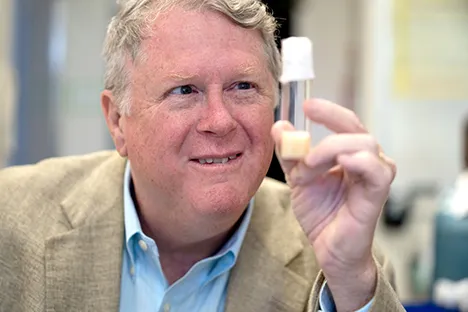
Todd Holmes, professor of physiology and biophysics at the UC Irvine School of Medicine, will discuss how "Non-Image Forming Visual Mechanisms Drive Animal Behaviors" at 12:10 p.m. It also will be on Zoom: https://ucdavis.zoom.us/j/95882849672.
"Image forming opsin-based phototransduction is well understood at molecular and systems levels while non-image forming visual mechanisms are much less understood," Holmes says in his abstract. "Using a combination of patch clamp analysis of fly neurons, molecular genetics and behavioral analysis, we discovered several novel non-opsin phototransduction mechanism based on Cryptochrome (Cry) and Rhodopsin 7 (Rh7). Light activates Cry and Rh7 directly in ventral lateral central brain circadian and arousal neurons (LNvs) in insects, thus establishing these phototransduction mechanisms as determinants of non-image forming light sensing. Many insect behavioral responses to light are mediated jointly by Cry, Rh7 and light sensitive opsins expressed in external photoreceptors that send synaptic inputs to LNvs. I describe our recent efforts to deploy different light-based strategies for species-specific control of insect behaviors."
His research interests include cellular physiology, circadian and visual circuits, ion channels, and neural circuits and behavior. His laboratory "has developed pioneering approaches for understanding neural circuits and whole animal behavior," according to his website. The lab focuses "on unraveling the functional operations of neurons in vivo with the goal of understanding integrative neural function from molecules to behavior. Recently, we have discovered novel phototransduction mechanisms that occur directly in neurons that rapidly modulate electrical excitability. Other recent projects include modeling human neurodegenerative diseases using Drosophila as a model system."
Holmes and his team recently found that night- versus day-biting species of mosquitoes are behaviorally attracted and repelled by different colors of light at different times of day. They studied mosquito species that bite in the daytime (Aedes aegypti, the yellow fever mosquito) and those that bite at night (Anopheles coluzzi, from the Anopheles gambiae family, the major vector for malaria). They found distinct responses to ultraviolet light and other colors of light between the two species. Researchers also found light preference is dependent on the mosquito’s sex and species, the time of day and the color of the light.
Holmes received his doctorate in neurobiology from the Massachusetts Institute of Technology in 1994.
He will be introduced by his colleague and former doctoral student, Lisa Baik, assistant professor of insect biology, UC Davis Department of Entomology and Nematology. Baik holds a doctorate (2019) in physiology and biophysics from UC Irvine, where she studied with Holmes and completed her dissertation on “Short Wavelength Light-Evoked Responses of Drosophila and Mosquitoes.”
For technical issues, contact seminar coordinator Marshall McMunn at msmcmunn@ucdavis.edu.
Cover image: Spotted-wing drosophila on raspberry. (Photo by Kathy Keatley Garvey)