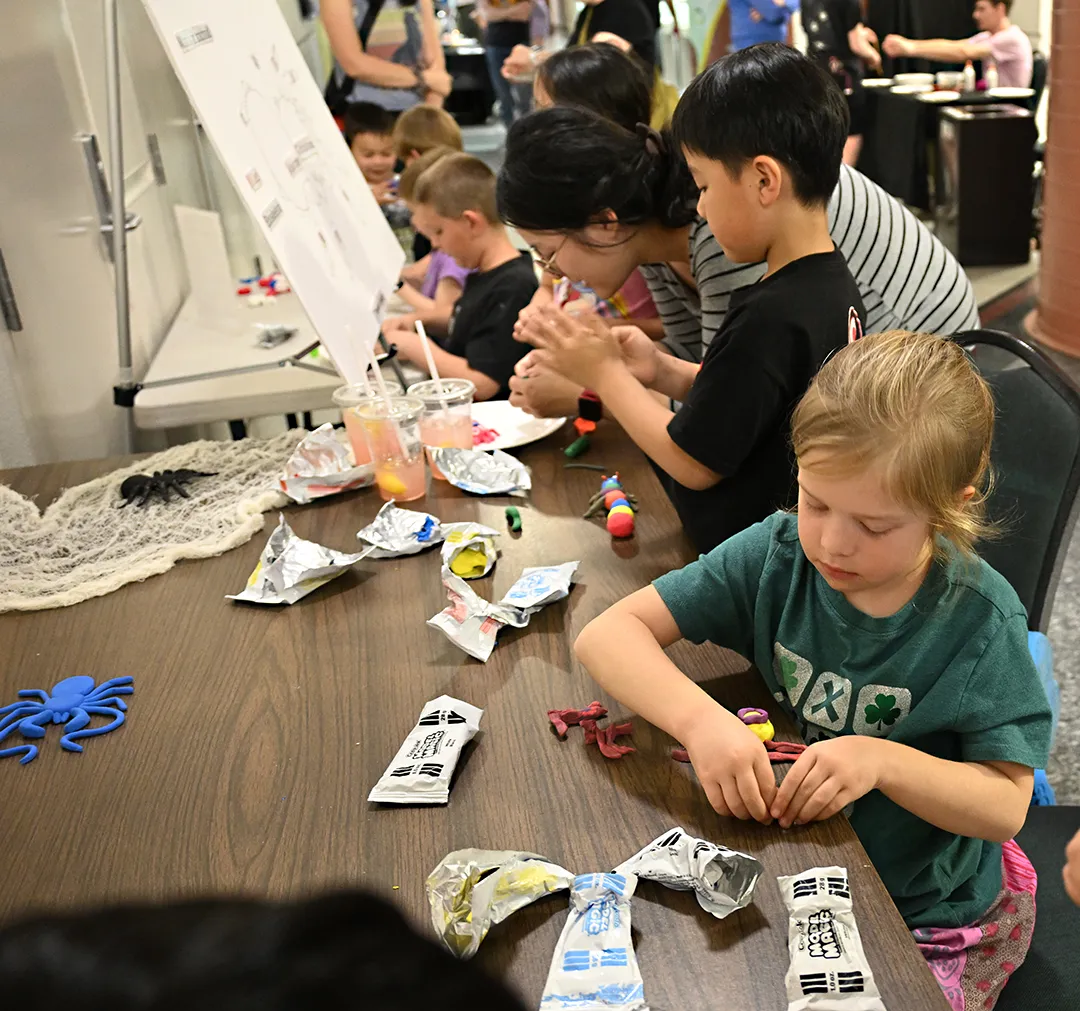
Future arachnologists? Maybe!
Artists? Definitely!
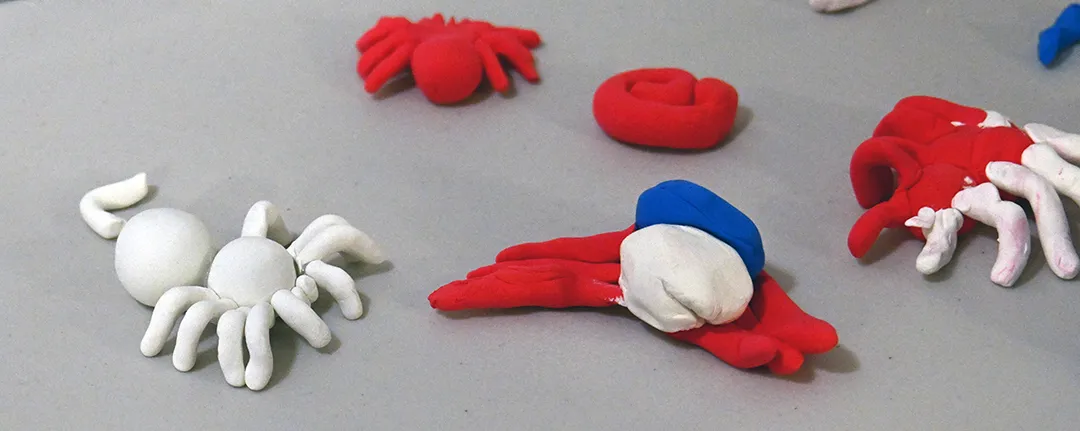
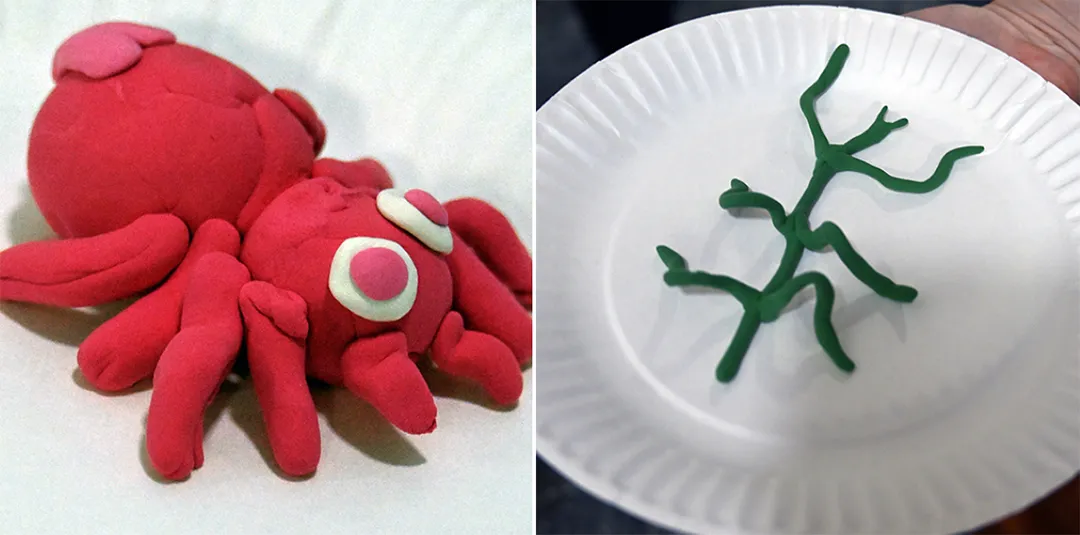
Children and adults alike created "new species" of spiders when they worked with modeling clay at the Bohart Museum of Entomology's recent open house, themed "Eight-Leg Encounters." All arachnids, including scorpions, spiders, and ticks, have eight legs.
Organized by doctoral candidate Emma "Em" Jochim and UC Davis alumnus Felix Duley, both of the Jason Bond lab, UC Davis Department of Entomology and Nematology, the event drew attention to assorted arachids, including trapdoor spiders, orb weavers, jumping spiders, and black widow spiders.
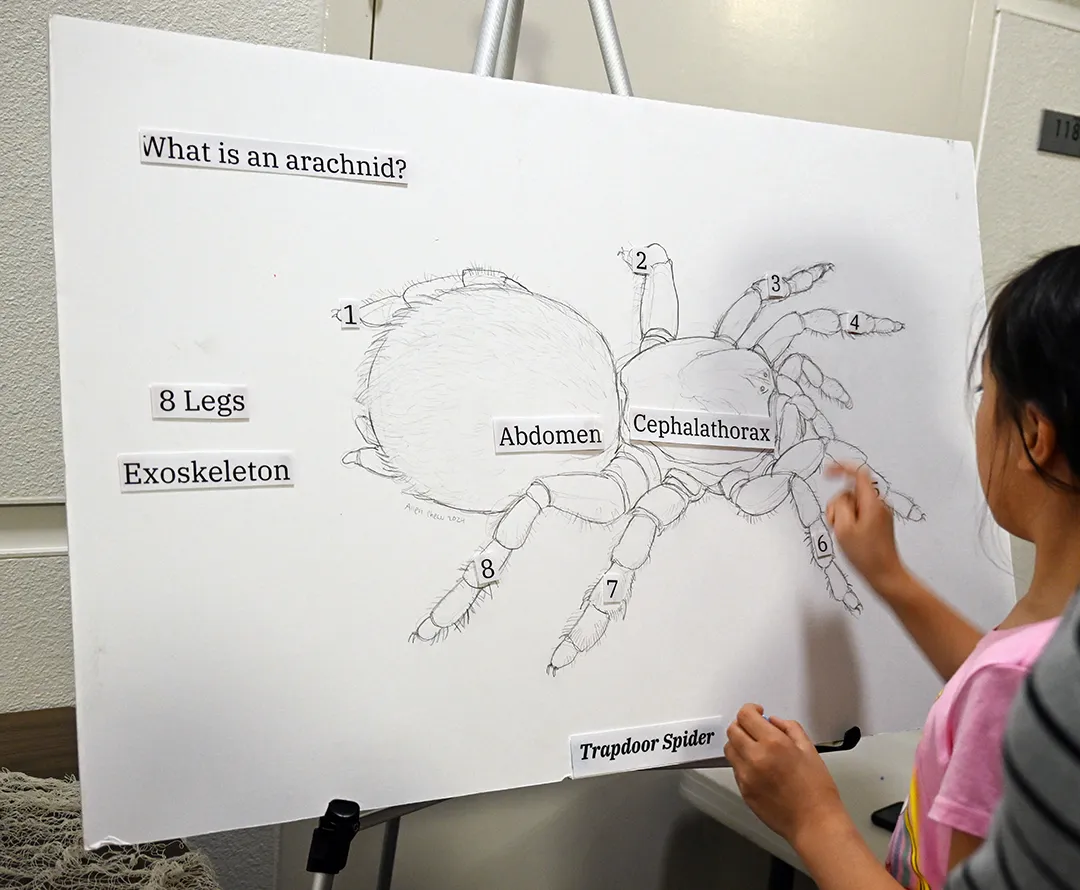
The craft table focused on trapdoor spiders, which construct burrows with a cork-like trapdoor made of soil, vegetation, and silk. A sign at the table read:
What is an arachnid?
- Two body segments. These are called the cephalothorax and abdomen.
- Eight legs: Arachnid legs are located on the cephalothorax (head region)
- Pedipalps: Specialized pair of appendages next to an arachnid’s mouth
- Chelicerae: The “jaws” or fangs of arachnids
Bond and his lab are acclaimed experts on trapdoor spiders. Bond serves as president of the American Arachnological Society (AAS), which divides the class Arachnida into 12-13 different orders, including the major groups:
- Acari (mites and ticks – often classified into a superorder and divided into two or more orders)
- Amblypygi (tailless whip scorpions)
- Araneae (spiders)
- Opiliones (harvestmen or daddy longlegs)
- Palpigradi (micro whip scorpions)
- Pseudoscorpiones (pseudoscorpions)
- Ricinulei (hooded tick-spiders)
- Schizomida (short-tailed whip scorpions)
- Scorpiones (scorpions)
- Solifugae (camel spiders)
- Thelyphonida (whip scorpions or vinegaroons)
In addition, some recent research also places the Xiphosura (horseshoe crabs) into the class Arachnida. At least 54 families and more than 1,000 spider species occur in California.

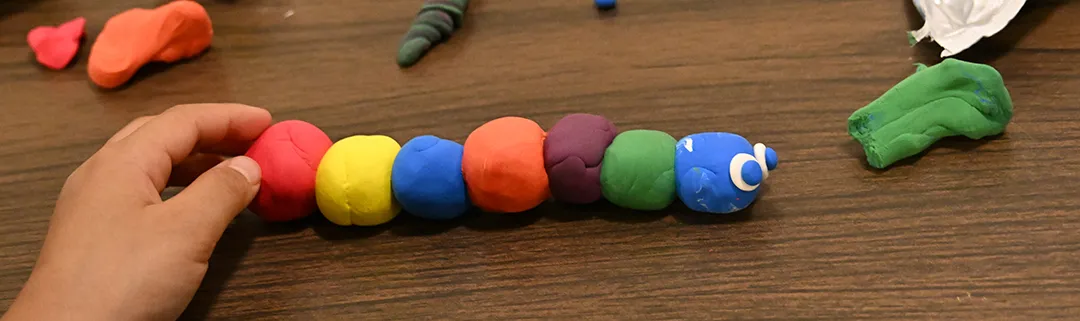
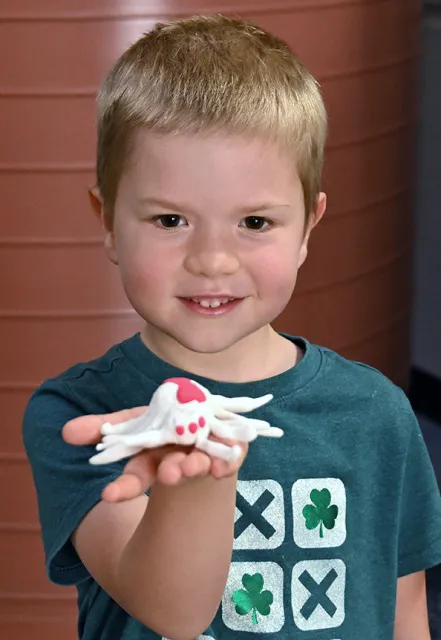
At the arts and crafts table at the open house, arachnid enthusiasts continually checked an illustration of a trapdoor spider that showed eight legs, exoskeleton, abdomen, and cephalathorax. Then they went to work. One artist decided that the black widow spider ought to be white, and crafted a white spider with red eyes. Another opted to make a colorful caterpillar using red, yellow, blue, orange, brown, green and blue clay. And still another, a totally green stick insect, aka walking stick.
The Bohart Museum, located in Room 1124 of the Academic Surge Building, 455 Crocker Lane, UC Davis, is the home of a global collection of eight million specimens, plus a live petting zoo (including Madagascar hissing cockroaches and stick insects) and an insect-themed gift shop.
Director of the Bohart Museum is Professor Jason Bond, the Evert and Marion Schindler Endowed Chair of Systematics, UC Davis Department of Entomology and Nematology. He is the executive associate dean of the UC Davis College of Agricultural and Environmental Sciences and the president of the American Arachnological Society.
The Bohart Museum will be participating in the campuswide UC Davis Picnic Day on Saturday, April 18. The Bohart scientists will be at Briggs Hall from 1 to 4 p.m. All of the entomology activities and displays are at Briggs. The Bohart Museum also will host an open house on Saturday, May 16 from 1 to 4 p.m. in Academic Surge Building. The theme: "Buzz Words: Insects in Literature."