
"Biologists have always been fascinated by strife and conflict, but cooperative exchanges, involving all species and networking large numbers of them into complex communities, are ubiquitous in the natural world. This talk will describe our current understanding of mutualism as well as the questions that remain to be answered."
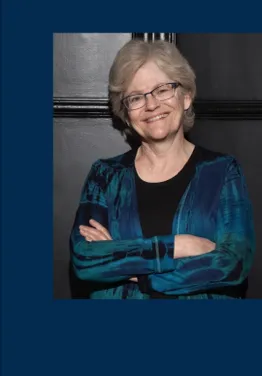
So says Judith Lee Bronstein, University Distinguished Professor of Ecology and Evolutionary Biology at the University of Arizona.
Bronstein, an internationallly recognized ecologist and evolutionary biologist--and member of the University of Arizona faculty since 1989--will speak on "Why Cooperate? Mutualism in the Natural World" at the UC Davis Storer Public Lecture, set from 4:10 to 5 p.m., Wednesday, Jan. 28 in the Activities and Recreation Center (ARC) Ballroom A. The event is free to attend, but registration is required for Zoom access.
"Using a combination of field observations and experiments, I investigate how population processes, abiotic conditions and community context determine net effects of the interactions for the fitness of each participant species," she writes on a website. "Specific conceptual areas of interest include: (1) conflicts of interest between mutualists and their consequences for the maintenance of beneficial outcomes in these interactions and (2) context-dependent outcomes in both mutualisms and antagonisms. I am also collaborating on theoretical and empirical investigation of (i) the fragility of mutualisms in light of conservation threats and mechanisms of restoring disrupted interactions and (ii) the causes and consequences of 'cheating' within mutualism."
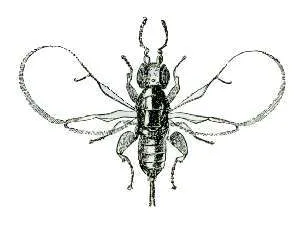
Mutualism is the study of mutually beneficial interactions, such as pollination, seed dispersal, and ant-plant relationships. An example: all fig trees are pollinated by very small wasps of the family Agaonidae.
Bronstein, an elected member of the American Academy of Arts and Sciences, says she focuses on the ecology and evolution of interspecific interactions, particularly on mutually beneficial ones (mutualisms). Her career goal: "to build a solid conceptual foundation for the study of these poorly understood interactions." Her current projects focus on their intersection with other interspecific relationships, as well as with intraspecific cooperation.
The recipient of numerous teaching awards, Bronstein has served in leadership positions locally, nationally, and worldwide, including president of the American Society of Naturalists. She is a Fellow of the Ecological Society of America; recipient of the American Society of Naturalist’s Distinguished Achievement in the Conceptual Unification of the Biological Sciences Award; and recpient of a Distinguished Service Award from National Science Foundation.
She has edited multiple books and volumes, including Mutualism, published by Oxford University Press in 2016. She has served on editorial boards for scientific journals, including as a book review consultant for the Quarterly Review of Biology, as an editorial board member for Annual Review of Ecology, Evolution and Systematics, and as editor-in-chief for The American Naturalist.
Bronstein holds a master's degree (1981) and doctorate (1986), both in ecology and evolutionary biology from the University of Michigan. Her doctoral dissertation research examined coevolution and constraints in a Neotropical fig-pollinator wasp mutualism. She received her bachelor's degree in 1979 from Brown University, where she was "an independent major: the use of ecological theory in environmental policymaking."
The Tracy and Ruth Storer Lectureship in the Life Sciences was established in 1960. Distinguished biological scientists are invited to the campus to present lectures and meet with faculty members and graduate students in their field of interest. Past Storer lectures have included Nobel laureates, members of the National Academy of Science and acclaimed authors in medicine and the life sciences.
Bronstein will deliver a peer lecture at 3:10 p.m., Thursday, Jan. 29 in the ARC Ballroom on "Dissolving Boundaries Toward Unification in the Study of Species Interactions."