
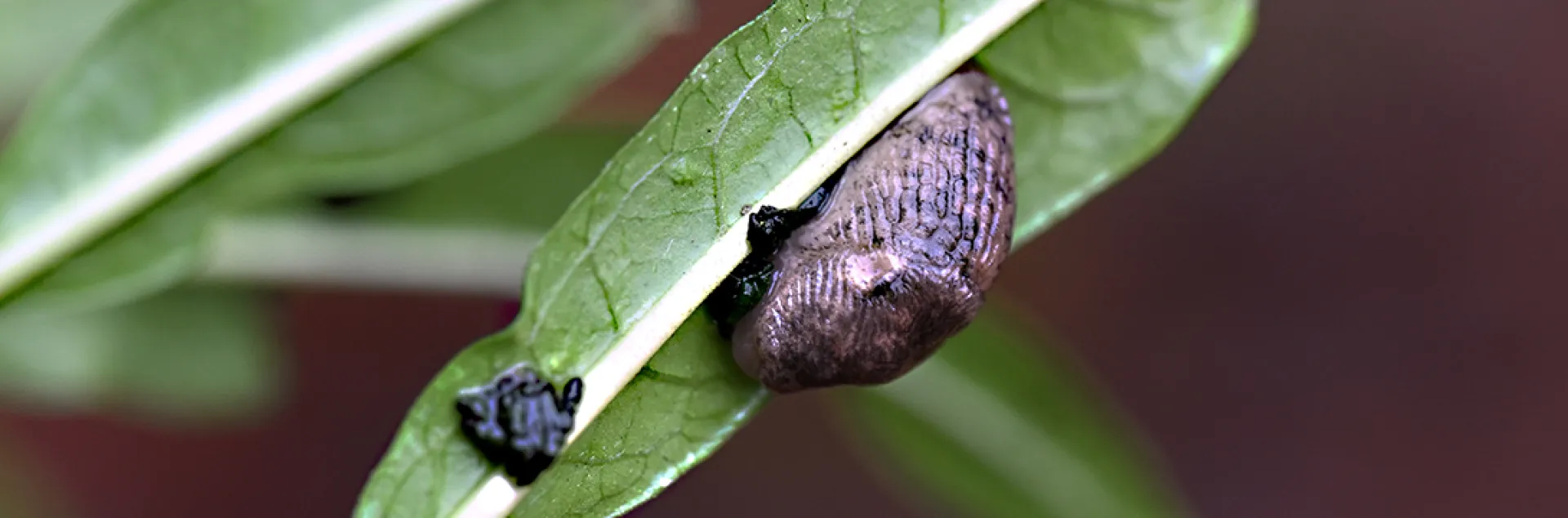

Talk about a slugfest.
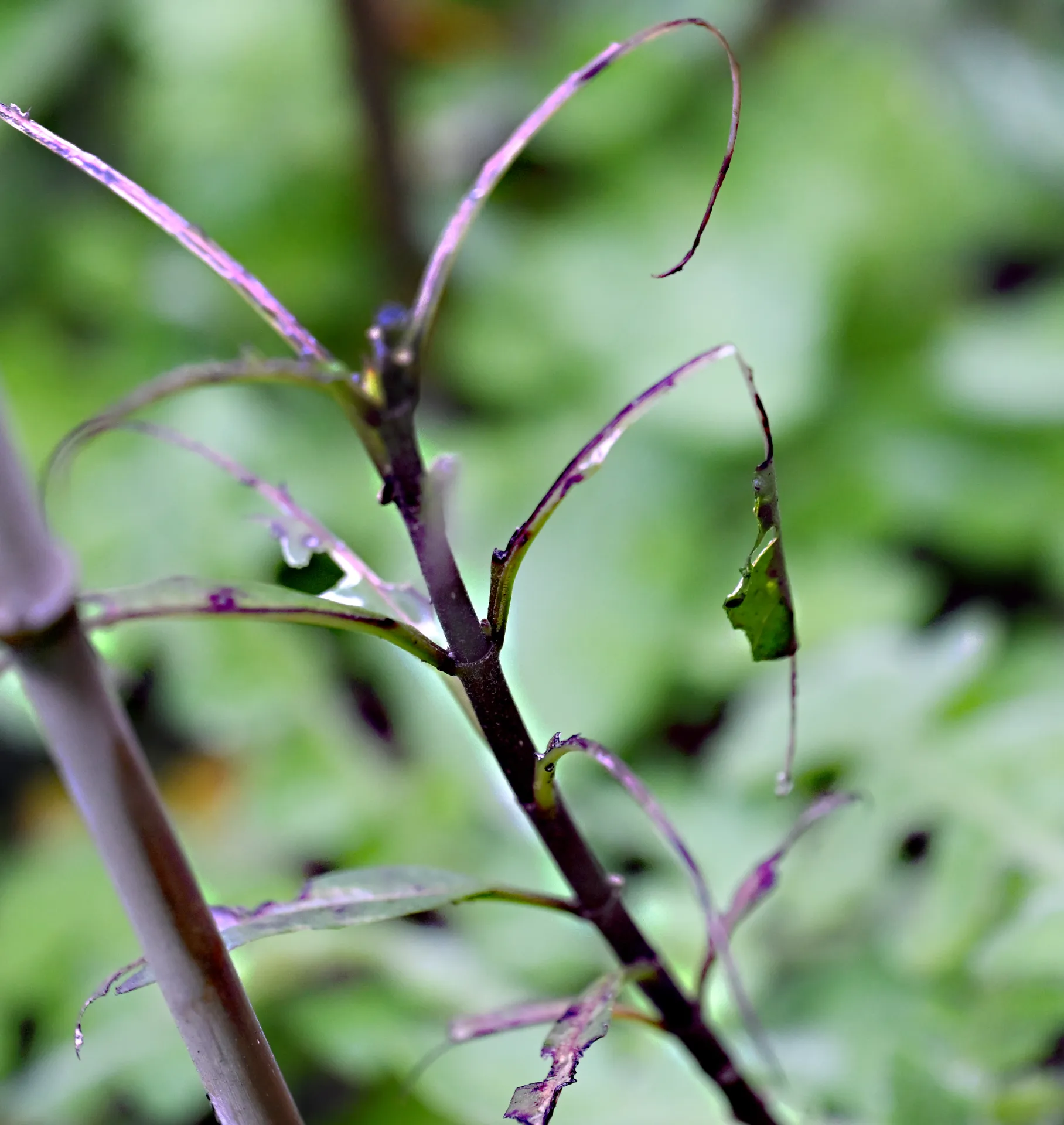
Slugs took a liking to the milkweed in our pollinator garden. They stripped the leaves from one tender young plant and were munching on two other plants--until we dispatched them.
We don't think they crossed the Rainbow Bridge. If they did, they left a slimy trail.
"Sorry, slugs. We're saving the leaves for the monarchs!"
The slugs didn't seem "bothered" that milkweed contains cardiac glycosides toxins or cardenolides, a word derived from card- "heart" (from Greek καρδία kardiā) and the suffix -enolide, referring to the "lactone ring with double bond at C17," as scientists tell us.
Monarch caterpillars sequester the cardenolides, which serve as a defense mechanism or deterrent to predators. Birds quickly learn to avoid eating the 'cats and adults. One exception: the black-headed grosbeak. It's a bird that can feast on them without vomiting.
Diverse, Living Fan Base
"If you welcome this plant (milkweed), a diverse, living fan base will follow close behind--and not only monarch butterflies," writes Eric Lee-Mäder in his book, The Milkweed Lands: An Epic Story of One Plant, Its Nature and Ecology. He co-directs the Pollinator Program for the Xerces Society for Invertebrate Conservation and co-owns Northwest Meadowscapes, a native seed farm located on Whidbey Island, Washington.
A diverse, living fan base? True. Quite true.
If you grow milkweed, you're accustomed to scores of critters gathering there for a food fest of sorts: aphids, lady beetles, small milkweed bugs, large milkweed bugs, honey bees, bumble bees, syrphid flies, soldier beetles, longhorned beetles, tussock moth caterpillars, cabbage white butterflies, earwigs, spiders, assassin bugs, praying mantises and snails.
And slugs. They usually feed at night and leave tell-tale slimy trails and chewed leaves or gaping holes in their wake.
They are not our friends.
The UC Statewide Integrated Pest Management Program confirms that "Snails and slugs are among the most despised garden pests. These slimy mollusks emerge from hiding at night and chew holes in leaves and flowers of many garden plants and fruit. Snails and slugs are similar in structure and biology, except slugs lack an external spiral shell. Management requires vigilance and a combination of practices that includes eliminating moisture and hiding spots, trapping, exclusion, and handpicking. Baits can be helpful but by themselves don't provide adequate control in areas that contain plenty of shelter, food, and moisture."
UC IPM tells us that "Common species of slugs that injure landscape plants include: the gray garden slug, Deroceras reticulatum (formerly Agriolimax reticulatus); the banded slug, Lehmannia poirieri; the three-band garden slug, L. valentiana; the tawny slug, Limacus flavus; and the greenhouse slug, Milax gagates."
"Slugs reach maturity after about 3 to 6 months, depending on the species, and lay translucent oval to round eggs in batches of 3 to 40 beneath leaves, in soil cracks, and in other protected areas," UC IPM says. (See UC IPM website for more information, including control methods.)
Serve 'em beer?
We've always heard that you can rid your garden of slugs and snails by using beer-baited traps (ground-level containers of beer). They're attracted to the odor of yeast and sugars. This Bud's for you? Well, it IS a chemical-free method of pest control. (See gardeningknolwege.com)
Spoiler alert: Our slugs did not sample, sip or slug beer when they departed our garden. We hand-picked them off, one by one. Seven of them.
"Sorry, slugs. We're saving the leaves for the monarchs!"