

(Editor's Note: The legendary UC Davis Distinguished Professor Bruce Dupree Hammock, who died on Jan. 5, 2026 at age 78, was an internationally recognized scientist who held a joint appointment with the UC Davis Department of Entomology and the UC Davis Comprehensive Cancer Center. He was a highly honored and beloved scientist and a member of the UC Davis faculty since 1980. The UC Davis Department of Entomology and Nematology published tributes to Professor Hammock in an earlier news story. A celebration of his life is pending. UC Davis Distinguished Professor Walter Leal of the Department of Molecular and Cellular Biology, former professor and chair of the UC Davis entomology department, submitted the piece below to the Retrospective section of Proceedings of the National Academy of Sciences. We gained permission to publish the original piece in its entirety. The link to the published article, Feb. 18, 2026, is at
https://www.pnas.org/doi/10.1073/pnas.2601584123.
A Quantum Leap at a Time: In Memory of Bruce D. Hammock
By UC Davis Distinguished Professor Walter Leal
Abstract: Distinguished Professor Bruce D. Hammock (1947–2026) was a prolific scientist, gifted teacher, and extraordinary collaborator whose work transformed entomology, immunochemistry, and inflammation biology. Author of more than 1,500 peer-reviewed publications and collaborator with over 3,500 scientists worldwide, he combined scientific rigor with rare generosity and vision. His pioneering studies on juvenile hormone biology, immunochemical biomarkers of environmental exposure, and especially soluble epoxide hydrolase (sEH) reshaped understanding of inflammation and led to promising clinical therapies. A gifted communicator and mentor, Bruce inspired generations of students and colleagues through his intellect, humility, and boundless enthusiasm. During the 28,635 days of his life, science, and the world, were richer for his presence.
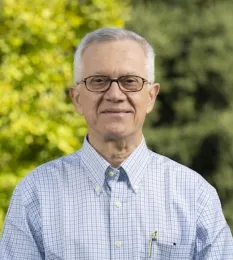
Born on August 13, 1947, in Little Rock, Arkansas, Distinguished Professor Bruce D. Hammock passed away peacefully, surrounded by his family, on January 5, 2026, in Davis, California. He was a master storyteller, a lover of nature, a kayaker, rock climber, a hiker, a devoted family man, a charismatic presence, a friend to thousands, and a truly remarkable scholar.
More than 1500 Peer-Reviewed Publications
"One of Bruce’s enduring legacies is his extraordinary contribution to science, documented in more than 1,500 peer-reviewed publications. From the time he completed his undergraduate degree in entomology at Louisiana State University in Baton Rouge in 1969, Bruce published, on average, a paper every two weeks for more than five decades. He possessed a rare ability to bring people together. Over the course of his career, he collaborated and published with 3,563 scholars, including students, postdoctoral researchers, visiting scientists, and colleagues around the world. Christopher Morisseau, a lab member and collaborator for three decades, co-authored more than 20% of Bruce’s publications. Bruce’s exceptional networking ability proved invaluable when he was asked to assemble, in less than a month, a successful application for the National Institute of Environmental Health Sciences (NIEHS) Superfund Program, a program he went on to direct from 1987 until two years ago.
With a minor in chemistry, Bruce authored more than 90 papers in the Journal of Medicinal Chemistry, his most frequent publication venue, with the PNAS ranking second among his “preferred” journals. He earned his PhD in entomology/toxicology in 1973 at the University of California, Berkeley, under the supervision of the late Professor John Casida (1929-2018) (1), with Sarjeet Gill (now Distinguished Professor Emeritus at University of California (UC), Riverside) as a classmate and lifelong friend. Bruce’s doctoral research focused on the synthesis and biological activity of juvenile hormone analogs, which at the time were being explored as environmentally friendly “insecticides” designed to disrupt insect development by preventing maturation.
Following postdoctoral work, including a Rockefeller Fellowship under the mentorship of Larry I. Gilbert (1929-2017) (2) and a brief stint in the United States Army, Bruce joined the Department of Entomology at UC Riverside in 1975 as a tenure-track faculty member. Another finalist for that position was David L. Denlinger, now Distinguished University Professor at The Ohio State University, who now reflected, “He certainly would have been my first choice for that Riverside position!” Denlinger remarked that Bruce “had a knack for identifying major questions and for pursuing them with elegance.” Professor Emerita Lynn Riddiford of the University of Washington, a leading figure in insect endocrinology, credited Bruce Hammock’s early studies on juvenile hormone esterase as “pivotal to our understanding of the normal degradation of juvenile hormone required for proper metamorphosis.” Bruce further demonstrated that “when expressed in baculovirus, juvenile hormone esterase could disrupt larval development,” an approach he pursued with the late Professors Sean Duffey (1943-1997) and Susumu Maeda (1950-1998) to translate fundamental discoveries into practical applications.
Joined UC Davis Faculty in 1980
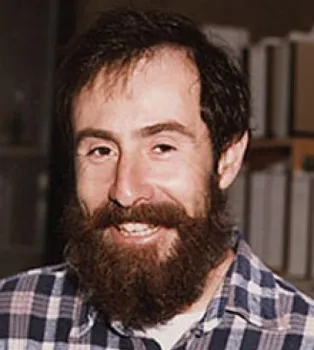
After earning tenure at UC Riverside, Bruce moved to University of California (UC) Davis in 1980, where he remained for the rest of his illustrious career, despite numerous offers and repeated attempts by other institutions to recruit him. Bruce was a great storyteller, partly because he liked to embellish his stories. He often recounted his move from UC Riverside to UC Davis as having occurred without a formal job offer. A more accurate version is that he had accepted a position, but the then-chair of entomology, Robert K. Washino and Dean Charles Hess (1931-2019) were unable to provide laboratory space or a reasonable start-up package. Bruce’s dramatized version underscored an important principle he held deeply: that public universities should not need extravagant packages to attract outstanding scholars.
Bruce was financially conservative, whether managing his own resources or public funds, and he was openly critical of the increasing corporatization of public universities, particularly in the compensation of administrators. His career at UC Davis began modestly, in a teaching laboratory. He was promoted to full professor in 1983 and held a joint appointment with the Department of Environmental Toxicology until 1998. He was elected to the National Academy of Sciences (NAS) in 1999, received the UC Davis Academic Senate Faculty Distinguished Research Award in 2000, and in 2003, he was named a UC Davis Distinguished Professor.
Pioneering Work
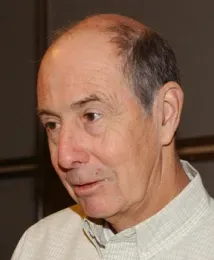
Bruce developed innovative immunoassays and biosensors to monitor human exposure to environmental toxins. He authored more than 300 publications on immunochemical biomarkers of environmental chemicals, human exposure assessment, and biomarkers of biological effect. The National Academy of Sciences recognized Bruce “for his pioneering work in using immunochemistry to analyze and monitor human exposure to environmental chemicals.” In the years that followed, his productivity and impact were so extraordinary that this citation came to represent only one part, indeed, a comparatively modest part, of his remarkable scientific legacy.
Bruce advanced through the academic ranks with remarkable speed, reaching the highest level of the UC professorial scale more than 20 years before his passing. In the UC system, the professorial series ranges from steps 1 through 9; Bruce was “above scale,” perhaps reaching a hypothetical step 18. In his final merit review, only a few years ago, he received an additional accelerated half-step in recognition of his continued research excellence, becoming the n-th step above scale, a distinction reserved for the most extraordinary faculty.
It was during those early years in the shared teaching laboratory that Bruce’s career experienced yet another quantum leap. Sarjeet Gill, who had isolated the epoxide hydrolase, returned from Malaysia as a research scientist with Bruce. That collaboration proved foundational in establishing that soluble epoxide hydrolases (sEH) play a central role in the third branch of the arachidonate cascade, also known as the cytochrome P450 pathway. sEH enzymes rapidly degrade natural fatty acid epoxides (EpFAs), lipid mediators now recognized as critical regulators of inflammation, pain, and tissue protection.
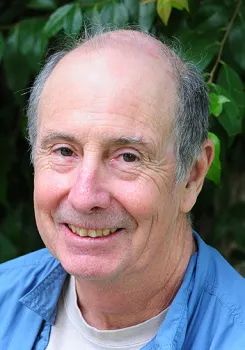
Boundless Curiosity, Generosity and Collaborative Spirit
Bruce was deeply conscientious about the broader implications of this discovery, recognizing its potential to reshape our understanding of inflammation and to open entirely new therapeutic avenues. That insight, combined with his boundless curiosity, generosity, and collaborative spirit, defined the remainder of his scientific life. His laboratory determined the 3D structure of sEH, that facilitated a clear understanding of how the sEH inhibitors worked. Of the multiple inhibitors he designed, one has advanced to human Phase 1b clinical trials under an FDA Fast Track designation for the treatment of inflammation and neuropathic pain. His research team further demonstrated that orally administered sEH inhibitors in rodent models of chronic central nervous system disorders reduced inflammation in key brain regions, with implications for reversing pathological processes associated with Parkinson’s disease, Alzheimer’s disease, and related neurodegenerative conditions.
The third branch of the arachidonate cascade, and the therapeutic potential of sEH inhibition, became Bruce’s central scientific passion for at least the final two decades of his career. In the early 2010s, many of our coffee-break conversations were dominated by his excitement in recounting how one of his sEH inhibitors had saved the life of a horse named Hulahulla, who was suffering from severe neuropathic pain (3). After compassionate treatment with the inhibitor, Hulahulla was able to stand again, a feat that made Bruce justifiably proud of the translational power of his research and collaborations.
An Instructor Par Excellence
Having had the privilege of co-teaching an undergraduate insect physiology course with Bruce Hammock and late Professor Charles L. Judson (1926-2015) (4) for thirteen years following my arrival at UC Davis in 2000, I can attest that he was an instructor par excellence. In 2008, he received the UC Davis Academic Senate Distinguished Teaching Award for Graduate and Professional Teaching. I never missed one of his classes and shared fully in the excitement of both junior and senior undergraduates. Here again, his talent as a storyteller served him well.
To emphasize the perseverance of scientific discovery, Bruce often recounted how William (Bill) S. Bowers (1935-2021) (5), working without the support of his immediate supervisor, synthesized a biologically active compound later confirmed to be juvenile hormone III. In Bruce’s telling, Bill’s supervisor warned him that he would be fired if he continued that line of research. Bruce, chalk in hand and sketching yet another thin-layer chromatography plate on the board, would describe how Bill, who was elected to the NAS for this discovery, waited for his boss to leave at 5 p.m. and then worked through the nights anyway, defiantly pursuing the science.
Later, when I moved on to teach a large-enrollment biochemistry course, I occasionally invited Bruce to lecture on enzyme kinetics (6). He would explain to students that Linus Pauling introduced the concept of the transition state, but he never mentioned that he himself carried the idea from theory into practical application. It is true that Bruce embellished stories, but never himself. He neglected to mention that he had synthesized multiple series of transition-state mimic enzyme inhibitors with picomolar potency, work that helped elucidate many of the regulatory roles of EpFAs in biology. Bruce was as modest as one could be and still thrived in academia.
Steady Stream of Emails
For members of his laboratory, keeping up with Bruce’s ideas could feel like drinking from a firehose, especially when he attended conferences. Those traveling with him would meet nightly to discuss what they had learned that day and to plan which presentations to attend the next morning. Those who stayed behind in Davis received a steady stream of emails filled with new ideas and experimental suggestions. Lab members confided that they eventually instituted the “3× rule”: if Bruce suggested something three times, it had to be done.
Lab members especially cherished the summers when Lassie Hammock (née Graham), Bruce’s wife of 53 years, dragged him off on hiking trips, strategically planned in the Sierra Nevada, where there was no cell phone reception. At least once every summer, lab inboxes were blissfully empty.
For the 28,635 days he was on this Earth, the world was undeniably a better place for having Bruce Hammock in it, especially for those who knew him as a family member, friend, collaborator, teacher, hiking companion, and scholar. Even those who did not know him personally, such as microbial oceanographer David Karl of the University of Hawaii at Manoa, have come to recognize that “we need more people like Bruce to make our world better.” (See acknowledgments and references at https://www.pnas.org/doi/10.1073/pnas.2601584123. )
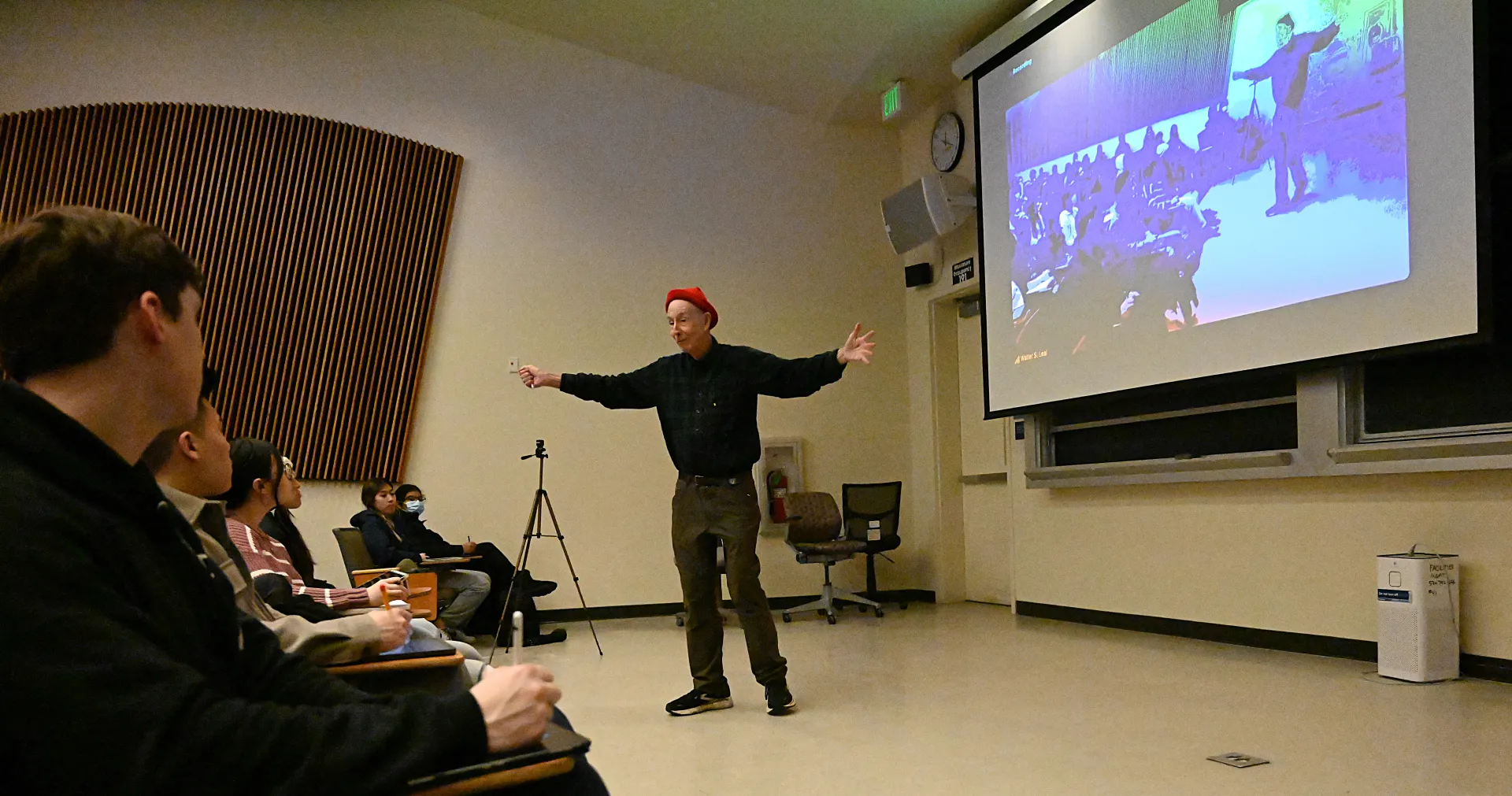
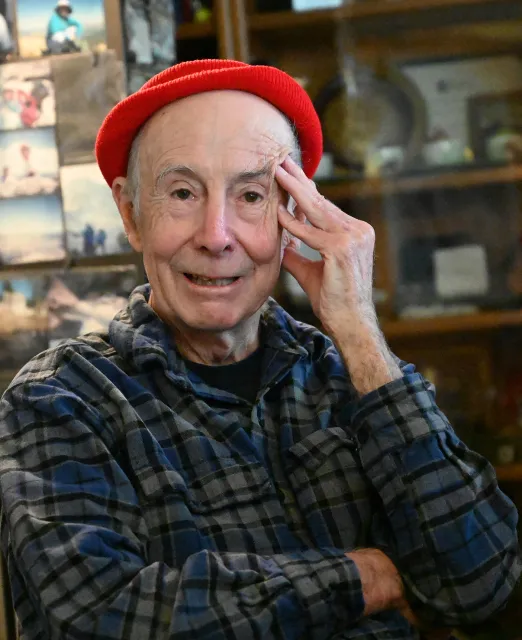
Cover image: UC Davis Distinguished Professor Bruce Hammock in his office on Feb. 24, 2009. (Photo by Kathy Keatley Garvey)