
All hail the aphid eaters!
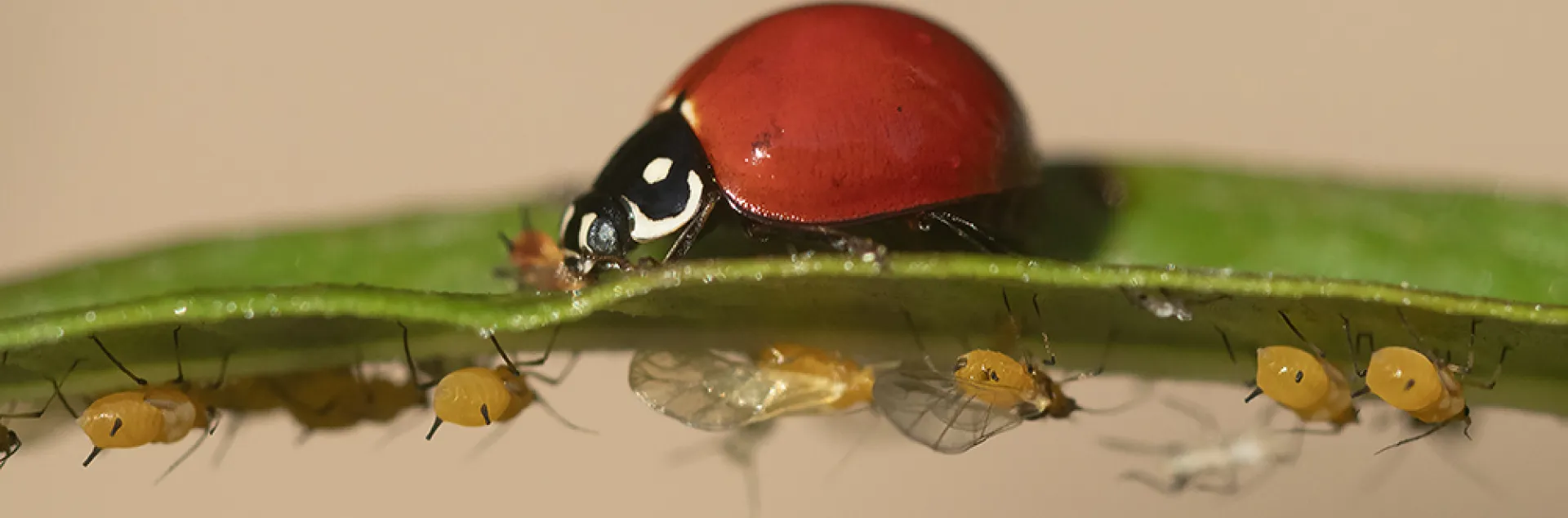
Lady beetles, aka ladybugs, emerge in spring from winter hibernation, and do so with voracious appetites.
Is your rose bush drawing aphids? Bring on the beetles.
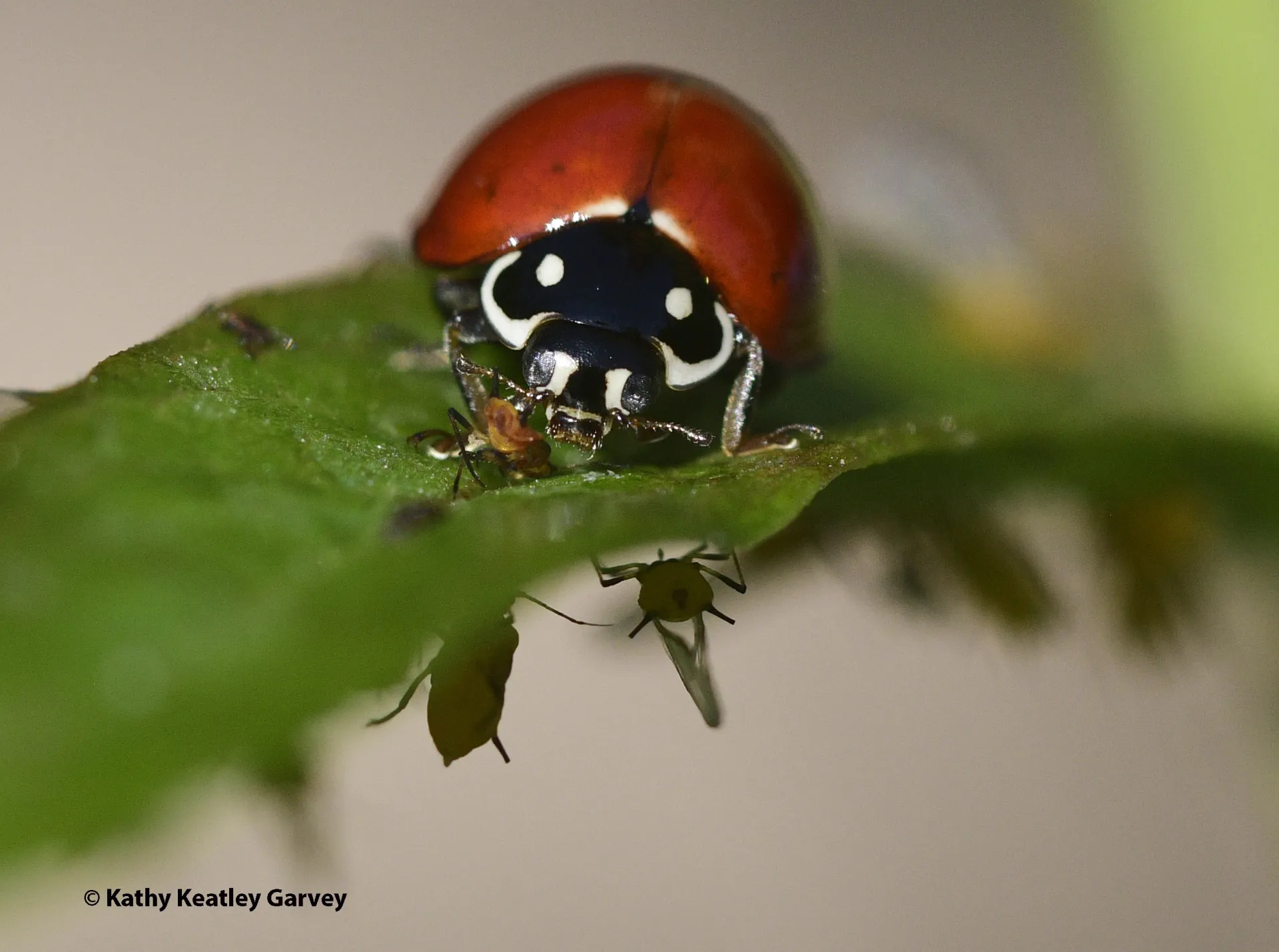
The lady beetle eats some 50 aphids a day--what some may call "a 50-course meal." In it lifetime, it can eat as many as 5000 aphids. So they're the good guys and gals in the garden; they've more than earned their moniker, "beneficial insects."
They belong to the family Coccinellidae. In England, the common name is "ladybirds." In America? "Ladybugs." Entomologists call them "lady beetles" because they're beetles, not true bugs. A true bug, as an entomologist will tell you, is an insect belonging to the order Hemiptera (comprising more than 80,000 species). True bugs have specialized piercing-sucking mouthparts called a rostrum or beak, which they use to feed on plant sap, animal fluids, or blood.
Lady beetles have become "a cultural icon of sorts because of their appearance and their beneficial habits," writes UC Davis Distinguished Professor Emerita Lynn Kimsey of the Department of Entomology and Nematology, who retired as director of the Bohart Museum of Entomology in February 2024 after 34 years at the helm. In her fact sheet on Lady Bugs and Lady Beetles, she writes "Both adults and larvae feed on aphids and other small, soft-bodied insects. They are ferocious predators on small insects. Adults will feed on pollen and nectar when their prey is scarce."
"The most abundant species is the convergent lady beetle, which is found throughout North and Central America," Kimsey writes. "It overwinters in large aggregations. In California, these overwintering aggregations can be found in the foothills of the Sierra Nevada Mountains and Coastal Range."
Lady beetles are often considered symbols of good luck, protection, and prosperity. That's with humans, not with aphids!