
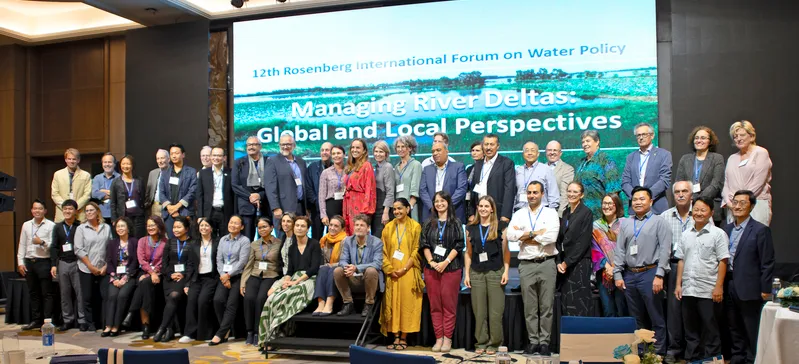
Representatives of 17 countries shared information about delta systems in Southeast Asia, South America, North America, the Middle East and Europe
From Oct. 27-30, 2025, global water scholars, community leaders and policy experts convened in Can Tho, Vietnam, for the 12th Rosenberg International Forum on Water Policy.
This year’s forum was hosted by UC ANR and the California Institute for Water Resources in collaboration with Can Tho University in Vietnam and the Botín Foundation in Spain. The Rosenberg Advisory Committee and local host Van Pham Dang Tri, director of the Mekong Institute, devoted their energy and resources to ensure a successful and engaging forum.
Among those attending from the U.S. were Soroosh Sorooshian, UC Irvine professor and chair of the Rosenberg Advisory Committee; and committee members Christina Babbitt, sustainability program manager for water stewardship at Meta; and Andrea Gerlak, professor in the School of Geography, Development and Environment at the University of Arizona. Vice President Glenda Humiston and Erik Porse, director of UC ANR’s California Institute for Water Resources, serve as ex officio members. Hope Zabronsky, leader of CIWR’s Climate Smart Agriculture Program, and Rachel Shellabarger, CIWR academic coordinator, also attended.
Much of the field tour experience was arranged by Van Pham Dang Tri and tour leader and researcher Ly Van Loi, both with Can Tho University. Planning and logistics were also supported by Phu Nguyen, associate adjunct professor at UC Irvine; Sherry Cooper, director of UC ANR’s External and Executive Events; and Nguyen Thi Phuong Thao, Can Tho University. Their leadership ensured that the event incorporated both the science of deltas and the lived realities of the Mekong Delta.
Held every two years in different locations around the world, the Rosenberg Forum creates a unique setting for international dialogue on urgent water issues. This year’s location in the Mekong Delta provided an ideal location to explore shared challenges and emerging strategies for sustainable and equitable delta governance.
Why the Mekong Delta matters now more than ever
Deltas are unique coastal areas where rivers meet the sea. Coastal deltas form unique habitats and support hundreds of millions of people throughout the globe. They are often hubs of agriculture, and some are mined for sediments used as construction materials.
Among the world’s deltas, the Mekong Delta is an important regional hub that supports food production, economies and ecosystems. Home to more than 17 million people, the Mekong serves as a foundation of Vietnam’s agricultural production. Over the past 45 years, the Delta has experienced significant shifts in water flows, salinity intrusion, land subsidence and ecological stress linked to climate variability and upstream development.
Forum participants emphasized that long-term resilience in the Mekong Delta depends on cooperation across the entire river basin. Speakers highlighted the need for decision-making that reflects the best available science along with the lived knowledge and priorities of local communities.
Open dialogue and knowledge sharing
Vice President Glenda Humiston, Rosenberg Advisory Committee member; Soroosh Sorooshian, forum chair and Distinguished Professor at UC Irvine; Alberto Garrido, director of the Water Observatory at the Botín Foundation in Spain; and Tran Ngoc Hai, associate professor and vice rector of Can Tho University in Vietnam, all played key roles in planning and facilitating this year’s forum.
The Rosenberg Forum intentionally brings together a small group of global experts on a topic to create an environment that supports meaningful conversation and collaboration. This year’s gathering welcomed more than 50 participants from 17 countries, including academic researchers, government officials, representatives of international organizations, water managers and community-based groups from around the world. Presentations explored delta systems in Southeast Asia, South America, North America, the Middle East and Europe.
Understanding delta complexity
Several sessions underscored the inherent challenges of managing large, dynamic delta systems. Sepehr Eslami, senior adviser for Deltares at Delft University of Technology in the Netherlands, noted that “deltas are probably the most complex geoscientific systems shaped by multiple interacting processes.”
He emphasized that while deltas across the world face similar pressures, no two systems behave identically. Climate impacts cannot be separated from local hydrology, land-use decisions, or socio-economic conditions. Effective adaptation requires informed communities, strong political representation and a robust scientific understanding of delta hydrology.
Introducing the Rosenberg Regional Scholars
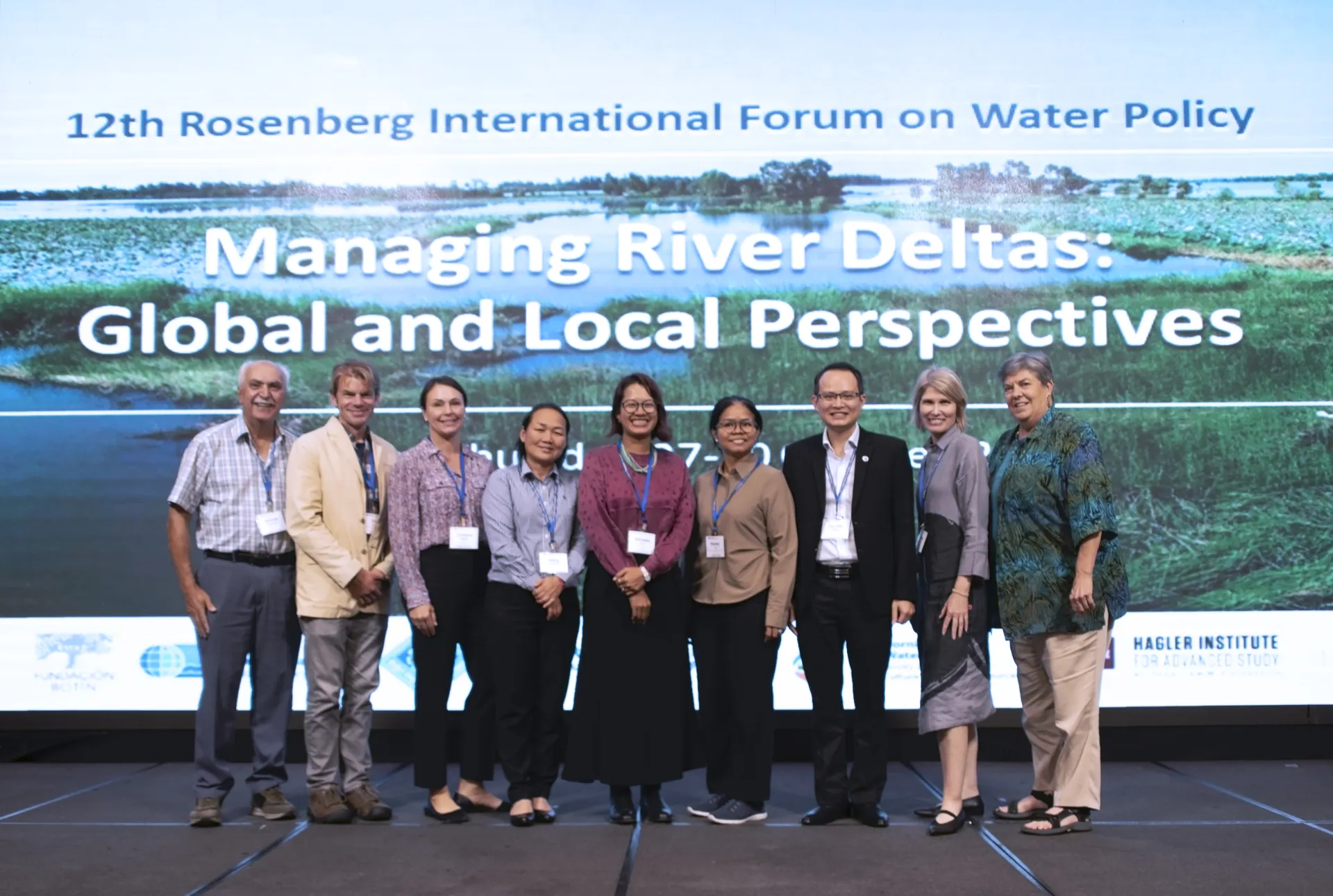
This year marked the launch of the Rosenberg Regional Scholars (fellows), who brought new perspectives from community organizations, Indigenous groups and local water governance networks across the Mekong Basin.
Rosenberg Scholars included Saengrawee Suweerakarn, vice president of Romphothi Foundation in Thailand; Socheata Sim, program manager of Oxfam’s Mekong Regional Water Governance Program in Cambodia; Reaksmey Luy, executive director of the Culture and Environmental Preservation Association in Cambodia; Duc Viet Nguyen, deputy head and scientist in the Division of Dam and Reservoir Safety Department of Hydraulic Works and Construction of Vietnam’s Ministry of Agriculture and Environment.
The Scholars contributed insights related to:
• Environmental and climate justice
• Water quality issues, including arsenic contamination
• Impacts of upstream mining and industrial activities
• Disaster risks and community preparedness
• Land rights and cultural heritage
• Access to scientific information and participation in policy processes
Several Scholars described challenges faced by women, children and marginalized communities, emphasizing that meaningful delta governance must include the voices, needs and local knowledge of people most directly affected by development and climate change.
Community participation, policy and governance
Equitable governance emerged as a critical theme of the forum. Ayman Rabi, executive director of the Palestinian Hydrology Group and Rosenberg Forum Advisory Committee Member, spoke to the human dimensions of water policy. Drawing on decades of work across regions, he synthesized the forum’s sessions noting that “equity and justice are vital; ignoring Indigenous and local rights leads to failure.”
Rabi’s remarks captured a sentiment shared by many participants – that durable solutions require not only rigorous science but also inclusive decision-making that respects local rights, voices and cultural knowledge.
Session themes connecting science, communities and policy
Throughout the forum, presentations and discussions highlighted the interconnected challenges facing deltas around the world. Speakers presented case studies from Southeast Asia, South America, North America, the Middle East and Europe, sharing how deltas are adapting to climate pressures, development and changing hydrology.
Participants emphasized that the social and economic importance of deltas cannot be separated from their ecological and physical dynamics. Conversations emphasized the need to protect local livelihoods, elevate community and Indigenous knowledge, and ensure equitable participation in decision-making.
Researchers presented findings on long-term hydrologic changes, salinity intrusion, sediment movement and the downstream effects of infrastructure development demonstrating how climate change interacts with local land use, governance, institutional finance and economic development.
Scholars shared emerging approaches for effective management including new financing mechanisms, nature-based solutions, and frameworks that link local, national and transboundary governance. Across all contexts, uncertainty has become the rule, not the exception. The most resilient institutions are those that build feedback loops, monitor change, act early and revise decisions as new knowledge emerges.
Resilience, then, is less about predicting the future and more about strengthening the capacity to respond, through flexibility, collaboration and continuous learning. Deltas rarely fit neatly within political boundaries. Their governance depends on coordination, and this cooperation must endure beyond electoral cycles as resilience is a long-term practice.
Experiencing the delta
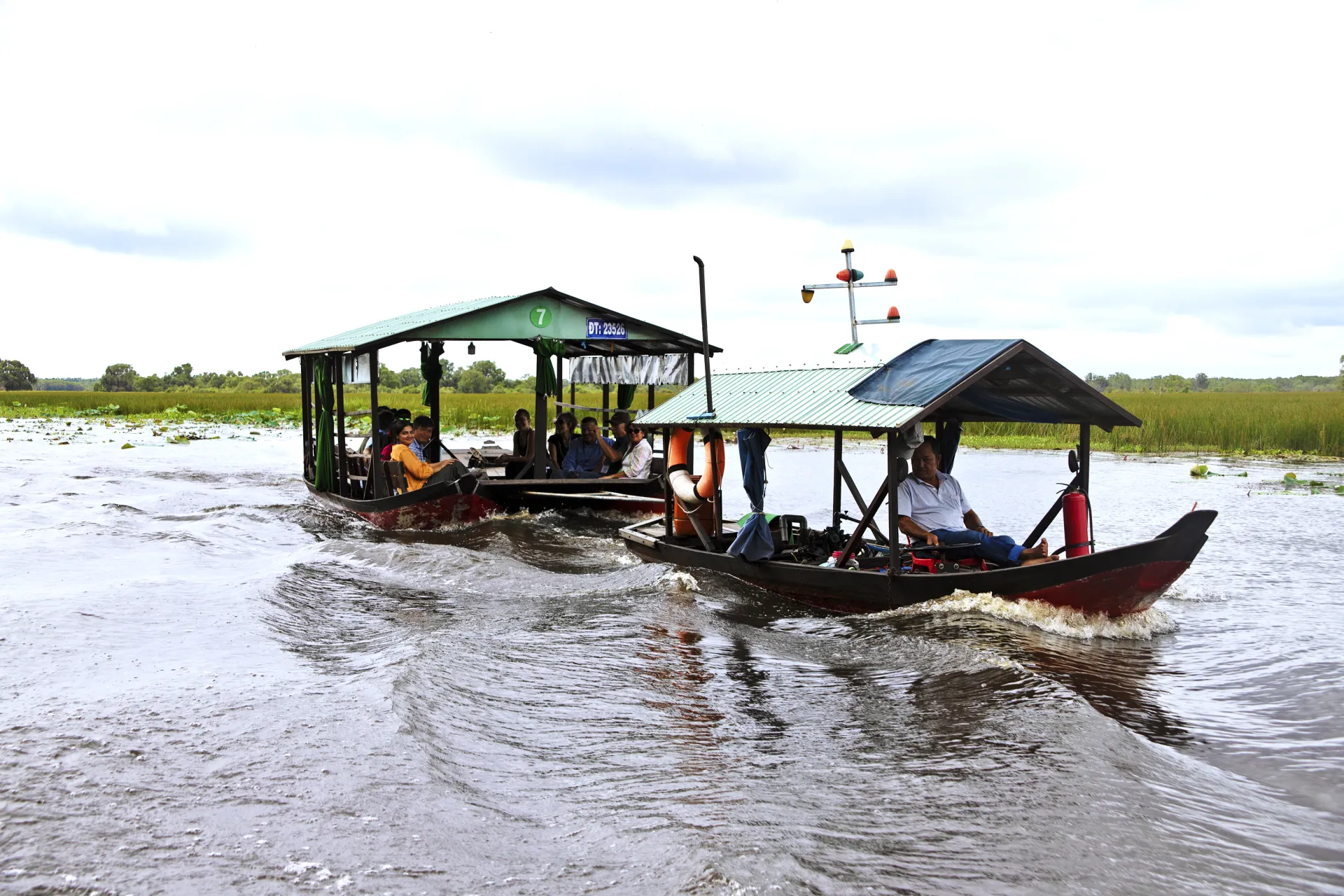
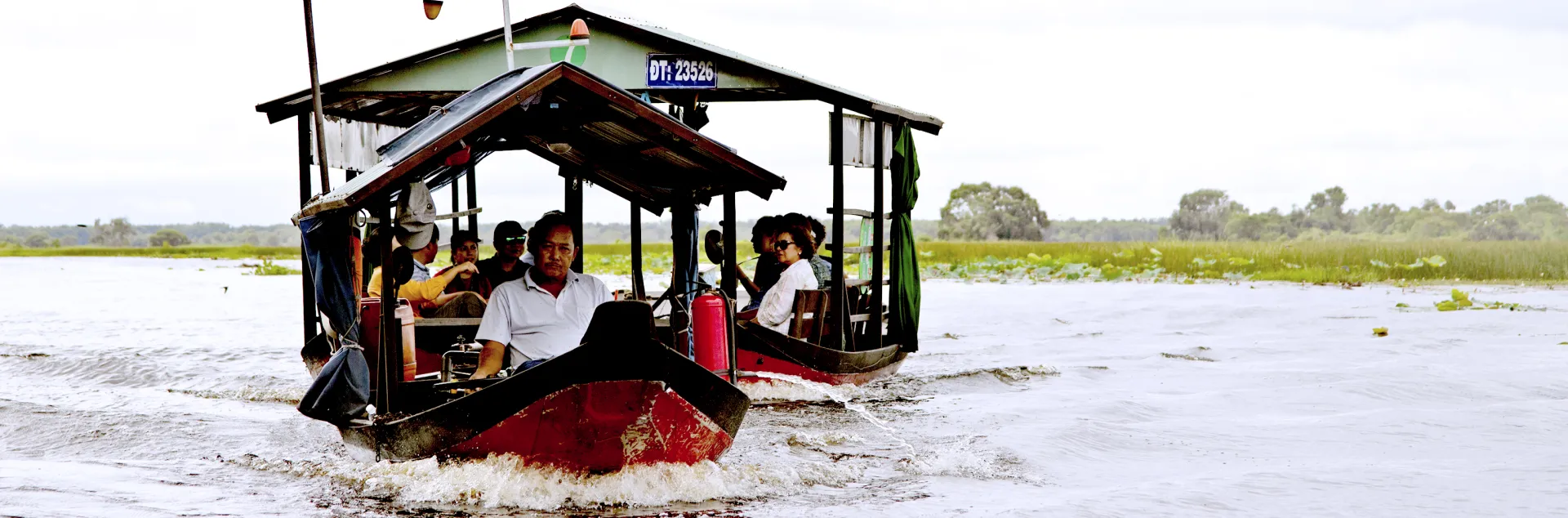
Field trips have long been an essential part of Rosenberg Forum events. During this year’s event, participants spent a full day at Tram Chim National Park, a Ramsar-designated wetland recognized for its extensive bird habitat and seasonally inundated landscapes. Participants had a direct view of the ecological forces shaping delta resilience while they floated down a river canal.
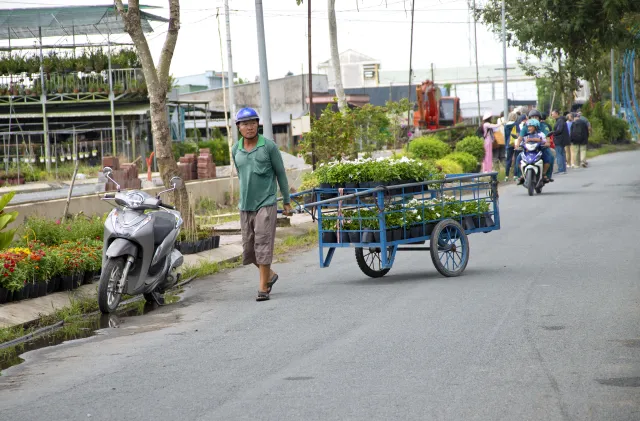
The same day, the group also visited Sa Dec Flower Village, a historic community known for ornamental flower cultivation. Participants walked through streets covered by thousands of flowers to be sold elsewhere in Vietnam. Both field experiences enriched the forum’s discussions by grounding technical conversations in the landscapes of the Mekong Delta.
Forum reflections and key takeaways
Over four days, several important themes emerged:
• Scientific knowledge is often not fully integrated into policy and planning
• Equitable participation and representation are essential for effective governance
• Centralized decision-making can limit co-management and innovation
• Nature-based solutions paired with data-driven tools can strengthen resilience
• Transboundary cooperation is vital for deltas shaped by upstream decisions
• Community knowledge adds critical context and improves long-term outcomes
Participants emphasized the importance of evaluating policy impacts, making data more accessible and building partnerships that bridge science, policy and local experiences.
A legacy of vision and support
The Rosenberg Forum exists thanks to a generous endowment established in 1996 by the Bank of America for Richard Rosenberg, former Chairman and CEO of Bank of America. Rosenberg was an influential figure in the global banking industry and envisioned a forum where international scientists and policymakers could come together to address global water issues.
Rosenberg’s endowment continues to fund the forum, enabling experts from around the world to participate and collaborate without financial barriers. This long-standing support reflects his commitment to advancing sustainable and collaborative approaches to global water management.
Looking ahead
The 12th Rosenberg Forum highlighted the importance of collaboration among scholars, policymakers, community leaders and institutions. As deltas around the world confront increasing climate and development pressures, the insights shared in Vietnam will help guide future research, partnerships and policy directions.
The forum highlighted a central message: Resilient deltas require approaches that bring together scientific evidence, community leadership and inclusive and adaptive decision-making.