
UC ANR LEARNING & DEVELOPMENT
Landing page | Archived webANRs | Learning resources

This month’s learning opportunities highlight a range of ways to strengthen your work — from Extension methods and inclusive practices to fundraising strategy, conflict competence, giving and receiving feedback, and personal productivity. These are just a few of the many professional development resources available to UC ANR employees.
Whether you’re building programs, supporting communities, leading teams, navigating difficult conversations or growing your own skills, ongoing learning strengthens our collective impact across California. To explore additional trainings, self-paced courses and development tools, visit our full Learning & Development resource hub.
Learn. Apply. Grow your impact.
On this page:
Extension Methods & Delivery
Building Support
Inclusion & Belonging
Office, Team, & Personal Development
EXTENSION METHODS & DELIVERY
Trauma Informed Care for Extension Professionals (Extension Foundation)
March 12 | 11 a.m. – Noon PT
Learn details & register.
This presentation focuses on the necessity of adopting trauma-informed practices within Extension professional services, noting that trauma is highly prevalent in our communities and directly impacts how individuals learn. Because a human being cannot effectively learn when they feel unsafe or emotionally activated, Extension professionals must look beyond simple education to provide a safe, supportive environment. A central theme of the presentation is viewing behavior through a “lens of trauma,” which acknowledges that affected individuals may struggle with a lack of trust in authority, feelings of helplessness and a perception of the world as a chaotic or unsafe place.
You will learn the MO Model of Trauma-Informed Care, which provides a four-stage framework for organizational growth: moving from “Trauma Aware” (understanding prevalence) to “Trauma Sensitive” (preparing for change), then to “Trauma Responsive” (active implementation), and finally becoming “Trauma Informed,” where inclusive practices are fully embedded into the culture. The workshop will also cover how effective trauma-informed care also requires the ability to recognize signs of a traumatic response in others, building safe spaces and humancentric relationships. Ultimately, the approach is summarized by the philosophy that people do not care how much you know until they know how much you care. Hosted By: Rachel Bailey, University of Missouri Extension
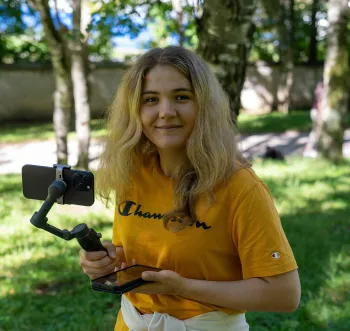
75 YouTube videos later: Lessons learned for creating ‘good enough’ Extension videos (Extension Foundation)
March 26 | 11 a.m. - Noon PDT
Register here.
Extension has a unique opportunity to capture and share stories that aren’t being told as well as locally relevant information people are looking for, but hiring professional videographers and producers can be pricey (upwards of $850 per video minute). As they say, "Don’t let perfect be the enemy of the good." Non-professional videographers, i.e. Extension professionals can film and edit "good enough" content. If you don’t have a videographer on staff at your Extension office, don’t let that stop you from getting relevant, needed content out to your audience. Some of the most innovative gardeners and farmers spend their time in the field, not in front of the screen. Extension professionals operate outside of the popular, ad-driven online landscape and have an opportunity to create relevant, informational focused content that is needed, even if it doesn’t go viral. This session will equip non-videographer educators with practical tools for creating ‘good enough’ videos. Participants will learn how to identify story ideas, choose between scripted or interview-style approaches, consider their target audience and improve audio and video quality using simple techniques. Hosted By: Heidi Rader, University of Alaska Fairbanks Extension.
BUILDING SUPPORT
UC ANR Giving Day Webinar: Developing Your Plan
April 8 | 10-10:45 a.m.

This interactive webinar will provide resources to help you plan and manage your online campaigns whether you are new to UC ANR Giving Day or have participated from the beginning. Learn how your group can stand out from the crowd and harness the power of generosity to raise funds for your program. Join Emily Delk, UC ANR director of Annual Giving and Donor Stewardship, to access campaign resources and hear from colleagues across the state as they share how they’ve engaged their supporters.
Zoom: https://ucanr.zoom.us/j/99097447144
Funding, Fundraising & Outreach Resources
- New UC ANR Modern Brand Family!
- The Office of Contracts and Grants supports staff with training and tools for navigating the grant process
- Development Services helps with donor engagement, gift processing and fundraising campaigns, and the
- Government & Community Relations Toolkit provides guidance for effectively engaging elected officials and community partners.
Video recordings
Fundraising, Grant & Partnership Development: Structuring Effective Proposals (Extension Foundation)
Fundraising, Grant & Partner Development: Navigation Grant Organizations for Success (Extension Foundation)
Tips for Telling Your Story to the Media (Extension Foundation)
INCLUSION & BELONGING
Use cultural intelligence to build inclusive environments (LinkedIn Learning)

When faced with challenging situations that involve diverse perspectives, equity challenges and the need for inclusion dynamics and equity, we need strong emotional intelligence skills that will equip us to navigate these situations with empathy, understanding and fairness. In this course, workplace belonging and well-being expert Farah Harris explains that to develop and sustain DEI work, you must use the skill set of emotional intelligence – in and out of the workplace. Explore your own emotions and biases, learn to navigate cross-cultural interactions with empathy and understanding, Develop an awareness of cultural nuances, biases, the impact of cultural differences on emotional expression and more. Join Harris in this course to practice emotional intelligence in real-time while learning to understand yourself and others better. Request your LinkedIn Learning account from UC ANR IT at help@ucanr.edu.
OFFICE, TEAM, & PERSONAL DEVELOPMENT
The Secret of Giving Feedback (5:02) Video
Humans have been coming up with ways to give constructive criticism for centuries, but somehow we're still pretty terrible at it. Cognitive psychologist LeeAnn Renniger shares a scientifically proven method for giving effective feedback. From The Way We Work a TED series, this video and others is a resource where leaders and thinkers offer practical wisdom and insight into how we can adapt and thrive amid changing workplace conventions.
Giving and Receiving Feedback with Daisy Lovelace (Situation, Behavior, Feedback)– (3:44 - LinkedIn Learning)
Give Feedback with Situation–Behavior–Impact (SBI)
Course link.
It can be one of the trickiest and most sensitive responsibilities for both leaders and individual contributors—giving and receiving feedback. That’s where the Situation–Behavior–Impact (SBI) model comes into play. SBI promotes clear, objective feedback by identifying a specific situation, describing the observable behavior (when and where it occurred) and explaining its impact. Using SBI helps keep feedback focused, constructive and results-oriented. Request your LinkedIn Learning course by emailing our ANR IT team @ help@ucanr.edu.
The Retention Equation: Negotiating for Academic Success (NCFDD)
March 6 | 11 a.m. - Noon PT
Learn details & register.
This webinar focuses on negotiating in academia. In addition to speaking to job market applicants and early career faculty, this session will include negotiation advice for early/mid-career faculty and academic leaders who are navigating their careers. Open your NCFDD account today using your UC ANR email address.
How to Develop a Daily Writing Practice (NCFDD)
March 12 | 11 a.m. - Noon
In this webinar you'll learn:
- The three biggest myths about writing that hobble new faculty productivity
- The surprising difference between struggling new faculty members and those who are designated as "rising stars"
- The 30-minute strategy that will increase your writing productivity AND decrease your stress, anxiety and guilt
Open your NCFDD account today using your UC ANR email address.
Conflict Competence for for Faculty and Staff (UC Davis Ombuds)
March 11 | 9 a.m. - Noon
Learn details & register

Conflict has the power to damage our relationships, lower productivity and increase stress. While conflict is inevitable, with proven conflict management techniques, you can minimize its negative impact, keep relationships on track and lower your stress. This highly interactive course provides tools to help you effectively prevent and resolve conflicts at work. You will learn strategies to successfully communicate your needs, lower others’ defenses and navigate emotionally charged situations. Please note that this course has significant overlap with “Conflict Competence for Managers and Supervisors,” but focuses on interpersonal conflict dynamics with colleagues and supervisors.
Accessibility First-Design (LinkedIn Learning)
Course link.
Knowing the benefits of an accessibility-first approach enables you to build more useful, resilient and inclusive products. In this course, accessible design and development consultant David Luhr shows you how to put accessibility first when designing digital experiences. Luhr demonstrates how teams can work together to prioritize and test for accessibility at all stages of product development, saving time and effort with better results. Gain deeper understanding of accessibility with practical examples of how to solve common design challenges. Build tactical skills in accessible content, accessible visual design, and accessibility testing to create successful products that everyone can use.
Tips to Work with Difficult People (LinkedIn Learning -16 minutes)

In this course, learn practical tools and strategies for navigating and transforming difficult interactions and relationships in professional settings. Emily Anhalt shows you how to shift your perspective from focusing on difficult people to addressing difficult behaviors, manage your own reactions, use empathy to foster better communication and create effective action plans. Join Anhalt in this course to gain the skills to handle challenging situations with confidence and empathy.
Learning objectives
Reframe perspectives to focus on addressing difficult behaviors rather than labeling individuals.
Track and manage personal triggers to foster thoughtful responses instead of immediate reactions.
Use empathy to shift from judgment to curiosity, enhancing understanding and connection.
Build trust and proactively prepare for potential challenges to ensure smoother interactions.
Set and uphold boundaries while creating collaborative action plans for mutual growth and resolution.
Grow your impact.
Image credits
Photo by Vladislav Anchuk on Unsplash
Image by AS_Photography from Pixabay
Image by rawpixel from Pixabay
Photo by Colton Sturgeon on Unsplash
Image by Ferdinand Herndler from Pixabay
Image by qimono from Pixabay