Enthusiasm, excitement and curiosity were in abundance during the first Tea Day, held on March 19 at UC Kearney Agricultural Research and Extension Center in Parlier.
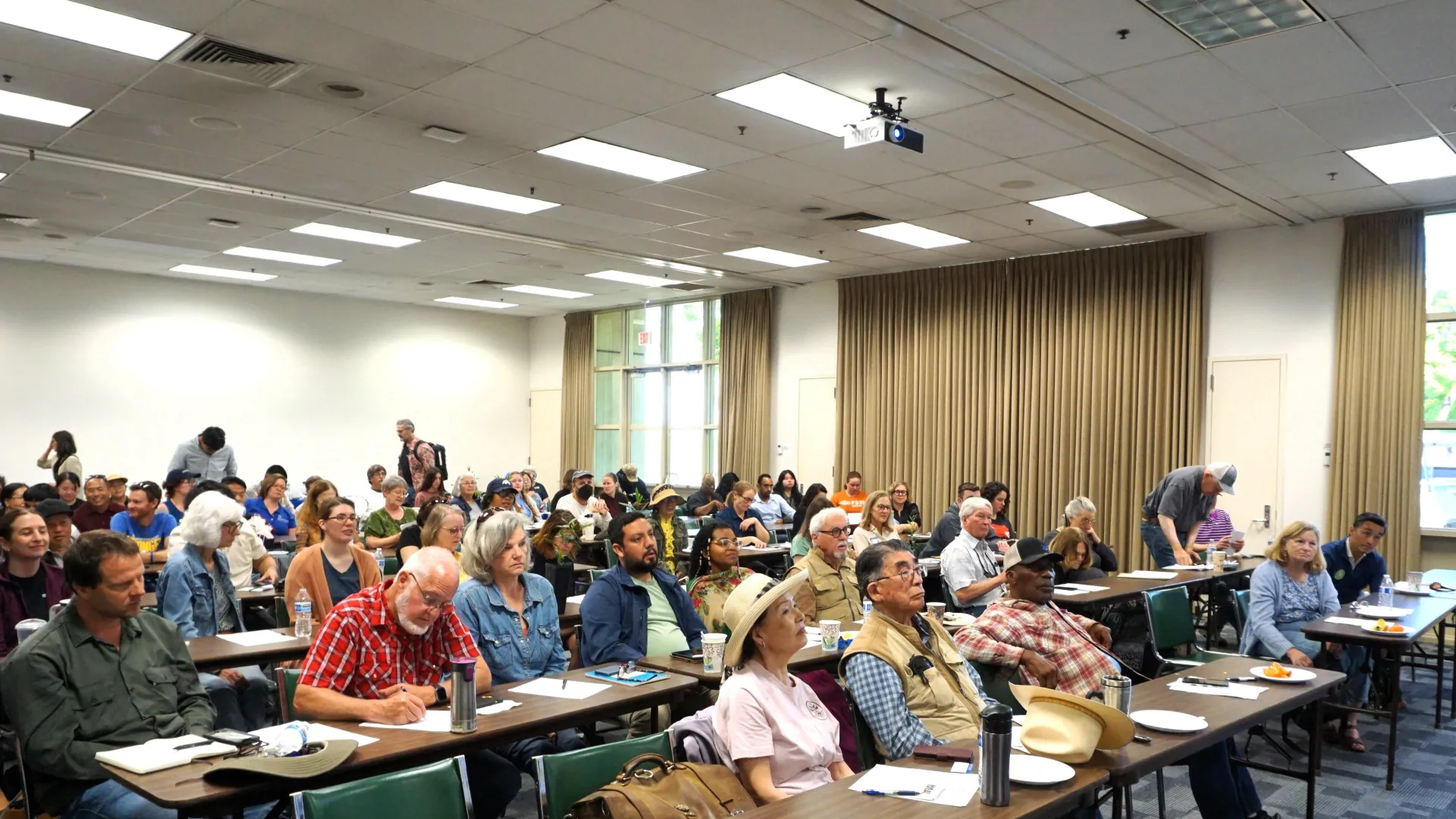
“Every seat in the room was taken,” said Atef Swelam, Kearney REC director. “The great turnout really reflected the interest in the community around tea; it is a potentially profitable crop that can be grown on smaller acreage, which may be important for growers adjusting to the Sustainable Groundwater Management Act.”
At the event, Swelam welcomed nearly 100 attendees, including Parlier Mayor Alma Beltran, farmers, gardeners, academics, students and other interested community members. Then Katharine Burnett, a UC Davis professor of art history and founder of the Global Tea Institute at UC Davis, discussed the institute’s role in the study of tea science and culture.
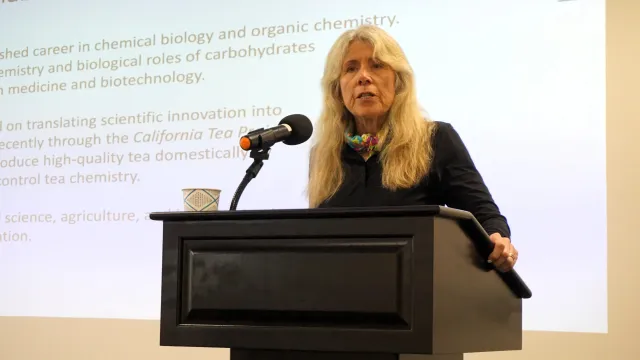
Jacquelyn Gervay-Hague, professor emerita of chemistry at UC Davis, covered the history of tea-growing at Kearney REC – from the Lipton-funded “California Tea Project” (1960-1980) to her own propagation experiments and studies of several varieties that continue to thrive at the center to this day. She shared practical pointers on growing tea from her experiences.
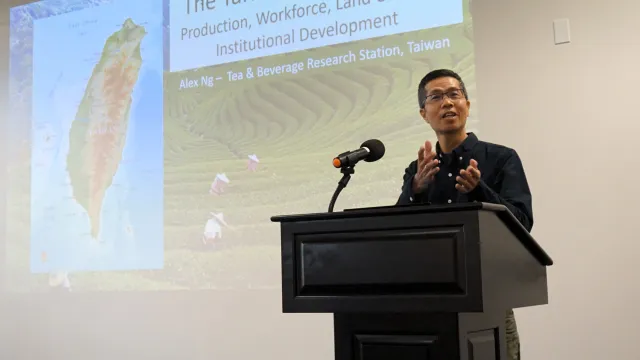
Next, Alex Ng, a visiting scholar from Taiwan, provided an international perspective by illuminating Taiwan’s tea history and the current state of the industry. An adjunct lecturer in the College of Agriculture and Natural Resources of National Chung Hsing University, Ng highlighted the cultural importance and economic impact of tea in Taiwan.
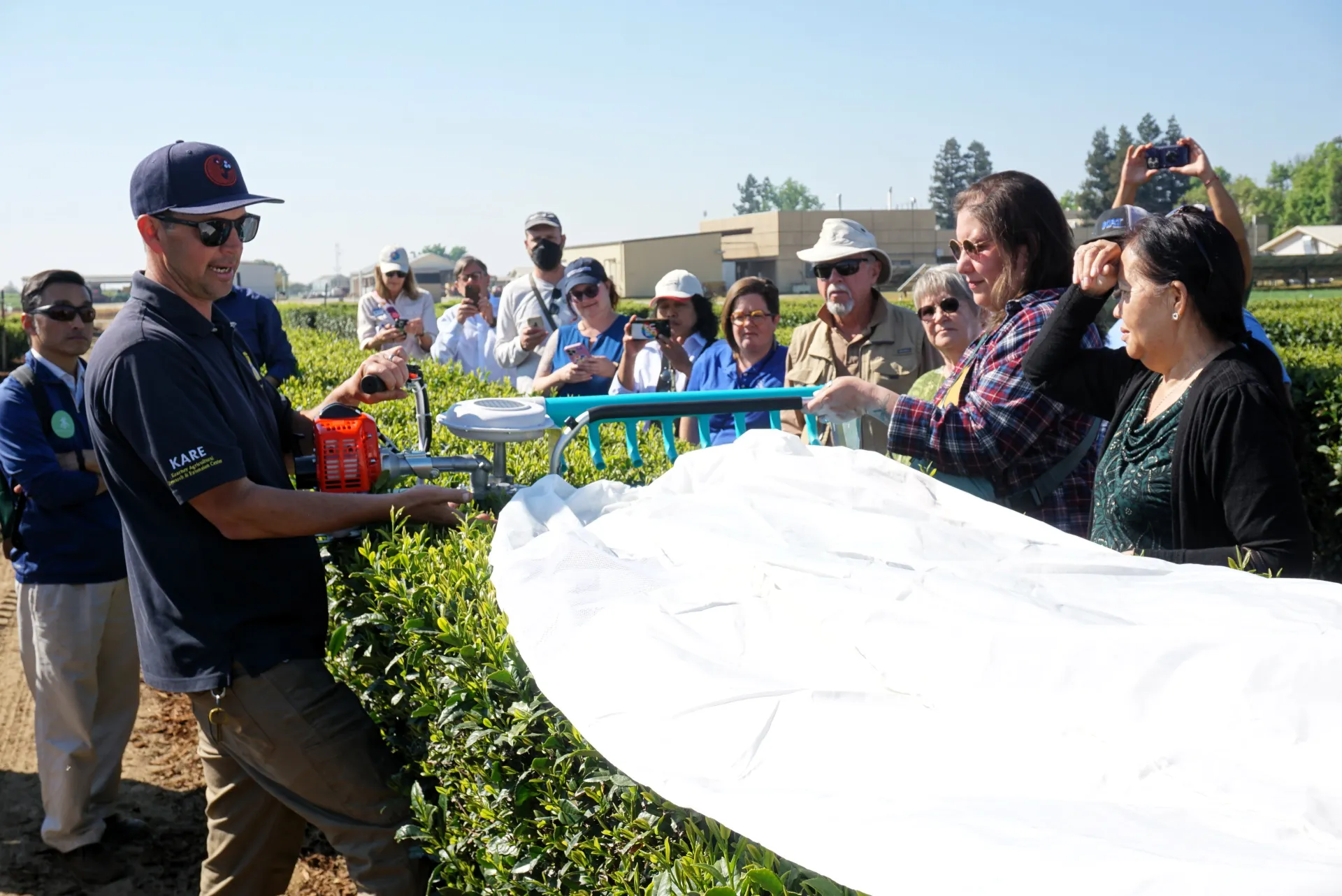
Tea Day participants then boarded the tram for a visit to tea plants in the field, where Kearney REC staff research associate Ryan Puckett brought out a newly purchased hand-held tea harvester. Puckett also took the group to the greenhouse to see the potted tea plants growing under his care.
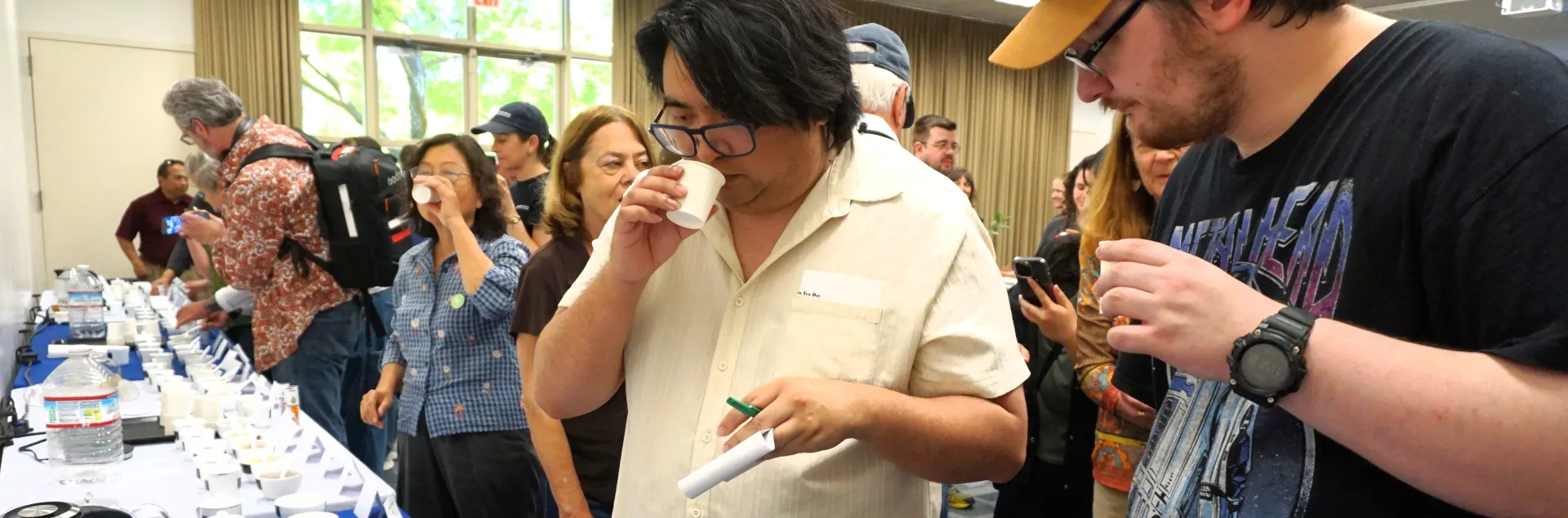
The day concluded with a tea tasting, as Ng explained the differences between green, oolong and black tea. (They are all grown from Camellia sinensis, but vary based on level of oxidation, from none to fully oxidized, respectively.) Ng – a “certified tea artist” – also demonstrated how to appreciate the different scents, aromas and tastes of various teas grown in Taiwan and California.
Tea plants grown at Kearney REC were made available for growers to try, and participants were eager to take their new knowledge and appreciation and begin their own adventures in tea-growing in California.