

Research Brief • April 2021
Effective Access means that safe and appealing drinking water is readily available at no charge to all children.1
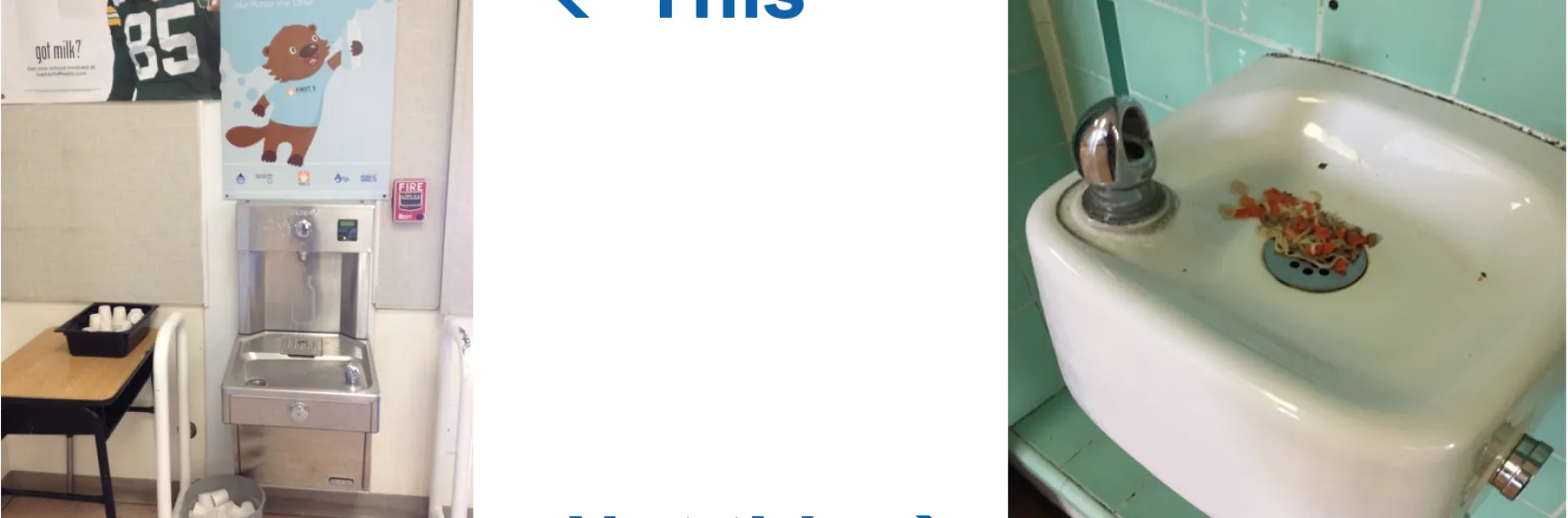
Children and adolescents spend many hours at school, making schools an important setting to support hydration and to promote healthy habits. Improved access and promotion of drinking water at school is a cost-effective2 way to increase water consumption and prevent childhood obesity.3,4 Concerns over water quality and cleanliness can lead students to avoid drinking fountains.5,6
Effective access to drinking water in school is water that children and adults can and want to drink.

Key strategies to provide effective drinking water access in schools
- Certify Drinking Water Safety - Assure that school drinking water meets safety standards for lead and other regulated contaminants and communicate results to the public.7
- Place Accessible Drinking Water in Multiple Key Locations - Ensure that free drinking water is available throughout the day in key locations such as the main hall, gym, and playground.8,9 Provide water sources that are accessible to all.9
- Maintain Drinking Water Sources - Adequately maintain the condition, appearance, quality and flow rate of drinking water sources.9-11
- Use Water Dispensers with both Appeal and Function - Use dispensers such as water bottle filling stations that permit more water intake than traditional drinking fountains.4,12 Students report higher satisfaction and intake with chilled water.12,13
- Enable Use of Cups and Reusable Water Bottles - Providing a cup or other drinking vessel increases consumption. The average sip from a fountain is only a few tablespoons of water.14
- Promote Healthy Hydration - Provide age- and culturally-appropriate material promoting drinking water.5,12,14 Encourage staff to model healthy beverage behaviors.8 Include strong, actionable drinking water language in wellness policies.15 Designate a water champion.16
School Drinking Water Fast Facts
Easy access to safe and appealing drinking water is important for all children.
Water is essential for health and wellbeing.17 Replacing sugar-sweetened beverages with water can reduce childhood obesity3,4 and dental caries.18 Further research is warranted,19 however, improving hydration status may support academic achievement by promoting cognition,20-22 focus ,23,24 and mood.24-26
Yet, 1 in 2 children aged 6-19 in the U.S. is not adequately hydrated, with disparities by race and gender.27
Improving water access and promotion is especially important for low-income and minority children who are at higher risk for obesity,28 report more negative perceptions about tap water,5 and have poorer beverage intake habits.5,29
Data suggest drinking water access in U.S. schools is insufficient.
The 2014-15 USDA School Nutrition and Meal Cost Study reports that 95% of schools were observed to meet the HHFKA mandate to provide drinking water access at mealtimes.30 However, USDA observed that:
- Only 1 in 2 schools offered drinking fountains within the cafeteria and another 1/3 were placed within 20 feet of the cafeteria.30
- Less than 1 in 4 schools offered water dispensers or coolers in the cafeteria; only 3% of schools offered water bottle filling stations.30
A 2016 convenience sample of 325 water sources in 40 racially, economically and geographically diverse U.S. schools found that 37% of cafeteria water sources had a cleanliness issue; 23% had less than satisfactory water flow; 8% were broken or had no water flow; only 7% provided cups, and less than 1% had promotional signage.31
A 2016 study in MA public schools found 30% of drinking water sources were broken or appeared dirty at any given time.10
Observations in a representative sample of 240 California public schools in 2016-2018 found over 75% made water available. However, only 18% met all of the study’s criteria for excellence in effective access.32 Criteria include administrators’ perception that water is safe and appealing and that water sources are clean and functional, provision of water in at least 4 of 5 key school locations, at least one water source that allows more than sipping, a high density of water sources.9
Current federal school water legislation.
The Healthy, Hunger-Free Kids Act of 2010, (HHFKA) Section 203 requires:
- “Schools participating in the school lunch program under this Act shall make available to children free of charge, as nutritionally appropriate, potable water for consumption in the place where meals are served during meal service, including breakfast.”
- In 2016 USDA’s Food and Nutrition Service issued a memorandum calling on all its regional offices and state agencies to ensure that children in the National School Lunch Program have access to drinking water that is both free and safe.
95% of U.S. schools participate in the National School Lunch Program. Thus, effective implementation of HHFKA water provisions would provide over 50 million children with access to appealing water at no charge.
Help schools develop effective access to drinking water and meet the “spirit of the law,” not just the “letter of the law.”
A tool to document effectiveness of water access in schools
Researchers from University of California Nutrition Policy Institute, Stanford University and University of Washington Center for Public Health Nutrition developed, validated and feasibility-tested a photo-evidence tool to assess the effectiveness of access to drinking water in schools and other community settings.32,36 The tool allows data collection using a Citizen Science approach and can be used to identify any components of effective access that are missing. The full toolkit and related resources may be found at AQWA: Assess the Quality of Water Access.37
References
- Patel AI, Hecht CE, Cradock A, Edwards MA, Ritchie LD. Drinking Water in the United States: Implications of Water Safety, Access and Consumption. Ann Rev Nutr. 2020 Sep 23;40:345-373.
- Kenney EL, Cradock AL, Long MW, Barrett JL, Giles CM, Ward ZJ, Gortmaker SL. Cost-effectiveness of water promotion strategies in schools for preventing childhood obesity and increasing water intake. Obesity. 2019;27(12):2037-2045.
- Muckelbauer R, Libuda L, Clausen K, Toschke AM, Reinehr T, Kersting M. Promotion and Provision of Drinking Water in Schools for Overweight Prevention: Randomized, Controlled Cluster Trial. Pediatrics Apr 2009, 123 (4) e661-e667.
- Schwartz AE, Leardo M, Aneja S, Elbel B. Effect of a School-Based Water Intervention on Child Body Mass Index and Obesity. JAMA Pediatrics. 2016;170(3):220-226.
- Onufrak SJ, Park S, Sharkey JR, Merlo C, Dean WR, Sherry B. Perceptions of tap water and school water fountains and association with intake of plain water and sugar-sweetened beverages. J Sch Health. 2014;84(3):195–204.
- Patel AI, Bogart LM, Klein DJ, et al. Middle school student attitudes about school drinking fountains and water intake. Acad Pediatr. 2014;14(5):471–477.
- US Environ. Prot. Agency. 2018. 3Ts for reducing lead in drinking water in schools and child care facilities. Tool Kit, US Environ. Prot. Agency, Washington, DC.
- Laguna MC, Hecht AA, Ponce J, et al. Teachers as Healthy Beverage Role Models: Relationship of Student and Teacher Beverage Choices in Elementary Schools. J Community Health 45, 121–127 (2020).
- Patel AI, Hecht K, Hampton KE, Grumbach JM, Braff-Guajardo E, Brindis CD. Tapping into water: key considerations for achieving excellence in school drinking water access. Am J Public Health. 2014;104(7):1314–1319.
- Kenney EL, Gortmaker SL, Cohen JF, Rimm EB, Cradock AL. Limited School Drinking Water Access for Youth. J Adolesc Health. 2016;59(1):24–29.
- Lawman HG, Grossman S, Lofton X, Tasian G, Patel AI. Hydrate Philly: An Intervention to Increase Water Access and Appeal in Recreation Centers. Prev Chronic Dis. 2020 Feb 20;17:E15.
- Loughridge, J.L. and Barratt, J. Does the provision of cooled filtered water in secondary school cafeterias increase water drinking and decrease the purchase of soft drinks? J Hum Nutr Diet. 2005;18: 281-286.
- Patel AI, Grummon AH, Hampton KE, Oliva A, McCulloch CE, Brindis CD. A Trial of the Efficacy and Cost of Water Delivery Systems in San Francisco Bay Area Middle Schools, 2013. Prev Chronic Dis 2016;13:160108.
- Kenney EL, Gortmaker SL, Carter JE, Howe MC, Reiner JF, Cradock AL. Grab a Cup, Fill It Up! An Intervention to Promote the Convenience of Drinking Water and Increase Student Water Consumption During School Lunch. Am J Pub Health. 2015;105(9):1777–1783.
- Improving Access to Drinking Water in Schools. Centers for Disease Control and Prevention and Bridging the Gap Research Program. 2014.
- Cooper AY, Altman E, Hecht CE, Bruce J, Patel AI. Stories of success: a qualitative examination of contributors to excellence in school drinking water access. Public Health Nutr. 2020 Jul;23(10):1800-1809..
- Popkin BM, D'Anci KE, Rosenberg IH. Water, hydration, and health. Nutr Rev. 2010;68(8):439–458.
- Sohn W, Burt BA, Sowers MR. 2006. Carbonated Soft Drinks and Dental Caries in the Primary Dentition. J Dent Res 85:262-6.
- Katz B, Airaghi K, Davy B. Does Hydration Status Influence Executive Function? A Systematic Review. J Acad Nutr Diet. 2021 Feb 2:S2212-2672(20)31574-4.
- Perry CS, Rapinett G, Glaser NS, Ghetti S. Hydration status moderates the effects of drinking water on children's cognitive performance. Appetite. 2015; Dec; 95:520-7.
- Bar-David Y, Urkin J, Kozminsky E. The effect of voluntary dehydration on cognitive functions of elementary school children. Acta Pædiatrica. 2005;94: 1667-1673.
- Benton D, Burgess N. The effect of the consumption of water on the memory and attention of children. Appetite. 2009; 53:143–146.
- Booth P, Taylor B, Edmonds CJ. Water supplementation improves visual attention and fine motor skills in schoolchildren. Education and Health. 2012; 30:75-79.
- Benton D. Dehydration influences mood and cognition: a plausible hypothesis? Nutrients. 2011;3(5):555–573.
- Ganio MS, Armstrong LE, Casa DJ, McDermott BP, Lee EC, Yamamoto LM, et al. Mild dehydration impairs cognitive performance and mood of men. Br J Nutr 2011;106(10):1535–43.
- Masento NA, Golightly M, Field DT, Butler LT, van Reekum CM. Effects of hydration status on cognitive performance and mood. Br J Nutr. 2014 May 28; 111(10):1841-52.
- Kenney EL, Long MW, Cradock AL, Gortmaker SL. Prevalence of Inadequate Hydration Among US Children and Disparities by Gender and Race/Ethnicity: National Health and Nutrition Examination Survey, 2009-2012. Am J Public Health. 2015;105(8):e113–e118.
- Taveras EM, Gillman MW, Kleinman KP, Rich-Edwards JW, Rifas-Shiman SL. Reducing Racial/Ethnic Disparities in Childhood Obesity: The Role of Early Life Risk Factors. JAMA Pediatr. 2013;167(8):731–738.
- Bleich, S.N., Vercammen, K.A., Koma, J.W. and Li, Z. (2018), Trends in Beverage Consumption Among Children and Adults, 2003‐2014. Obesity, 26: 432-441.
- U.S. Department of Agriculture, Food and Nutrition Service, Office of Policy Support, School Nutrition and Meal Cost Study, Final Report Volume 1: School Meal Program Operations and School Nutrition Environments by Sarah Forrestal, Charlotte Cabili, Dallas Dotter, Christopher W. Logan, Patricia Connor, Maria Boyle, Ayseha Enver, and Hiren Nissar. Project Officer: John Endahl. Alexandria, VA: April 2019. Available on the Food and Nutrition Service website.
- Walkinshaw LP, Hecht C, Patel A, Podrabsky M. Training High School Student "Citizen Scientists" to Document School Water Access: A Feasibility Study. J Sch Health. 2019 Aug;89(8):653-661.
- Altman EA, Lee KL, Hecht CA, et al. Drinking water access in California schools: Room for improvement following implementation of school water policies. Prev Med Reps. 2020 Sep;19:101143.
- United States House of Representatives. Healthy, Hunger-Free Kids Act of 2010. P.L. 111-296, 2010.
USDA. Resources for Making Potable Water Available in Schools and Child Care Facilities. Memo SP 49-2016, CACFP 18-2016. - National School Lunch Program. Food Research & Action Center. 2020.
- Patel AI, Podrabsky M, Hecht AA, Morris S, Yovanovich S, Walkinshaw LP, Ritchie L, Hecht C. Development and Validation of a Photo-Evidence Tool to Examine Characteristics of Effective Drinking Water Access in Schools. J Sch Health. 2020 Apr;90(4):271-277.
- AQWA: Assess the Quality of Water Access. National Drinking Water Alliance.
Acknowledgements
Research brief created with funding from the WK Kellogg Foundation. Disclaimer: Any opinions or recommendations expressed are those of the authors and do not necessarily reflect the view or position of the funder, the University of California, Stanford University, University of Washington or the United States Department of Agriculture.
Suggested citation: Research Brief: Effective Access to Drinking Water in Schools: What is it and why does it matter? UC ANR Nutrition Policy Institute. Stanford University. University of Washington Center for Public Health Nutrition. April 2021.
University of California Agriculture and Natural Resources is an equal opportunity employer. © 2021 UC Regents, Creative Commons 4.0 International License.