
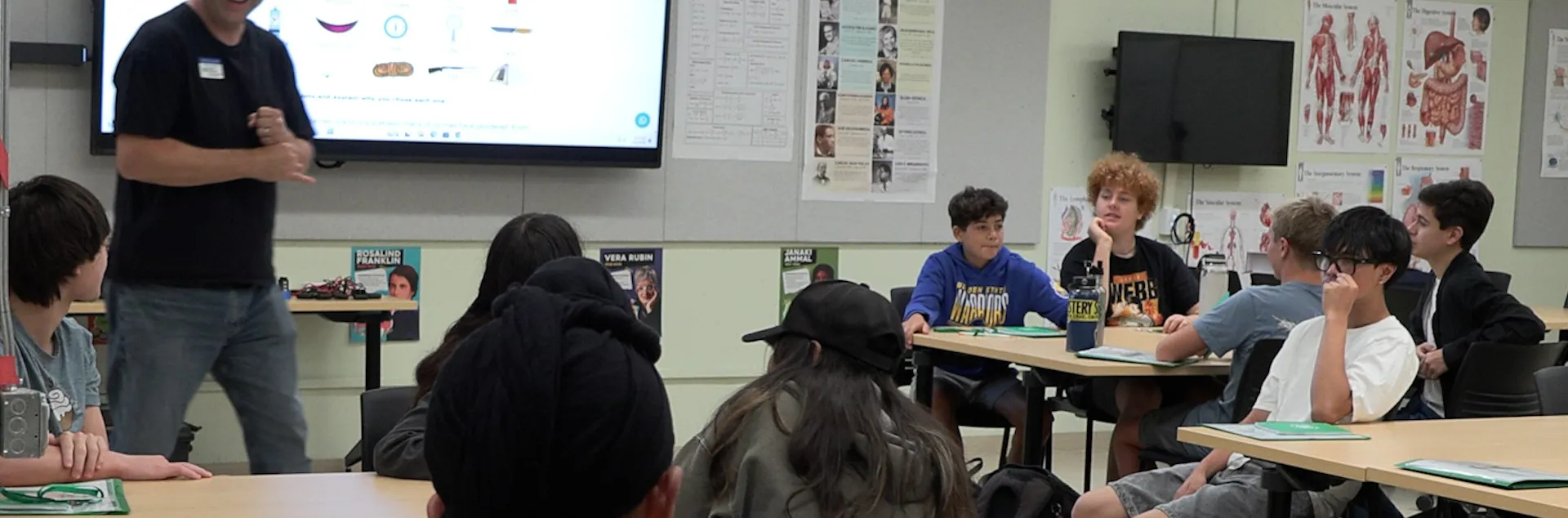
4-H drone camp introduces teens to technology, teamwork and STEM careers
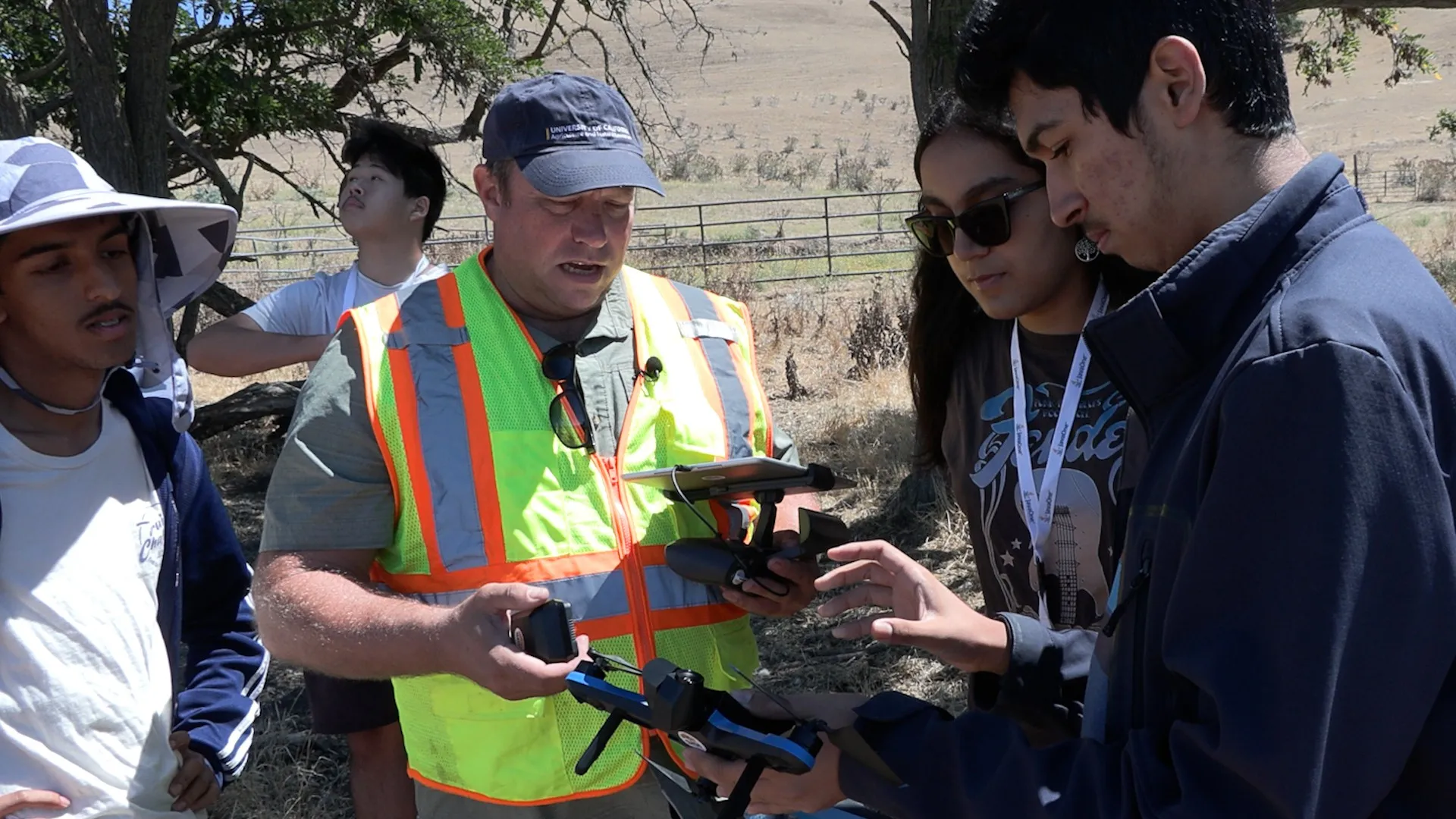
Drones aren't just for photos anymore. At a 4-H camp in California, teens are learning to use them to study crops, inspect structures, explore the ocean and answer questions from their own communities.
When 13-year-old Keren González Mendoza arrived at the 4-H drone camp for teens at Napa Valley College, she never imagined that by the end of the week she'd be piloting an aircraft, working as part of a flight crew and talking with excitement about agriculture, photography and marine biology.
Keren, who is about to enter eighth grade, is from Novato, just north of San Francisco. She had flown small drones as a child but had lost interest over time. It was her mother, Karen Mendoza, who learned about the camp and encouraged her to sign up.
At first, the teenager wasn't sold on the idea.
"She told me, 'No, Mom, I don't want anything to do with drones,'" Mendoza recalled.
On the first day, Keren came home overwhelmed by all the information. By the second day, though, her attitude had already shifted.
"She came home really excited, really happy," Mendoza said
. "She told me, 'Mom, what I'm learning is really interesting.' She definitely wants to learn a lot more."
For Mendoza, seeing that change was especially meaningful. As a Latina mother, she saw the camp not only as a new experience for her daughter, but also as an introduction to opportunities her family had not known were available.
Mendoza discovered the camp through the City of Novato's website. Until then, she had never heard of 4-H, and Keren had never participated in a program like it.
"I felt this camp was a unique opportunity because my daughter hadn't been exposed to an environment like this," Mendoza said.
For Mendoza, that lack of exposure is part of a larger challenge for many Latino families.
"A lot of the time it's just not knowing," she said. "We don't know other paths exist beyond becoming a doctor, an engineer or a lawyer."
That new sense of possibility quickly became part of Keren's experience. As the week went on, she came home each afternoon with new vocabulary, new questions and new stories about what she'd seen and learned.
One moment stood out in particular: watching a large agricultural drone in action.
"They brought in a helicopter bigger than the table we have at home," Keren said.
She learned that the aircraft can survey crops, capture imagery and help identify what plants need.
A gateway into science and technology
4-H is the largest youth development organization in the U.S., serving more than 6 million young people ages 5 to 18 through hands-on programs in agriculture, science, healthy living and civic engagement. California 4-H is administered through the University of California Cooperative Extension.
The Napa camp was built around Sky Mappers: Agricultural Drones and GIS Mastery, a 17-lesson curriculum for teens ages 13 to 18. It introduces drones, remote sensing and geographic information systems, or GIS, as tools to investigate agriculture, food systems, environmental conditions and issues facing local communities.
Over roughly 25 hours, participants move from learning about different types of drones and equipment to planning and flying an actual mission. Along the way, they learn the rules of responsible flight: caring for equipment, reading airspace, communicating as a crew and running safety checks before takeoff.
The curriculum is built around five core skills: framing a place-based question, operating drones responsibly, designing a mission to collect useful data, turning imagery into usable maps, and analyzing and communicating results ethically.
Schools and 4-H programs can use the curriculum as a day camp, a five-day academy or a once-a-week program spread across the school year.
After supervised practice flights, participants learn how aerial photographs become maps and usable data through GPS, image stitching, sensors and software such as ArcGIS Drone2Map.
For Steven Worker, UC Cooperative Extension 4-H youth development advisor serving Sonoma, Marin and Napa counties, the appeal of drones can open the door to much bigger lessons.
"Teens really like drones. They're seen as cool and exciting, and it's been a great gateway to get more teens involved in our 4-H programs," Worker said.
But flying is only part of the experience, he said. Participants also learn about legal and ethical issues surrounding aerial imagery, work in teams, design projects and present their results.
For Worker, drones are the hook — a way to draw teens into science, technology, engineering and math while developing skills that extend well beyond operating an aircraft.
Learning to fly as a crew
Over the week, Keren rotated through different roles on the flight team and learned that the success of a mission doesn't rest on the pilot alone.
"The pilot obviously flies the drone and has to pay attention," she said. "Then there's the visual observer, who watches the drone and tells the pilot if a bird's coming, or a plane, or if it's about to hit a tree."
A third crew member logs observations and mission details.
In one exercise, Keren served as both pilot and visual observer. Her team's mission was to photograph a sports field marker and check it for damage.
The project walked participants through the entire process: framing a question, planning a safe flight, capturing images, processing the data, interpreting results and presenting their findings to their families.
For Mendoza, watching her daughter speak in front of an audience was one of the camp's biggest benefits.
"When you're exposed to giving presentations like this at a young age, it builds confidence, it helps your self-esteem, it gives you practice," she said.
Those skills, Mendoza added, carry over to high school, college, job interviews and the workplace.
Seeing new career possibilities
Before camp, Keren had no idea how many careers involved drones. During the week, she learned they're used to photograph real estate, produce videos, inspect structures, monitor crops and even explore underwater environments.
Aerial photography caught her attention first.
"When I look at newspapers, they have photos taken from above – of houses, the ocean, all of that," she said. "Taking photos really interests me."
But it was marine biology that really hooked her.
"I really like the ocean," Keren said. "With drones you can take photos, learn what's under the water, and see animals you can't spot with the naked eye."
The discovery resonated with Keren, who is also interested in acting, reading, writing and graphic design. The camp didn't ask her to choose a career. Instead, it showed her how technology could connect with things she already loved.
"I like that they show teens the opportunities out there, all the careers they could go into that they probably hadn't considered," she said.
Her advice to anyone unsure about trying something new is simple.
"Try it, and if you don't like it, that's fine. It's good to try a bit of everything and find what you like."
Learning the rules of the sky
Along with flying, participants learned about the rules that govern drone operators. The Federal Aviation Administration sets safety standards for recreational pilots, including understanding airspace rules, keeping the aircraft within visual line of sight and passing The Recreational UAS Safety Test, or TRUST.
For Keren, the training reinforced that flying a drone comes with responsibility.
"The certification is so that if you're flying a drone, you already know the rules," she said.
The curriculum also includes an educator's guide covering safety, local regulations and the materials needed to run each activity. Some lessons require drones or computers, while others do not. Each includes learning goals, opening questions, step-by-step activities and reflection.
Representation matters
For Mendoza, the camp also highlighted the importance of making programs like this visible to families who may not know they exist.
As a Latina mother, she said it mattered to see her daughter in a space connected to science and technology.
Representation, she said, tells young people and their families that those spaces belong to them, too.
"Presence matters. When you see someone like you, you feel represented," Mendoza said. "Without saying a word, it's telling you: this space is for you too."
Mendoza hopes to spread the word to other families in her community, especially parents who don't know about 4-H or who may assume science and technology programs aren't meant for them.
"Sometimes we hold back because we think those places aren't for us," she said. "It's the opposite. Our culture only adds richness to any professional field we get the chance to be part of."
A seed for the future
Sky Mappers can be used in 4-H clubs, after-school programs, academies, summer camps and other settings connected to agriculture, the environment and GIS.
California 4-H offers clubs, camps and enrichment programs throughout the state, with opportunities varying by county.
4-H is open to youth ages 5 to 18. Families interested in participating can visit the Join California 4-H page to find their local county program and learn about clubs, camps and enrichment opportunities.
The Napa camp lasted just a week, but Mendoza believes it already left a mark.
Keren, usually reserved and not one to talk much about her day, came home all week talking about agricultural drones, flights, oceans, maps and possible careers.
"This week she's been sharing so much of what she's done and learned," Mendoza said. "That's a good sign the little seed has been planted – and I'm sure it's going to bear fruit."