

About the Central Valley
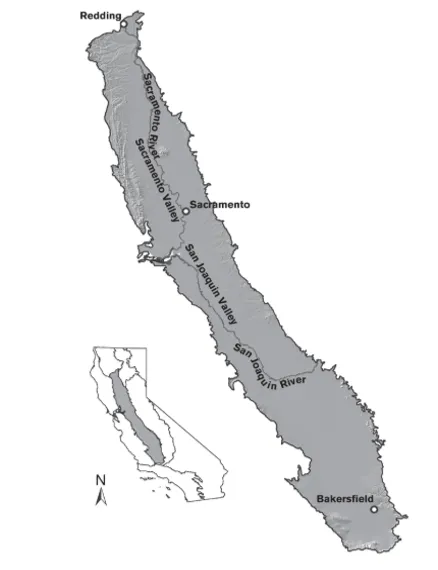
Lying between the Sierra Nevada and the Coast Ranges, the Central Valley is one of the most defining physical features of California. It is nearly 500 miles long and up to 75 miles wide. The Central Valley is often described as two valleys lying end to end – each is drained by a major river: the Sacramento and San Joaquin Rivers. The majority of the Central Valley occurs elevations very close to or at sea level with the ends of the valley rising to just 400 ft. Some areas in the delta region are actually considered to be below sea level. Historically, flood events played a major role in the development and distribution of ecosystems in the region, however, the construction of flood control structures and intensive land-use in the region has dramatically altered the pattern, frequency, and magnitude of flood events.
The climate of the Central Valley is Mediterranean, with warm, wet winters and hot, dry summers. Most precipitation falls as rain in the winter months. Due to diverse regional temperatures and pressure systems, significantly more rainfall occurs in the northern portion of the valley compared to the southern portion. Generally, years that are drier and warmer than normal have larger and more widespread fires.
The topography of the Central Valley strongly influences fire climate factors. Proximity to the Sierra Nevada and Coast Ranges lead to the development of foehn winds. Lightning strikes are an uncommon source of ignition in this region. Though direct ignition from lightning was unlikely in the valley, numerous lightning-started fires in the surrounding foothill regions may have eventually spread downslope in the summer months contributing to historic fire regimes.
Fire History of the Central Valley
Indigenous Burning
Historically, intentional ignitions from Indigenous people contributed to the frequent presence of fires in these landscapes. The Central Valley region is the ancestral lands of many Indigenous tribes that still steward these lands today, including the Miwok, Nisenan, Nomlaki, Patwin, and Yokuts tribes to name a few. Tribes burn for many reasons, including for the production of food and basketry materials, to aid in hunting efforts, and for cultural and ceremonial purposes. To learn more about other Indigenous tribes in the Southern Cascades region, visit https://native-land.ca/.
Historic Fire Occurrence
There is very little information on the fire histories of Central Valley ecosystems. However, the Mediterranean climate and widespread use of fire by Indigenous people likely historically promoted frequent surface fires of low- to moderate-intensity in woodland and grassland ecosystems.
Indigenous people frequently used fire, more so in the fall, to promote food plants, including oak trees, and to improve deer browse. Indigenous fire was widely excluded from landscapes following Euro-American settlement. Settlers introduced a variety of nonnative grasses and plants through livestock grazing, potentially changing the frequency and timing of fire events. The invasion of annual grasses has substantially change fuel characteristics in grasslands; these thatch forming grasses have likely lengthened the fire season, increased likelihood of ignitions, and created more continuous fuelbeds compared to historic conditions. Unlike other systems, there is no documented use of fire by ranchers to improve rangeland forage or for clearing of agricultural lands.
Unlike other bioregions in California, the Central Valley has seen less significant effects from changes in fuels and climate. Currently, human-caused ignitions result in frequent fires, but habitat fragmentation, developments, and land conversion limits fire size.
Fire Ecology of the Central Valley by Ecoregion
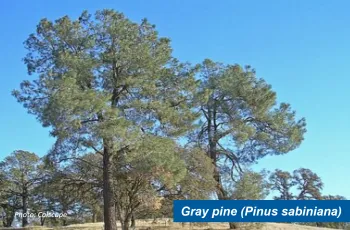
Fire in the Foothill Woodlands
There is little evidence of past fire regimes in these ecosystems. Based on limited research, fire regimes of foothill woodlands were likely characterized by frequent (~ every 12 years) fires of low- to moderate-intensity and severity. Fires burned mostly in the late summer through fall and variable understory vegetation and fuel conditions likely resulted in patchier burns. It should be noted that because of dramatic changes in fuel type, load, and arrangement in contemporary ecosystems, recent fire events in foothill woodlands may differ dramatically from those of the past.
Fire in Grasslands
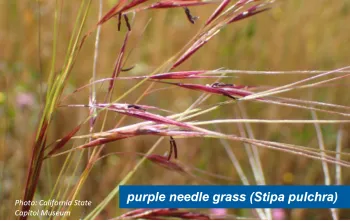
Grasslands are resilient to a range of fire frequencies. Native grassland species are adapted to persisting through the dry season with dormant rhizomes, bulbs, or seeds. In the absence of fire for long periods of time, natural grassland patches persist because of their ability to out compete other types of plants in similar environmental conditions where most soil moisture is retained in the upper portions of the soil. Annual grasslands, dominated by non-native grasses, thrive on frequent fires due to prolific seed production and high seed survival under fires of low-intensity.
Little information exists regarding the fire histories of these ecosystems, however, fire regimes likely varied based on topography and vegetation type. Research suggests historic fire regimes were characterized by relatively infrequent fires of low intensities and moderate- to high-severities. Similarly to grasslands in the Central Coast fire return intervals in these ecosystems were likely heavily influenced by proximity to Indigenous communities, being more frequent in these sites, but in more remote areas, where lightning was the primary ignition source, fire return intervals were much longer. Historically, fires burned in late summer and fall, but human-caused burning led to fires burning in early winter and late spring as well.
Fire in Riparian Forests
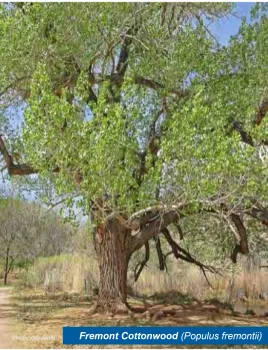
There is very little information on past fire regimes in these ecosystems, but they were likely Indigenous-influenced. Areas near Indigenous communities were likely burned frequently at low- to moderate-intensity and size, however, in areas not close to human communities, fire regimes were likely characterized by infrequent fires of mixed severities and intensities. Assuming there was a repeated pattern of fire in foothill woodlands and grasslands, riparian forests must have also experienced periodic fires. During wet years and floods, riparian forests may have served as barriers to control fire spread between different vegetation types. Conversely, during periods of drought, riparian forests could burn readily, increasing fire size and altering vegetation patterns.
The majority of riparian forests are lost currently, and prescribed fire and cultural fire practices can be used to limit negative effects of high intensity and high severity wildfire. Today, fires in riparian forests are increasing both in frequency and intensity. This is likely due to the presence of more flammable, nonnative vegetation (e.g. giant reed (Arundo donax) and tamarisk (Tamarix spp.)).
Fire in Desert Scrub
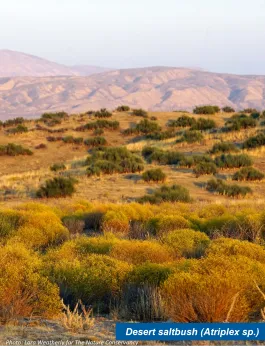
There is very little information on past fire regimes in these ecosystems, but they were likely categorized by infrequent fires of moderate- to high-severity. However, due to the spread of invasive nonnative grasses (e.g. cheat grass (Bromus tectorum)) in desert scrub, fire return intervals are getting shorter due to the grass-fire cycle replacing the native fire regime. Desert scrub species are not fire-adapted, and re-establishment after fires is limited and slow, which can result in grassland conversions.
Additionally, the San Joaquin Desert has been extensively converted (60-90%) from desert scrub to agricultural, residential, and industrial development (solar and oil fields). Draining wetlands, damming reservoirs, and invasive annual grass encroachment/replacement, and climate change, in combination, stress this desert scrub ecosystem threatening the longevity of desert scrub habitats.
Reducing fire extent and severity makes the natural re-establishment of saltbush more successful several years post fire. For example, grasses interspersed between shrubs can be reduced using managed grazing, mowing or other chemical treatments, which helps to lengthen fire intervals. Recent groundwater regulations leading to agricultural land retirement have also created exceptional opportunities for restoration of desert scrub communities.
Fire in the Freshwater Marsh
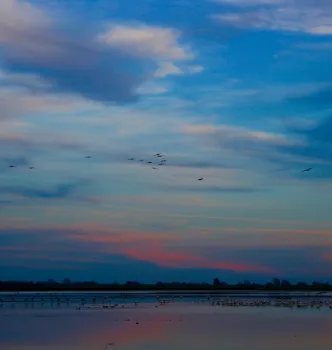
There is very little information on past fire regimes in these ecosystems, however, there are records of Indigenous people regularly burning in freshwater marsh habitat. The effect of these ecosystems on fire behavior is also unknown; during wet years, marshes may have served as barriers to control fire spread between different vegetation types. Conversely, during periods of drought, freshwater marsh vegetation could burn readily, increasing fire size and altering vegetation patterns.
Additional Resources
Check out these resources below to learn more about fire ecology and history in the Central Valley!
- Wills, R. 2018. Central Valley Bioregion. In van Wagtendonk, J. W., N. G. Sugihara, S. L. Stephens, A. E. Thode, K. E. Shaffer, J. A. Fites-Kaufman (Eds.), Fire in California’s Ecosystems. 279 -297.
- van Wagtendonk, J. W., N. G. Sugihara, S. L. Stephens, A. E. Thode, K. E. Shaffer, J. A. Fites-Kaufman. 2018. Fire in California’s Ecosystems (2nd ed.). University of California Press. https://www.ucpress.edu/books/fire-in-californias-ecosystems/hardcover.