
Houseplants in Their Natural Environment
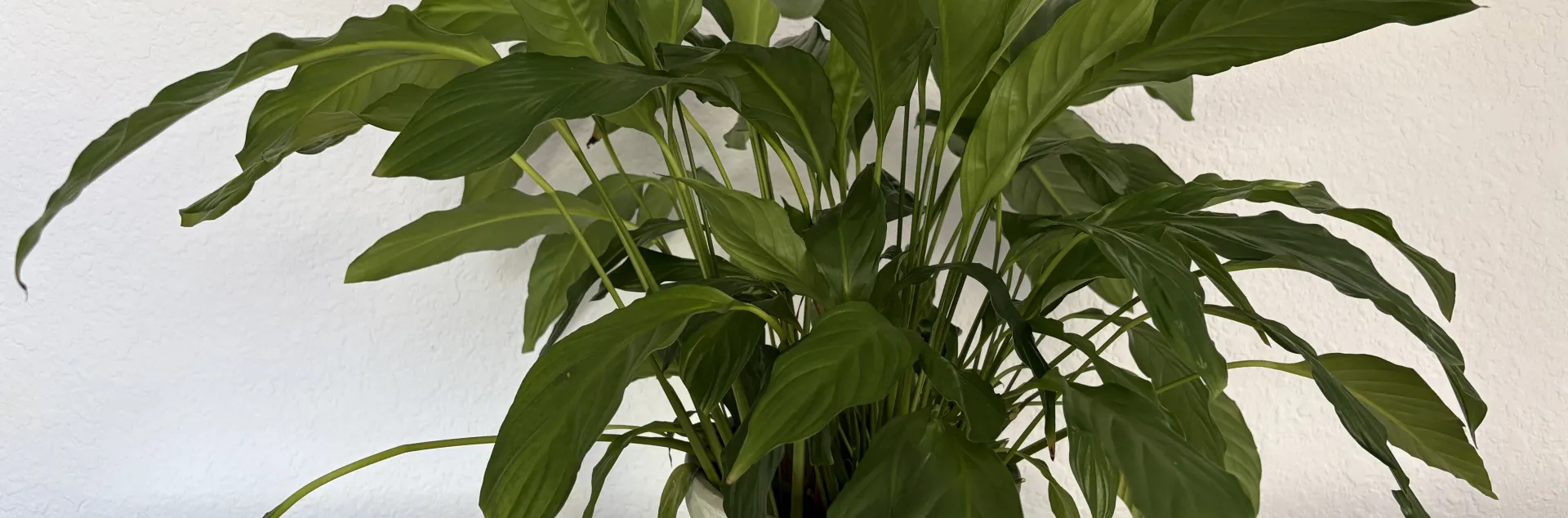
Understanding where plants come from helps make sense of their care and handling needs. Most houseplants are from tropical and subtropical regions of the world. Some grow under the forest canopy or on the forest floor, receiving the filtered light from the canopy above. This adaptation to low natural light allows them to tolerate the relatively low light levels of our homes. As plants with tropical or subtropical origins, they prefer warm, slightly humid environments. Individual species vary in the amount of indoor light they need.
EXTERNAL IMAGE
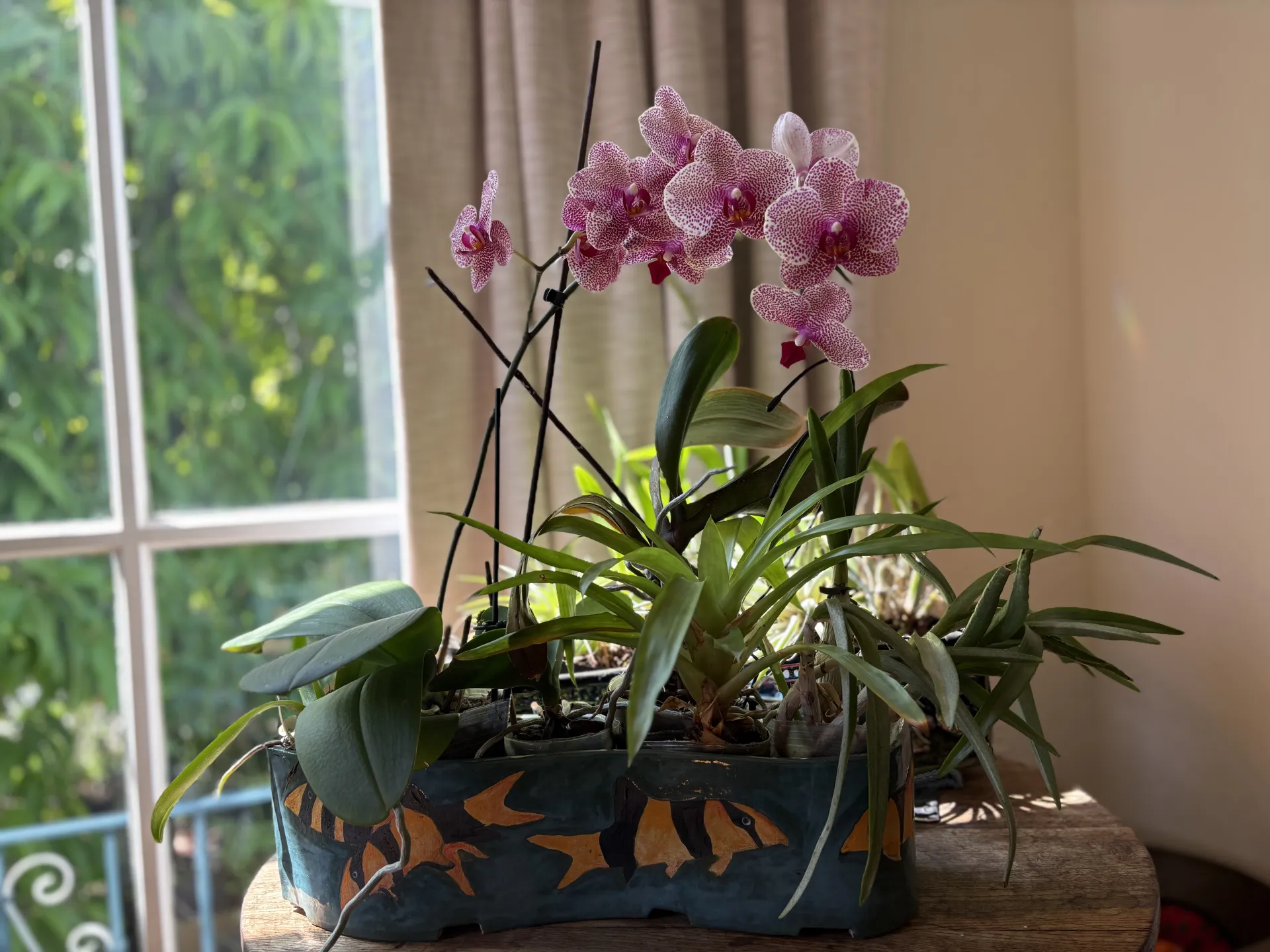
Epiphytes, often called “air plants,” grow on other trees and plants for support. They obtain water and nutrients from rain, moisture, dust, and organic debris around them. Many familiar houseplants—including some orchids, bromeliads, ferns, hoyas, and aroids—are epiphytes.
Even though they are not tropical or subtropical, many types of herbs, such as chives, basil, and cilantro, can be grown indoors. Herbs generally need more sunlight than many typical indoor houseplants since many like full-sun or partial sun in the outdoor environment.
Plants need the proper light, temperature, humidity, water, and fertilizer. Most houseplants will do well with daytime temperatures between 65 and 75º F, ideally with nighttime temperatures only 5–10°F lower. Humidity, watering, and fertilizing are all things that we can control fairly well, but lighting intensity is more complex and harder to get right.
Light Intensity in the Home
EXTERNAL IMAGE
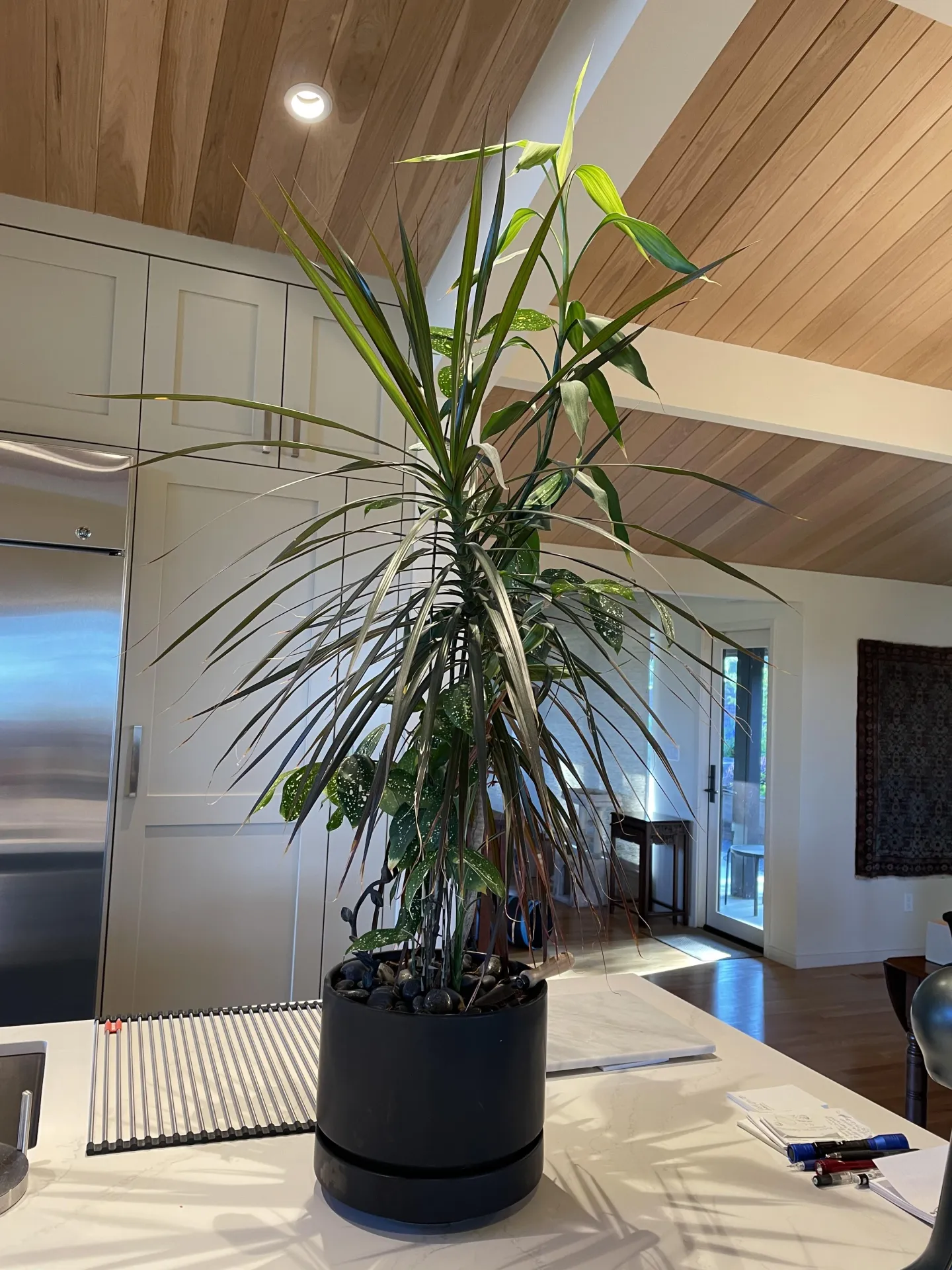
Indoor spaces usually seem much darker to a plant than they appear to us because our eyes adjust to varying light levels. Indoor light is generally much lower than outdoor light, which is why we must think about plant placement and windows. Many plants need bright indirect light, which means bright light without direct sunlight falling on the leaves. Take a tour through your home and observe the areas where you might want to grow and place plants. You can identify most of your interior areas as high, medium, or low light.
Lighting can seem complicated since the seasons, window orientation (north, east, west or south), distance from the window, the weather and landscape outside, and other factors affect light intensities.
Some conditions to note as you walk through the house looking at the plant locations, current or potential:
- Areas nearest windows generally offer the best light for plant growth. The closer the plants are to a window, the more available the light. As you move plants more to the side or back from the glass, light levels drop dramatically. Do careful monitoring if you move plants close to glass; watch how they are adjusting to the light and heat.
- Outdoor obstructions (trees, shrubs, balconies, overhangs, awnings) can reduce the amount of light available to plants. Window coverings, like drapes, sheers, and blinds, also drastically reduce light, sometimes making hot direct light more like bright, cooler diffuse light.
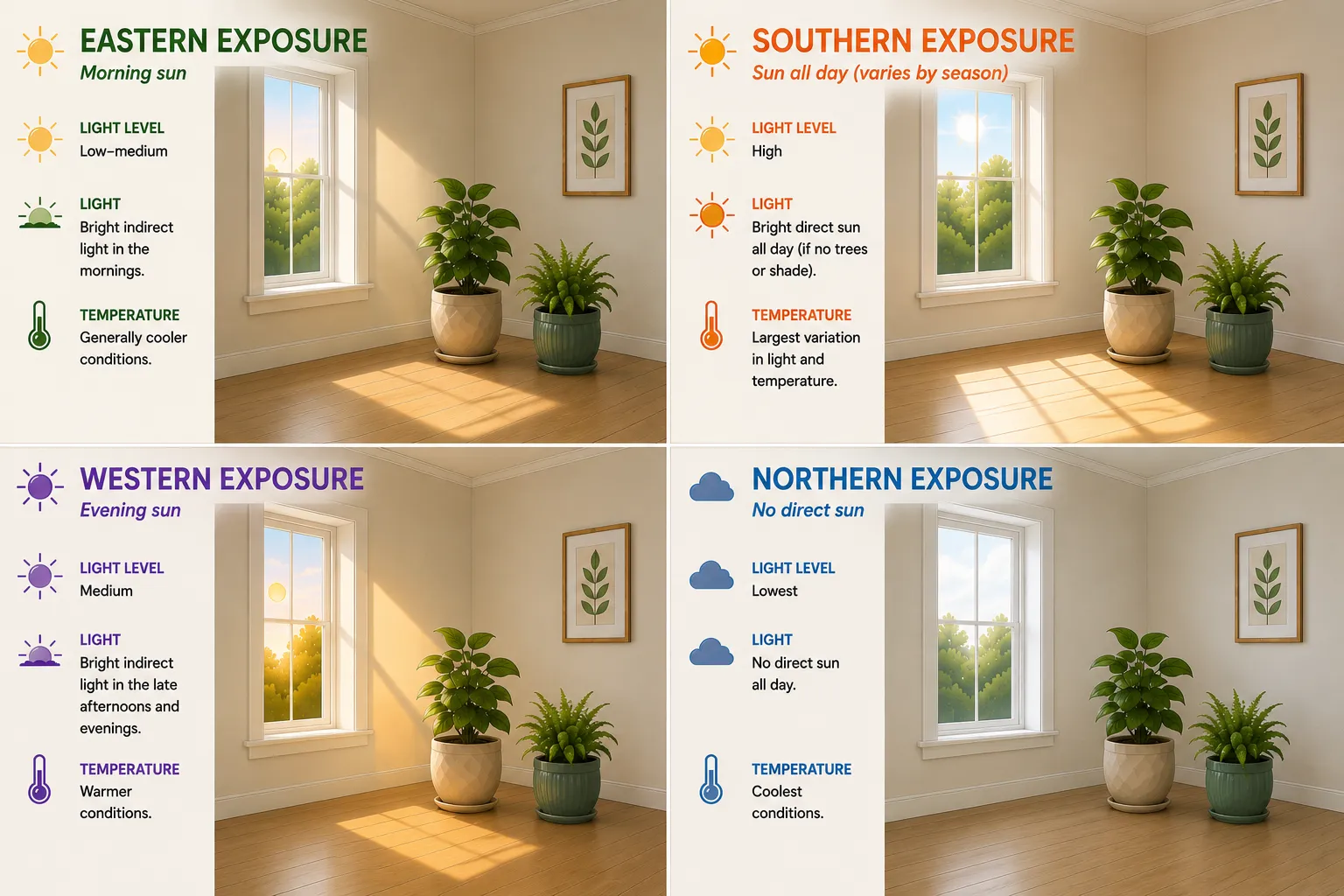
Exposure (north, south, east, or west) affects light and temperatures.
EXTERNAL IMAGE
Eastern exposure Low-medium light levels. Bright indirect light in the mornings.
Eastern light plants receive direct morning light from sunrise until nearly midday. The light is cooler than the light from the south and the west. Morning sun from east-facing windows can provide favorable light for many indoor plants.
Southern exposure Highest and brightest amount of light.
Southern light can provide substantial direct indoor light if not shaded by trees, buildings, or overhangs.
The amount and depth of sunlight entering a south-facing window change dramatically with the seasons. The lower winter sun shines into a room for most of the daylight hours, making a southern exposure room a place useful for plants needing more light in winter.
Western exposure Medium light levels. Bright indirect light in the late afternoon.
West-facing windows receive afternoon sunlight, which can be more intense and warmer than morning light from an east-facing window.
Northern exposure Lowest levels of light. Little or no direct sun.
North-facing windows tend to provide cooler, lower-light conditions.
Classification of Light Intensity: Low, Medium, Bright, Direct
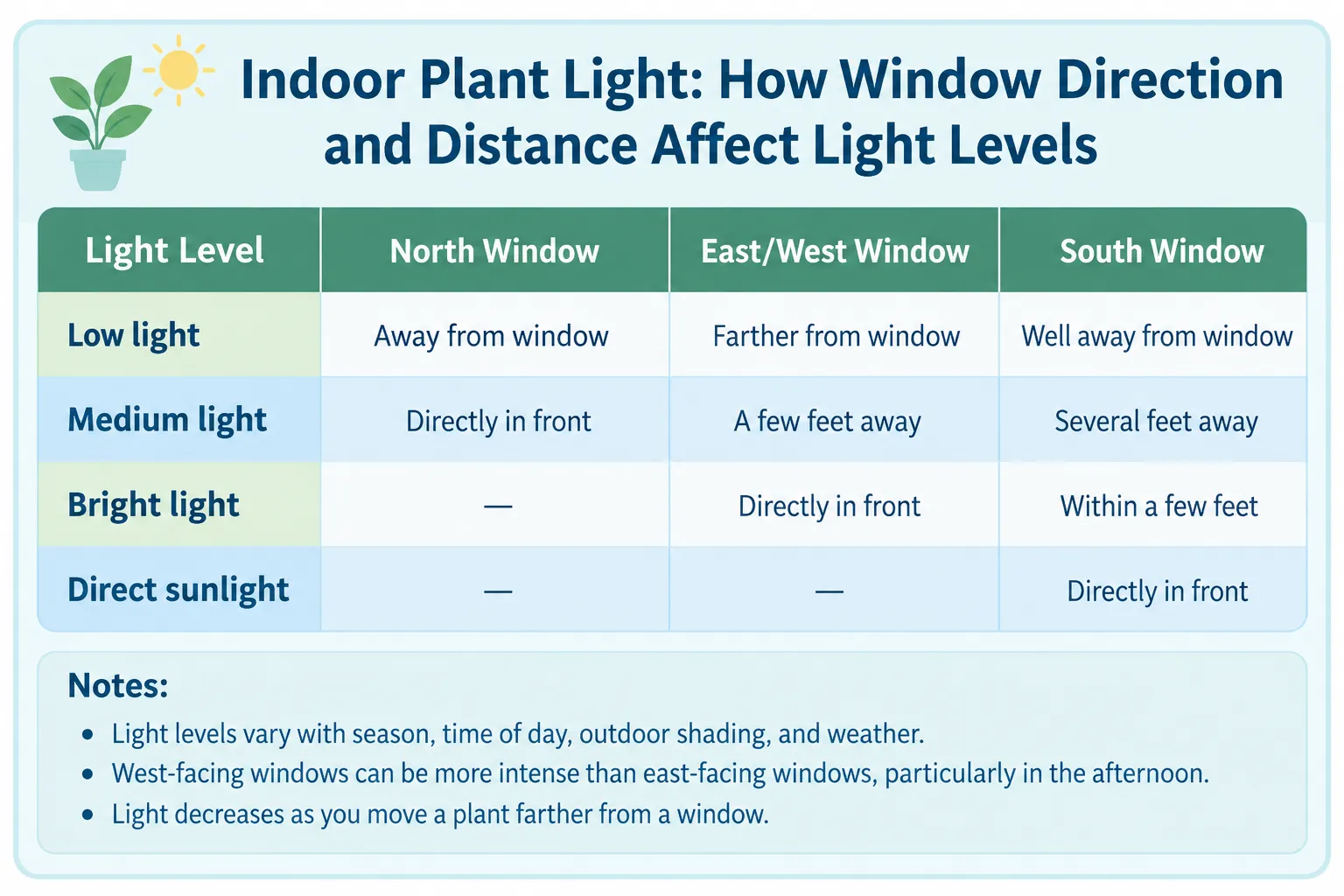
Indoor light levels are commonly described as low, medium, bright, or direct, but these terms are only general guidelines. Actual light levels vary with window orientation, distance from the window, season, time of day, outdoor shading, and other conditions. The table below illustrates how window orientation and distance can affect the amount of light available to a plant.
EXTERNAL IMAGE
Alt text: Table showing approximate indoor plant light levels by window direction and distance from the window. Categories include low, medium, bright, and direct light. Actual light levels vary with season, time of day, outdoor shading, weather, and distance from the window.
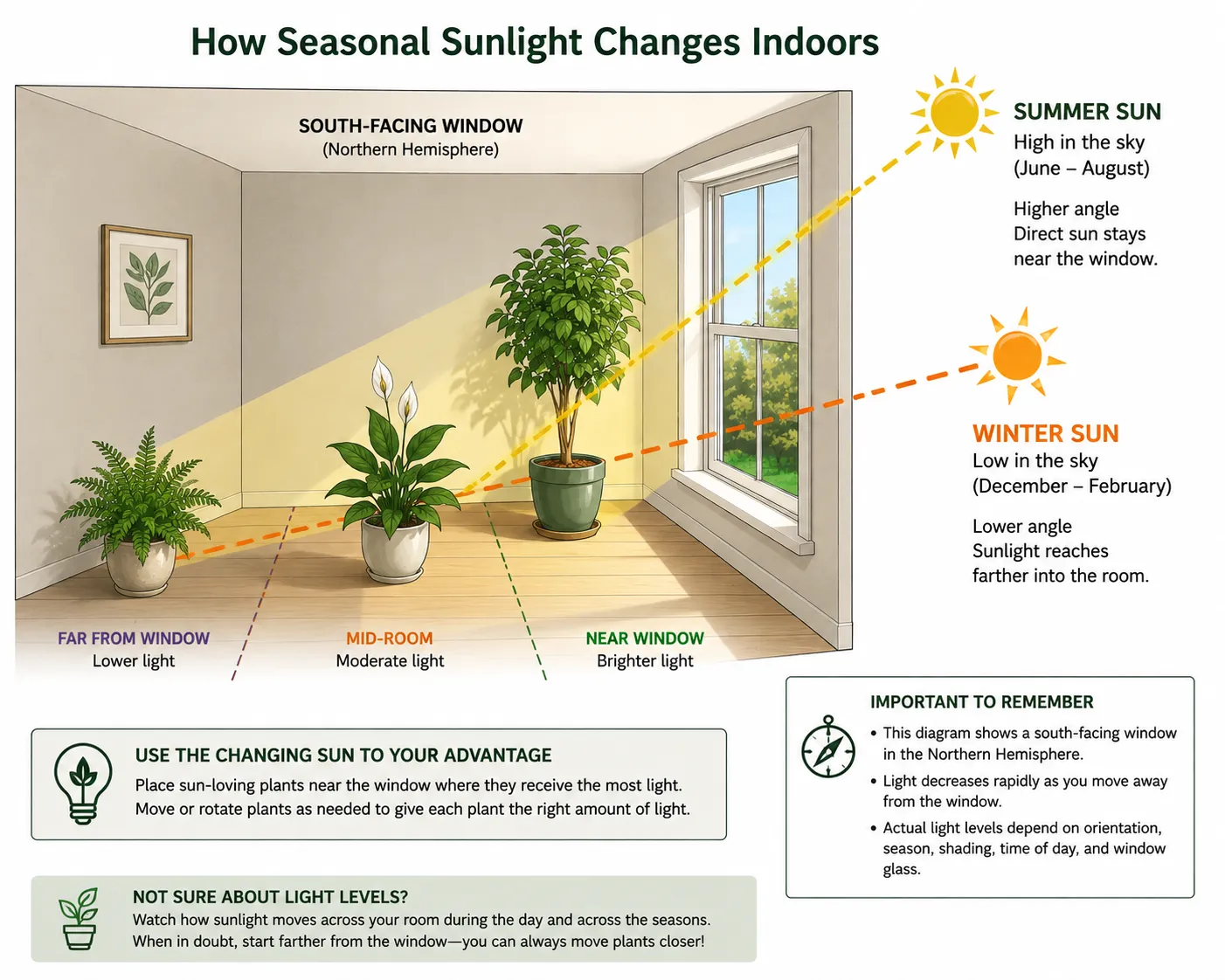
Seasons alter the amount of natural light entering through windows.
Keep in mind that light conditions change throughout the seasons. Several factors can influence your light intensity and duration.
For example, the sun is higher in the sky in summer and lower in the sky in winter. The lower angle of the winter sun allows sunlight to reach farther into a room. However, winter days are shorter, and light intensity decreases rapidly with distance from a window. As a result, some plants may need to be moved closer to a window in winter to receive sufficient light.
EXTERNAL IMAGE
Seasonal changes in the surrounding trees and shrubs can affect indoor light; trees may lose their leaves in winter, allowing more sunlight through the windows.
Your best friend is observation; look for the sunlight and see how it moves during the day as seasons change. When in doubt, place plants further from the window. You can always move the plants closer as you monitor how they are doing.
Choose your plants by considering the amount of light needed and whether you have the right space for the plant. Remember that the real test of what works for a plant can only be determined by real-life trial and error.
Watering
EXTERNAL IMAGE
Improper watering causes many problems for our plants. Watering on a fixed schedule may not work because your plant’s water needs can change as your plant grows larger, room temperatures change, or a plant is moved to a new location. Air conditioning and heaters can cause the potting mix to dry out more quickly. Instead of watering on a fixed schedule, try checking your plants regularly and water according to their individual needs.
Water thoroughly. When your plant does need water, use room-temperature water to thoroughly moisten the potting mix where the plant roots are. Let the water drain out and then remove the excess water. After watering, feel for the moisture an inch or two down below the surface to check that the water has penetrated more than just the surface and edges of the potting mix.
Check the potting mix before watering. Feel the potting mix to determine whether it is still moist. With experience, you can tell when to water by other signs, such as the appearance of the plant, the weight of the potted plant, the color of the potting mix and wilting in more water-sensitive plants. Remember, wilting alone can indicate either too much or too little water. Too much water can cause root rot, which can also cause wilting.
Don’t let plants sit in water. Be sure that the water drains out and the roots are not sitting in water for an extended period of time. Empty saucers and trays, or elevate pots above standing water. Roots can develop root rot if they are left wet too long. Some houseplants, such as fittonia and calathea, prefer consistently moist potting mix, but it should not remain waterlogged.
Rehydrate potting mix if completely dry. Potting mix that becomes extremely dry may repel water. You may have to pour water through the pot multiple times or place the potted plant in a container to soak for a time to rehydrate the potting mix.
Use the sink or bathtub for an occasional spa day. Take your smaller, easy-to-carry plants to the sink or bathtub, where you can water thoroughly without worrying about overflow. Use the opportunity to wash the leaves and inspect the plant. Use room-temperature water.
Humidity and Temperature
EXTERNAL IMAGE
Most houseplants prefer a more humid environment than is found in many homes. Most people keep their homes within a temperature range that is suitable for many houseplants. Home heating and air conditioning often dry out the air, however, causing plants to lose moisture more quickly. If your plant is near a heater or drafty area, check the potting mix frequently for dryness.
Humidifiers can be used to increase indoor humidity where practical. Many tropical plants benefit from additional humidity during winter months when the heat is on.
Grouping plants can create a more humid microclimate around them as plants release moisture into the surrounding air.
Place plants with high-humidity needs in the bathroom, provided there is enough light. Regular showering can temporarily increase humidity in the room.
Fertilizing
Most indoor areas do not provide the ideal growing conditions of the native habitats of plants, so indoor plants often grow more slowly than plants growing outdoors under favorable conditions. As a result, indoor plants generally do not need as much fertilizer. Apply fertilizer sparingly and infrequently to plants grown indoors.
Avoid overfertilizing. Too much fertilizer may result in the buildup of salts and excessive, leggy growth. It can also encourage rapid growth, resulting in more frequent repotting or a plant that outgrows its available space. Follow the fertilizer label directions, keeping in mind that indoor plants generally need less fertilizer.
Reduce or stop fertilizing when growth slows. Many houseplants grow more slowly during winter as natural light decreases and therefore may need little or no fertilizer during that period.
Containers
EXTERNAL IMAGE
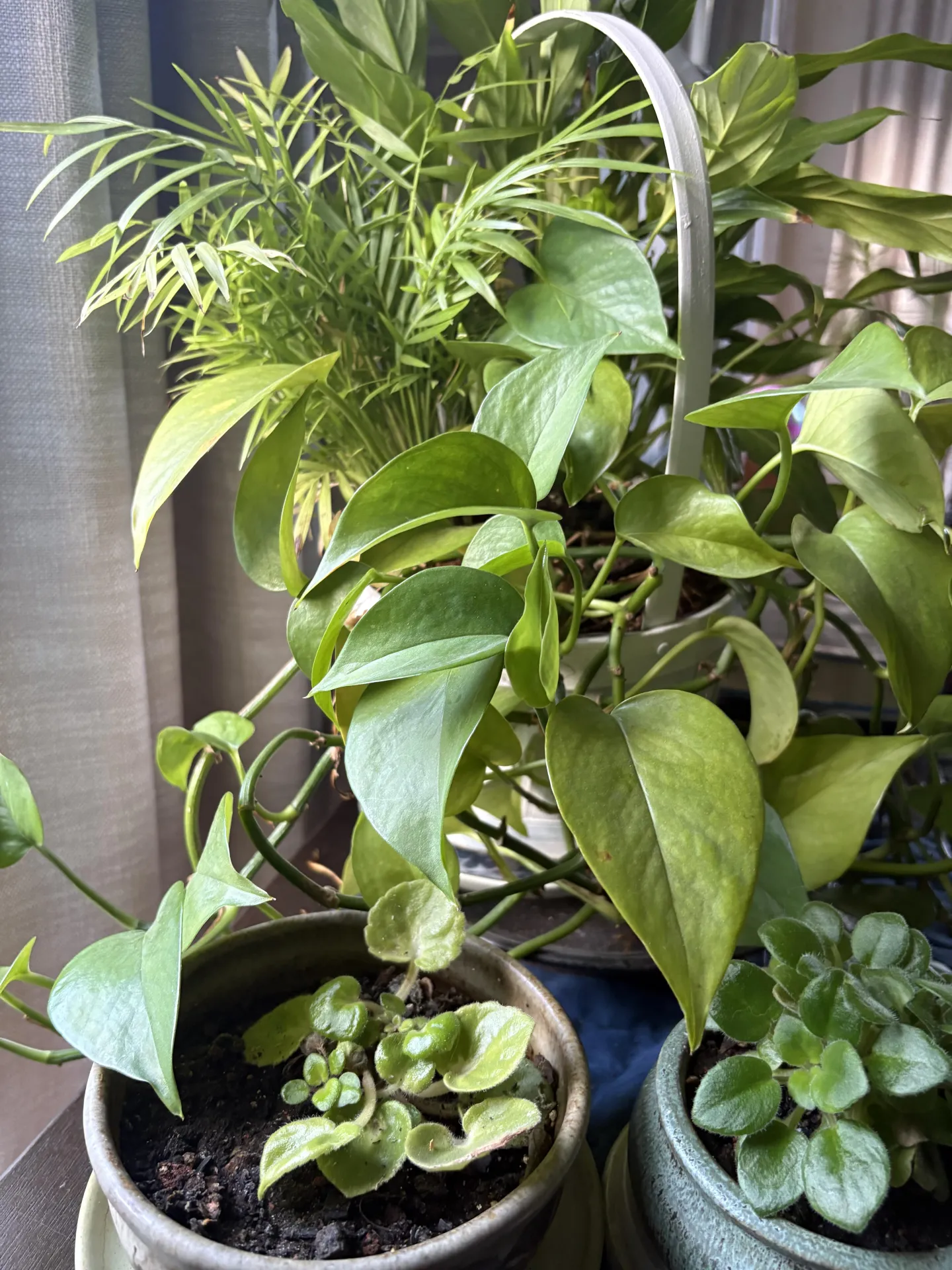
When selecting a container, choose one that fits the size of the plant, considering both the top growth and the root system. Allow some space around the root ball, but not too much.
Good drainage is essential for healthy roots. Choose a container with at least one drainage hole to let water drain out of the potting mix and allow air to return to the root zone. Good drainage helps prevent the potting mix from remaining waterlogged.
If you use a decorative container without a drainage hole, keep the plant in an inner pot that does drain. Elevate the inner pot so it does not sit in collected water, and empty the decorative container as needed.
Maintenance
Keep an Eye on the Plants
Place your plants where you will notice them during your daily activities. Make a habit of cruising by your plants and taking a quick look at them. Are they wilting? Are leaves yellowing and dropping? Has it been a while since you really noticed them? Is the weather changing and affecting indoor temperatures? Is there some new house project that might affect lighting or humidity? For example, changes to your home’s heating or cooling system may affect indoor humidity and, in turn, your plants.
Summer Care
An Outdoor Spa Vacation
Houseplants may benefit from a holiday outdoors during the warm summer months. Even plants in a sunny indoor location may benefit from the additional light outdoors, since indoor light intensity is generally much lower than outdoor light, even in the shade.
Moving Outdoors. Houseplants moved outdoors should not be placed suddenly in strong direct sun. Start them in a sheltered, shady area, such as under a tree. Place the plants outdoors for just a few hours on the first day, then gradually increase the time outdoors. After one to two weeks, the plants can stay outdoors in the shady area all day.
Moving Back Indoors. In the fall, bring them back into the house before the weather gets cold. Gradually reintroduce them to lower indoor light levels. Inspect them for insects and disease, and consider keeping them isolated from other houseplants for a couple of weeks while you are making sure they are pest-free.
Giving Plants in Low-Light Areas a Break
If you have plants in very low-light areas, such as corners, bookcases, or rooms with no windows, consider temporarily moving them to better light for a few weeks. After a short “vacation” in better light, the plants may look healthier and be in better shape. You can move or rotate them back to low-light areas for decorative accents.
Grooming
EXTERNAL IMAGE
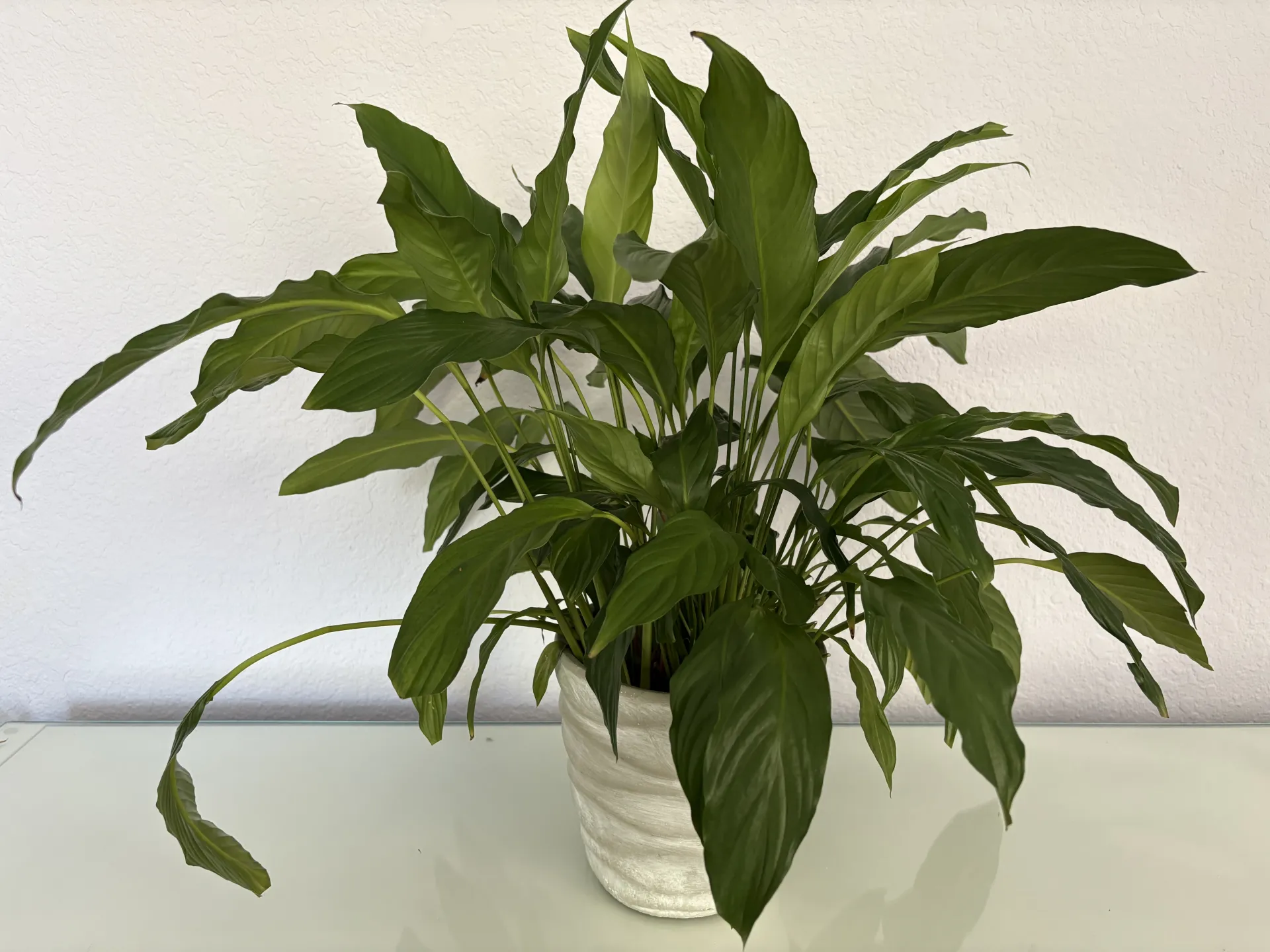
Keep plants clean. Dust can accumulate on leaves. Gently wipe or wash the leaves and stems, checking for insects as you are cleaning. Be sure to inspect the undersides of leaves, a prime hiding place for insects. Use room temperature water.
Remove dying, browning or yellowing leaves and stems. Use scissors to trim dried brown leaf tips and margins. For best results, follow the shape of the leaf when trimming to maintain a natural appearance.
Turn Plants. Rotate plants periodically so all sides of the plant receive available light and growth remains more symmetrical.
Remove whitish crust on potting mix. A whitish crust can develop on the surface of potting mix from a buildup of fertilizer salts and minerals in the water. Thorough watering that allows excess water to drain from the container can help reduce this buildup.
Plant Problems, Diseases and Insect Pests
Interestingly, many houseplant problems are associated with environmental factors, particularly light and watering. The UC Integrated Pest Management Program (UC IPM) offers a good starting point for diagnosing houseplant problems: What Causes Houseplant Problems.
If your plant has pests, a thorough spraying of water may remove some of them. Be sure to spray the undersides of leaves as well as the tops, since pests often hide under the leaves. This resource describes many of the common pests you might encounter on your houseplants—though hopefully not.
You may decide that a pest is too difficult to control, especially one like mealybugs, and choose to get rid of the plant. Sometimes tossing the plant, painful though it may be, is the best option. If you choose to control the pest, this resource provides information on managing common houseplant pests.
Easy-to-Grow Houseplants
Looking for a houseplant that doesn't require a lot of fuss? Several university Extension programs offer lists of houseplants that are relatively easy to grow.
EXTERNAL IMAGE
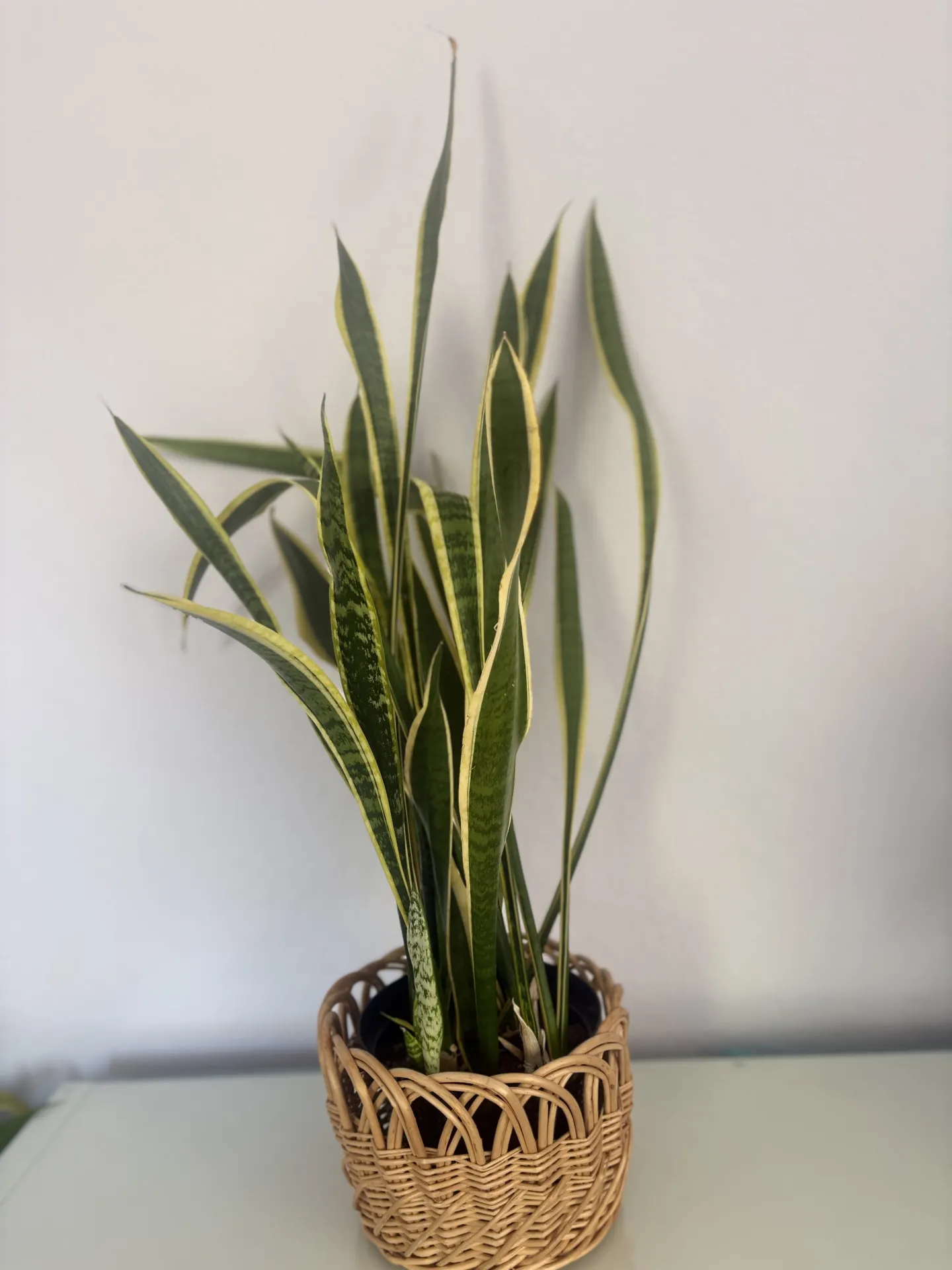
Clemson Cooperative Extension offers this list, Exciting Houseplant Selections for Beginners, with information about the care of each plant: snake plant, pothos, spider plant, and dragon tree.
Iowa State University Extension offers Easy Low-Maintenance Houseplants, a list of plants for beginners and experts alike. Each plant includes a description and photo, along with water, temperature, light, and humidity needs: pothos, snake plant, spider plant, ZZ plant, peperomia, heartleaf philodendron, ponytail palm, peace lily, cast iron plant, dragon tree, and more.
University of Connecticut offers Growing Houseplants, which includes easy-to-grow houseplants such as philodendron, aloe, peace lily, and snake plant. The article gives a general overview of light, soil, temperature, and humidity requirements for houseplants, along with tips for growing some specific plants.
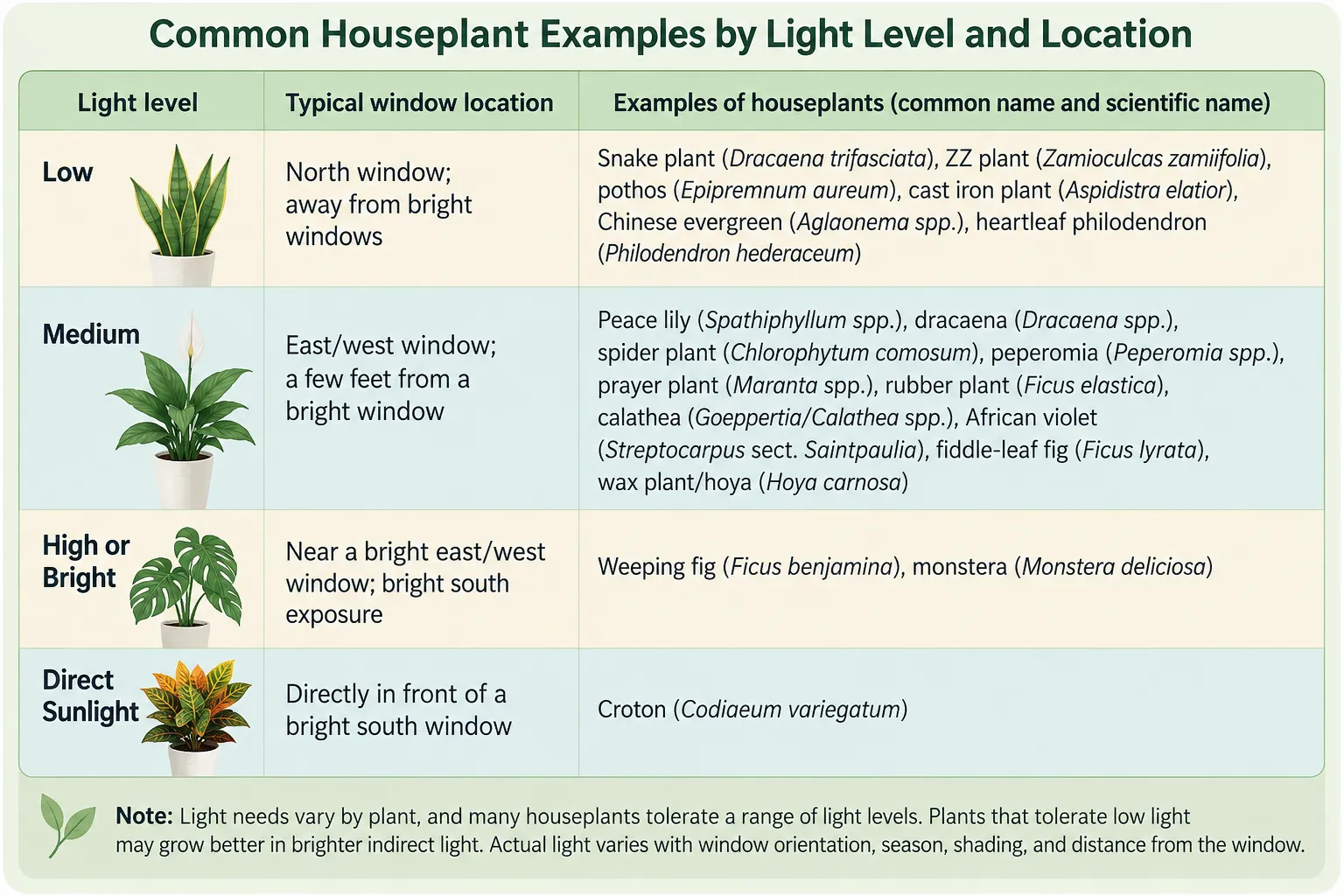
Indoor Plants for Different Levels of Light and Location:
EXTERNAL IMAGE
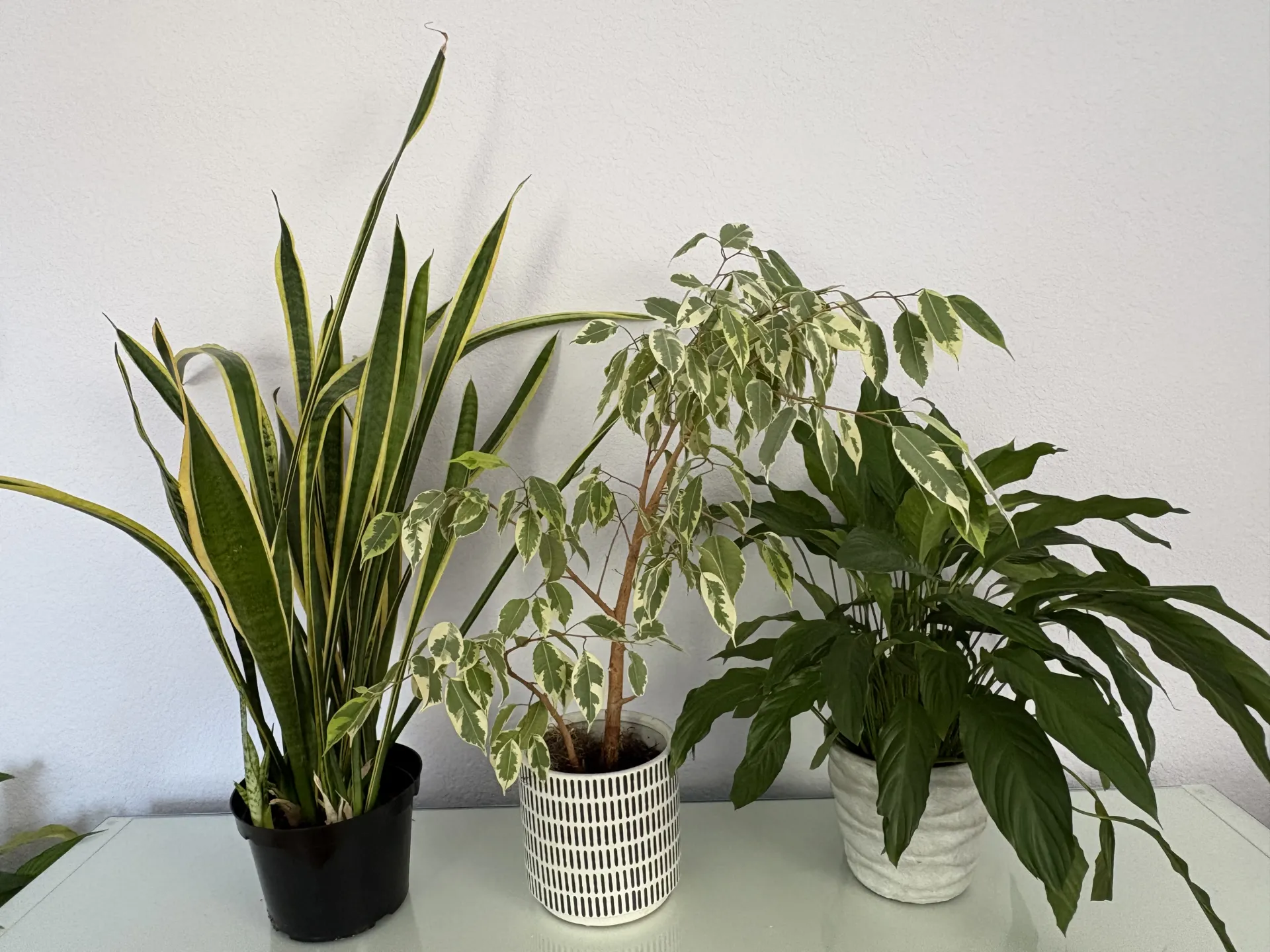
The table below provides examples of houseplants for different light levels. Keep in mind that some plants can grow successfully under a range of light conditions, so you may see the same plant listed in more than one category.
Plants may tolerate lower light levels, but with more light, they may flower or grow better overall. Close observation and small adjustments will help you figure out the best locations for your plants in your particular setting.
EXTERNAL IMAGE
For a listing of more plants and more details on care of specific plants, explore the Resources section at the end of this blog.
Things Happen, Plants Recover … Mostly
There may be bumps along the road when growing indoor plants, but many plants can recover with time and care. Caring for houseplants can sometimes be challenging, but watching a struggling plant recover can be especially rewarding.
My nerve plant (Fittonia albivenis) is a good example. I nearly killed it when I forgot to water it and almost all of its leaves dried up and fell off. After months of patient waiting and consistent watering, it came back and is healthy again.
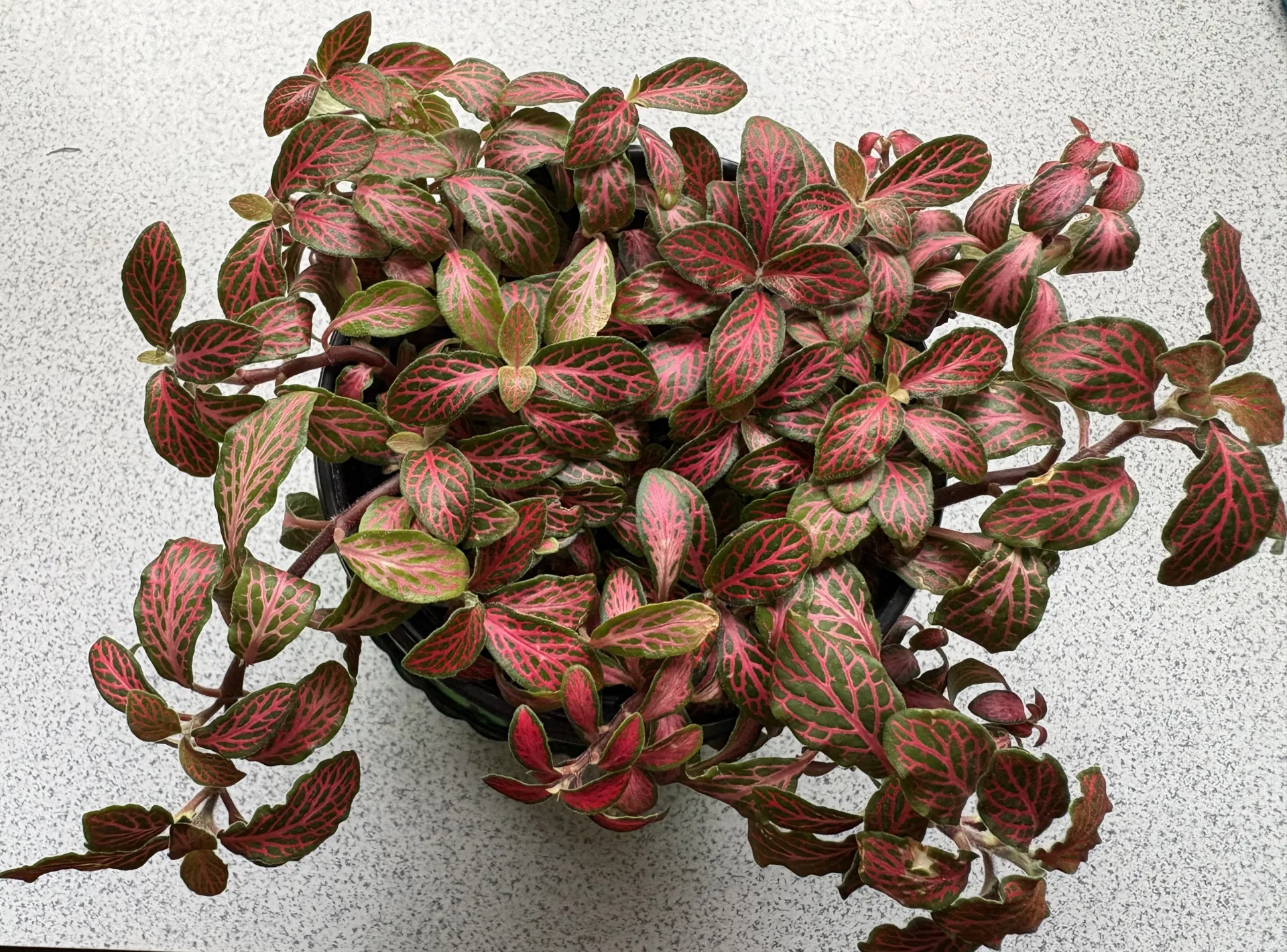
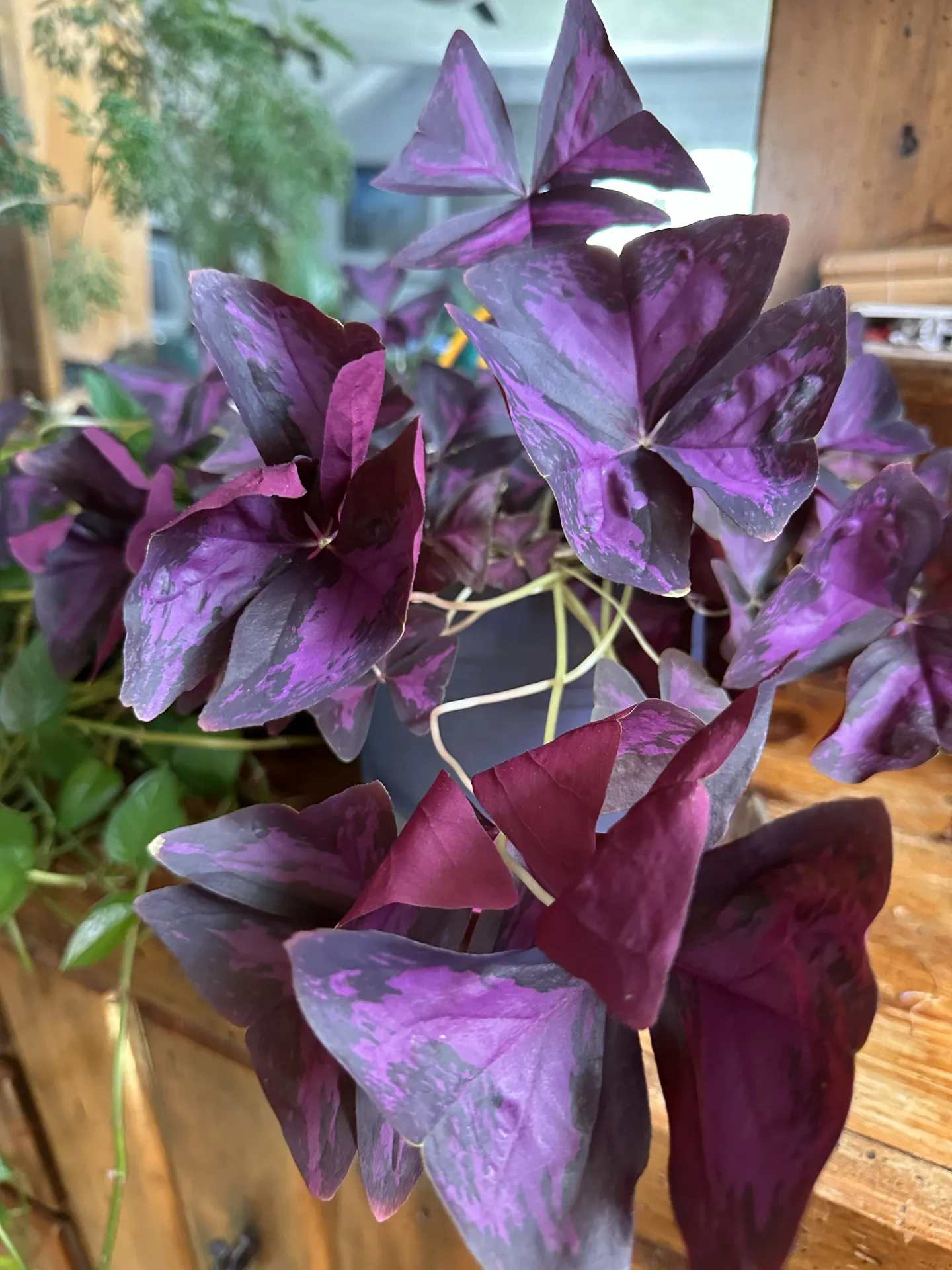
EXTERNAL IMAGEIn its native tropical South America, nerve plant grows as a low-spreading ground cover. Its growth habit and preference for high humidity make it well suited to dish gardens and terrariums.
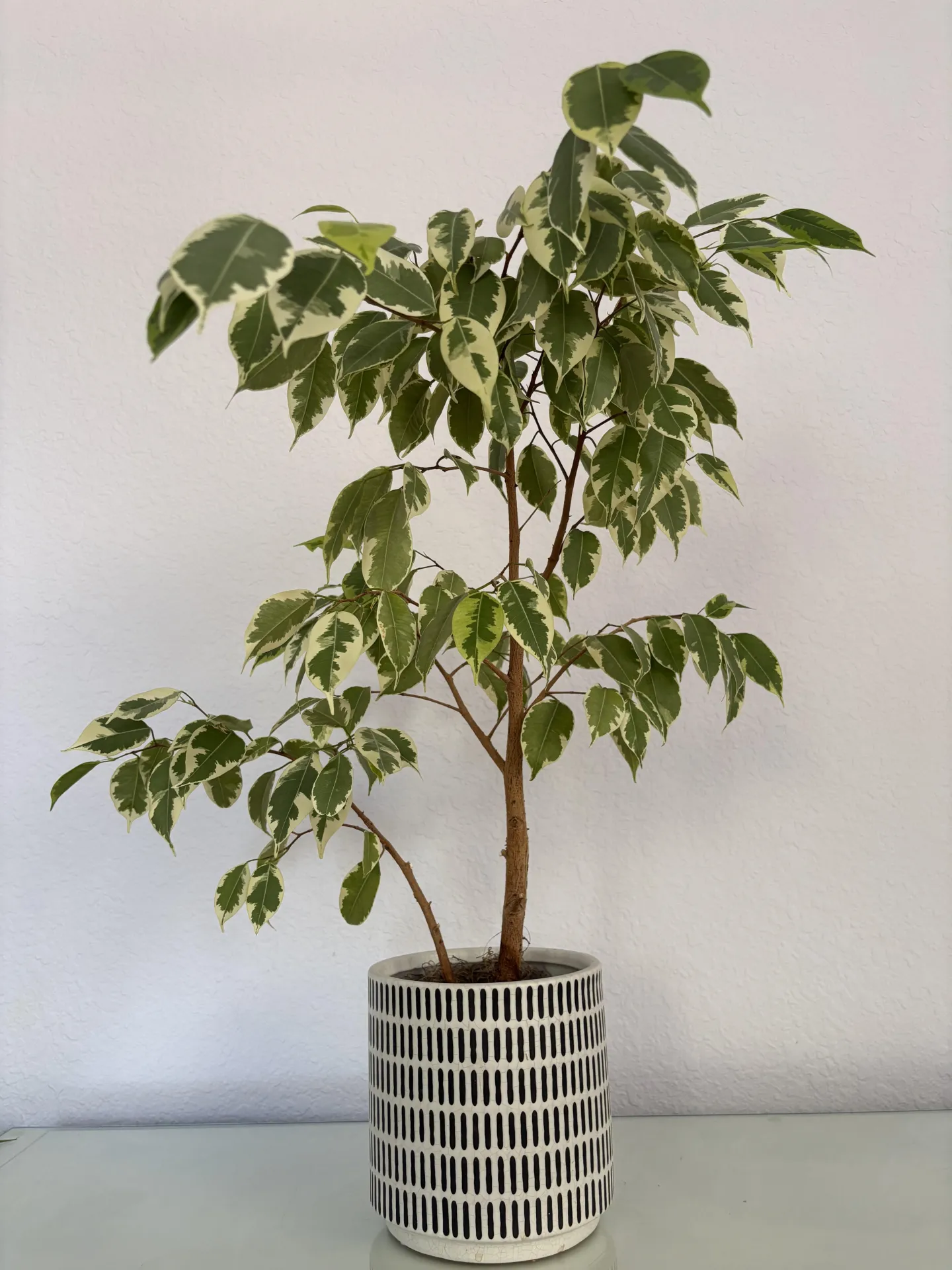
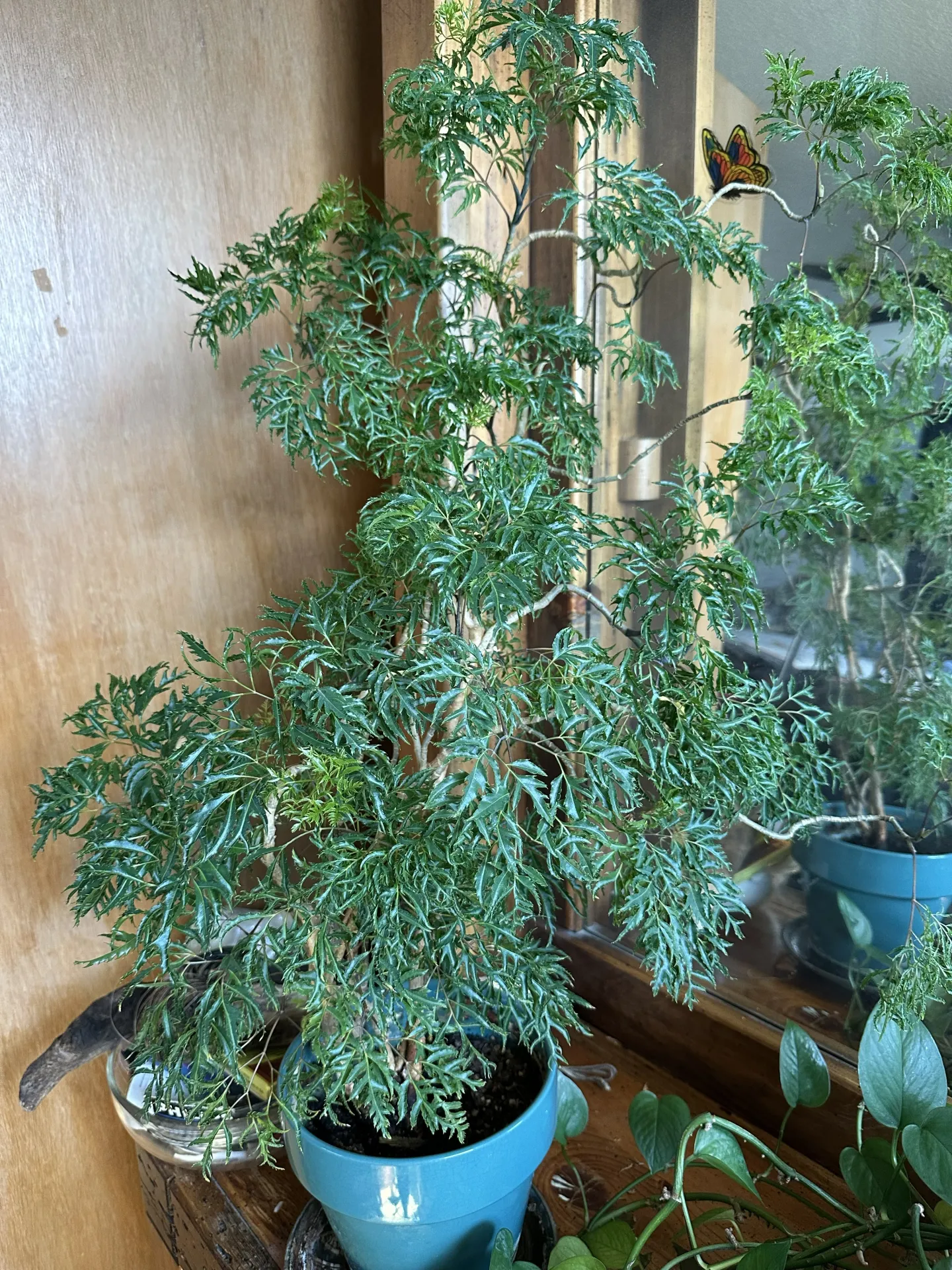
EXTERNAL IMAGEWeeping fig (Ficus benjamina) is notoriously sensitive to change. Moving it to a new location, exposing it to a sudden draft, or changing its watering routine can trigger leaf drop. Once the plant acclimates and conditions improve, it can produce new leaves.
I can attest to that. My weeping fig dropped most of its leaves when I didn't water it for two weeks. Fortunately, it has forgiven me and is putting out new leaves.
Growing houseplants is an adventure. General guidelines give us a good place to start, but every home—and every plant—is a little different. In the end, much of successful houseplant care comes down to observing how your plants respond and making adjustments along the way. With patience, attention, and a little trial and error, you'll get to know what helps your plants thrive.
Resources
Illinois Extension — Houseplant Care
Illinois Extension — Houseplant Varieties
Iowa State University Extension — Houseplants
University of Maryland Extension — Lighting for Indoor Plants
Penn State Extension Blog — Low Light Houseplants
Penn State Extension — Growing Herbs Indoors
New York Botanical Garden — Houseplant Basics
University of Missouri Extension — Caring for Houseplants
University of Georgia Cooperative Extension — Growing Indoor Plants with Success
University of Connecticut — Growing Houseplants
University of Missouri Extension — Lighting Indoor Houseplants
UC Marin Master Gardeners — Houseplant Care
Clemson Cooperative Extension — Exciting Houseplant Selections for Beginners
Mississippi State University Extension Service — Care & Selection of Indoor Plants
Want to Learn More?
This blog post is brought to you by the Help Desk of the UC Master Gardeners of Alameda County. Subscribe to our blog!
Have a Gardening Question? We'll Help.
Visit our Help Desk page to submit your question and see additional ways you can reach us.