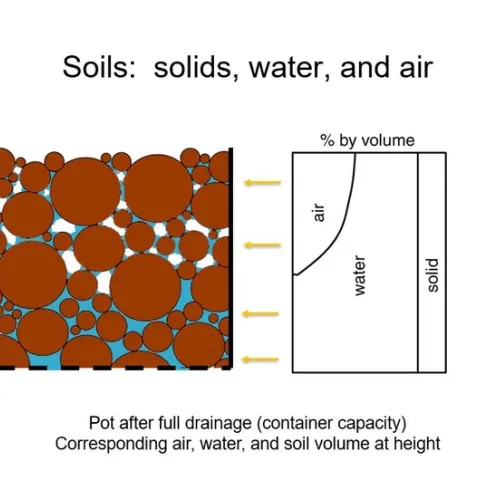
Parameters for air- porosity and water- holding capacity have been established for container soils. These parameters were developed based on the needs of the plant. But the occurrence of root diseases can be affected by the amount of air and water in the soil too.
Container soils should have a good balance between air- porosity and water- holding capacity. But what are the favorable levels of these two parameters? Most horticulturists will recommend providing a soil with good drainage.
Container soils must have the right balance of air-filled and water-filled pore space. This is especially important right after irrigation. I showed in the previous blog that field soils shouldn't be used in containers because they don't drain well and create a saturated root environment.
Over 4000 years ago, records depict Egyptians transporting Frankincense trees to Somalia. The trees were moved in containers. It is likely that these ancient horticulturists found great difficulty in growing plants and moving trees in containers filled with field soil.
Now through the spring is the time to take a close look at crops that are susceptible to downy mildew so that the disease can be detected early. This post follows the previous one that describes the general identification and biology of downy mildew diseases.