Pruning

Primary Image
manzanita
UC Marin Master Gardeners: Document

Pruning Manzanita

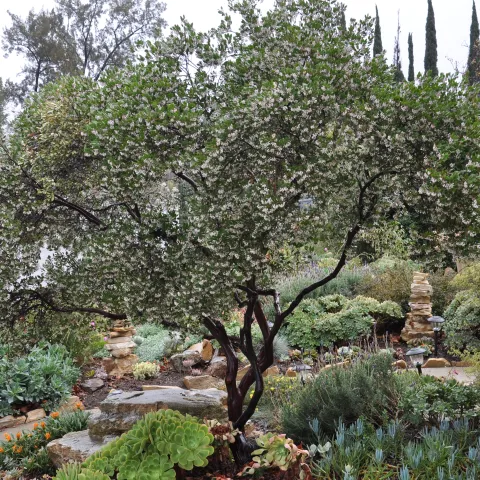
 Scientific NameArctostaphylos spp.Prized forDelicate flowers and leaves; twisting trunk and branches; and shiny red bark.Blooms onOld wood.When to PruneAugust, September, October, before flower buds emerge. Flowers form after the summer dormant season on old wood and bloom from the early winter to…
View Document
Primary Image
redbud
UC Marin Master Gardeners: Document

Pruning Redbud

 Scientific NameCercis occidentalisPrized forMass of pink flowers; and twisting branches and trunk. Blooms onOld woodWhen to PruneAugust – OctoberWhat to PruneUse thinning cuts to reveal the branch and trunk structure which is striking in the winter.> BACK TO PRUNING TIPS FOR NATIVE PLANTS
View Document
Primary Image
serviceberry
UC Marin Master Gardeners: Document

Pruning Serviceberry

 Scientific NameAmelanchier utahensisPrized forBerries. Upright structure.Blooms onOld woodWhen to PruneJanuaryWhat to PruneIt is best to thin canes from the bottom of the plant. Avoid heading cuts at mid-cane. They may produce “witches broom”, i.e., sprout lots of new growth at the end, causing a…
View Document
Primary Image
spice bush
UC Marin Master Gardeners: Document

Pruning Spice Bush

 Scientific NameCalycanthus occidentalisPrized forLush foliage; red flowers; and seedpods.Blooms onNew woodWhen to PruneJanuaryWhat to PruneOne approach is to keep the plant full by tip pruning only. Alternatively, a plant can be trained as small, multi-trunk tree by using thinning and releadering cuts…
View Document
Primary Image
Toyon Berries Heteromeles arbutifolia
UC Marin Master Gardeners: Document

Pruning Toyon

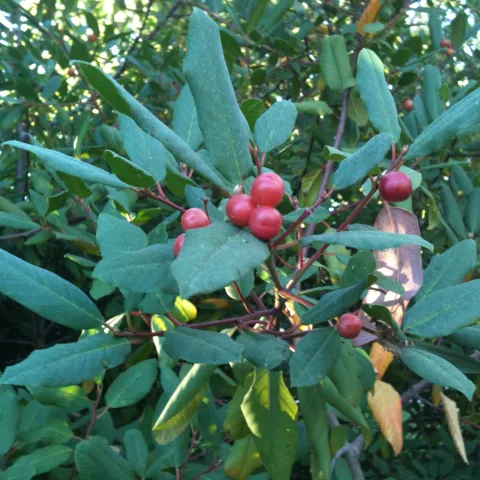
 Scientific NameHeteromeles arbutifoliaPrized forBright red berries in November and December.Blooms onOld woodWhen to PruneIf interested in the berries, prune in January. If not interested in the berries, prune in August or September.What to PrunePrune for structure in August or September, although this…
View Document
Primary Image
Vine maple
UC Marin Master Gardeners: Document

Pruning Vine Maple

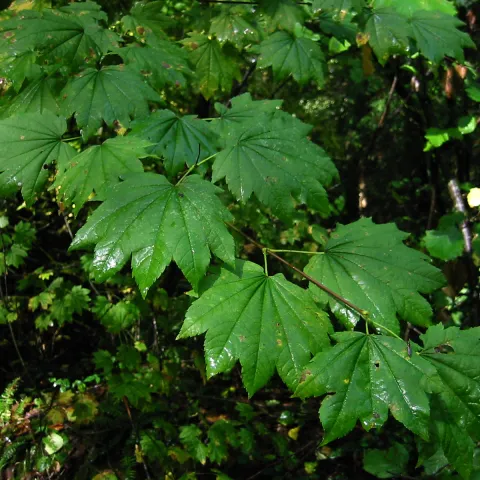
 Scientific Name:Acer circinatumPrized forLeaf detail and graceful structure.Blooms onNew woodWhen to PruneWinter or very early spring (Ideal: February).What to PruneUse thinning cuts to reveal the structure. Pluck leaves in dense areas. > BACK TO PRUNING TIPS FOR NATIVE PLANTS
View Document
Primary Image
ceanothus
UC Marin Master Gardeners: Collection

Pruning Tips: Native Plants & Trees

Monthly Care | Plant Care | Fertilizing | Pruning | Propagating | Planting | Tools | Garden Sanitation | Health & Safety in the Garden     Browse through a list of pruning information for the most common California native plants and trees!
View Collection
Primary Image
apples
UC Marin Master Gardeners: Document

Pruning Apple

Scientific NameMalus domestica Special ConsiderationsApples need sturdy branches. Heading cuts are necessary.  Fruit grows on:Old wood (spurs). Spurs form on one to three year old trees. Spurs continue to produce fruit for eight to 10 years, then die off. Trees are continually generating new…
View Document
Primary Image
Apricot tree
UC Marin Master Gardeners: Document

Pruning Apricot

Scientific NamePrunus armeniaca Special ConsiderationsApricots bloom early (February or March). Therefore, late spring rains can limit pollination.Apricots are susceptible to a number of diseases, including eutypa, a water-borne fungal disease. As a result, apricots should be pruned only when rains are…
View Document
Primary Image
cherry tree
UC Marin Master Gardeners: Document

Pruning Cherry

Scientific NamePrunus avium Special ConsiderationsGenerally, cherries are the most difficult fruit trees to keep alive. They do not tolerate wet feet and are very susceptible to brown rot, bacterial canker, root and crown rots, and eutypa, a water-borne fungal disease. As a result, cherries should be…
View Document