Pests & Diseases

Primary Image
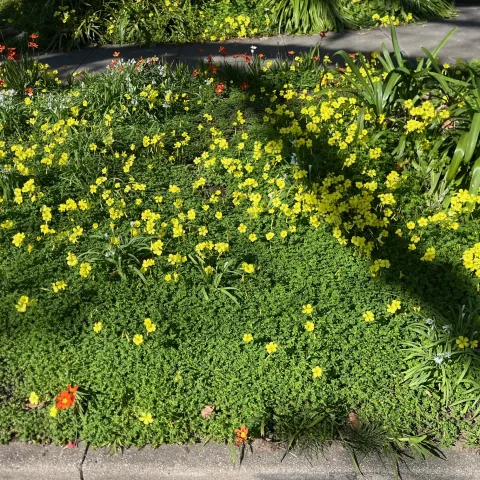
Bermuda buttercup infesting a bed of landscaped plants.
Pests in the Urban Landscape: Article

Spring is in the Air, and Oxalis is Everywhere

April 17, 2025
By Lindsey Hack
Bermuda buttercup (Oxalis pes-caprae), also called buttercup oxalis or sourgrass, might be a familiar sight in winter and spring, particularly to those who live in coastal regions or the Sacramento Valley. Some people enjoy seeing this plant’s cheerful yellow flowers pop up in their spring gardens, but for…
View Article
Thrips/TSWV status in Yolo & Colusa: Article

2025 Second Report-- April 16th

April 16, 2025
By Patricia A Lazicki, Neil McRoberts
General situation The oldest tomatoes have been in ground for more than a month, and planting is progressing rapidly. The warm weather in the past two weeks has pushed thrips population projections forward by a few days compared to the last report.  Thrips population First-generation adults are still…
View Article
Primary Image
Argentine Ant vs Tamarixia
Topics in Subtropics: Article

Ask the Experts Webinars from UC IPM

April 4, 2025
By Ben A Faber
What Are the UC Ag Experts Talking About?Event NameDateUC Ag Experts Talk: Considerations for Cover Crops and Weed Management   3/19/2025 UC Ag Experts Talk: Integrated Soil Health Management   4/30/2025 UC Ag Experts Talk: Mealybug Management in Citrus Orchards in California   5/21/2025 What…
View Article
Primary Image
Armillaria
UC Marin Master Gardeners: Document

Armillaria

 Armillaria root rot, also known as Oak root fungus, is a disease of many different plants.  There is no known effective cure.  Root rot fungus disease of trees and woody plants. Affects palms, succulents, ferns and other herbaceous plants like begonia, daffodil, dahlia, and geranium.  No…
View Document
Primary Image
Damping Off
UC Marin Master Gardeners: Document

Damping Off

Seedlings sometimes fail to sprout or die soon after. Seeds may rot before germinating, shoots may decay before they emerge, or stems of seedlings may be attacked near the soil line, causing young plants to collapse. These diseases are collectively called “damping off,” likely caused by a number of soil…
View Document
Primary Image
downy mildew
UC Marin Master Gardeners: Document

Downy Mildew

Downy mildews, including Peronospora and Plasmopara spp., are pathogenic water molds (oomycetes) that primarily damage foliage. Hosts include cane berries, roses, various herbaceous ornamentals, and many fruit, grain, and vegetable crops. Category Fungi Signs/Symptoms Downy mildew causes pale green to…
View Document
Primary Image
Brown, scorched-looking leaves are symptoms of fire blight in trees in the apple and pear family. Photo: Sebastian Stabinger
UC Marin Master Gardeners: Document

Fire Blight

 Fire blight is a common and frequently destructive disease of pome fruit trees and related plants.  The disease can destroy limbs and even entire shrubs or trees. Caused by the bacterium Erwinia amylovora. Pear (Pyrus species) and quince (Cydonia) are extremely susceptible.  Apple, crabapple …
View Document
Primary Image
fusarium wilt
UC Marin Master Gardeners: Document

Fusarium Wilt

Fungus.  Various host-specific forms of Fusarium oxysporum can kill infected plants. Hosts include asparagus, bean, cabbage, cantaloupe, pea, tomato, and watermelon. There are many varieties of host plants with resistance to Fusarium wilt.Like verticillium, causes leaf…
View Document
Primary Image
blight
UC Marin Master Gardeners: Document

Late Blight on Potatoes

Late blight of potato was responsible for the Irish potato famine of the late 1840s. Late blight is caused by the oomycete Phytophthora infestans. Oomycetes are fungus-like organisms also called water molds, but they are not true fungi. Category Fungi Signs/Symptoms Lesions appear as small dark green…
View Document