
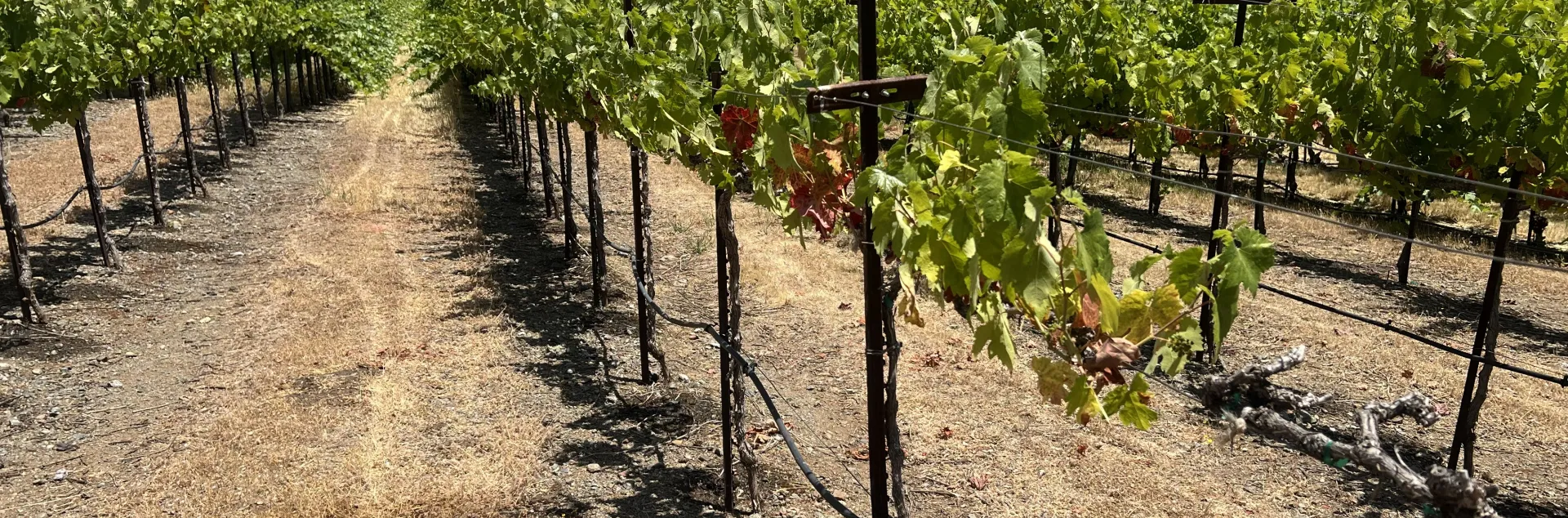
Irrigation approaches and scheduling guide for growers in Central Sierra
Efficient irrigation management is important for sustainable crop production especially in the water limited/drought prone areas. Farmers in the Central Sierra region grow different types of crops, and each crop has different water needs. Soil type, weather conditions, crop growth stage, and irrigation systems affect how much water is needed. Using proper irrigation scheduling approach can help growers save water, reduce water loss, and maintain crop production.
This article provides simple and practical irrigation scheduling approaches for growers. The focus is on methods that are supported by research, tested in the field, and easy to use. This information is especially useful for small scale farmers who may need low cost and practical irrigation management options.
Embracing the goal of irrigation scheduling
The goal of irrigation scheduling is to keep enough moisture in the crop root zone without creating conditions that are too wet or too dry. Plants need enough soil moisture to support important processes such as transpiration, photosynthesis, nutrient movement, and growth. When soil becomes too dry, plants cannot take up enough water, which can create water stress and reduce crop yield and quality. However, applying too much irrigation water can also create problems. Very wet soils for a long time can reduce oxygen availability for roots, increase disease risk, and move nutrients below the root zone.
Therefore, successful irrigation management requires keeping the root zone moist but also well aerated. Good irrigation scheduling helps growers answer two important questions: when should irrigation start and how long should irrigation continue? Applying water at the correct time and in the correct amount helps maintain crop growth and water conservation.
A look at evapotranspiration (ET)
One common method for irrigation scheduling is the evapotranspiration (ET) based approach. This method estimates how much water a crop uses by combining weather and crop data. Reference evapotranspiration (ETo), which is available from CIMIS (California Irrigation and Management Information System) weather stations, is multiplied by a crop coefficient (Kc) to estimate actual crop water use (ETc). ETo is a total water loss in the form of evaporation and transpiration from a well watered grass growing at the CIMIS weather stations; whereas Kc is specific to each crop that is developed based on research and can be found from UC resources. The product of these two numbers gives total water use by a particular crop on a particular day based on current weather conditions (ETo x Kc = ETc). This method provides a good starting point because it can be used for many different crops and locations.
ET based scheduling estimates the amount of water removed from the field and helps growers decide how much water needs to be replaced through irrigation. This method is especially useful for deciding irrigation duration, or how long an irrigation event should run. Hot, dry, or windy days can increase crop water use, while cooler conditions can reduce water demand. Because of these changes, using the same irrigation schedule every week may not provide the correct amount of water. A fixed schedule, such as irrigating every few days for the same amount of time, may result in too much or too little soil moisture.
However, actual crop water use may change depending on local field conditions such as soil type, crop variety, plant size, and irrigation efficiency. For this reason, ET based scheduling should be adjusted based on field observations and other irrigation scheduling approaches.
Considering soil moisture monitoring
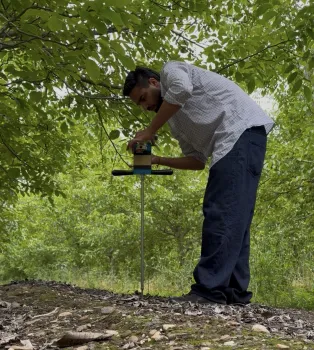
Soil moisture monitoring is another way to improve irrigation decisions. This method measures how much water is available in the soil where plant roots grow. For small farms, simple soil checking methods such as using a shovel to dig and see the depth of soil moisture and using a feel and appearance method, can still provide useful information. Growers can also use soil moisture sensors, tensiometers to understand soil water conditions. Soil moisture information helps growers see if irrigation water is reaching the root zone and if the crop has enough available water. It helps check if ET based irrigation schedules are working correctly. However, soil can be different across a field, so sensor location is important. Soil moisture sensors work best when they are placed in areas that represent crop root conditions.
Many fields benefit from using sensors at two depths. A shallow sensor is placed where most active roots are located and helps determine when irrigation is needed. A deeper sensor is placed near the lower part of the root zone and helps show whether irrigation water reached the desired depth. The deeper soil area can act as a water reserve for plants when the upper soil becomes dry. If both shallow and deeper soil layers become too dry, the crop has a higher chance of experiencing water stress. Proper sensor selection, installation, and maintenance are important for successful soil moisture monitoring. Sensors should have good contact with the soil and should be installed in locations that represent the field conditions.
Different fields, soil types, crops, and planting dates may need separate monitoring locations. Soil moisture sensors are very helpful for deciding when to start irrigation, but they are usually not the best tool for deciding when to stop irrigation. Irrigation water does not always move evenly through the soil, especially with drip or micro-irrigation systems. ET based calculations are usually better for estimating the correct irrigation duration.
Observing the plant is not as simple as it may seem
Plant based monitoring is another method that helps growers understand irrigation needs by looking directly at the crop. The plant shows how it responds to water availability. Growers can observe plant growth, leaf condition, and signs of water stress. More advanced methods can measure plant water status using pressure bomb and sensors. Plant based information is valuable because the crop responds to all field conditions, including soil moisture, weather, and irrigation practices. It helps growers know if the crop is receiving enough water. However, some plant monitoring methods need special equipment, training, or more time, which may make them difficult for some small scale growers to use regularly.
Understand the soil-water balance
Another useful approach is the soil water balance method. This method tracks water going into and leaving the soil. It considers irrigation water, rainfall, crop water use, and the amount of water stored in the soil. By understanding the soil water balance, growers can make better decisions about when to irrigate and how much water to apply. This method can improve irrigation efficiency, but it requires good information about the field and regular record keeping.
A good irrigation scheduling approach combines several methods together
Growers can first estimate crop water use using ET information from weather data and crop coefficients. Then they can track soil water conditions by checking irrigation, rainfall, and crop water use. Soil moisture measurements and plant observations can be used to check if the irrigation plan is working correctly. Based on this information, growers can adjust irrigation timing and the amount of water applied. Growers should regularly check irrigation systems for leaks, clogged emitters, broken sprinklers, and uneven water distribution. Testing irrigation distribution and uniformity helps make sure all areas of the field receive the correct amount of water. Good irrigation practices include checking irrigation system performance/pressure regularly, applying water in a way that allows proper infiltration and preventing any runoff. Pulse irrigation, where water is applied in shorter cycles with breaks between applications, can improve water movement into the soil compared with one long irrigation event especially for tree crops. It allows water to reach the desired depth which encourages the development of deeper roots for better anchorage and tap deeper soil moisture reserves.
Therefore, combining science based irrigation tools with regular field observations can help growers make better water management decisions and improve long term farm sustainability. For more information and assistance with your irrigation scheduling you can contact UC Cooperative Extension Farm Advisor.
Contact Hardeep Singh with questions in Amador, Calaveras, El Dorado, and Tuolumne Counties