
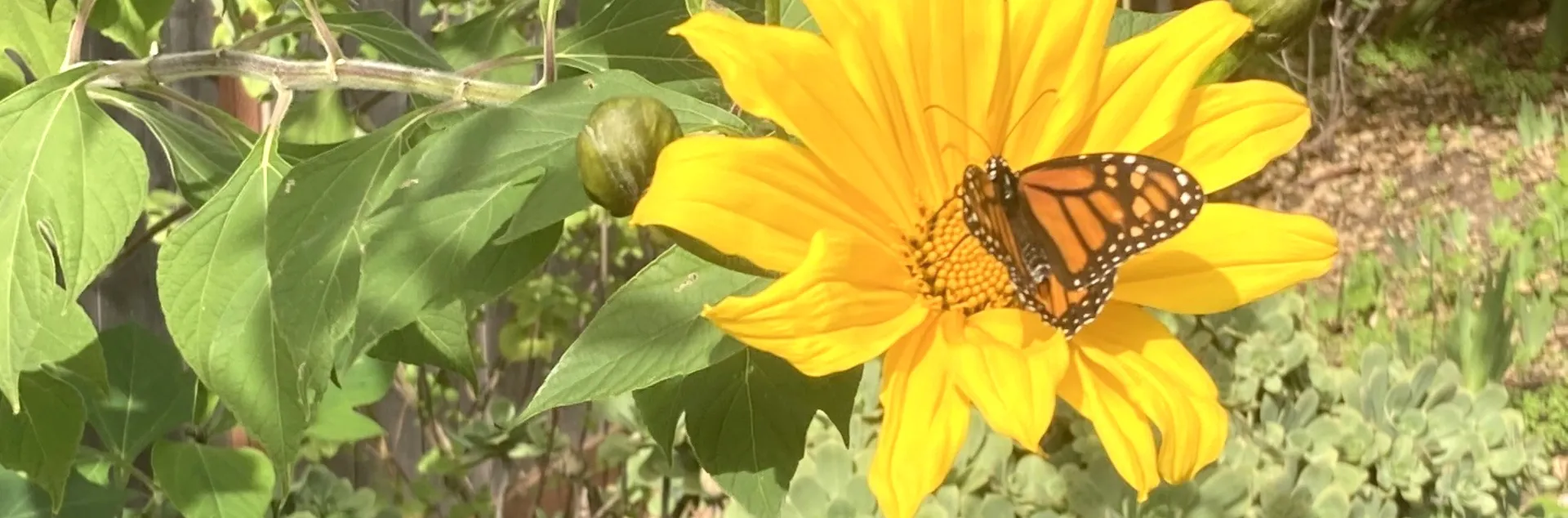
The sunflower, Helianthus annuus, is an annual in the Asteraceae family widely seen across California. From ancient domestication to modern gardens, sunflowers are easy to grow, offer food and habitat for wildlife, and brighten our gardens with cheerful blooms.
Dating back 4500 or more years, Indigenous peoples of North America were the first to domesticate the sunflower. As part of the Eastern Agricultural Complex, sunflowers were selected over generations for larger seeds and more pronounced flower heads. They were used for food, oil, dye, medicinal treatments, and ceremonial purposes.
Spanish explorers arrived in North America in the 16th century. They brought sunflower seeds back to Europe. Russians embraced sunflowers for ornamental and agricultural purposes. By the 19th century, sunflowers became a key oil crop in Eastern Europe. In some interpretations of the traditional “Three Sisters” planting system, corn, beans, and squash, the sunflower is the symbolic “Fourth Sister” attracting pollinators and watching over the other plants.
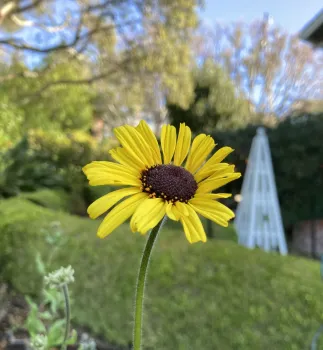
Some sunflower cultivars can be used to remove toxins and heavy metals from the soil, highlighting their ecological value for phytoremediation. In U.S. agriculture, oilseed sunflowers produce small black seeds used in cooking, cosmetics, and biofuel.
One of the sunflowers’ most fascinating traits is heliotropism. Young plants track the movement of the sun across the sky. They begin the day facing east, follow the sun to the west, and reset overnight to face the east again. Once mature and in full bloom they stay facing east, which warms the seed’s head early in the day and attracts more pollinators.
Sunflowers are easy to plant. Most varieties thrive in full sun (6- 8 hours a day) and well-drained soil. Seeds can be sown directly into the ground after the threat of frost has passed. Space seeds 12- 18 inches apart depending on the variety.
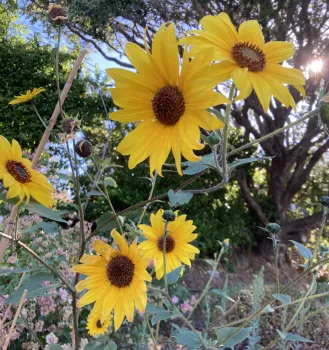
Sunflowers are heavy feeders. Amend the soil with compost or well-rotted manure before planting. Other natural amendments include bone meal for root development and blood meal for rapid leaf growth. Water deeply and infrequently, allowing the plant to develop a robust root system. Remember to provide mulch for water conservation.
If you are growing sunflowers for seed, know when to harvest. Once the back of the flower is dry, cut the heads and let them dry in a well-ventilated space or hang them upside down. The seeds should rub out easily by hand. Wait too long and the squirrels will help themselves.
In Marin County both annual and perennial sunflowers can shine. Some favorites are:
- Common woolly sunflower (Eriophyllum lanatum) a California native perennial that looks like a sunflower, host to 7 species of butterflies and moths.
- Delta sunflower (Helianthus annuus) Grows 6 ft. tall and 5ft. wide, multiple blooms for several months, native to California and deer resistant.
- Jerusalem artichoke (Helianthus tuberosus) A perennial prized for nutty tubers. The “sunchokes” (tubers) are edible. Harvest tubers for replanting next year.
- Lemon Queen (Helianthus annuus) A hybrid variety with soft yellow blooms and branching stems.
- Mammoth Russian (Helianthus annuus) enormous heads 1 ft. wide with stalks 10 – 12 ft. tall. - seeds for roasting and feeding birds.
- Mexican sunflower (Tithonia diversifolia) 6-10 ft. tall with large yellow flowers provide an ideal landing pad for butterflies.
- Teddy Bear (Helianthus annuus) 2- 3 ft. dwarf with soft fuzzy flower heads great for kids’ gardens.
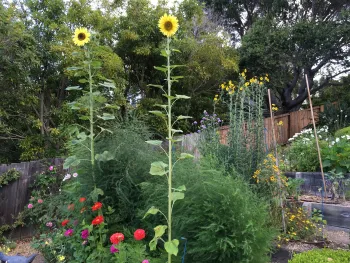
Plant sunflowers with companions like marigolds and zinnias that thrive in the same conditions. Pair them with herbs like basil, dill, and rosemary. These aromatic plants also attract beneficial insects like ladybugs and butterflies. Consider the tall varieties as living trellis. Branched sunflowers work well with sprawling mini pumpkins.
Beyond their beauty, sunflowers are excellent habitat plants offering nectar and pollen for a wide array of bees and butterflies. Their seeds are a valuable food source for birds, making them a wonderful choice for wildlife and earth-friendly gardens.
By Alice Cason, May 2, 2026