
Although we’re in the middle of winter, soon we’ll witness the unveiling of springtime and all her joyous colors: brilliant orange poppies, deep purple iris, and vivid yellow tidy tips. And after that beguiling display, we can look forward to summer’s velvety sages and rugged buckwheats.
Ever wondered how these flowers keep showing up year after year? There’s no garden center in the wild. No mail order catalog. No Johnny Appleseed.
The answer? It varies, depending on whether they’re annuals or perennials, but behind it all is a tireless army of pollinators: hummingbirds, bees, butterflies, beetles, wasps, flies, bats, and more.
The work these tireless creatures perform is critical. Pollination accounts for 80% of the world’s flowering plants, including most of our food crops. Without pollination, the environment around us would collapse, and we humans would cease as a species because we rely on plants for food and oxygen.
But don’t worry! The system has been working for at least 130 million years.
Pollination: how it works
Virtually every seed-bearing and cone-bearing plant requires pollination. Pollen, that yellow dust that makes you sneeze, bears a plant’s male sex cells. When a bee or other pollinator transfers that pollen from the male parts of a flower to the female parts of the same or another flower in the same species, pollination occurs – that is, fertile seeds are produced.
When pollination occurs within the same flower, it’s called self-pollination. When it occurs between different flowers, it’s called cross-pollination. Cross-pollination is preferable because it produces more genetic diversity, which in turn makes a species more likely to survive by adapting to its changing surroundings.
Pollination between two completely different species does not produce viable seeds because the genetic material is incompatible. In other words, a poppy and a pine tree aren’t going to cross-pollinate. However, pollination between two closely related species can sometimes produce a hybrid offspring that contains traits from both parents. For instance, a habanero and jalapeño pepper might cross to create a fiery hybrid. Or your daughter might have your nose and your spouse’s eyes. You know how it works.

Meet the pollinators
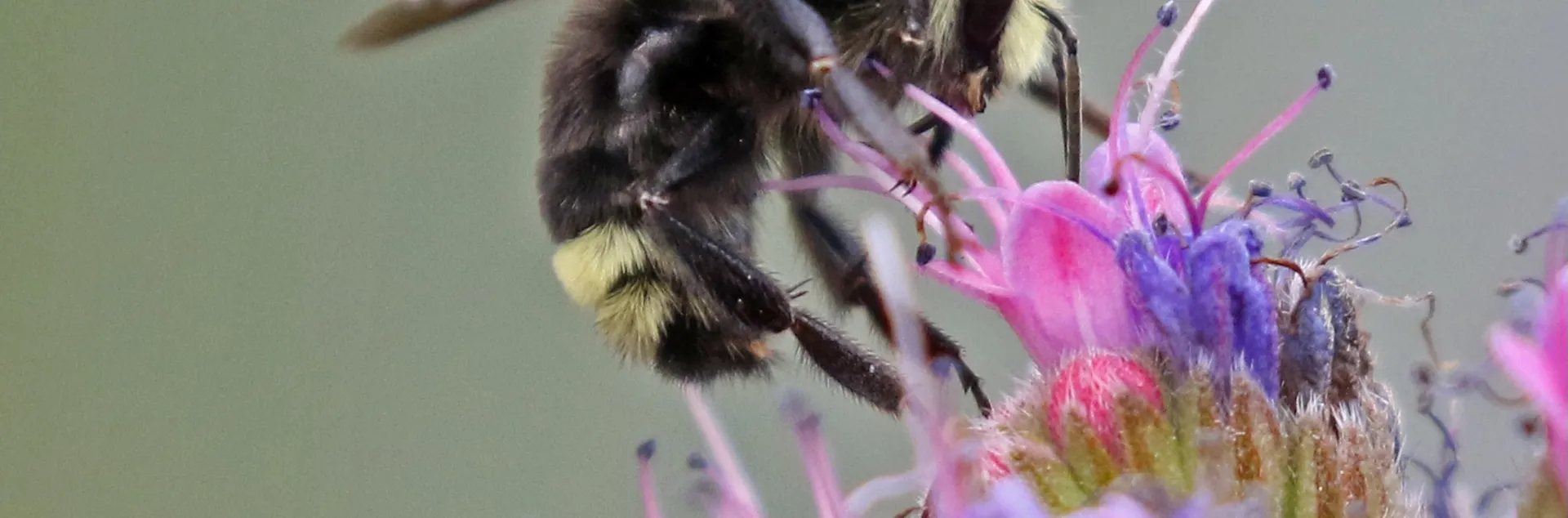
The first pollinator that probably comes to mind is the honeybee, the pervasive European insect introduced to California in 1853. Honeybees pollinate many California crops and are actually classified as domesticated livestock like sheep and goats. Although honeybees are helpful on the farm, they aren’t necessarily good for the environment. Why? Because they’ve roamed far beyond the farm, which affects our native bees. California has 1,600 native bee species, and honeybees can transmit diseases and often out-compete them for food. In addition, native bees are better pollinators and they also pollinate the native plants that are critical to our biodiversity.
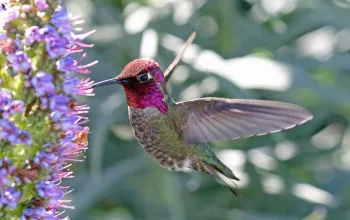
Hummingbirds, on the other hand, are always welcome pollinators. These beloved birds gather pollen on their beaks and foreheads while sipping nectar, and they have the added benefit of being able to hover over flowers for easy access. Hummingbirds appreciate tubular flowers that are red or orange.
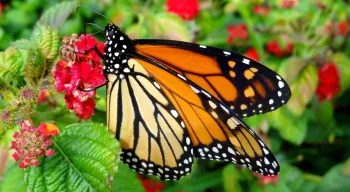
Butterflies are lovely pollinators, but they aren’t as efficient as bees at moving pollen. They pick up a bit of pollen on their long, spindly legs as they flutter from flower to flower. They have good vision but a weak sense of smell. Butterflies appreciate flowers in clusters, which provide landing pads.
They may not be as alluring as butterflies, but flies, gnats, and even mosquitos are also worthy pollinators. Like chocolate? You can thank a small midge fly, the sole pollinator of the cocoa plant.
Beetles were among the first insects that visited flowers and they remain important pollinators for ancient species like magnolias. They eat their way through plant parts and prefer flowers that are white or greenish, sweet-smelling, and bowl-shaped.
Bats, the only flying mammals, pollinate over 300 species of fruit, including bananas and mangoes. They also pollinate agave, which is used for tequila. Margarita, anyone?
By Marie Narlock, January 24, 2026