
The Need for Help
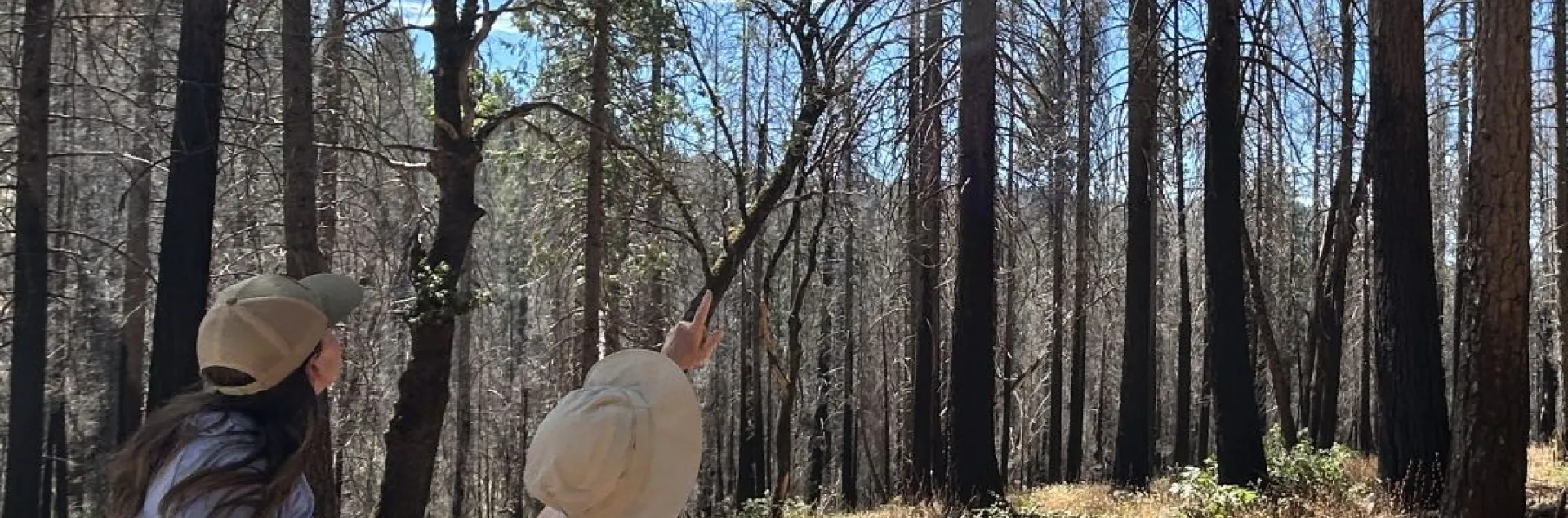
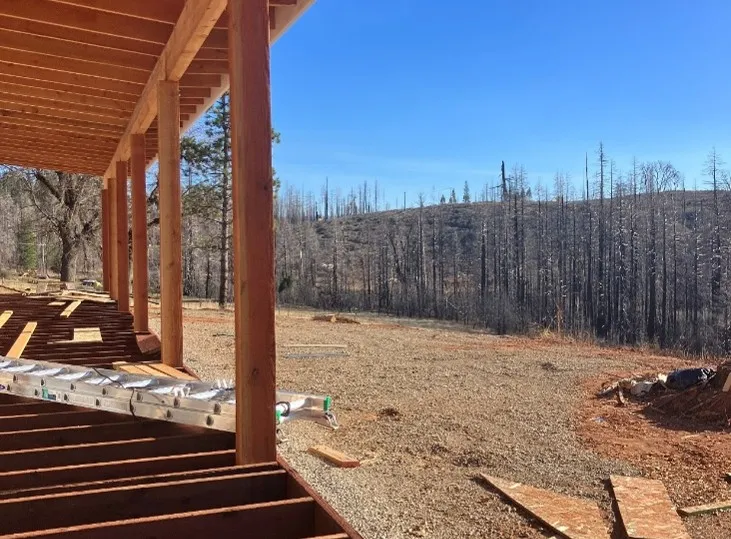
Forest stewardship actions to take after wildfire are primarily determined by the severity of fire effects to forest vegetation (see Assessing Fire Severity in Sierra Nevada Forests), vegetation type, management objectives, and available resources. In many California forests, rapid restoration treatments are needed to ensure continued forest cover where fire effects are severe. Treatments can include dead tree removal, replanting, and controlling competing vegetation (see Post-Fire Assessment of Fire Severity). Landowners often need assistance with completing forest restoration work.
Professional Assistance
A California registered professional forester (RPF) can help landowners understand their options for post-fire restoration treatments. Landowners may need to hire an RPF to write a forest management plan. When trees are sold, bartered or traded, permits must be obtained by an RPF and trees must be cut by a California licensed timber operator (LTO) (See Professional Assistance).
Landowners may also need to consult with other professionals and regulatory agencies when undertaking forest restoration work on their own, such as a pest control advisor (PCA) when using herbicide to control competing vegetation (see Laws and Regulations Affecting Forests).
State and Federal Cost Share Programs
The cost of post-fire management can be very high. Harvesting dead trees for sale may subsidize additional restoration costs, but sales may not be feasible or may not provide significant revenue. State and federal government assistance programs that cover a portion of management costs are available to help landowners with post-fire forest restoration. Landowners must apply for these programs, a process which may require the development of a forest management plan (see Forest Management Plans for Private Forest Landowners). Most programs allow landowners to do some of the work themselves, though hiring a professional is sometimes required and may be preferable. Landowners are responsible for hiring their own contractors to complete forest work and initially cover restoration costs prior to partial reimbursement, which varies by program. Funds received from cost share programs must be reported as taxable income. Programs vary in their ability to provide technical assistance in planning restoration activities.
While restoration practices eligible for funding vary by program, the most commonly used programs cover immediate post-fire practices including cutting dead trees, processing woody material (including mastication, chipping, piling and burning), replanting, and controlling competing vegetation via herbicide or other methods.
Comparison of State and Federal Programs
California Forest Improvement Program (CFIP): Through CFIP, the California Department of Forestry and Fire protection (CAL FIRE) provides financial assistance to landowners with at least 20 acres of forest land. Each CFIP funded project must be at least five acres. Landowners must hire an RPF to complete the CFIP application and to complete the required forest management plan. A shorter CAL FIRE Mini Management Plan is accepted when the land has been damaged by wildfire.
Covered activities are typically limited to forest treatments, though some erosion control and road rehabilitation may be covered if it directly improves aquatic habitat. The program also covers RPF fees for development of a forest management plan and supervision of the project. They reimburse landowners for 80 to 90% of restoration costs. Landowners can choose to hire professionals and do some of the work themselves. (See the CFIP User’s Guide).
Environmental Quality Incentives Program (EQIP): Through EQIP, the USDA Natural Resources Conservation Service (NRCS) provides financial and technical assistance for agricultural and forest management activities. There is no minimum acreage requirement when the land has been damaged by wildfire. NRCS staff provide an environmental evaluation and can help in planning restoration activities, though a forest management plan may be needed, which must be developed by an RPF. EQIP will cover a broader range of restoration projects in addition to forest treatments. Landowners are reimbursed for restoration work at a standard flat rate per acre for each treatment type and may do some work themselves.
Emergency Forest Restoration Program (EFRP): The USDA Farm Service Agency (FSA) EFRP provides forest restoration assistance to landowners affected by a specific disaster. Landowners apply for assistance during an enrollment period. The FSA or a partner agency determines eligibility based on damage caused by the disaster and develops a forest restoration plant. Landowners hire contractors and are reimbursed up to 75% of costs.
Finding Assistance
In addition to the state and federal agencies who administer cost share programs, local organizations may provide assistance programs specific to a disaster or region and/or connect landowners with professionals and technical assistance: Start with these links:
- Natural Resources Conservation Service (NRCS): https://www.nrcs.usda.gov/programs-initiatives
- California Department of Forestry and Fire Protection (CAL FIRE): https://www.fire.ca.gov/what-we-do/grants
- Farm Services Agency (FSA): https://www.farmers.gov/working-with-us/service-center-locator
- Resource Conservation Districts (RCDs): https://carcd.org/page/interactive-rcd-map
- Fire Safe Councils: https://cafiresafecouncil.org/
- Prescribed Burn Associations: https://calpba.org/
- Firewise communities: https://www.nfpa.org/education-and-research/wildfire/firewise-usa
Table 1: Comparison of assistance programs
| Environmental Quality Incentives Program (EQIP) | California Forest Improvement Program (CFIP) | Emergency Forest Restoration Program (EFRP) |
Availability | Ongoing (periodic award dates) | Ongoing (periodic award dates) | Application period follows a specific disaster |
Minimum Acreage | None if significantly damaged | 20 acres total forestland ownership, 5-acre project minimum | One acre |
Cost Share | Flat rate/acre for each treatment type | 90% if substantially damaged | Up to 75% |
Treatments Covered | Broad conservation activities | Forestry practices (excluding new roads, fencing, etc.) | Forest treatments that address conservation issues created by disaster |
Technical Assistance | NRCS staff provide free technical assistance, RPF may be needed | Landowners must hire an RPF to complete application and forest management plan | FSA provides assessment of restoration need and a treatment plan |
Further Reading and ResourcesUCANR Forest Fact Sheet.
California Forest Improvement Program User’s Guide Laws and Regulations Affecting Forests Part I and Part II. UCANR Forest Stewardship Series 19 and 20. Forest Management Plans for Private Forest Landowners. UCANR Fact Sheet Professional Assistance. UCANR Forest Stewardship Series 24 Technical and Financial Assistance. UCANR Forest Stewardship Series 24. |
Find the printable version of this fact sheet below. Note that the pdf is for print purposes ONLY.
