
Authors: Mark Lundy, Maya Shydlowski, Caitlin Peterson
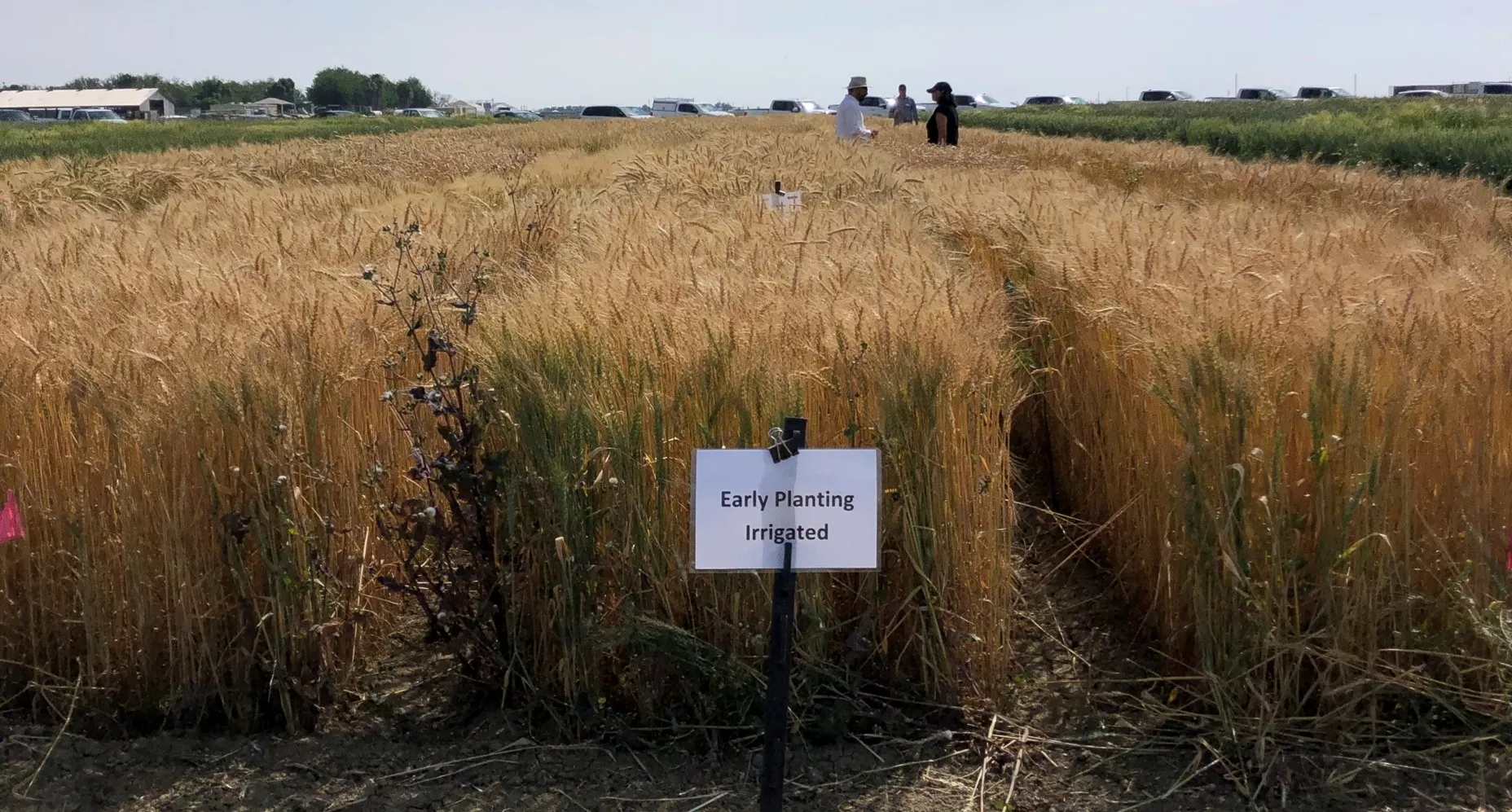
For several years, we’ve been working on how to get the most from limited water in the San Joaquin Valley. Recent field trials at the UC Westside Research and Extension Center tested winter cereals under both average and dry conditions: about 9 inches of seasonal rainfall in 2023-24 and only 4 inches in 2024-25.
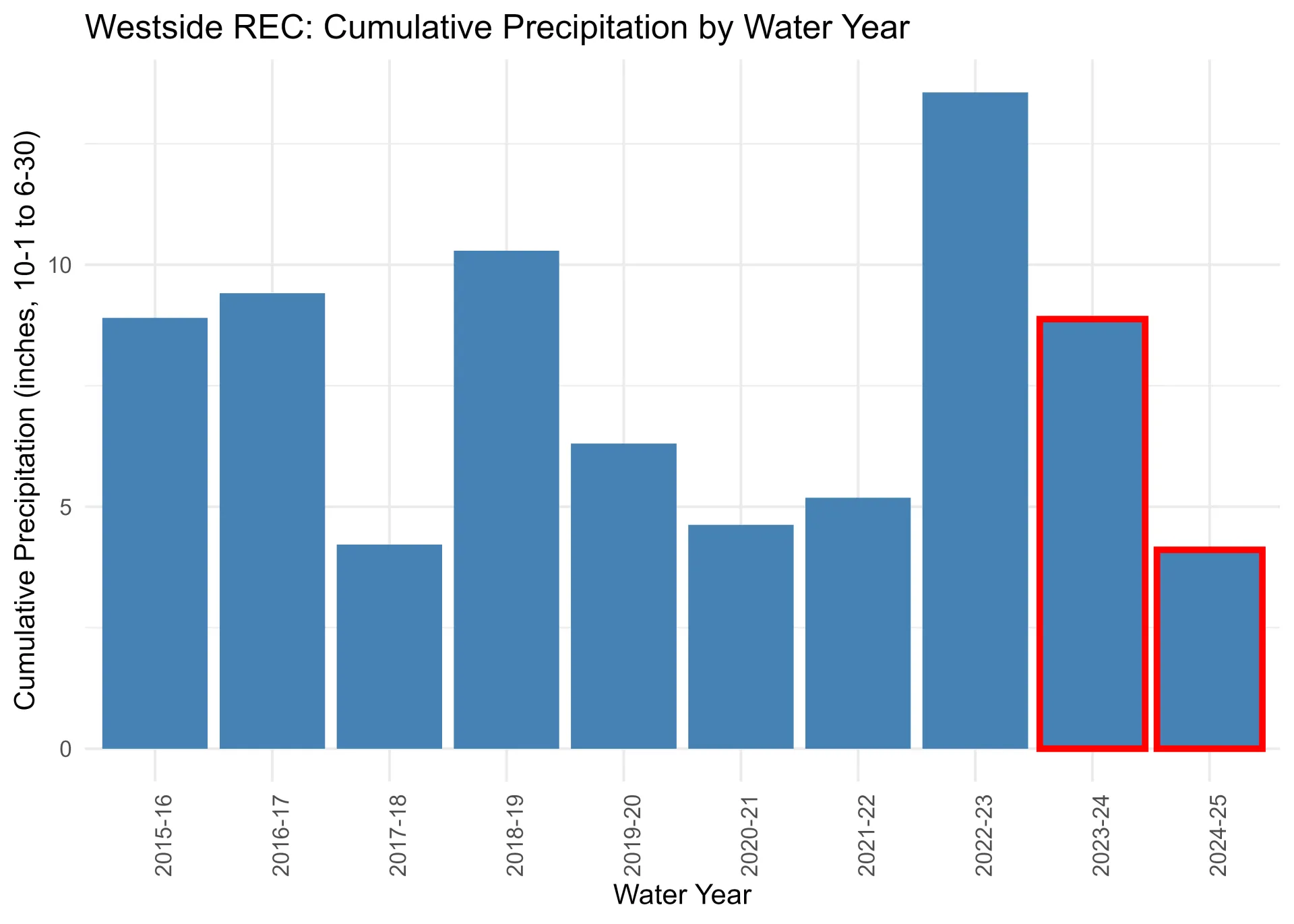
Figure 1. Seasonal rainfall totals across a 10-year period at the UC Westside Research and Extension Center (WSREC) located in western Fresno County. The 2023-24 and 2024-25 experimental years are indicated by the bars with the red outlines.
During these seasons, we ran experiments designed to pinpoint best management practices under severely limited irrigation availability. We planted wheat, triticale and barley at dates ranging from mid-October to January and either applied 4 inches of irrigation at planting or supplied no irrigation (rainfed). The establishment irrigation made a big difference. Without it, rainfed crop productivity was limited in the wetter year (2023-24), and in the very dry season (2024-25) the rainfed crop failed.
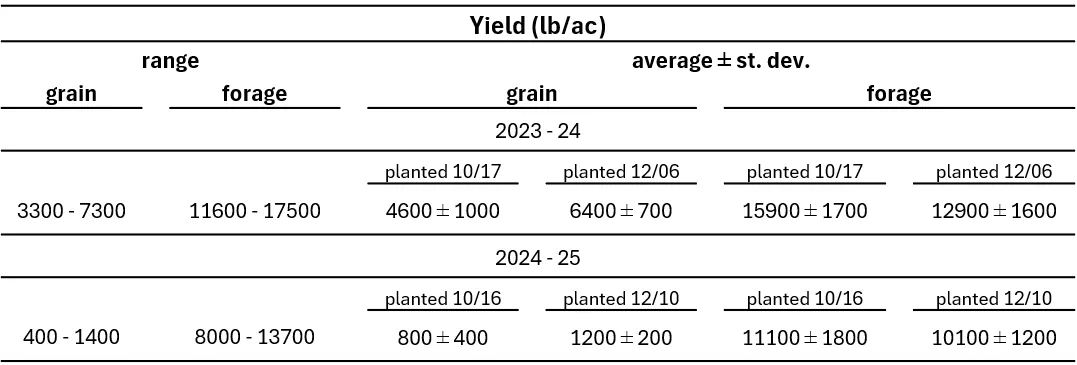
With only 4 inches at planting, however, forage production was surprisingly robust (see Table 1). Even in the drier season (2024-25), forage yields generally reached about 5–6 dry tons per acre, depending on the crop type, variety, and planting date. In contrast, grain yields were much more strongly affected by heat and water stress late in the season. Even still, up to about 3 tons of grain yield was attainable in the wetter year with the right management approach.
Table 1. Trials comprised of wheat, triticale, and barley with four varieties for each crop type conducted at UC Westside REC in western Fresno County. Crops received 4 inches irrigation at planting plus 9 inches of rainfall during 2023-24 or 4 inches of rainfall during 2024-25 (10/1 - 6/30).
Looking across both years, forage crops receiving only 4-inches of irrigation at planting produced roughly 1,100–1,500 pounds of dry matter per inch of total water received (irrigation plus rainfall). At a hay price of $150 per ton, that translates to roughly $250 in gross crop value per inch of applied irrigation. In terms of returns to water that is competitive with some much higher-value summer-irrigated crops grown in the Central Valley.
We also compared the seasonal water budget of winter cereals to fallow ground. Fallowing is a common approach for conserving water, but under the conditions we studied, leaving land fallow did not mean that all (or even most) of winter rainfall was stored in the soil for later use. In fact, when managed for high water productivity, winter cereal crops consistently produced a viable forage crop with relatively little difference in stored soil water by the end of the season compared to either fallow or rainfed management (see Figure 2).
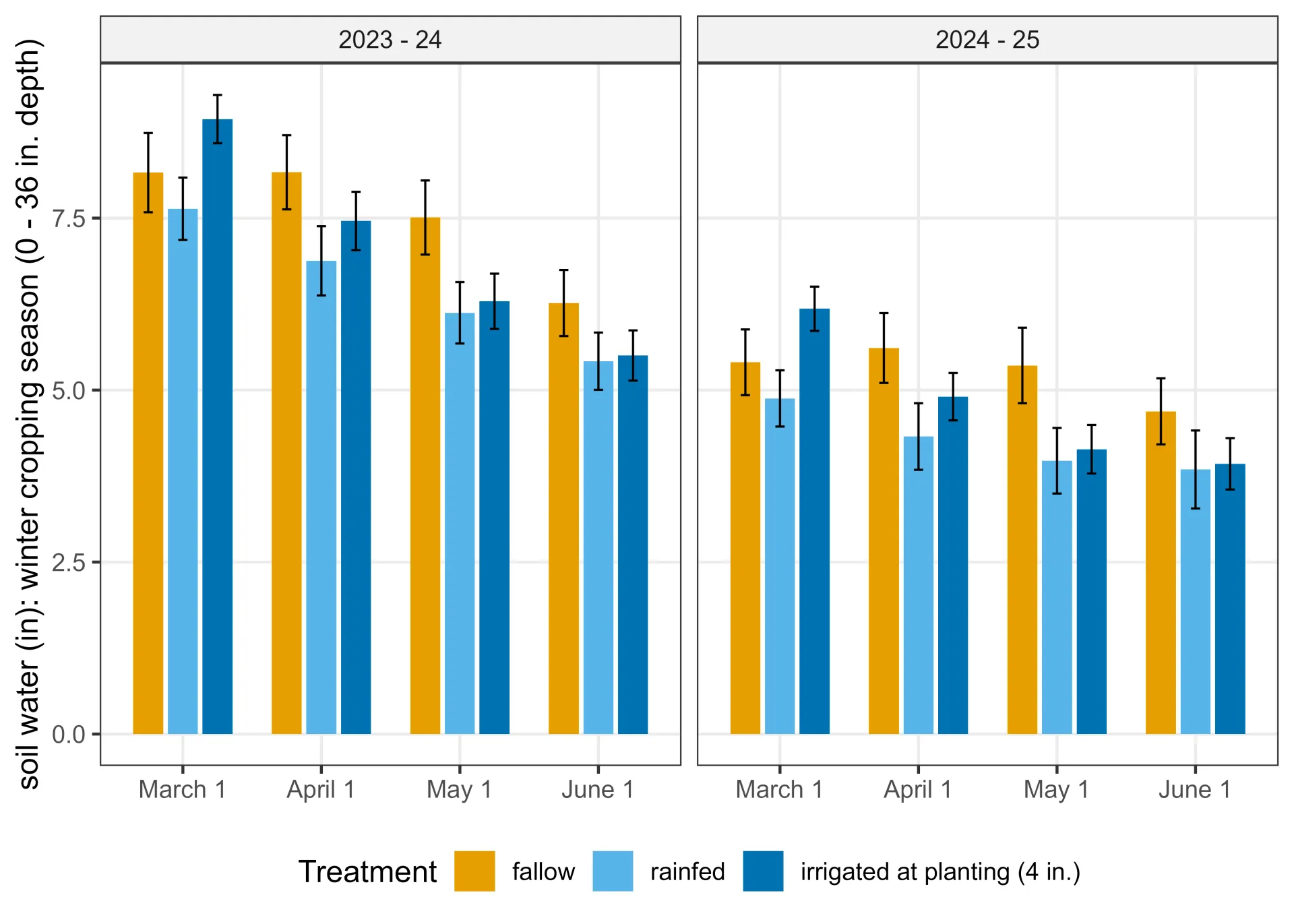
Figure 2. Late-season (March through June) soil water content (in.) to 3-foot depth in a fallow field, and winter cropped fields that were either not irrigated (“rainfed”) or irrigated with 4 inches at planting. Trials were located at the UC Westside Research and Extension Center (WSREC) located in western Fresno County. Results are averages across fields harvested for forage with planting dates that ranged from mid-October through January.
The takeaway? Even in the driest year of a 10-year stretch in one of the driest parts of the San Joaquin Valley, winter cereals produced a viable hay crop on as little as 4 inches of irrigation with little net change to the soil water balance. Although gross revenues from this type of cropping system approach are low compared to summer-irrigated perennials grown in the same region, returns to water are competitive and margins are routinely positive under the right conditions. In comparison to fallow ground, winter crops provide benefits at both the farm and regional scales that extend beyond the immediate crop revenue.
For more detail on this work, check out our recent report co-authored with the Public Policy Institute of California and other partners (https://www.ppic.org/publication/sgma-ready-crops-as-a-low-water-alternative-to-fallowing/).