
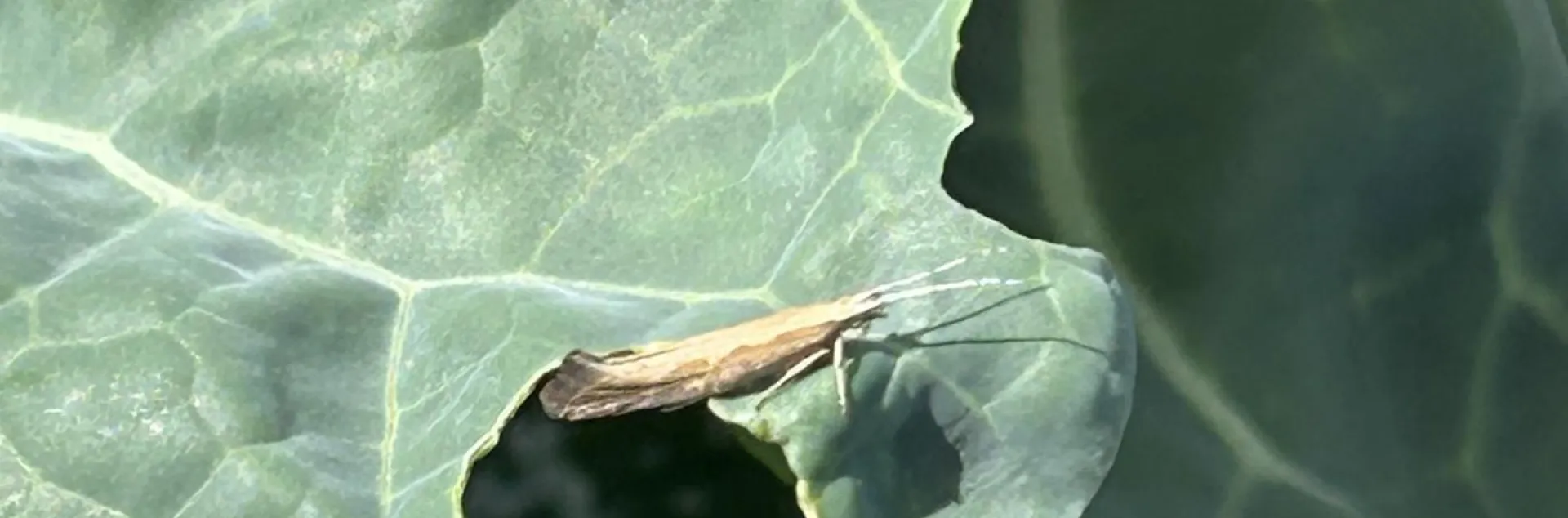
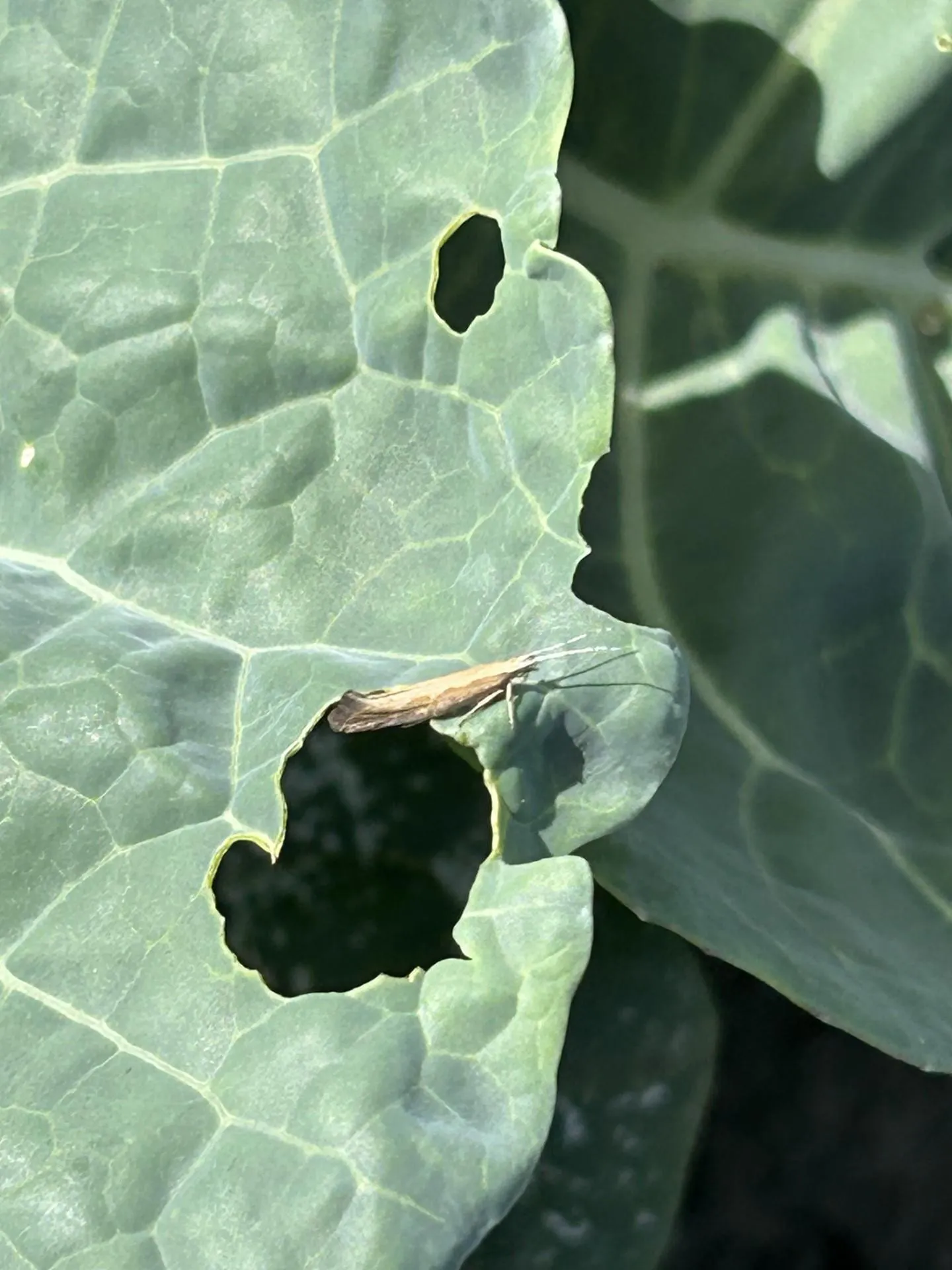
Diamondback moth (Plutella xylostella, DBM) is a major pest of Brassica crops in California. Many PCAs and growers in the Salinas Valley and across California have been facing economically devastating outbreaks of DBM over the past few years, in part due to favorable year-round environmental conditions for this pest and rising cases of resistance to major insecticide classes. Another challenge to managing DBM larvae is that they primarily feed on the undersides of the leaves. Many insecticides registered for DBM larvae work either by contact or ingestion of spray residues and are non-systemic, so chemical insecticide efficacy against DBM larvae requires adequate spray coverage of the canopy to reach susceptible larvae. Ensuring good uniform spray coverage and incorporating adjuvants to help insecticides spread, stick, penetrate, and absorb are critical when applying these insecticides to waxy brassica leaves.
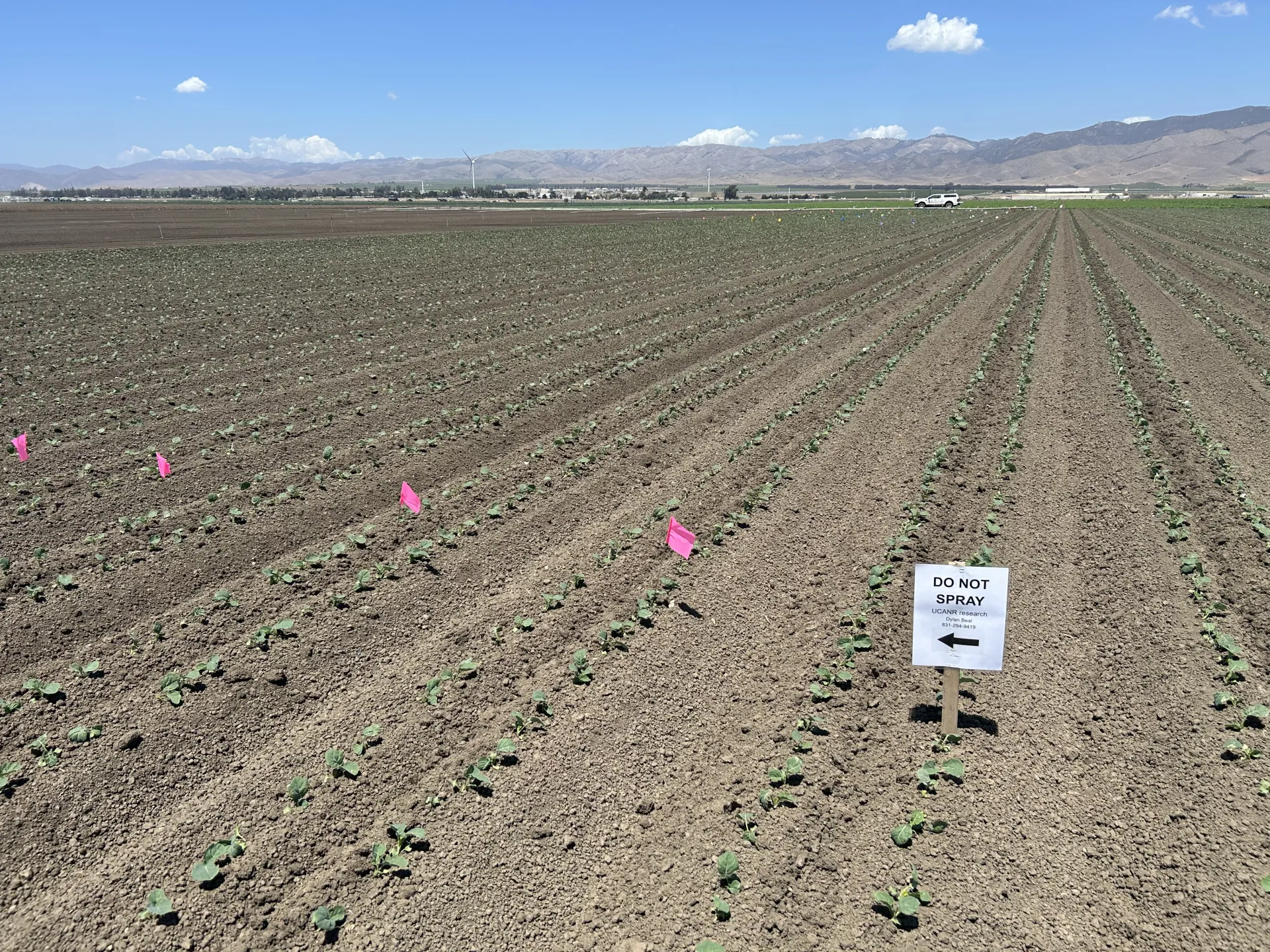
This summer, in collaboration with Salinas Valley grower and PCA partners, I conducted a field insecticide efficacy trial of commercially available, recently registered, and potential insecticide products for DBM larvae. It built off a preliminary fall 2025 insecticide trial that looked solely at commercial standards for DBM larvae in cauliflower transplants. In the summer 2026 trial, I wanted to compare recently registered and experimental pesticides to Salinas Valley commercial standards in broccoli seedlings (Table 1). I conducted the trial relatively early in the cropping cycle (4 weeks after wet date) when the plants were still relatively small and the canopies were open enough to allow adequate spray coverage. The trial consisted of two foliar spray applications (7/8, 7/14) of each treatment on four replicate plots in a randomized complete block design. Each plot consisted of two 40-inch broccoli beds by 35 feet. Approximately six-seven days after each treatment application, we collected 10 whole broccoli plants per plot. Plants were destructively sampled and we counted all live larvae and pupae on each individual plant.
Table 1: Treatment List
Trade name, active ingredients, rates, and dates of summer 2026 DBM insecticide efficacy trial. Not all materials are currently labeled for brassicas and/or DBM in California.
Six days before the first application date, the field infestation rate was low (0.366 larvae/plant). DBM pressure started to build as the trial progressed and did reach levels where treatment is recommended (0.5 – 1.0 larvae/plant). Six days after the first application date, although there was some variation in larval counts, DBM larvae per plant did not significantly differ among treatments (Table 2).
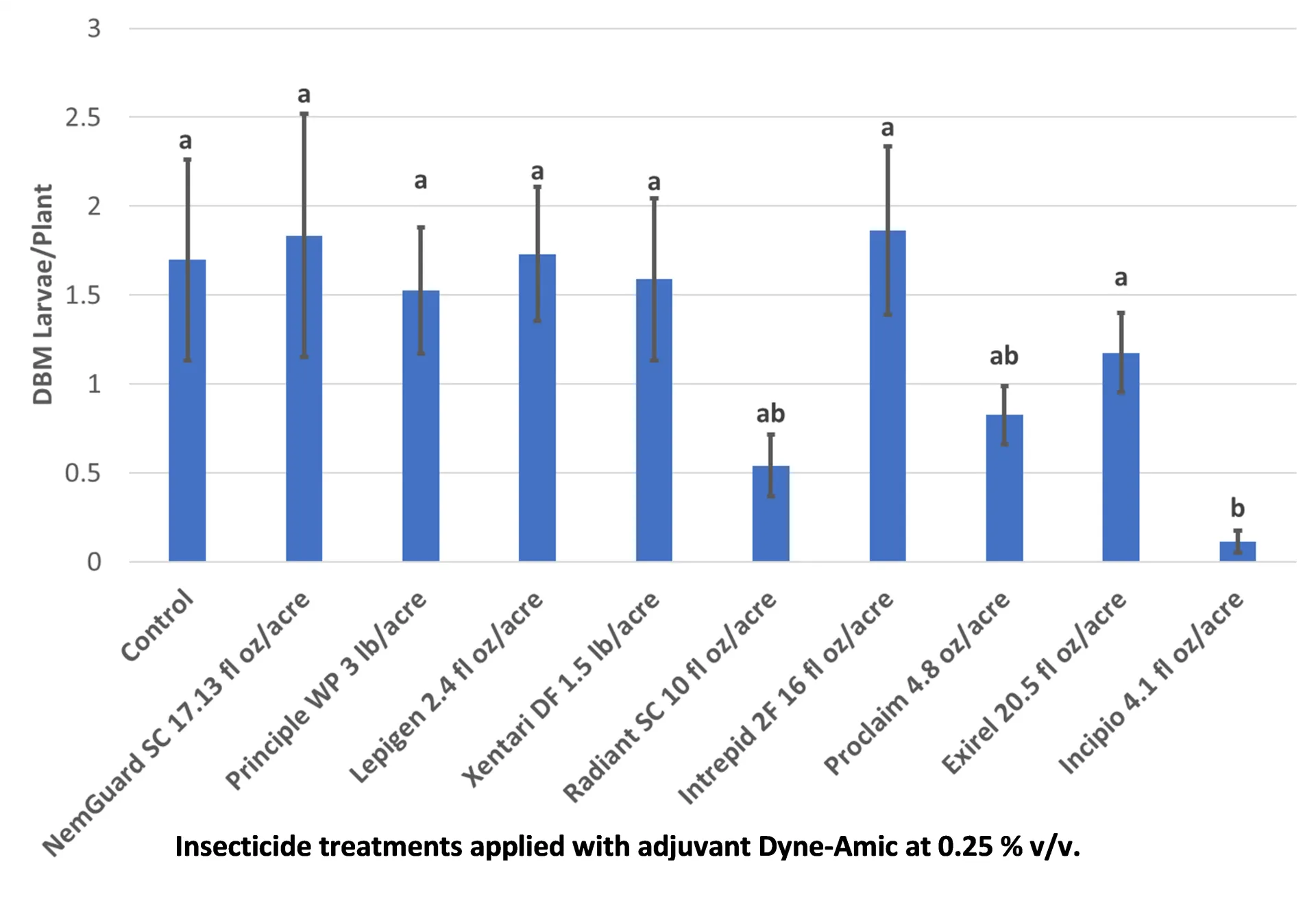
Figure 1. Overall Trial Average of DBM Larvae per plant for different treatments. Means in a column followed by the same letter are not significantly different (P<0.05, Tukey’s HSD).
Seven days after the second application and when treatment counts were averaged across the entire trial, the only treatment with significantly fewer larvae/plant than the control was Incipio (Table 2, Figure 1). The recently registered materials (Principle WP, Lepigen) had comparable DBM larvae/plant to the control. However, a two-week small plot efficacy trial might not be the most representative test of these biological contact and ingestion-based insecticides. As fungal and viral pathogens, they may require proactive applications, conducive microclimates, larger field plots, or longer temporal scales to adequately function. Xentari DF and Exirel’s comparable performance to the untreated control aligns with the recent rise in DBM resistance to Bt and diamide products in the Salinas Valley. Intrepid DF, an insect growth regulator, is labeled for suppressing rather than controlling DBM larvae, so its standalone efficacy compared to the untreated control is within expectations.
Although they weren’t significantly different from the control, the industry standards that performed numerically better were Radiant SC and Proclaim. Together with Incipio and Exirel, it’s important to note that these materials all have some level of inherent translaminar activity (limited movement between leaf surfaces). It is also important to recognize that given field to field variation in DBM insecticide resistance, the efficacy of some of these industry standards may vary across your fields and sites.
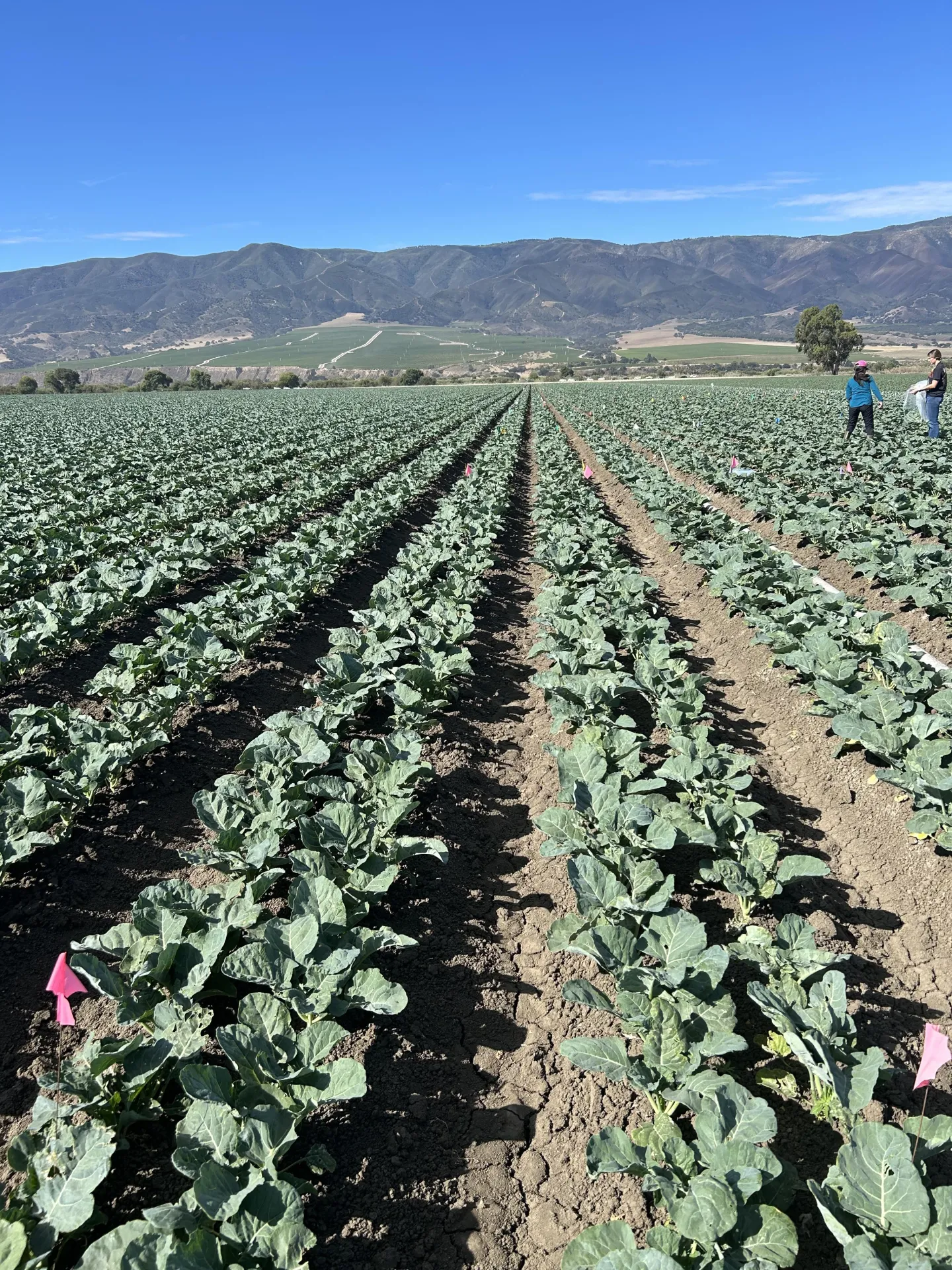
Following this summer field trial, I am planning fall trials to explore some of these materials further. First, I am planning a season long small plot field trial to assess the efficacy of some of the newly registered/experimental products as rotational replacements or tank mix partners. Second, I am planning a medium scale field trial to assess the impacts of incorporating Incipio as rotational partner with grower standard practices. Third, I am planning a larger scale field trial to assess the impacts of adding Lepigen as a tank mix partner on top of grower standard practices. While these trials have so far been focused on establishing baseline insecticide efficacy data of current and potential insecticides for DBM in the Salinas Valley, its important to recognize that together with Ian Grettenberger at UC Davis and Daniel Hasegawa at USDA and other extension and grower partners, we are also working on assessing alternative IPM practices such as mating disruption, biological control, and bug vacuums. With a tough pest to manage like DBM, its important that we continue to develop, optimize and retain effective tools in the toolbox.
For further information on this trial and the planned fall trials, please reach out to Dylan J. Beal (djbeal@ucanr.edu). To contribute to an ongoing survey of Central Coast brassica growers on DBM damage during the first half of 2026 and management tactics in 2025 vs 2026, please click here. Your input and feedback are appreciated as they help to guide my program's projects and those of my collaborators.
I would like to thank the growers, shippers and PCAs who advised and supported me during the development and execution of these trials. I am thankful for Huntington Farms for the space and maintenance of the broccoli field that hosted this field trial. I would like to thank Huntington Farms, Top Flavor Farms, Christensen & Giannini, LLC, and TheogCompanies for providing interns to support these field trials. This work would also not have been possible without my Area Director, Emily Jane Freed, my fellow UCCE Monterey advisors, admin staff, and lab assistants. I would like to thank industry partners for donations of insecticide material.
Table 2: Average DBM/larvae per plant at each sampling point and the overall trial average
| DBM larvae/plant | ||||
| Treatment Name | Rate/acre | 6 DAA1 | 7 DAA2 | Trial Avg. |
| Untreated Check | - | 1.169 a | 2.225 a | 1.697 a |
| NemGuard SC | 17.13 fl oz | 0.867 a | 2.800 a | 1.833 a |
| Principle WP | 3 lb | 0.625 a | 2.425 a | 1.525 a |
| Lepigen | 2.4 fl oz | 1.150 a | 1.775 a | 1.731 a |
| Xentari DF | 1.5 lb | 0.800 a | 2.377 a | 1.589 a |
| Radiant SC | 10 fl oz | 0.275 a | 0.808 ab | 0.542 ab |
| Intrepid 2F | 16 fl oz | 1.375 a | 2.350 a | 1.863 a |
| Proclaim | 4.8 oz | 0.725 a | 0.925 ab | 0.825 ab |
| Exirel | 20.5 fl oz | 0.900 a | 1.450 ab | 1.175 a |
| Incipio (Isocycloseram) | 4.1 fl oz | 0.150 a | 0.075 b | 0.113 b |
| P > F | 0.073 | <0.01 | < 0.001 | |
Means in a column followed by the same letter are not significantly different (P<0.05, Tukey’s HSD).