

By Calli-Jane West, Liaison, and Madeline Mikles, Education Coordinator, Butte County Fire Safe Council.
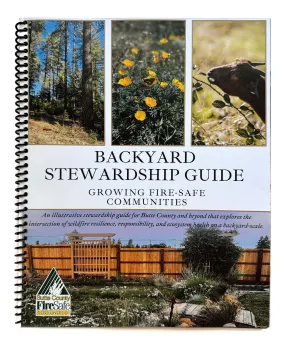
The Butte County Fire Safe Council, a local nonprofit, is excited to share the Backyard Stewardship Guide: Growing Fire-Safe Communities (online viewable guide), an illustrated resource for homeowners in Butte County and beyond that explores the intersection of wildfire resilience, shared responsibility, and ecosystem health.
The 100-page Guide begins with a definition of land stewardship as the practice of creating and sustaining a good habitat into the future for oneself and one’s plant and animal neighbors. Over the course of six chapters, it features native plants and pollinators, habitat elements, birds, traditional ecological knowledge, defensible space and much more! It weaves together knowledge from disciplines that have too often been looked at separately rather than integrated. Celebrating the natural beauty of our region, it highlights local examples where stewardship is making a real difference. The challenge is to care for our lands in ways that balance thriving yards, productive gardens, and healthy forests with the harsh realities of wildfire.
The Fire Safe Council worked with native plant enthusiasts, Master Gardeners, community garden practitioners, tribal members, and wildfire survivors to create this Guide and accompanying Program, in an effort to improve beneficial land stewardship across our communities.
Fruitful conversations covered a wide variety of landscapes, from newly planted yards to 40-year-old established gardens and burned-over vacant lots. Community members were eager to know more about hosting monarch butterflies, native ground-nesting bees, and inviting beneficial insects and predators to their home gardens. Other topics of interest included plant identification, seed saving, placing the right plant in the right place, reforesting wildfire scars, and large-scale land management tactics. The Backyard Stewardship Guide therefore provides information on a multitude of topics and objectives, with resources and references allowing readers to dive deeper into specific areas of interest.
Wildfire has shaped California’s ecosystems for thousands of years, thus stewardship with fire adaptability, resilience, and historical context is crucial to achieve landowner objectives. Particularly affected by wildfire, 54% of Butte County has burned in just the past eight years, straining our relationship with fire. Akin to grazing and indigenous tending, beneficial fire is an integral part of this ecosystem. Utilizing the information and tools included in the Backyard Stewardship Guide, we can heal our lands and our relationship with fire, and create safe, sustainable, flourishing yards and gardens.
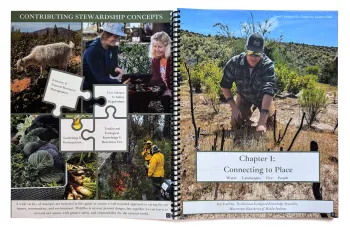
The Backyard Stewardship Guide and accompanying Program invite homeowners and land stewards to map their property and inventory their plants with the ultimate goal of grounding their experience in intention. Which means looking closely, researching, planning, and thinking carefully before taking action. With holistic practices in place, be prepared to reevaluate and adapt to environmental changes and challenges.
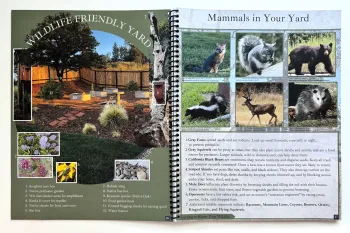
The Guide opens with a chapter describing the specific environments and ecosystems in Butte County. Chapter 2 brings the focus down to the backyard level, with the goal of creating wildlife- and pollinator-friendly landscapes. Chapter 3 focuses on ways to maximize the possibilities in one’s own yard by increasing soil health and maximizing available water; this chapter includes valuable information on stewarding in a post-fire landscape. Further chapters explore plant choices for fire-resistant landscaping and creating defensible spaces around one’s home. The final chapter presents a series of eight case studies where homeowners with properties ranging from half an acre to over 20 acres are implementing good land stewardship practices.
In addition to the Guide, a complimentary eight-page “Action Plan” is available to help land stewards develop the concepts outlined in the Guide’s six chapters through observation, thought-exercises, prompts, data collection and creating adaptive-management plans. Those who want to take their stewardship journey a step further (or are unsure where to start) can reach out to the office at: ready@buttefiresafe.net or (530) 877-0984 to schedule an in-person Stewardship Assessment with the BCFSC staff. In this Assessment, staff come to your property to help you create personalized stewardship goals, assess ecosystem health, and address wildfire vulnerabilities on your property and adjacent to your home.
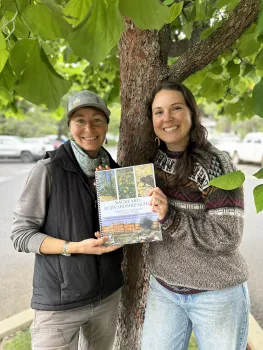
The online Backyard Stewardship Guide is available on the Butte County Fire Safe Council website. Physical copies can be requested by contacting the BCFSC office at 530-877-0984.
The Fire Safe Council has scheduled the following public events in September:
September 15th and 22nd (Tuesdays): Fire Safe Council staff will teach OLLI (Osher Lifelong Learning Institute) classes on valuable native plant information gleaned from yards around the County.
September 20th (Sunday): Feather River Park and Recreation’s Clean Up in Oroville. Fire Safe Council staff will be there to talk about native plants and making native plant seed balls.
To learn more about native plants and land stewardship in our area contact the Butte County Fire Safe Council, or call them at 530-877-0984.
UC Master Gardeners of Butte County are part of the University of California Cooperative Extension (UCCE) system. To learn more about us and our upcoming events, and for help with gardening in our area visit the UC Master Gardener website. If you have a gardening question or problem, email the Hotline at mgbutte@ucanr.edu or leave a phone message on our Hotline at 530-552-5812. To speak to a Master Gardener about a gardening issue, or to drop by the MG office during Hotline hours, see the most current information on our Ask Us section of our website.