
by Maureen Ladley, UC Master Food Preserver of Solano/Yolo County Volunteer
Over the years, more than one of my acquaintances has assumed that if fruit isn’t very good fresh, turning it into jam is the right solution. After all, you’ll be adding sugar and cooking it, right? Unfortunately, jam is not a magic trick. If the fruit isn’t something you’d want to eat fresh, there’s a good chance turning it into jam won’t improve it.
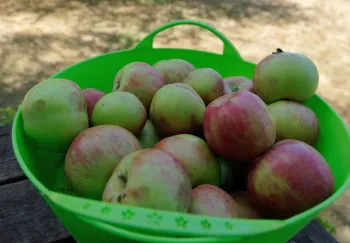
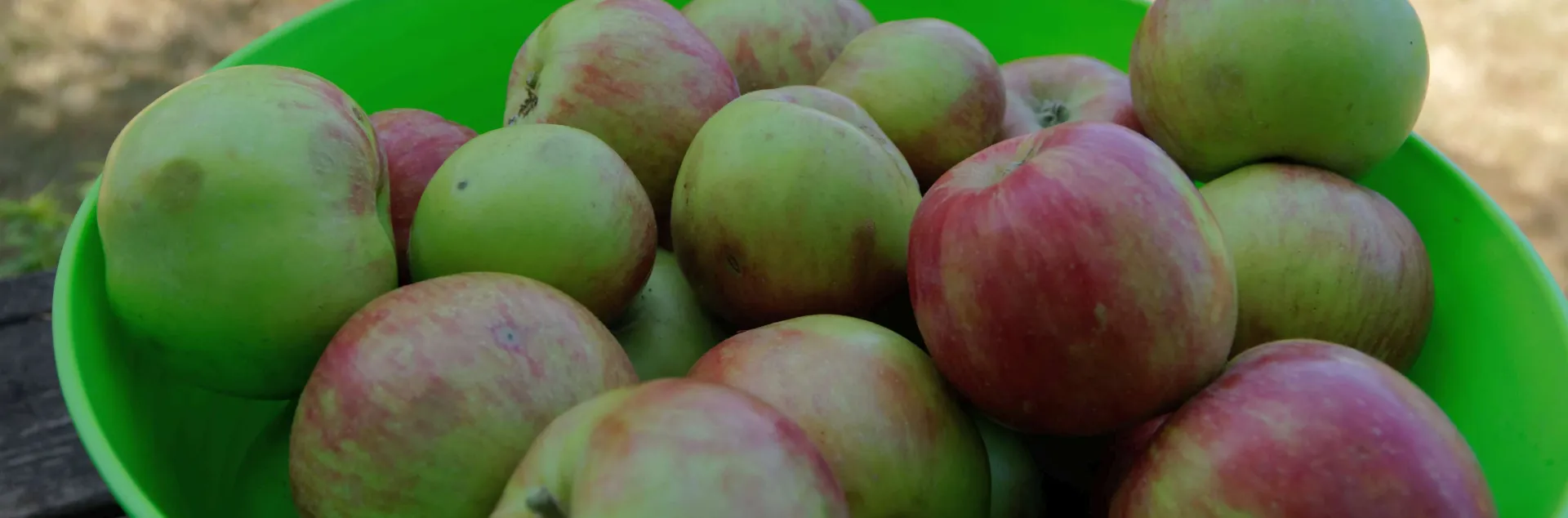
Friends and acquaintances know I’m a home canning enthusiast, and occasionally someone will mention they have a ton of fruit they’d be happy to give me to turn into jam. That news is very exciting until I learn it’s windfall fruit they’ve collected from untended trees behind their home. My excitement tends to fizzle, my face gets a slightly frozen look, and I politely decline.
My feelings about untended fruit trees are tied to an experience from my youth. The first time I was tricked into excitement for tasting untended fruit was when I was young and visiting my grandparents in the Pacific Northwest. A neighbor my age was very excited that cherries were ripening on trees near some public stairs in the town. I love cherries, and the Pacific Northwest produces fantastic fruit. I followed her, and we picked and ate some. Alas, they were bitter and frankly terrible. It was my first lesson that fruit is not automatically delicious. There’s a reason farming is a profession.
To the credit of the people offering otherwise wasted fruit, their impulse is to not let something go to waste, a noble desire, but, as I learned from my early example and as reinforced by my Master Food Preserver education, not all fruit is equally suited for jam-making.
Quality fruit makes better jam
What makes the ideal fruit for canning, or more specifically, for making home-canned jam?
First, quality fruit makes better jam. To produce the best-quality jam, start with something delicious that is top-quality, between just under-ripe and ripe, with no signs of spoilage. If it’s something you’d like to eat as fruit, it’s more likely to be something you will enjoy as jam. Natural fruit acids and pectin are at their highest in fruits at this stage of ripeness, which is important for successful gel formation in jam. Overripe fruit, which I suspect was often part of the fruit being offered to me, will be lower in natural pectin and acid content, which could result in a soft or runny product, not the jam you envision.
Second, many fruits are naturally high in acid, with a pH of 4.6 or lower, and are suitable for boiling-water canning when prepared using tested recipes. It’s important to understand which fruits can be safely made into jam, and the role of acid in selecting what you will make from that fruit.
Some fruits, including Asian pears, figs, melons, bananas, dates, papaya, ripe pineapple, and persimmons, are not naturally high in acid with a pH of 4.6 or lower, and the other preservation methods for those fruits should be considered, as they may not be safe for jam-making without the addition of an acid. If in doubt, always check for research-based recipes before proceeding.
Of course, here, I am specifically talking about making jam by the boiling-water canning method, but jam-making is not the only form of food preparation and preservation. If the fruit on offer tasted great but was unsuitable for jam, it might be right for juicing, dehydrating, or freezing.
Someday, I may be lucky enough to have a friend offer a truly excellent fruit that’s perfect for jam-making. Until then, I’ll continue to politely decline questionable windfall fruit and remember those disappointing childhood cherries. After all, bad fruit does not make good jam. And while there are many forms of preservation beyond jam-making, such as canning, dehydrating, or freezing, starting with high-quality produce and a tested recipe will give you the best chance of creating something you’ll be excited to enjoy later.
Reference: Powers-Hammond, Lizann and Sandra McCurdy, Fundamentals of Consumer Food Safety and Preservation, Master Food Preservers Handbook, University of Washington and University of California. California Edition 2018. Chapter 4, page 3; Chapter 7, pages 6 and 7.