
What is biodiversity, why is it important, and how can we get it in our home landscape?
The word biodiversity means variety of life. It includes a variety of plants and animals of all shapes and sizes, from the smallest organisms that are invisible to us to the large plants and animals that we can easily see. A landscape with many kinds of plants is more diverse than a landscape with only a few kinds of plants. Animals interact with plants in different ways. More diversity in plant choices will attract a wider range of wildlife, from soil microbes to birds and insects.
An example of a landscape that does not have biodiversity would be a lawn. All those blades of grass are one species. Add some flowers, trees, and shrubs of different kinds, and you increase the biodiversity.
Why is it important?
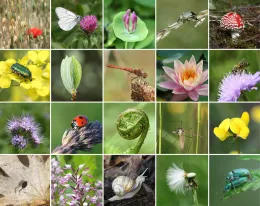
In a home garden, biodiversity is important because it supports a healthy, balanced ecosystem. The word ecosystem refers to the community where living things interact with their environment. It includes plants, animals, fungi, and microorganisms in a specific area along with non-living elements such as water, soil, and sunlight. Everything in an ecosystem is connected and relies on each other to survive. For example, plants provide food and oxygen for animals while animals help pollinate plants and recycle nutrients back into the soil. All of these organisms depend on sunlight and water to do this. Our gardens and home landscapes are cultivated ecosystems.
Benefits of a healthy ecosystem
Benefits of a healthy ecosystem include healthy soil, natural pest control without the need for many pesticides, pollination, and a habitat for wildlife.
Without diversity, a garden is more susceptible to disease and pests. A disease can eliminate a whole crop. The Irish potato famine resulted from a fungal infection that affected the potato crop, which the people of Ireland depended on. A swarm of grasshoppers can wipe out a field of corn in a few days. When your livelihood depends on a single crop, you are vulnerable to these types of diseases and pests. On the other hand, planting a variety of crops would give protection against this sort of devastation.
Without diversity, the soil can become depleted of essential nutrients. If all the plants are the same and they all use the same nutrients for their health, those nutrients will be depleted and need to be replaced. Using a variety of plants will prevent this nutrient depletion. Without diversity, there isn’t a variety of insects and other pollinators that are essential for the continued health of the plants. This is where the relationship between native plants and insects becomes important. A plant native to the area is supported by native insects and vice versa. It’s all connected.
In our gardens, biodiversity isn’t measured by the number of different species living there alone, but by the diversity, quality and richness of their exchanges. As every gardener will tell you, plants and animals work together to maintain a healthy ecosystem. Earthworms aerate the subsoil and prevent it from becoming too compacted. Weeds help keep the surface moist and slow down evaporation and erosion. Even passing birds help to refresh the soil cover and spread seeds. Plants also help each other and combine their efforts. For example, nasturtiums attract aphids, which keep them away from radishes, tomatoes and courgettes. Aphids won’t go anywhere near lavender, but that’s a favorite of bees, who help melliferous plants and flowers thrive. Other plants repel pests, help maintain the soil’s composition, retain moisture for their neighbors or, on the contrary, help dry the soil out to prevent root rot.
How we can improve biodiversity in our home landscapes.
- Decrease the amount of turf in your landscape. Replace it with a variety of plants, preferably plants native or well-suited to our climate.
- Attract wildlife such as butterflies, pollinators, and birds by providing food, shelter, and water for them.
- Remove invasive plants that outcompete native plants and replace them with a plant native to our area.
- Limit the use of pesticides. Many pesticides are broad-spectrum and will kill more than the insects you intend to kill, such as pollinators and beneficial insects such as lacewings, praying mantis, and spiders.
- Use plants that bloom and seed at different times of the year, providing year-round food for the birds.
- Don’t rake up all your leaves. Leaves provide mulch, which improves soil health and provides places for insects to overwinter.
California Biodiversity Day is September 7th
California Biodiversity Day is a time to celebrate the incredible biodiversity that exists throughout our state while also learning about ways to be involved and actions we can take to conserve and steward the nature that sustains us.
California is one of the most biodiverse regions in the world and is one of 36 global biodiversity hotspots. Within the United States, California is the state with both the highest total number of species and the highest number of endemic species (i.e., those that occur nowhere else), including over 30% of all plant and vertebrate species found in the country. Global biodiversity hotspots contain exceptional concentrations of plant and animal species found nowhere else on the planet, but they also experience high rates of biodiversity loss. Unfortunately, California is no exception – approximately 30% of our species are at risk of extinction. Learn more at: 30 x 30 California - Biodiversity Day
Whether it’s a window box on a windowsill, a potted plant on a tiny balcony, or a vegetable patch in the shade of a garage – it doesn’t take much to help biodiversity thrive. People are often surprised by the sudden enthusiasm for gardening that can take hold with just a little effort.