
Short- and long-term forest management actions after wildfire may depend on many factors, including safety, economic considerations, objectives for future forest use, and the fire severity or proportion of trees killed by the fire. High severity fires kill most of the trees. This drastically alters the structure and health of the forest and often calls for restoration actions. Assessing the severity of wildfire damage to a forest, which may vary across an ownership, is an important step in making informed management decisions (See Post-Wildfire Assessment of Fire Severity in California Forests).
Different forested ecosystems vary in their response to fire, but there are similarities in effects and their management implications across forest types. Most conifer forests in California, including the mixed conifer and yellow pine forests which cover much of the Sierra Nevada, are adapted to frequent, low severity fire in which many trees survive (Safford and Stevens, 2017). High severity fires usually lead to the greatest need for active forest restoration, though some management may be desirable where the severity of fire effects is low or moderate as well.
Management after Low Severity Wildfire
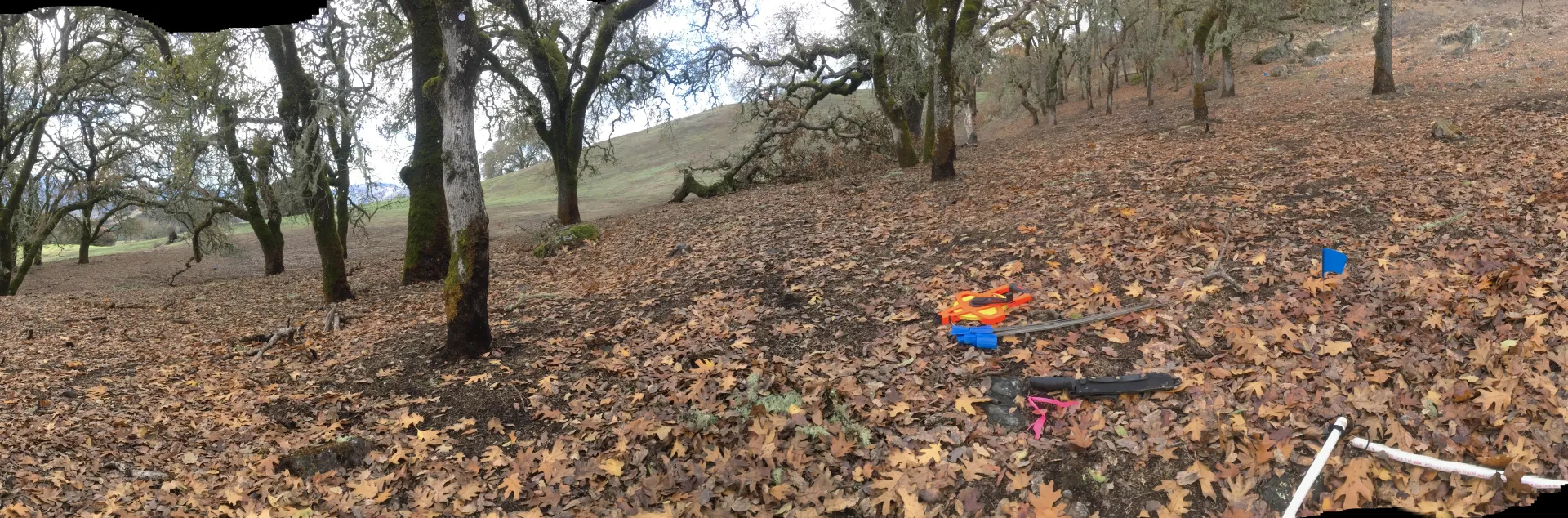
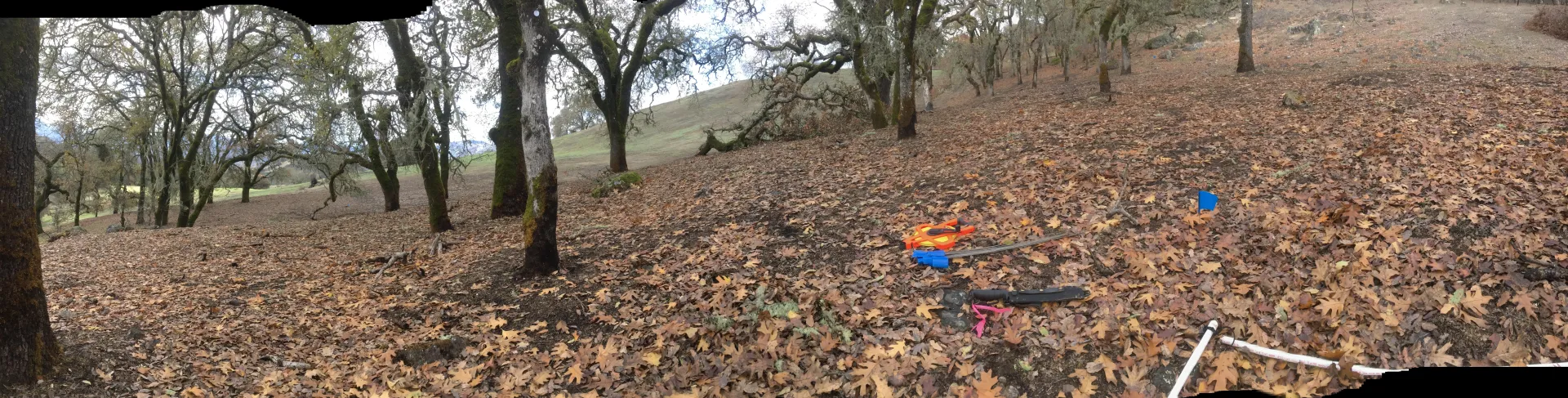
Low severity fires generally burn the surface fuels along the forest floor, killing some understory vegetation and small trees but leaving most large trees alive. In most forests, low severity fires have many positive effects. Some trees and understory shrubs die, reducing competition for light, water, and nutrients, improving growing conditions for the trees that remain as well as native grasses and forbs in the forest understory. Low severity fires consume living and dead surface fuels, reducing the risk of future high severity fires. Exposure to low severity fires can improve tree defenses to bark beetles (Hood et al. 2015), but some trees may be sufficiently injured to make them susceptible to beetle attacks, drought or disease. It may be desirable to remove such trees and/or to thin remaining dense stands to improve fire resilience and forest health. Tree planting is generally unnecessary after low severity fires as most overstory trees survive, allowing for new seedlings to establish from nearby seed trees. Soil erosion is rarely a major concern after low severity fires as soils are stabilized by remaining live trees, regenerating surface vegetation and leaves and needles that fall in autumn or from scorched trees (See Post-Fire Erosion Control).
Management after Moderate Severity Wildfire
Moderate severity fires result in the mortality of individual trees or clumps of trees, leaving some mature trees alive. This frees up space and resources for remaining trees as in low severity fires and is ecologically important in the landscape. It creates diversity in forest structure and species by removing some mature trees and creating gaps in the forest canopy that can allow shade-intolerant species (including ponderosa pine) to grow, which is difficult in dense shady forests (Moghaddas et al. 2008). Dead trees also provide key wildlife habitat. Since more trees die after moderate severity fires, there may be a need to remove them to mitigate hazards from falling trees and accumulating fuels. Landowners may choose to cut and sell dead trees to recoup their economic value, which diminishes quickly after they die. Moderate severity fires often cause damage to surviving mature trees, making them more likely to die later from bark beetle attack (Hood et al. 2015). This may necessitate additional tree removal. Planting is generally unnecessary to maintain a forest, as some mature trees survive to provide seeds for new seedlings. Erosion control concerns are often minimal when some vegetation remains, though assessment of erosion risk is wise.
Management after High Severity Wildfire
High severity wildfires result in the total or near total loss of forest cover across large areas or in large patches. Patches of high severity fire can serve an important ecological function by providing wildlife habitat in the form of standing and fallen dead trees and shrub dominated areas.
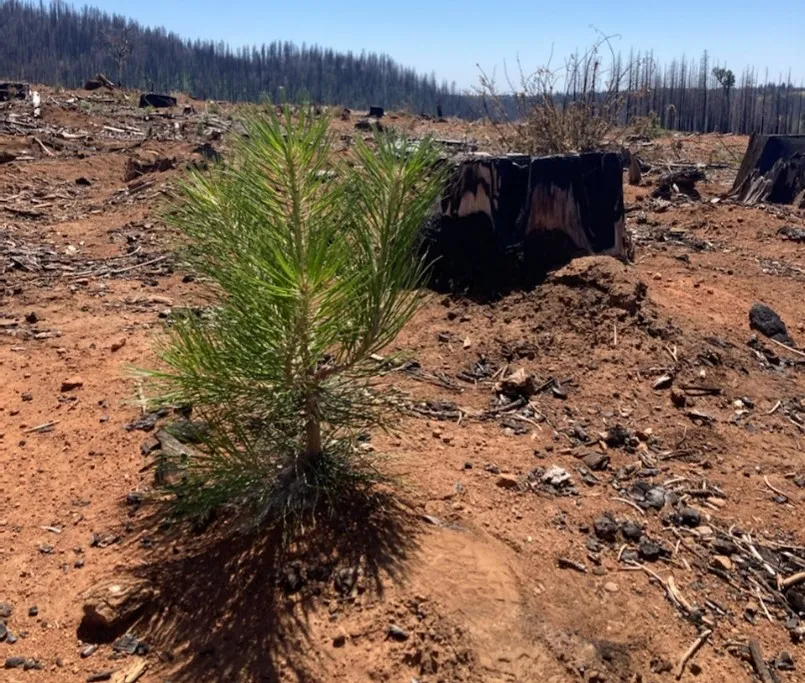
However, high severity fires have dramatically increased in size in California and Sierra Nevada forests (Williams et al. 2023), leading to very large patches of dead trees where active management is often needed to help forests regenerate. A rapid response increases reforestation success and minimizes costs.
Tree removal is often important to mitigate the hazard posed as dead trees fall, to recoup economic value from trees where markets allow, and to decrease future fire risk from accumulated fuels. Landowners should work with a registered professional forester (RPF) as soon as possible after wildfire to plan and permit tree removal.
For most conifer species, planting is necessary when there are no mature live trees near enough to provide seed for regeneration. The distance that seeds disperse from mature conifers varies widely by species and conditions, but most will fall within a distance of 1½ times the height of the tallest trees (McDonald 1980). High wind speeds (20 miles per hour) might disperse lighter seeds (ponderosa pine and white fir) as much as a thousand feet away, and heavier sugar pine seeds up to a few hundred feet away (Fowells and Schubert, 1956). Rodents and birds may double these dispersal distances for some tree species, especially those with heavier, more nutritious seeds such as Jeffrey pine (Vander Wall 2003).
Landowners should be careful to plant seedlings of appropriate species and seed zone for their location, and plan to order seedlings approximately one year before planting. The number and arrangement of planted seedlings should be designed to promote resilience in the future forest stand and to support management goals (see Post-Fire Seedling Planting). Native shrub species often resprout vigorously after wildfire, often outcompeting conifer seedlings (Zhang et al. 2006). Therefore, controlling this competing vegetation is important to ensure the success of planted conifers and to minimize the risk of future fire from fuel accumulation (Coppoletta et al. 2016, See Post-Fire Managing Competing Vegetation to Improve Reforestation Outcomes).
Soil erosion risk is greatest after high severity fire, and the condition of roads and streams should be assessed before the first rainy season if possible. See Post-Fire Erosion Control for guidance.
Hardwoods, such as oaks, killed by wildfire will often resprout from their roots, ensuring their persistence onsite. Landowners may wish to encourage oaks after wildfire or suppress them in favor of planted conifers. As oak sprouts are generally vigorous and bushy, it is often desirable to thin the sprouts to encourage better structure (See Post-Fire Management of Oak and Hardwood Resprouts).
The Need for Continued Management
Rapid post-fire treatments are critical to the development of a resilient forest, especially after high severity fire in the Sierra Nevada. Additional treatments are often needed to maintain forest development and health into the future, including control of competing vegetation and thinning of trees as planted seedlings mature. Having a forest management plan helps a landowner ensure that their objectives and forest health are maintained in the future. UCANR’s Forest Stewardship Series provides guidance on many aspects of forest management planning and implementation.
Table 1: Timeline and priority for post-fire management based on fire severity
Activities | Low Severity | Moderate Severity | High Severity |
| Assess property for hazard from damaged trees that may fall and endanger structures or humans (1-3 months after fire). | medium | high | high |
| Assess erosion concerns/damage to essential roads, addressing these as possible before the first rain (1-3 months after fire). | low | medium | high |
| Assess fire severity and develop management objectives and plans, consulting with a professional forester (1-3 months after fire). | medium | high | high |
| Order seedlings for replanting (1-3 months after fire). | low | low | high |
| Remove dead trees (and other site preparation when planting) (year 1) | low | medium | high |
| Plant new seedlings (year 1-2) | low | low | high |
| Control vegetation competing with seedlings (year 2-4) | low | low | high |
| Consider ongoing management needs and make management plans. | high | high | high |
Further Reading and ResourcesUCANR Forest Fact Sheets:
Forest Stewardship Series. UCANR Publication 8323 Recovering from Wildfire: A Guide for California’s Forest Landowners. UCANR Publication 8386 |
Find the printable version of this fact sheet below. Note that the pdf is for print purposes ONLY.
