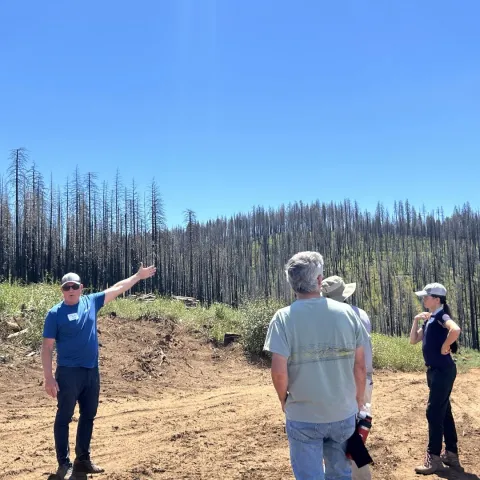
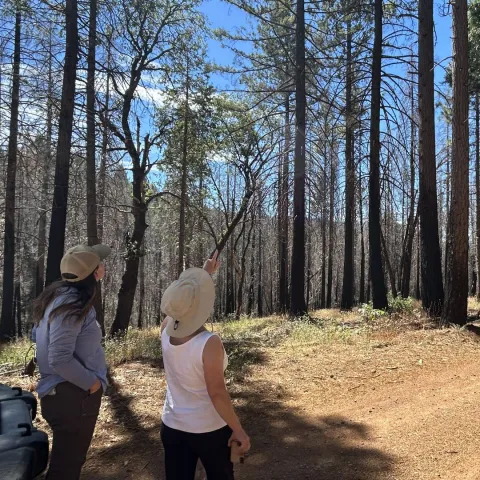
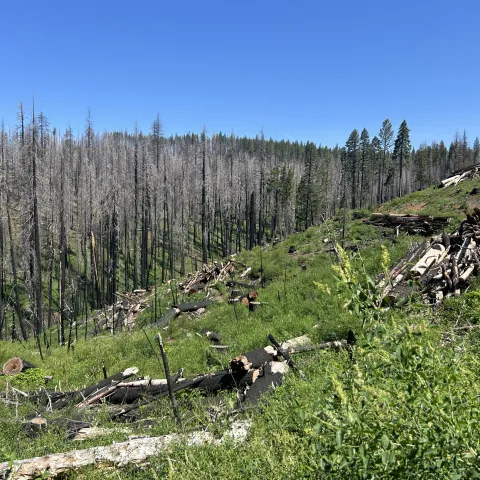
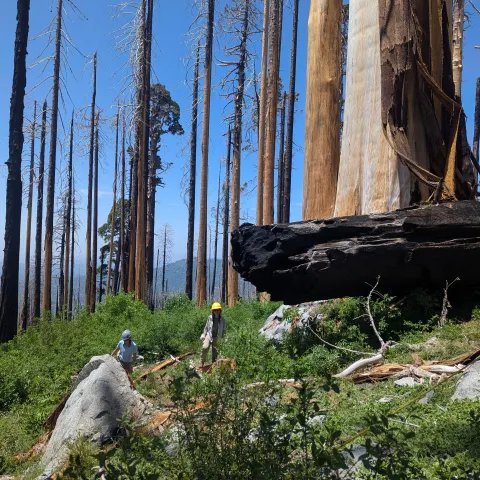
Release date: March 2026. Fire severity refers to the degree of vegetation change caused by a fire, measured in forested ecosystems by the mortality of overstory trees. Low severity fire burns mostly on the forest floor and causes little to no overstory tree mortality. Moderate severity fire kills more…
Release date: March 2026. Short- and long-term forest management actions after wildfire may depend on many factors, including safety, economic considerations, objectives for future forest use, and the fire severity or proportion of trees killed by the fire. High severity fires kill most of the trees. This…
Release date: March 2026. Forest stewardship actions to take after wildfire are primarily determined by the severity of fire effects to forest vegetation (see Assessing Fire Severity in Sierra Nevada Forests), vegetation type, management objectives, and available resources. In many California forests, rapid…
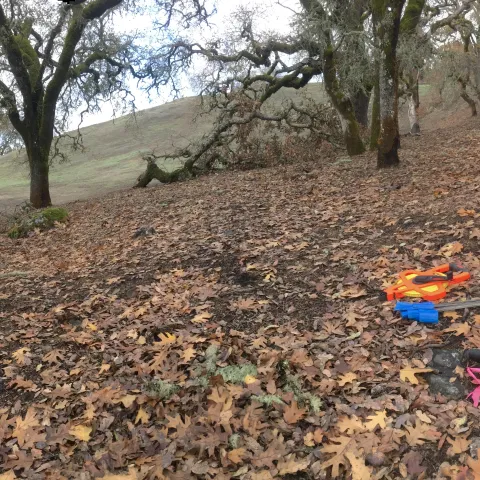
Release date: March 2026. Effective land management depends on understanding how forest conditions are changing over time. Documenting environmental conditions can help managers track landscape responses over time, both to management interventions and to large disturbances like wildfire. Memory and written…
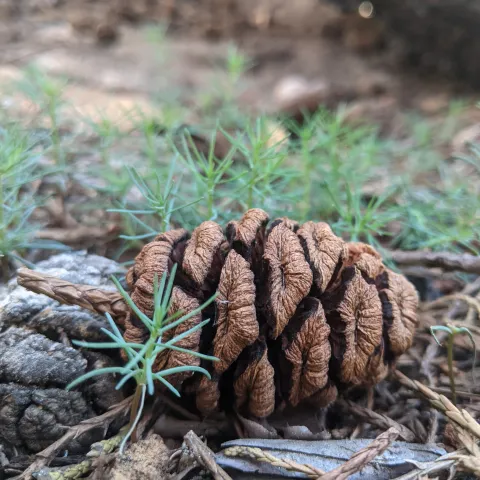
Release date: July 2026. Giant sequoias are a charismatic, long-lived species that grow primarily within isolated groves on public land within a limited endemic range in the Sierra Nevada of California. Their adaptations to fire include thick bark that insulates them from heat damage, height and self-pruning…
Release date: August 2026. Giant sequoia (Sequoiadendron giganteum) are massive, ancient trees that can live for 2,000 to 3,000 years. They are found at 5,900 to 7,500 feet on the western slope of the southern Sierra Nevada in 70 groves that total only ~25,000 acres (Swetnam 1993). Wildfire is an integral…