
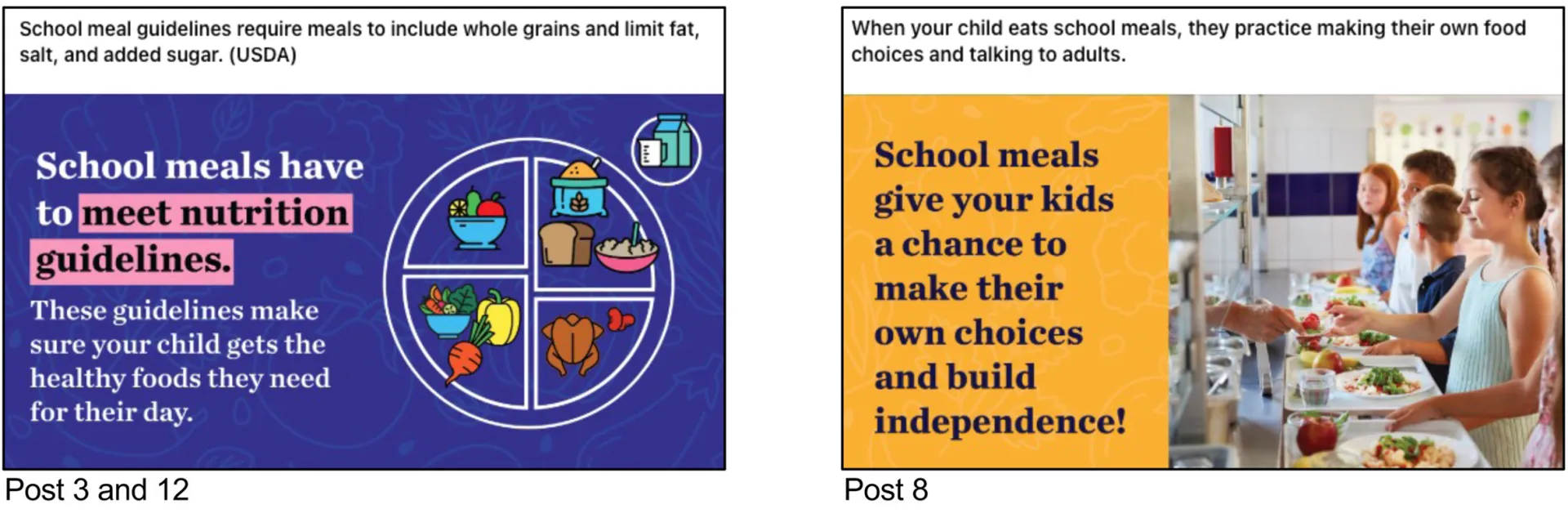

Universal School Meals programs provide free meals to all students, improving diet quality while reducing food insecurity and stigma; however, many eligible students still do not participate. In a recent study published in the Journal of Nutrition Education and Behavior, researchers examined parents’ reactions to a social media marketing campaign created to encourage children’s participation in Universal School Meals programs. Study participants were parents of elementary school children in the eight states with Universal School Meals programs during the 2024–2025 school year.
The study found that the parents who responded positively to messages highlighted money-saving, convenience, and social benefits of Universal School Meals. Parents whose comments indicated rejection of the messages expressed concerns about meal quality, healthfulness, and the limited time students have to eat. Although parents often reported appreciating the availability of free school meals, many reported that their children did not participate because they found the meals unappealing or perceived them as low quality.
These findings suggest that while social media campaigns can raise awareness of the benefits of school meals, addressing structural barriers such as food quality and mealtime constraints may be necessary to increase participation. Further, the results suggest that social media campaign messages might be most effective when they include clear evidence and explanations of the benefits of eating school meals. Future research should evaluate school meals program campaigns across varying populations and communications platforms, such as school district websites, to better understand how to increase participation.
The study was published in the Journal of Nutrition Education and Behavior. It was co-authored by Carolyn Chelius with the University of North Carolina at Chapel Hill, Amanda Zeitlin, Anisha Patel, Andrea Pedroza-Tobias, and Anna Grummon with Stanford University School of Medicine, Christina Hecht and Kenneth Hecht with the Nutrition Policy Institute. This research was supported by a grant (no. 81356) from Healthy Eating Research.