
The Issue
Farm to School programs have an important preventative health role, especially in schools disproportionately affected by the underlying drivers of health inequities, which include built environments, nutrition insecurity, and limited access to quality healthcare. Elementary schools in rural Butte, Colusa and Glenn Counties, where the majority of students qualify for free or reduced price school meals are critical settings for these interventions. In these communities, elementary students grow up in areas where agriculture and home-gardening are woven into daily life and community identity, making Farm to School a culturally relevant and high-impact preventative health strategy. Farm to School initiatives like garden-based food education and local food procurement have been shown to improve health knowledge and behaviors, including improved food literacy, willingness to try new foods, and increased fruit and vegetable intake.
How UC Delivers
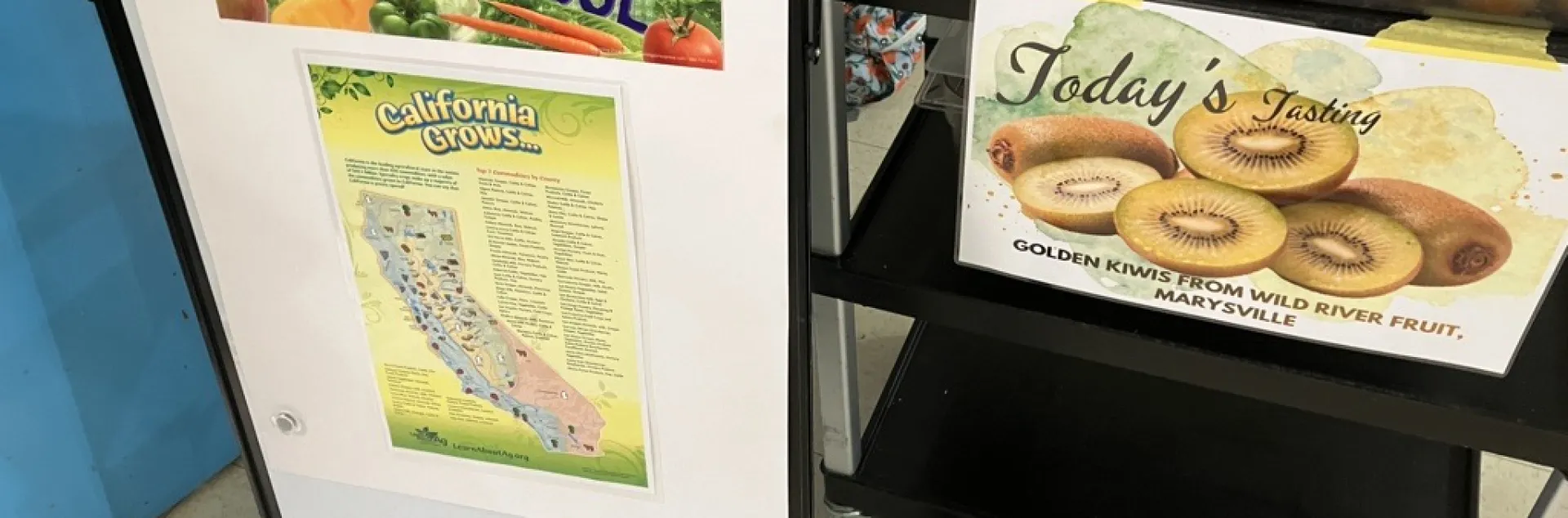
In 2025, the California Department of Food and Agriculture’s Office of Farm to Fork awarded a Farm to School Incubator Grant to the University of California Cooperative Extension (UCCE), Butte County, to partner with elementary schools across the region to strengthen garden infrastructure, create welcoming outdoor classroom environments, and expand capacity to grow produce. The grant also supports training for teachers in garden‑based nutrition education and builds school‑wide value for local growers and aggregators through monthly taste‑tests featuring locally sourced fruits and vegetables.
Youth-lead, school-wide Monthly Taste Tests
Student council leaders partnered with CalFresh Healthy Living, UCCE Community Educators to support monthly taste‑tests at their school. In the days leading up to each event, they promoted “tasting day” through peer‑to‑peer reminders and classroom announcements. On the day of the activity, they welcomed students in line, offered hand sanitizer, and explained how to cast a vote, either “I liked it” or “Not today” for the featured produce item. Their involvement strengthened student engagement while providing them an opportunity to gain valuable leadership experience.
Monthly newsletters featuring the highlighted produce item, its nutritional benefits, and the local farmer or aggregator who supplied it were sent home with students to reinforce their tasting experience and connect families to regional agriculture.
School Garden Improvements and Curriculum Trainings
Five partnered schools enhanced their garden spaces by adding student seating, installing storage for maintenance and lesson materials, and revitalized raised garden beds, which created a more inviting outdoor classroom environment where teachers can engage students in experiential learning. A total of 23 TK - 5th grade teachers participated in on-site training using the UC ANR curriculum, Teams with Intergenerational Support (TWIGS). Each training session was held directly in the school garden to model practical garden-based instruction.
The Impact
Improved Understanding and Acceptance of Fruits and Vegetables
Taste tests encourage students to try fruits and vegetables that they are less familiar with. This activity has been shown to improve children’s willingness to try, accept, and eat more fruits and vegetables at school and request them at home.
Throughout the ’25–’26 school year, students tasted a variety of locally sourced items, including Sommerfeld apples, Murcott mandarins, rainbow carrots, prunes, almond butter, snap peas, dried apricots, and golden kiwis.
Classroom taste‑test evaluation data of over 2,000 TK - 5th grade student responses showed that only 32% indicated they had tried the featured produce item before. During the taste test, however, 94% tasted it, and 75% of responses showed that they were willing to try it again. These results highlight the importance of structured exposure and peer‑supported tasting environments to increase students’ openness to fruits and vegetables.
One student who tried a Sommerfeld apple shared, “Good! It’s going to be my new food.”
Cafeteria taste‑test evaluation data from over 3,500 TK–5th grade student responses were collected throughout the school year; this cumulative count reflects repeated participation by students each month. Across these responses, 84% selected “Liked it” and 16% selected “Not today.”
Across TK–5th grade classrooms, student responses show strong gains in fruit and vegetable knowledge and motivation:
Learning about fruits and vegetables: Among 430 responses, 74% reported learning “a lot,” while only 3% said “not at all.”
Desire to eat more fruits and vegetables: Out of 471 responses, 90% indicated they “want to eat more,” with very few (1%) selecting “not at all.”
Eating more fruits and vegetables at school: From 447 responses, 71% reported eating more at school, while 6% said “not at all.”
A class of sixth grade student leaders who participated in the peer-led taste tests completed a Youth Leader Survey. Of the 19 responses, 18 selected “agree” or “strongly agree” to the statement “My family has purchased healthier foods” which suggests that student leadership in Farm to School activities may positively influence food choices at home.
A total of six teachers completed a Teacher Observation Tool, and all either agreed or strongly agreed that compared to the beginning of the school year, more students are now willing to try fruits and vegetables.
Teacher Training Outcomes
Sixteen of the 23 teachers that participated in the training on the TWIGS curriculum in their school garden completed a post-training survey. All who completed the post‑training survey unanimously indicated intent to use their newly renovated school garden space to engage students. All 16 selected “probably will” or “already adopted” in response to implementing the garden as an outdoor classroom. One teacher noted, “I love the information about the seeds and the progression of how the lessons are organized.”
Next Steps
Schools will showcase their newly developed garden classrooms through a harvest-themed Back-To-School night garden tour. Teachers will have access to additional TWIGS curriculum training focused on garden maintenance and food literacy. The 4-H Youth Development and UC Master Gardener programs will coordinate with schools to support and strengthen long-term garden sustainability.
Together, these outcomes illustrate how coordinated Farm to School strategies, youth leadership, experiential garden learning, and exposure to locally grown foods can meaningfully improve community health and wellness through students' healthy food behaviors and promoting a school-wide value for local agriculture.