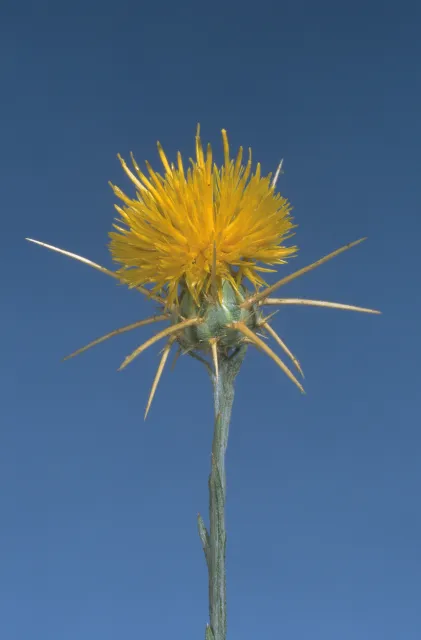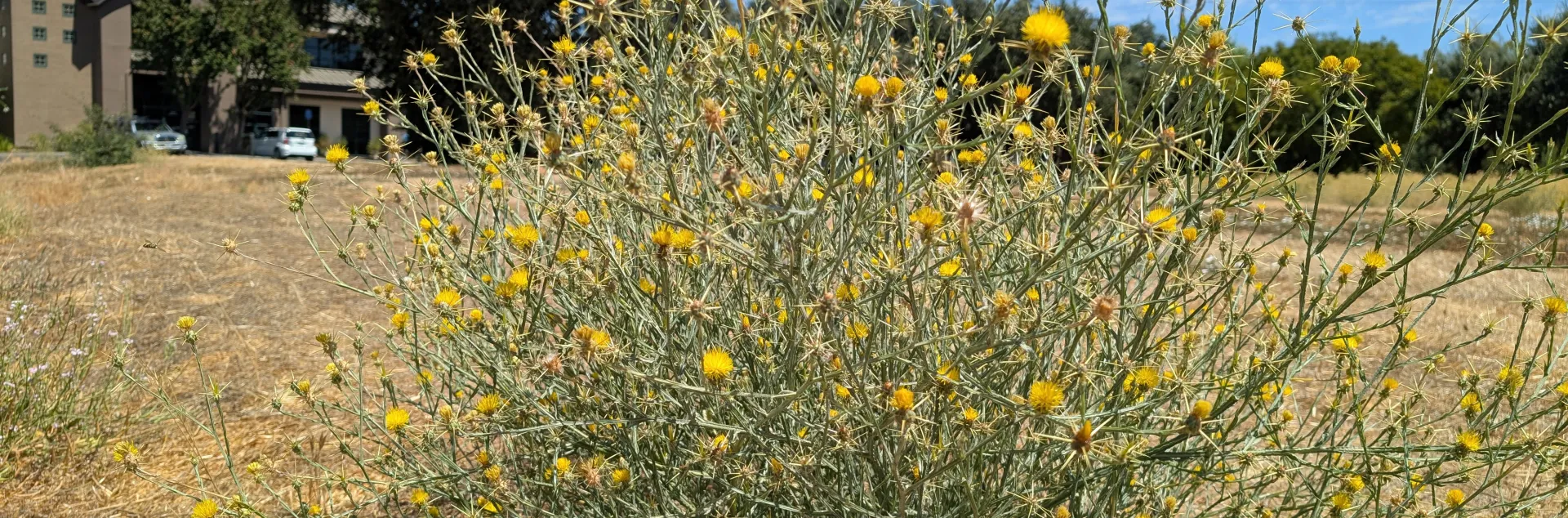
Yellow starthistle is a spiky, fast-growing, invasive weed in home landscapes, parks, rangelands, roadsides, and natural areas. It outcompetes other plants by growing in impenetrable stands and depleting soil moisture. It's also highly flammable which increases the risk of wildfires where it's growing.
Yellow starthistle starts to grow in the winter, and the young plant, a relatively small rosette of leaves, is easy to miss. It's not until early summer when the plant matures and produces its distinctive yellow flower surrounded by spikes that its presence becomes obvious.
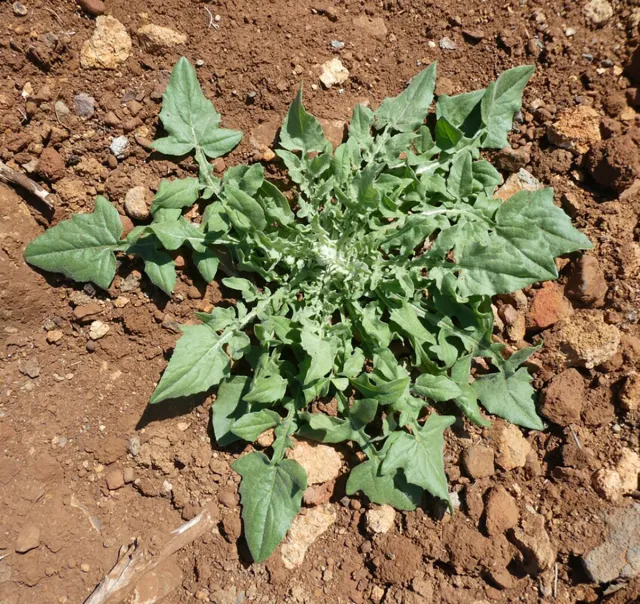
Because this weed thrives in disturbed soil, it's important to check those areas for new infestations of yellow starthistle in the spring. Grow desirable plants to shade out yellow starthistle seedlings. Yellow starthistle often must be managed over multiple years through a combination of hoeing, burning, hand pulling, pesticides, and other techniques.
For more information, see the newly revised Pest Notes: Yellow Starthistle, authored by UC Cooperative Extension Advisor Scott Oneto and Joe DiTomaso, retired UC ANR Specialist from the UC Davis Department of Plant Sciences. New information about the impact of this weed have been added, as well as updates on biological control and herbicides.