
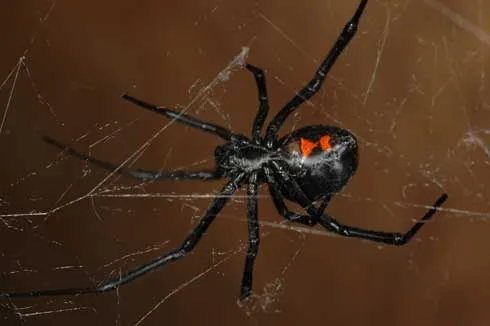
Once again, hunting season in my yard is open - for female black widow spiders and their webs. It happens every year, beginning in late spring and through the summer months, into the warm fall season.
We live at the end of a court in a typical residential neighborhood; however, there is no house on the lot next to ours, so I imagine the weeds and dry, undisturbed landscape of that lot probably contribute to the number of black widows I regularly find in my garden and along our fences.
Black widow spiders in the United States, the western black widow, Latrodectus hesperus, are found along the west, from Canada into Mexico, and everywhere in between. Mature female black widows are shiny black in color, with long, thin legs, and they are known for their large, bulbous abdomen with an hourglass-shaped red spot on the underside. Being the shy creatures that they are, they are fond of dark, hidden, undisturbed locations. They are often found around sheds, fence crevices, foundations, stone walls, piles of wood, or trash. In garages, they like to be near vents and doorways to snag insects coming and going into their web. As they do stay out of sight during the day, their webs are usually the first telltale sign of where they might have taken up residence around your home. Black widow webs are notoriously known for being incredibly strong, messy, debris-filled webs - when you break them, they make a 'crackling' sound. Black widows come back out as darkness begins, to spruce up their web, before taking an upside-down position in the middle of the web, to await their next meal.
Controlling the presence of black widow spiders using chemicals is challenging - it is more a matter of limiting areas for them to take up residence. Try to keep your garage and yard clean of debris and other insects, the food of the black widow. Vacuum or sweep webs around the house and in the garage, keep clutter in the yard to a minimum, and regularly clean out garages and sheds. Most importantly, wear gloves when working in these areas or when lifting and moving seldom-used or seasonal items. Also, beware of putting on shoes that have sat outside or in your garage, unworn, for a time.
To learn more about black widows and detailed suggestions for limiting the chances of them taking up residence, visit the UC IPM page on Widow Spiders and Their Relatives website for symptoms and details about what to do in the event of a black widow spider bite (seek immediate medical attention).