
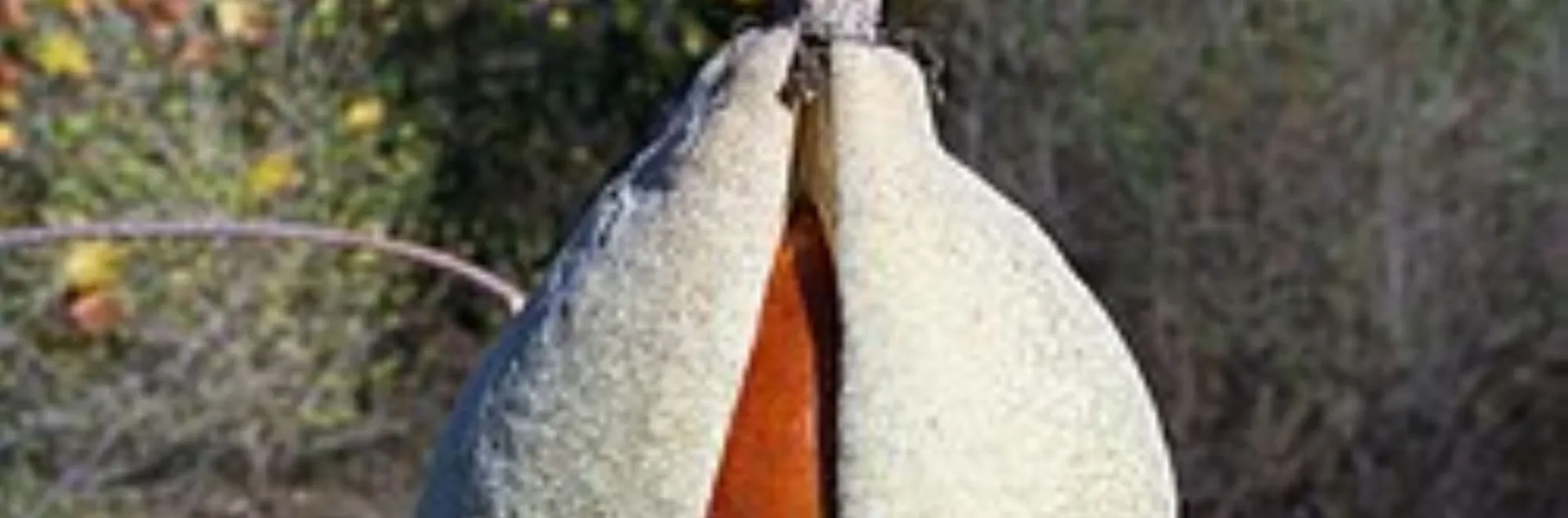
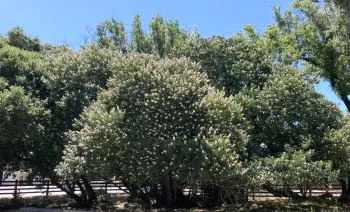
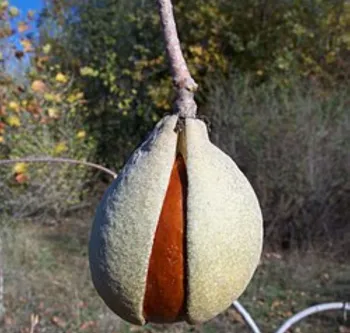
The California buckeye Tree (Aesculus californica) is one of the most distinctive trees native to Marin County. Found along hillsides, creek edges, and in the oak woodlands, it is a species adapted for survival. It is designed to handle drought conditions, attract pollinators, and produce seeds that are too poisonous to be consumed. The trees are named for their large, brown seeds that resemble a chestnut, and when split from their leathery husks, resemble the eye of a deer (buck). The name derives from Native American descriptions later adopted by American settlers. Individual trees can live for 250 to 300 years.
The buckeye tree is adapted to Marin’s Mediterranean climate – wet winters and long dry summers. Leaves emerge as early as February with bright emerald leaves in the winter landscape. In late spring, it produces tall, creamy white spikes offering nectar when few other resources are available. Long-tongued native bees, ceanothus silk moths, and swallowtails visit in abundance. The tree is the host plant for the Echo Azure butterfly (also known as Echo blue or Pacific Azure), whose adults can be found puddling on damp soil at its base.
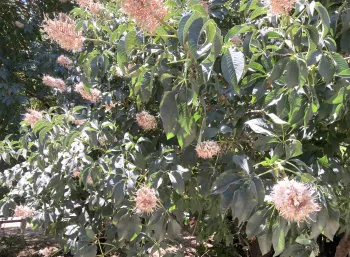
The large showy flowers can be toxic to European honeybees introduced centuries after the buckeye evolved. Honeybees that do survive after ingesting buckeye nectar may produce “buckeyed bees” that hatch with deformed legs, wings, and bodies. The seeds are poisonous and the tree is highly resistant to deer, gopher, and rabbit, although deer can nibble on the leaves. The leaves, shoots, and flowers are protected from grazing animals by noxious compounds. The only animals that can safely consume seeds are squirrels and chipmunks.
The Native tribes, including the Pomo, Yokut, and Coast Miwok people, used the tree with care. Although the seeds are toxic to eat when raw, they were traditionally leeched and processed during lean years and used as a flour source high in protein. Ground seeds were used in fish harvesting. When the compound was released in shallow pools or small streams it temporarily stunned fish and made them easy to catch. Buckeye wood was used to make bowls and the tree’s smooth, straight branches were useful for bow and fire drills. The bark was used for snake bites and toothaches. Later, American settlers sometimes carried seed pods in their pockets for good luck.
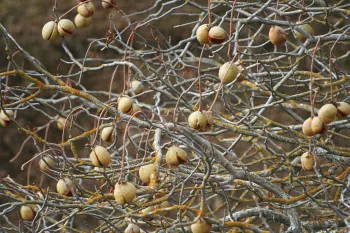
By midsummer, the foliage dries brown, and the trees drop their leaves without supplemental irrigation. This strategy is called drought deciduous, allowing the tree to conserve water during the hottest months. It might look dead, but this is a natural occurrence, and the trees are perfectly healthy. They are conserving water in the summer heat. When the leaves are gone, the silhouette can highlight the seed pods, among the biggest of any native California plant. The seed capsules fall and roll downhill, and when the fall rains start to germinate with tiny bright green foliage.
Buckeye trees can be found throughout Marin’s landscapes. The deep roots stabilize slopes from erosion on the steep terrain in Fairfax and Mill Valley. Large trees dot the landscape in Nicasio, and hikers can find them on the Cataract Trail or on Ring Mountain. In San Rafael, the road to China Camp is dotted with buckeye trees and features the Buckeye Cove picnic area. A large buckeye anchors the parking lot below San Rafael’s Falkirk mansion. Buckeye trees grow in many of the same areas where Coast Miwok villages once stood, including Terra Linda, Lucas Valley, and the slopes of Mt. Tamalpais.
Today, the buckeye trees act as seasonal markers. In spring, they signal leaf-out early-season planting. In summer, leaf drop signals the height of the dry season. In autumn, seed fall is aligned with traditional harvest times. With its striking form, ecological importance, and deep cultural history, the native buckeye is a tree of many virtues—well worth a place in the landscape.
By Alice Cason, July 4, 2026