
Watershed and natural resources advisor Royce Larsen retires this summer after extraordinary career helping ranchers care for rangelands
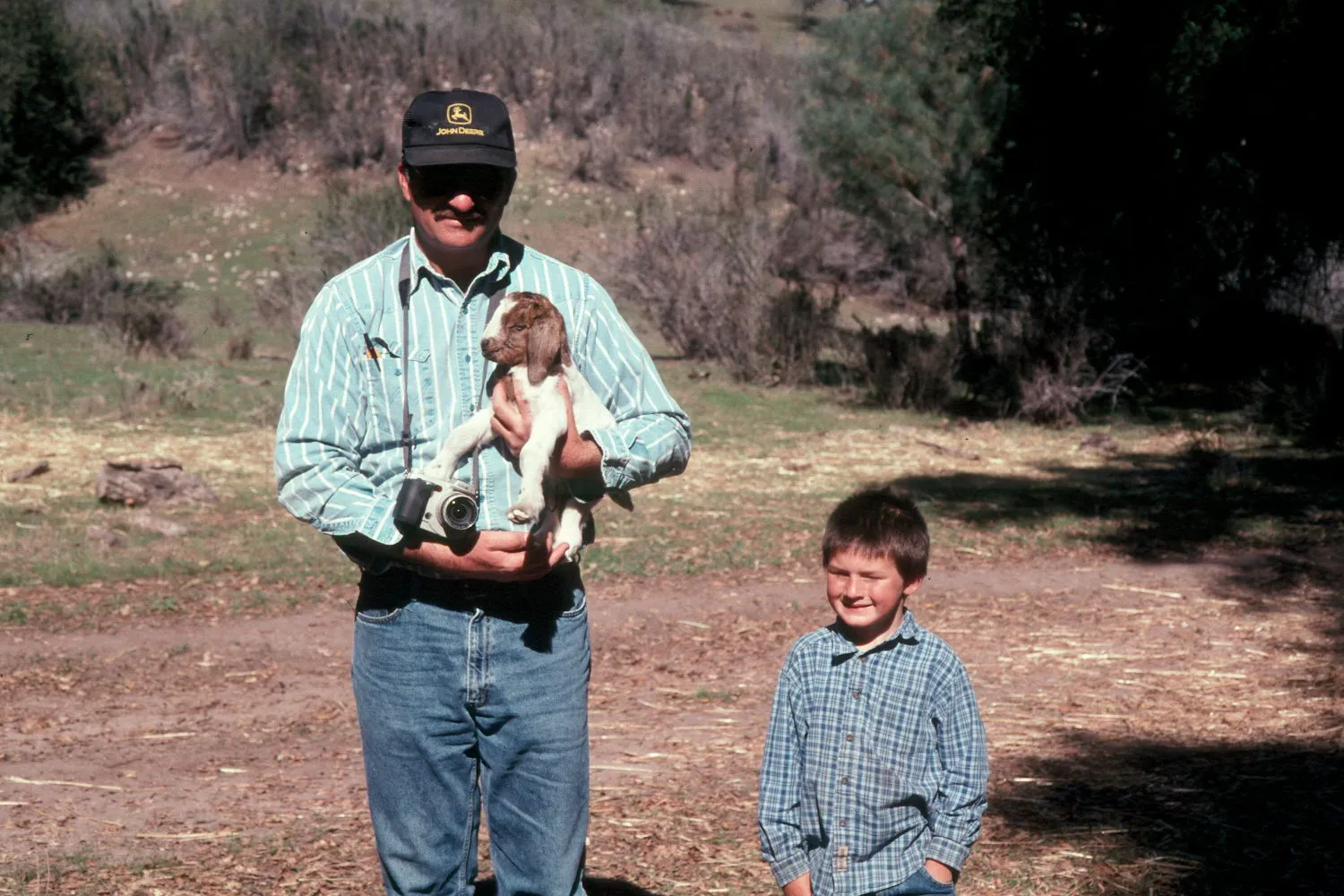
By the time Royce Larsen turned 12, he had never traveled farther than a three-hour drive from his family’s dairy ranch in rural Utah. Caring for cows was a demanding household chore requiring participation from the whole family.
“ You get up at 4:30 – milk – go to school, come back – milk. There’s never time to do anything else,” Larsen said.
Growing up on the dairy, Larsen realized that milking cows was not his life’s calling. Still, a love of the outdoors and rural life stuck with him, eventually leading him back to the range – not as a dairyman, but as a scientist.
For 30 years, Larsen has shared his expertise in rangeland management through UC Cooperative Extension, protecting the types of landscapes that were the backdrop to his childhood. Larsen spent most of his career as the watershed and natural resource advisor covering Monterey, San Luis Obispo and Santa Barbara counties. This summer, he will retire from that role and move back to Utah.
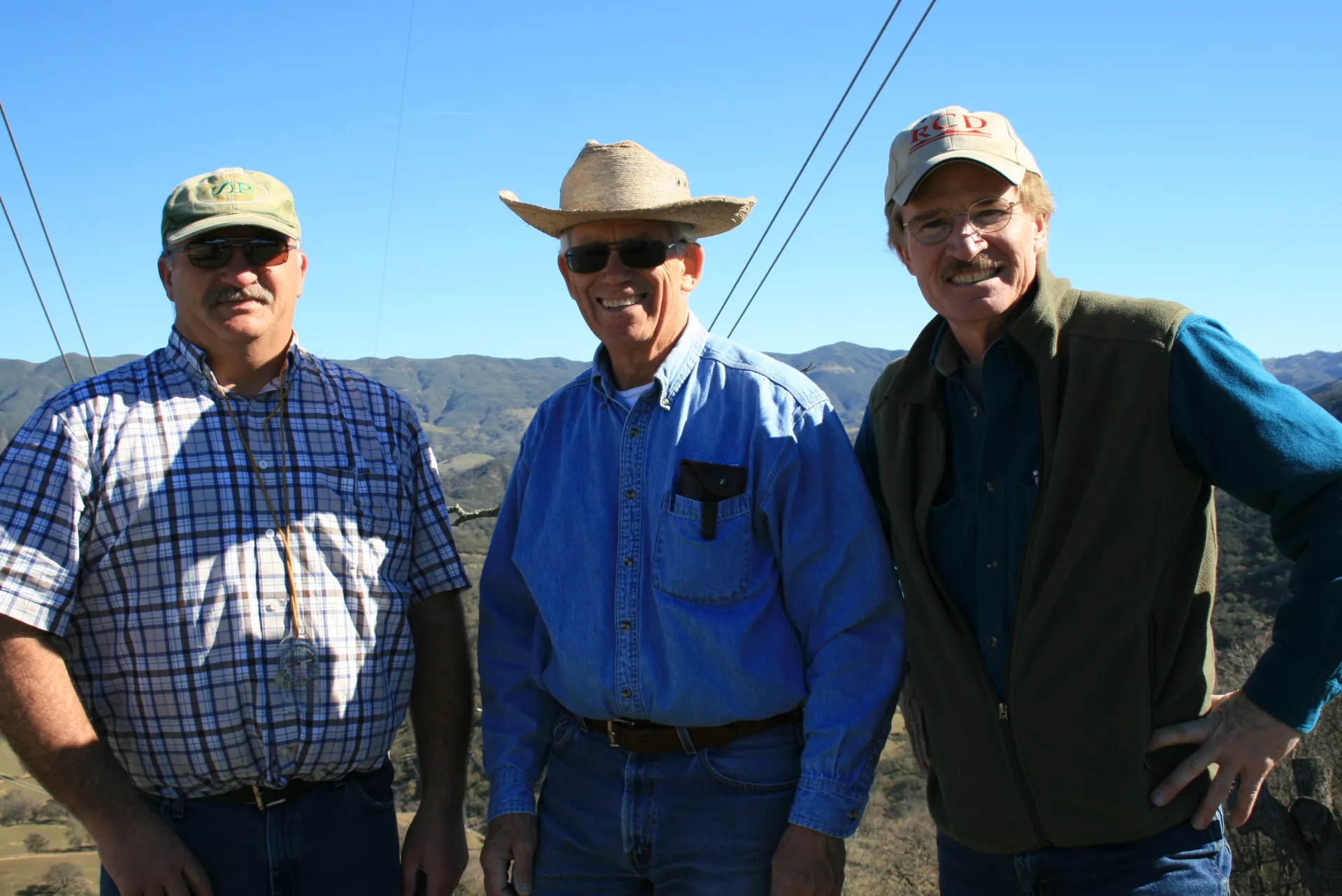
Cattle ranchers of California’s Central Coast can attest that Larsen has been a local fixture of the community. His trustworthiness earned him keys and combinations to their ranches, allowing him freedom to collect data on vegetation and many other ecological indicators.
Kevin Kester, a rancher from Parkfield and past president of the National Cattlemen’s Beef Association, says Larsen made good on his trust. Larsen helped him develop rangeland management plans to protect his natural resources and family livelihood for future generations.
“It takes a certain kind of person from the academic world to interact with cattle ranchers… not everybody can do it. Royce was a perfect fit,” Kester said. “His word is as good as gold.”
Larsen’s tact with the local community rewarded him academically. Larsen used the extensive data he collected to demonstrate how rangeland environments are changing with the climate, and effectively communicated those stakes to ranchers.
Over his career, he published 230 articles and delivered countless workshops, lectures and site visits. Larsen has applied for emeritus status to continue leveraging his knowledge to benefit California’s watersheds and the ranchers who manage them.
From dairy farmer to watershed scientist
The dairy that Larsen grew up on was relatively small. By the time he was a teenager, his family faced steep pressure from the surrounding farms.
“We had to either get large or get out,” Larsen recalled.
When his family made the tough decision to sell the business, Larsen took that as an opportunity to transition. He enrolled at Utah State University, just a few miles from home.
He pursued computer science, but that interest was eclipsed after taking a course on watersheds and rangelands. For the first time, Larsen learned how water that falls on farms all feeds into streams and underground reservoirs. He began to understand water quality as a shared responsibility.
Larsen didn’t come from a family oriented toward science. Of his six siblings, he is the only one to finish a college degree. But his passion for watershed management inspired him to keep learning, leading him to earn a master’s and Ph.D. from Oregon State University. By that time, he wanted to stay in academia, but becoming a university professor didn’t feel right.
“I just didn’t see myself teaching a class day after day. But I wanted to do research and get out and visit with people,” Larsen said.
Larsen was introduced to Cooperative Extension at OSU. There, he was invited to camp out with local cattlemen, who shared how much they need the insights scientists have to offer. Larsen noted the long history of mutual respect between ranchers and Cooperative Extension. That kind of relationship-based research felt natural – and important.
“Like, this is where I want to go. This is the direction,” Larsen said.
Cleaning up the water clears the name of cows
Larsen landed his first UC ANR job as an environmental science advisor for San Bernardino and Riverside counties, a role that took him into the Mojave to survey for endangered desert tortoises. (On one outing, he even found a human jaw!) Despite the intrigue, Larsen wanted to focus more on grazed rangelands, so when a watershed advisor position opened in San Luis Obispo, he jumped on it.
At that time, the State Water Resources Control Board was enforcing the Clean Water Act more stringently. Regulators had tackled single “point-sources” of contamination (think: dumped sewage) and were now turning to more generalized “nonpoint-source” contamination.
In California, the vast majority of surface water flows through rangeland watersheds and thus, ranches were receiving special scrutiny for their potential impact on water quality.
“There was this big emphasis: ‘Clean it up!’” Larsen said. “The water quality regulators up to that point felt that cows were a problem, but a lot of times they’re not. So let’s focus on what the problem really is and how we fix it.”
Larsen got to work tracing water contaminants. Water lawyer and local rancher Steve Sinton opened his property to the research effort.
“He’s come out to our ranch and studied anything that’s in a cow pat,” Sinton said. “If there’s something in there that you don’t want, does it go to the streams?”
Larsen discovered that, in most cases, contaminants only traveled a few feet from the cow pat. As long as ranchers avoided grazing cattle on roads and in streams, they could make significant strides in protecting the local watershed.
“Grazing really didn’t have that big of an impact on the water quality as they were being blamed for,” Larsen said.
For Sinton, that discovery was vindicating. It reinforced the value of collaborating with local Cooperative Extension advisors who bring data-based evidence to pressing environmental issues.
“There’s science to back up what’s actually happening out there. And it takes scientists to get the science,” Sinton said.
By taking water quality readings in the field, Larsen provided ranchers with data to accurately gauge – and improve – the sustainability of their operations. He helped develop a short course on water quality to help ranchers establish management plans tailored to their operations. That individual attention was noticed and appreciated.
“He’s out on our ranch. He’s out and about. He’s not an office guy,” Sinton said.
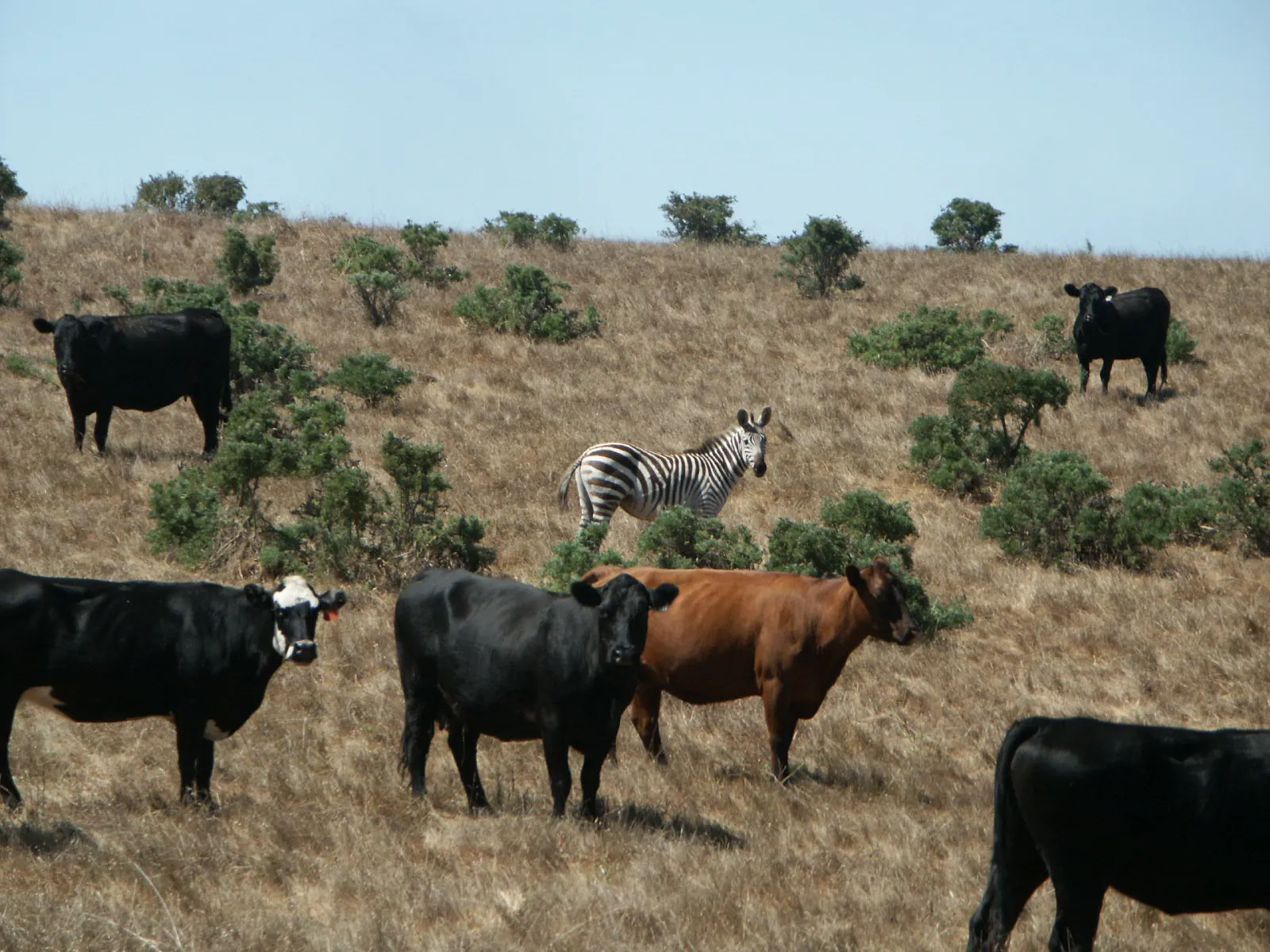
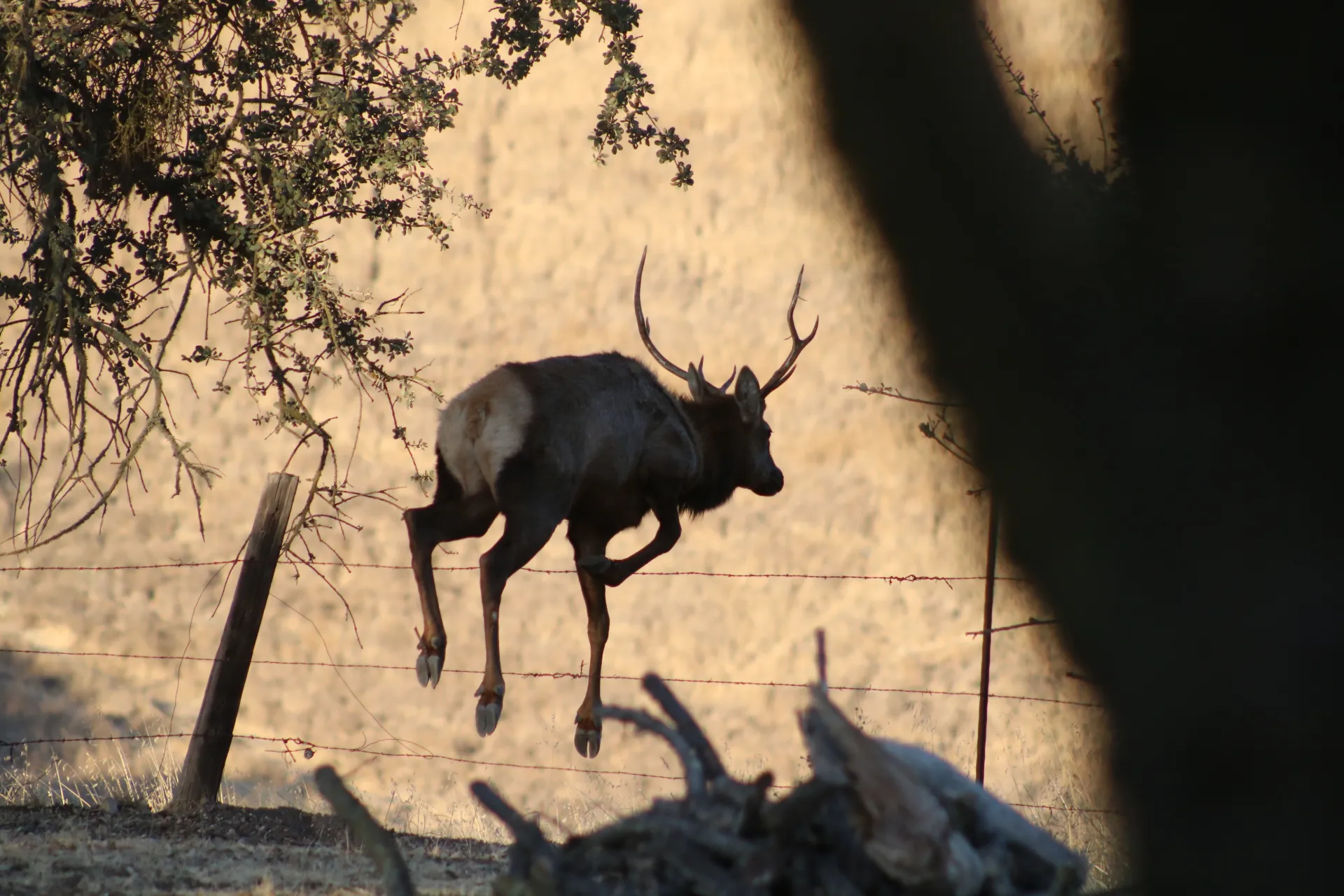
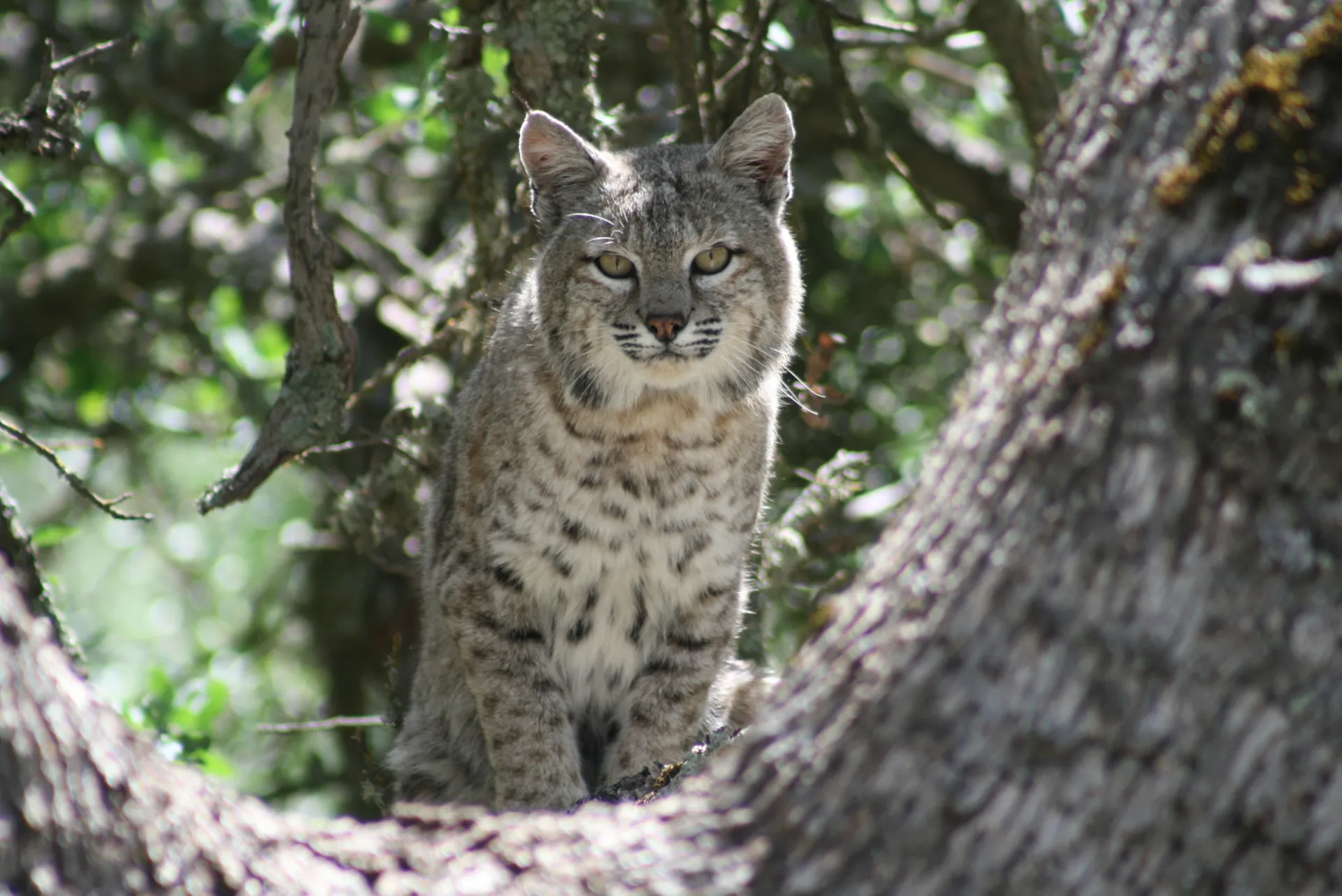
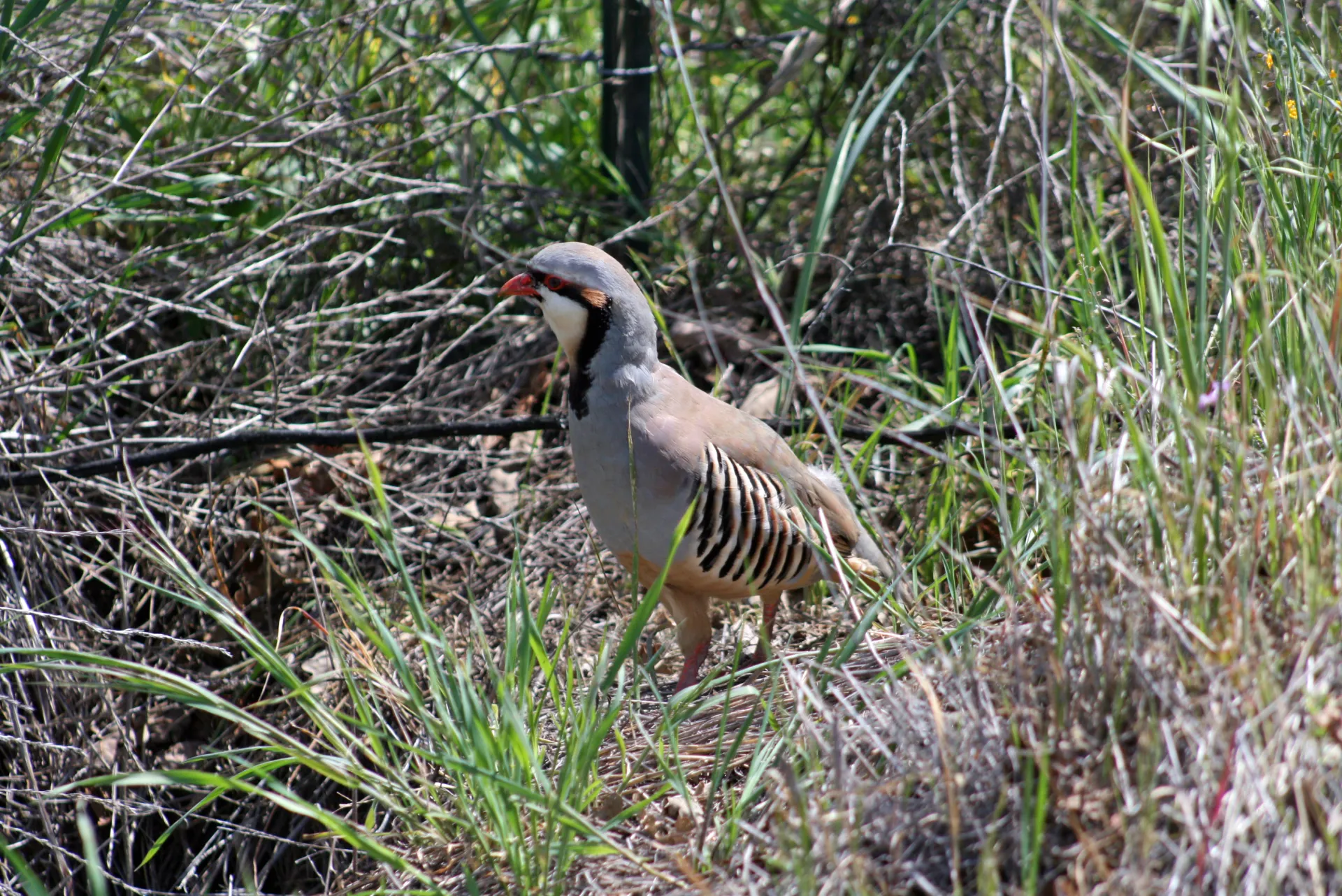
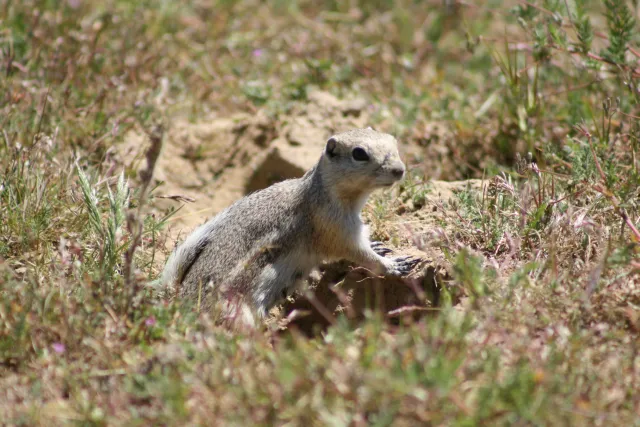
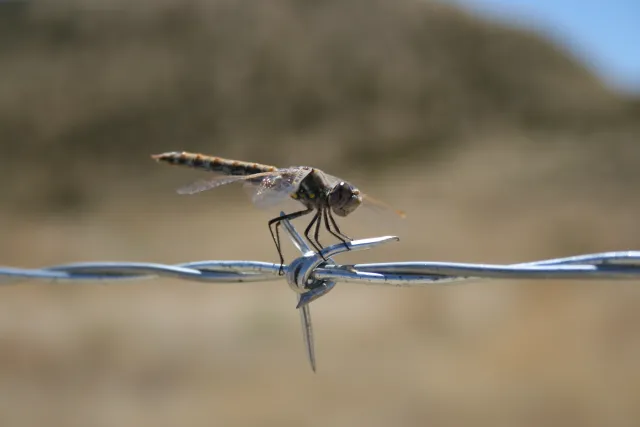
All that time spent outside had other perks. Larsen frequently snapped photos of close encounters with wildlife, including bobcats, elk and birds – a reminder of the non-human beneficiaries of Larsen’s passion for environmental protection.
A treasure trove of climate data shows rangelands in flux
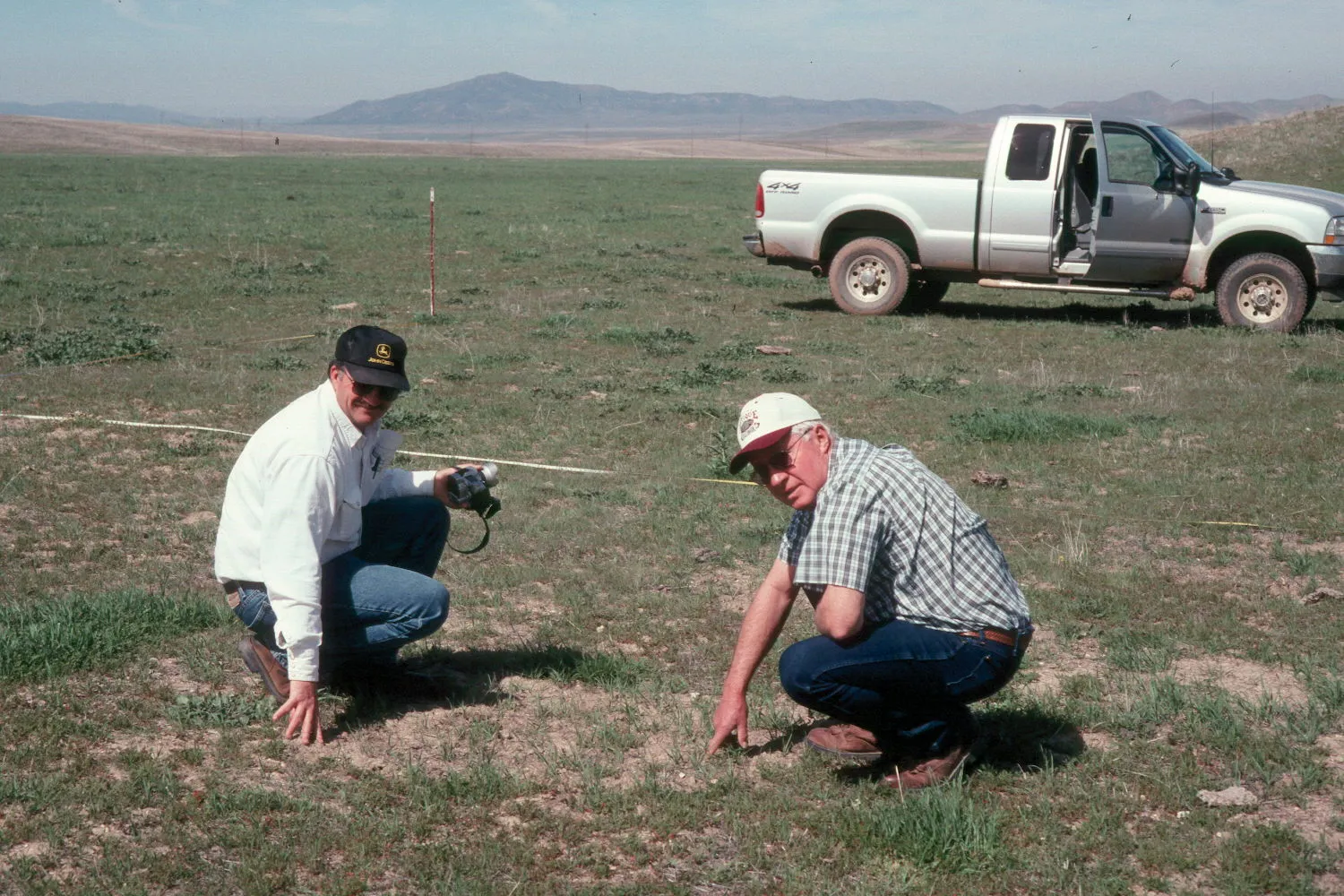
Every year of his career in San Luis Obispo, Larsen has collected the same type of data on forage, the plant material eaten by livestock. The process is almost ritualistic. After drawing up quadrat study plots on rangelands, he carefully collects vegetation, dries the material and weighs it. He also records plant species and other ecological observations.
This dedication to monitoring rangeland environments for 25 years gave Larsen a front-row seat to watch the climate as it changes. In the 2010s, he saw extreme droughts put pressure on vegetation, cows and ranchers alike.
“They had to sell most of their herd. The cows wouldn't survive. There’s nothing for them to eat,” Larsen said.
Landscapes still haven’t recovered from those impacts, even years later.
“The average temperature is increasing every year,” Larsen said. “The other problem is we’re seeing rains being erratic.”
Cattle rancher Kevin Kester has seen the same phenomenon.
“We’ve got these dry years, that’s a fact, and then we’ve got a wet year. What are the effects of it? How do we deal with it?” he asked.
According to Kester, one of Larsen’s greatest strengths has been in discussing these challenges with ranchers, never coming off as a know-it-all or alarmist. Kester credits Larsen for moderating meaningful conversations about practical sustainability issues.
“Just in his low-key Royce manner, he can ask those kinds of questions. Not threatening or challenging – he just makes you stop and think,” Kester said.
As Larsen retires, many variables on rangelands are in flux. Any successor will have to consider changing fire regimes and forage availability. For Larsen, adapting to that future will require getting out into the field– a great privilege of the job.
“They’ll need to go visit the ranchers and determine for themselves what’s important,” Larsen said.
Ahead of his retirement, Larsen wishes to thank his collaborators and mentors, especially Melvin George, who hired him as a postdoctoral researcher at UC Davis and supported him through his UC career. He extends his gratitude to retired UC ANR specialist Bill Tietje, with whom he worked at the San Luis Obispo office.
He also extends special thanks to Karl Striby of the USDA Natural Resources Conservation Service, with whom he collaborated on many projects, to Randy Dahlgren, professor at UC Davis, with whom he worked over the last 15 years, and to all the advisors and staff in the county.
“There were many others, too many to mention individually, but without whom I could not have achieved nearly as much in my program – thank you to all I have worked with,” Larsen said. “Most importantly, I want to thank my wife, Wendy, who has supported me throughout my career.”