
Every adult correctional facility in state receives produce through program initiated by Nutrition Policy Institute
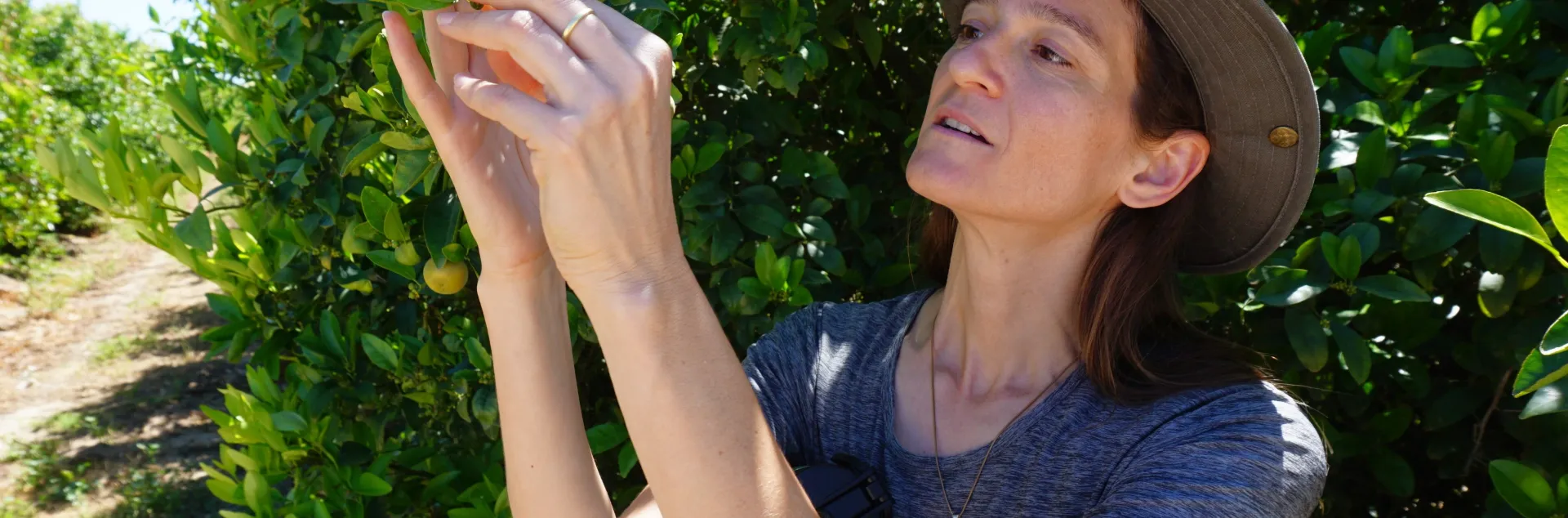
Emotion showed on the face of the farmer as she walked across the rec yard of California State Prison Solano.
As Sarah Weil talked with incarcerated residents of the facility in Vacaville, many of them shook her hand and thanked her for the mandarins she had supplied to the California Department of Corrections and Rehabilitation (CDCR).
“Those are fire,” said Andre Pierson, chair of the Inmate Advisory Council, which liaises between residents and prison administration.
“The only issue I have with the mandarins is we don’t get five of them!” said Patrick Range, another resident of the Solano facility.

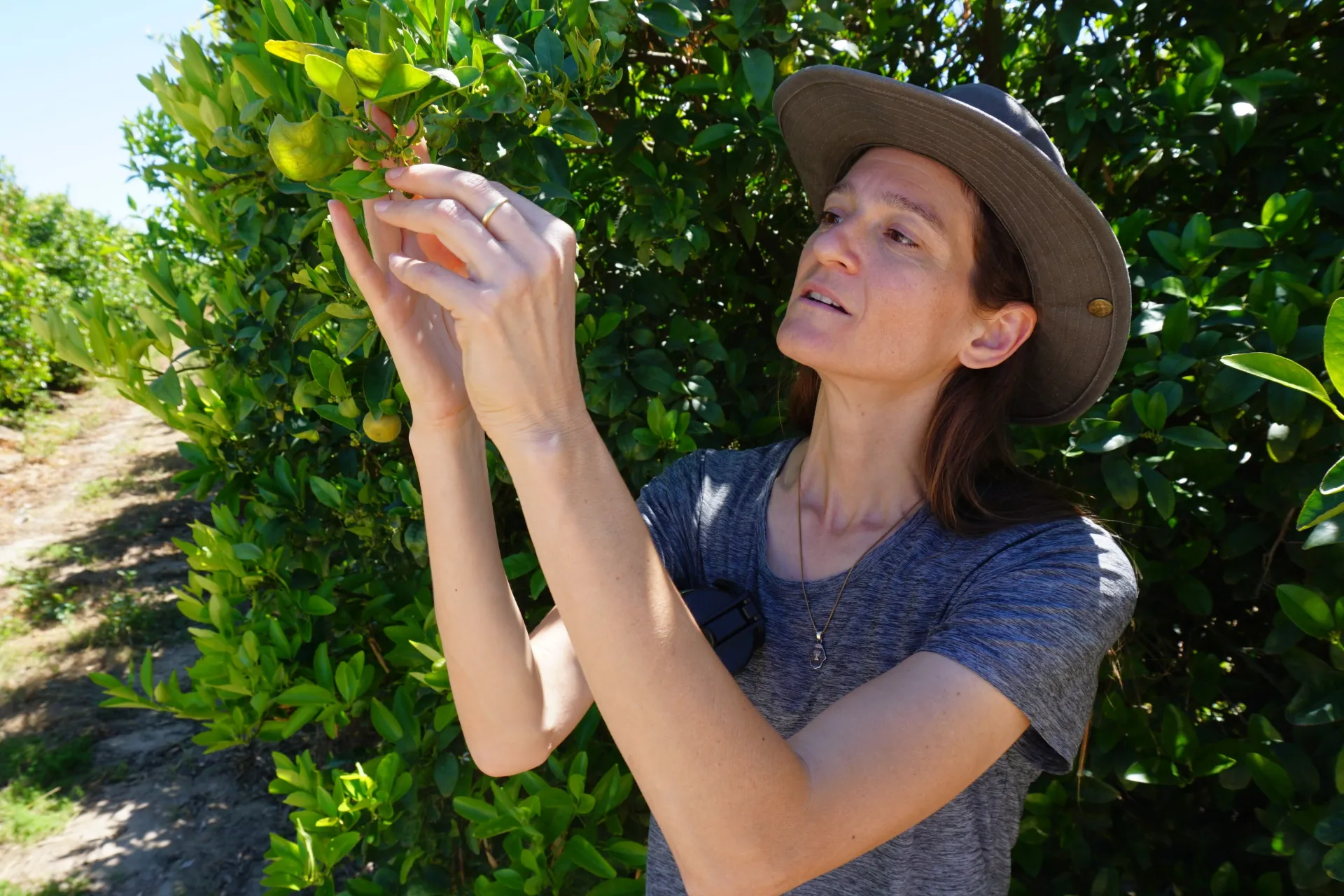
Weil, the co-owner of Twin Tree Farms in Madera, said she mainly sells her mandarins to wholesalers and thus rarely gets to hear such heartfelt appreciation from the people who are actually eating her fruit.
“I literally cried at some point because I was so moved by how meaningful a mandarin can be,” Weil said. “For the people there, it’s a lifeline, and I was able to be a part of providing them that lifeline. That gave me a tremendous sense of satisfaction and purpose in what I’m doing in being a farmer.”
Weil’s 47-acre mandarin farm is currently one of about 30 small- and medium-sized farms across the state participating in Harvest of the Month, a “farm to corrections” program bringing California-grown produce to CDCR facilities. Since its pilot phase in 2023, the program has expanded to supply fresh fruit and vegetables to all 30 adult facilities that house a total of about 90,000 people.
The result of a cross-sector partnership initiated by University of California Agriculture and Natural Resources’ Nutrition Policy Institute, Harvest of the Month is the only program of its kind in a U.S. correctional system. NPI brought aboard the nonprofit Impact Justice and ChangeLab Solutions, and together they developed a partnership with CDCR and Spork Food Hub to launch this project.
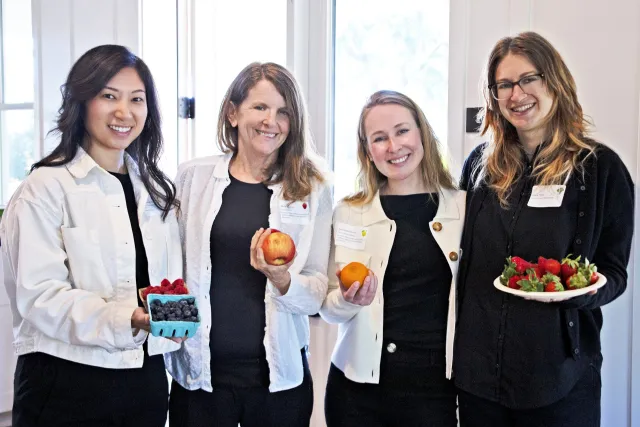
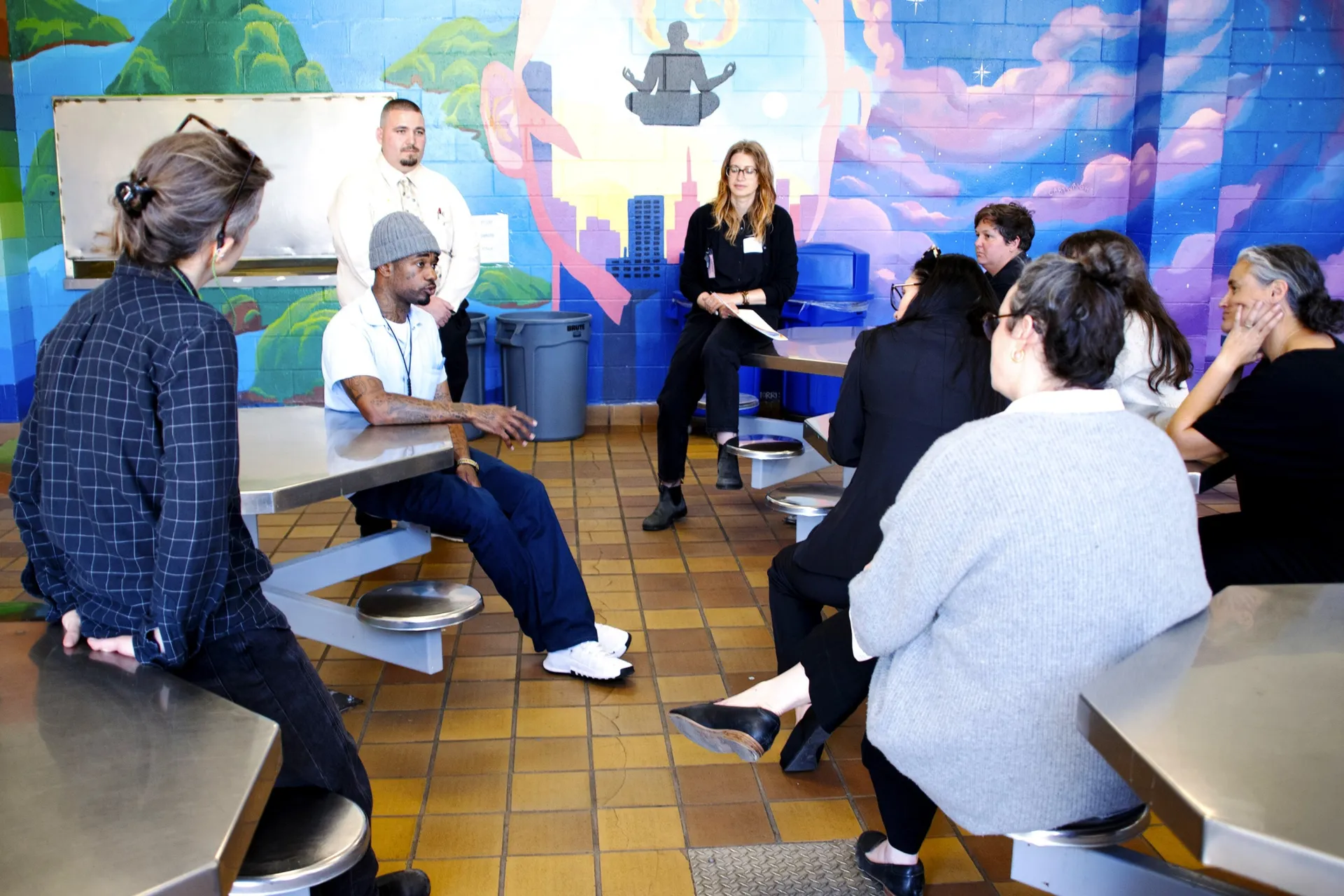
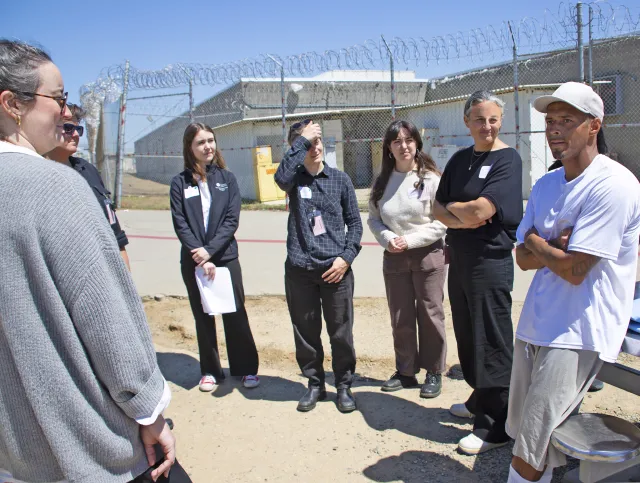
In late April, the current partners hosted stakeholders, including farmers like Weil, at a panel discussion about the program at Spork in Davis and a tour of the Solano facility. Weil was grateful for the chance to meet with the incarcerated residents and understand the full impact of her mandarins.
“Harvest of the Month means everything to me,” said Range, citing the health benefits of fresh produce.
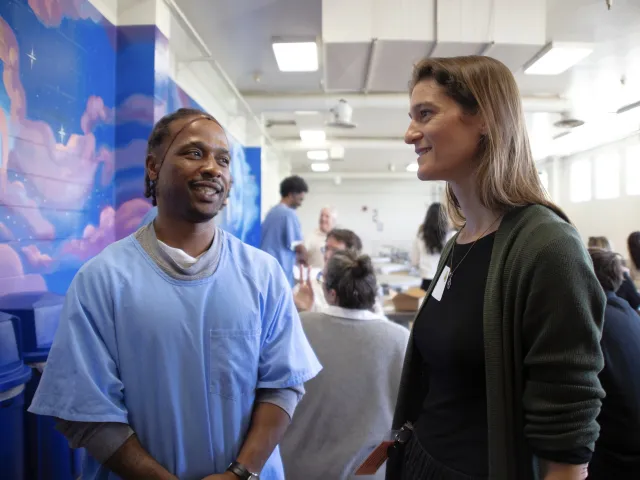
Weil recalled residents telling her that the citrus didn’t just nourish their bodies – it nourished their souls. “It brought them a sense of connection to the outside; it brought them a sense of connection to nature, a connection to something that’s living,” Weil explained.
For that firsthand experience and her involvement with Harvest of the Month, Weil also expressed her thanks to the partners behind the program, led by the NPI team of principal investigator Wendi Gosliner, project director Ron Strochlic and project manager Kassandra Bacon.
“I feel very, very blessed to be a part of it,” Weil said.
NPI, Impact Justice grew partnership that led to CDCR efforts
In 2019, Impact Justice invited Gosliner to a stakeholder interview to talk about food and nutrition and how they affect incarcerated people. Subsequently, Gosliner and Strochlic saw an opportunity to increase access to California-grown fruits and vegetables in carceral settings through a California Department of Food and Agriculture Specialty Crop Block Grant funding opportunity. Gosliner invited Impact Justice and ChangeLab Solutions to partner on the proposal.
Awarded an initial grant in 2020, the team spent a couple years gathering input from experts and stakeholders across the country, including formerly incarcerated individuals. The project managers also gradually cultivated a working relationship with CDCR – the State of California’s largest single purchaser of food.

Departmental managers initially resisted the idea due to financial considerations, as a single serving of California-grown produce from a small or medium grower costs about 35 cents, compared to their typical cost of 12 to 15 cents per serving sourced from large distributors or places like Mexico.
But CDCR, like all California state entities, was facing a requirement to purchase – by the end of 2025 – at least 60% of their food from California growers and producers, as mandated by AB 778.
“In order to do this, food services began to collaborate with other departments and agencies,” said CDCR food administrator Lance Eshelman.
The partners eventually settled on an approach based on the existing Harvest of the Month model, used in K through 12 settings to encourage young people to eat a variety of foods and receive nutrition education – while supporting small and medium farmers at the same time. The team sought to deliver one select produce item each month, starting with three correctional facilities in July 2023.
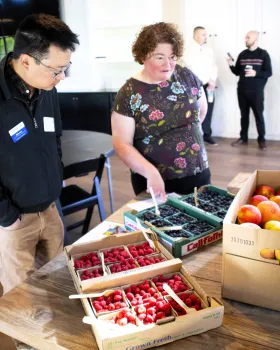
“We thought of a bite-size, small-step way to get our foot in the door with this, and that’s where Harvest of the Month began,” said Heile Gantan-Keo, program manager of Impact Justice’s Food in Prison Project.
But piloting the program at the outset, even at a modest scale, presented challenges.
“There were just a lot of logistics to manage in terms of getting the right product, having it delivered at the highest quality, and then getting it utilized well by the facilities,” Gosliner said. “There were learning curves all across that entire chain of experience.”
Fortunately, they were able to lean on the expertise of Spork Food Hub.
Harvest of the Month offers stability, new market for California farmers
When the COVID pandemic disrupted food supply chains, a handful of Sacramento Valley growers formed Spork to pool their crops and sell them to local school districts, according to Hope Sippola, co-owner of the food hub.
The project team brought in Spork because of its ability to fill a substantial order from a large purchaser like CDCR by pulling together organically or sustainably grown products from a variety of operations. Spork works with 120 farms ranging in size from two to several hundred acres, with about 60% of them operated by people who identify as Black, Indigenous or people of color.
Sippola – who is also co-owner of Fiery Ginger Farm in Yolo County – said her small farm has supplied bok choy and pluots to Harvest of the Month.
“For a tiny farm like ours, it’s really important,” she said. “We wouldn’t be able to access this market if it weren’t for the fact that a food hub could aggregate the different quantities from the different farms.”
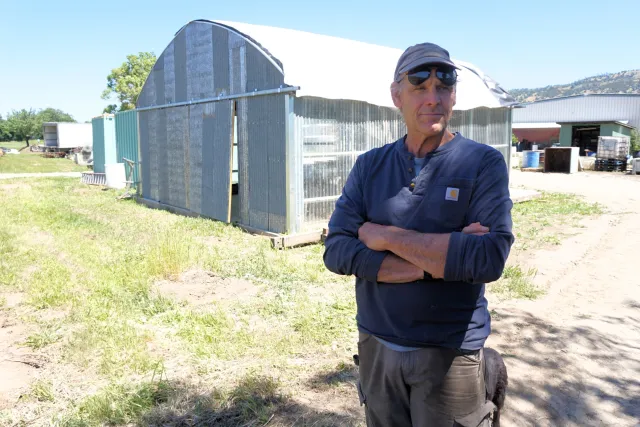
Working together also distributes risks among farmers and mitigates any potential shortfall of a particular crop, said Tim Mueller, chief executive officer of Riverdog Farm, a mixed fruit, nut, vegetable and livestock operation on 350 acres in the Capay Valley. His farm has supplied purple and watermelon daikon radishes, broccoli and cabbage to the program.
Harvest of the Month can absorb unexpected overruns, Mueller noted, and having a reliable customer in Spork gives his operation stability. That means he is able to give his 40 employees steady work, which strengthens the economy and social fabric of the entire community.
“These are people who aren’t chasing harvests across California, up and down the West Coast – they’re here; this is their home,” Mueller explained. “They have year-round work, and a program like Harvest of the Month helps make that a reality.”
Weil, who grows mandarins exclusively and also operates her own packing house, said the consistency and volume of Harvest of the Month orders enable her to stay in production and retain her picking and packing crews – a challenge for many growers.
“We’re talking about 50 people – from the pickers to the packers and other people that are involved,” Weil said. “A lot of people benefited from this program; it’s really been a godsend and I’m so grateful for it.”
Thus, despite the slightly lower price point offered through the Harvest of the Month program, participating farmers nevertheless appreciate access to a significant new market and the guaranteed sales – as well as other opportunities.
“For example, Orozco Farms – also known as Melon Bros – they didn’t grow in the winter and grew only summer crops,” Sippola said. “But now they’re growing in the winter for this program specifically, and we’ve been crop planning with them.”
Growth of program presents delivery, kitchen challenges
Given the many benefits for growers and incarcerated individuals alike, Harvest of the Month grew steadily, with the program partners adding three CDCR facilities each quarter. Through an additional $5 million allocation from the California legislature to help CDCR comply with AB 778, all 30 adult facilities in the system now get multiple servings of fresh fruit and vegetables every month.
This presented a major test for Spork’s logistical reach.
“We’re driving all the way to the Oregon border and all the way to the southern border of California, which is a lot for our five little trucks,” said Sippola, who added that Spork is also partnering with a third-party company to help deliver the produce to all CDCR facilities.
Although it started as a regional food hub, Spork now sources from farms all over California.
“We have a lot of coastal farmers, which gives us season extension and they can grow things like berries year-round,” Sippola said. “We source from most of California, with a focus on the Central Valley and Central California coast, as far south as Santa Maria.”
Another challenge has been ensuring that the fruits and vegetables can be properly processed by the diverse facilities across the CDCR system.
“When we’re dealing with 30 different kitchens – some as old as San Quentin, some as new as the Stockton medical facility – we have different equipment,” Eshelman explained. “They all don’t have the same infrastructure or equipment, and some cooks get creative in order to produce a quality product.”
Butternut squash was, quite literally, a tough case in point. Gantan-Keo of Impact Justice said she heard many questions from food service staff – what to make with this, how does this fit into the statewide menus they need to comply with, and how do they even cut up the hard squash, without industrial choppers, processors, or the sharp knives that one might find at home.
“We learned from that; we listened and surveyed food managers who have been implementing the program,” Gantan-Keo said. “And then we tried to go for a softer variety of squash, like delicata squash.”
The program team also has been gathering feedback from the residents of the facilities.
“When Heile and the team are going to the facilities, they’re not just talking to food service staff or the food managers. They’re also talking to the incarcerated individuals – they’re the ones that are consuming these products,” Eshelman said. “They also know how to prepare ingredients in their cell, from the food they purchase from the canteen [a commissary in a correctional facility].”
With state support, Harvest of the Month will continue to improve
Pierson and Range, incarcerated residents at the Solano facility, have been using the fresh vegetables in the soups that they make. Pierson said he is teaching the younger men how to prepare the soup, and Range added that he appreciates being able to add different vegetables to his rice bowls, such as the bok choy.
“In the ’90s, when I got here, you got a handful of lettuce,” recalled Range, who has to manage kidney disease.
He said that in 2023 he was told he would need dialysis by the end of the year, but after watching his diet and increasing his intake of fruit and vegetables, he noted that his kidney function had actually improved in the intervening years.
“My kidneys are better and my health is better,” Range said.
Other residents in the rec yard told attendees of the stakeholder tour that the fresh produce was a great boon for their mental and emotional health. By eating less processed food and more fruits and vegetables, some observed that they felt less sluggish, or had fewer mood swings, or were less prone to destructive behavior.
They especially enjoyed the greater variety on offer – from pluots to persimmons, and avocados to asparagus.
“Every time I got these vegetables, I called my mom and asked her what to do with them,” said Brian Cortez.
The produce will keep coming, at least for the foreseeable future. Harvest of the Month will continue, even as the grant money that supported program logistics and management runs out. A second specialty crop block grant that the NPI team received ends later this month.
“The idea behind those grants is that the project should be self-sustaining and not continue to require grant funds,” said Gosliner, the NPI principal investigator. “We’ve been trying these past three years to figure out how to make Harvest of the Month embedded in systems, so it doesn’t require our effort for the work to continue.”
The funding for purchasing the food from Spork has been entirely provided by CDCR, noted Strochlic, the NPI project director.
“It’s all come from CDCR, which has demonstrated their commitment to the program and making sure that it’s successful,” he said. “They’ve been a great collaborator, as well as a great champion.”
Eshelman, the departmental food administrator, credits CDCR leadership – Secretary Jeff Macomber and the federally appointed Receivers overseeing health care – for their support of the program.
As long as the state’s budget permits, Eshelman said he will continue to grow and improve upon the template that has been established by Harvest of the Month.
“We have plans, we have ideas, and now we know how to make it work,” he said. “And we’re looking forward to the future.”