
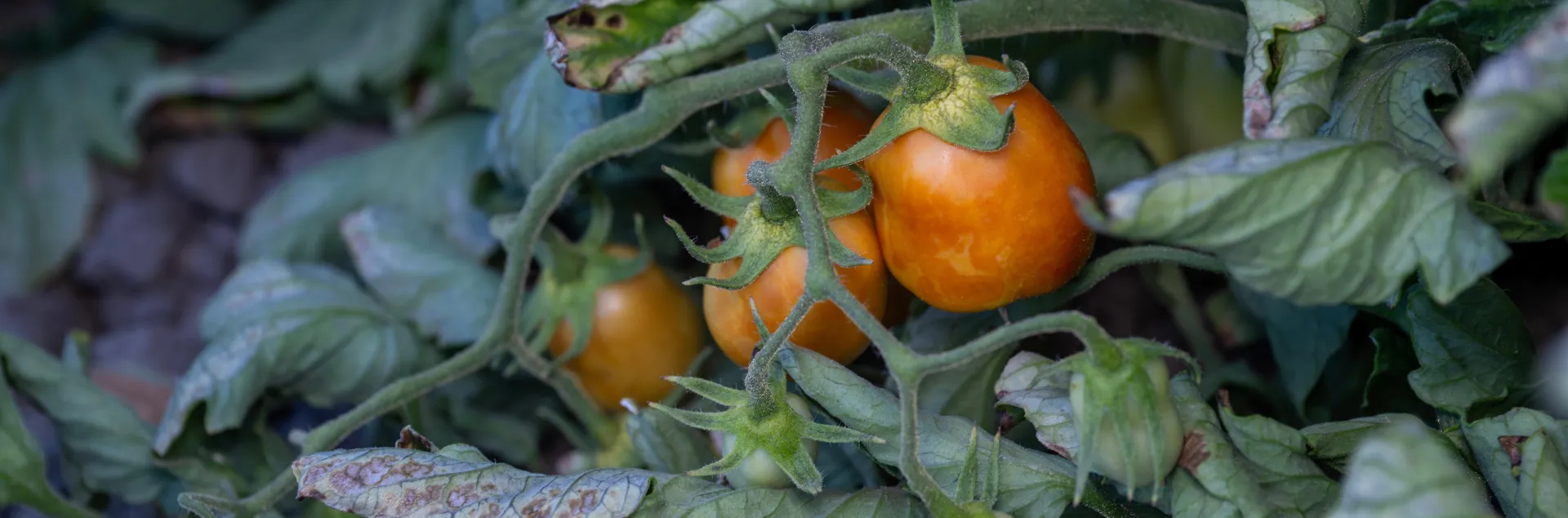
When you have a vegetable garden, sometimes you might discover your plants aren’t growing as well as expected and look sick. Vegetable plants can get diseases just like animals. A plant disease is an abnormal condition caused by microorganisms such as bacteria, fungi, water molds, or viruses. These are known as pathogens or infectious agents. Plants can also be affected by environmental issues, which are called disorders. Disorders can result from improper irrigation or nutrient levels, poor air quality, incorrect soil pH, exposure to too much or too little sunlight, or extreme temperatures. To help identify diseases and disorders, we use symptoms, or the visible effects on the plant, and signs, any physical evidence of an infectious agent. Symptoms can take many forms, such as wilting, discoloration, abnormal growth, leaf spots, rot, or stunted growth. Examples of signs of plant diseases include visible fungal growth and bacterial ooze. By knowing where to look and what to observe, you can narrow down which diseases and disorders you might be dealing with.
Diseases
Plant diseases can be host-specific, depending largely on the pathogen, the infectious agent. Some diseases are named after the pathogen that causes them; for example, Fusarium wilt is caused by Fusarium fungi. Others are named for the symptoms or signs they produce, such as the fungal disease powdery mildew. Below are some common vegetable diseases, the pathogens that cause them, and general management strategies.
Damping-off
Early in the growing season, you might see damping-off in your vegetable garden. Damping-off is a seedling disease caused by several soil-borne pathogens including Pythium, Rhizoctonia, Fusarium, and Phytophthora. Damping-off pathogens primarily infect young seedlings, whose tender tissues make them highly susceptible, while older plants are less affected. Seeds may rot or decay before germination or soon after. Infected seedlings will often collapse, and the lower stem and crown may disintegrate. Damping-off diseases are worse in cold, wet, compact soil and when nitrogen levels are excessive. Control this disease with good sanitation, including cleaning equipment and using clean seed or growing material. Grow seedlings in well-draining soil or media
Downy Mildew
Another early-season disease is downy mildew. Downy mildews are a group of diseases caused by fungal-like organisms known as oomycetes (water molds). Downy mildew pathogens are relatively host-specific, infecting either a single or a group of closely related hosts. Symptoms appear as necrotic (dead) or chlorotic (yellow) patches on the top of leaves. Spores are produced on the undersides of leaves, forming white to brown velvety patches. Downy mildew thrives in cool, wet conditions. Manage this disease by increasing airflow and reducing leaf wetness. Vegetables susceptible to downy mildew include beets, brassicas, chard, cucurbits, garlic, lettuce, onions, peas, spinach, and radishes.
Fusarium Wilt
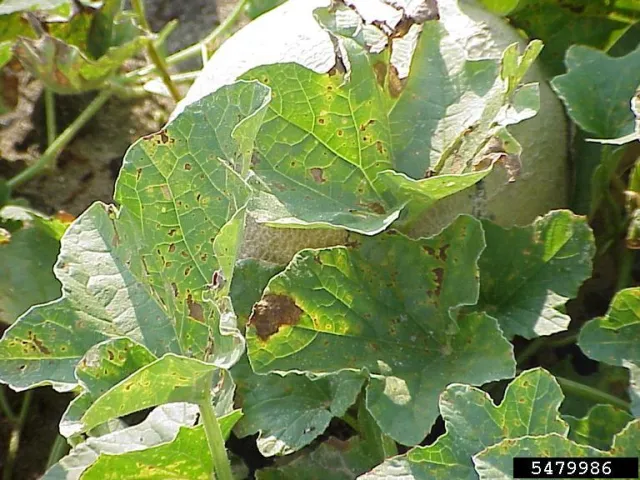
As plants mature, they may show signs of Fusarium wilt, a disease caused by fungi in the Fusarium genus. These fungi are generally very host-specific; however, some can infect related crops. Infected plants will wilt or become chlorotic on one side or branch, and their water-conducting tissues may be discolored and brown. Vegetables susceptible to Fusarium wilt include asparagus, broccoli, cabbage, cauliflower, cantaloupe, peas, solanaceous crops, and some cucurbits. There is no cure for Fusarium infection, and infected plants should be removed and destroyed. Unfortunately, once the Fusarium fungus is introduced to an area, eradication is very difficult. Cultural management of Fusarium wilt includes rotating to an unrelated crop, using resistant varieties, and solarization.
Powdery Mildew
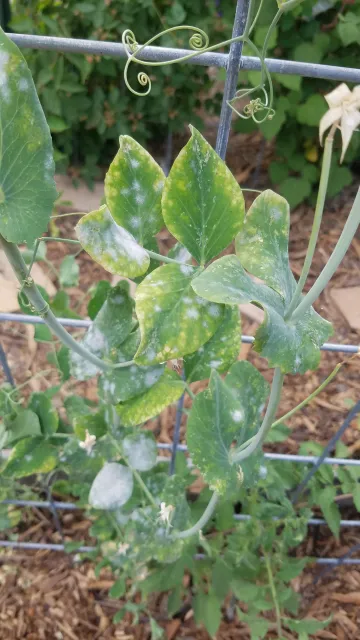
The distinctive white patches of powdery mildew are common later in the growing season as plants mature. Powdery mildew is a fungal disease caused by several different fungal genera. These fungi tend to be host-specific, often infecting a single species, or at most a few closely related plants. The primary sign of this disease is white powdery fungal growth generally found on the tops of leaves. Early infection may appear as pale-yellow patches on leaves. Powdery mildew can occur on many leafy greens, solanaceous plants, cucurbits, beans, artichoke, carrots, and brassicas. Some vegetables, like tomatoes and cucumbers, have resistant varieties. Cultural management includes providing sunny areas and increasing airflow. If treatment is necessary, oils and sulfur products can provide control.
Mosaic Viruses
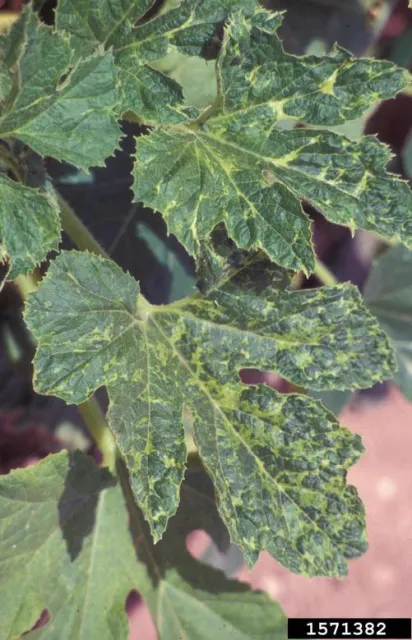
As vegetable plants grow and mature, mosaic virus disease symptoms become apparent in infected plants. Mosaic viruses are caused by a wide variety of plant viruses that produce similar symptoms, making individual viruses difficult to distinguish. Symptoms include leaf twisting and distortion, a chlorotic mosaic pattern, and stunting. While most viruses are carried from plant to plant through aphid feeding, some can be transmitted through seed, other insects, or infected sap. Unfortunately, there is no cure for plants infected with mosaic viruses. In some cases, resistant varieties exist, but using virus-free plants is the most effective way to prevent virus diseases. Vegetables susceptible to mosaic viruses include beans, beets, cucurbits, chard, solanaceous plants, lettuce, peas, and spinach.
Soft Rot
Ripe vegetables can become infected with soft rot diseases. These diseases are caused by the bacteria genera Erwinia, Pseudomonas, Pectobacterium, and Dickeya. Infected plants will become water soaked, mushy, and may have a foul-smelling odor. Vegetables commonly affected by soft rot diseases include brassicas, carrots, corn, garlic, onions, and potatoes. Soft rot most often affects corms, bulbs, and tubers; however, the thick stems and crowns of lettuce and brassicas can also become infected. Bacteria enter through plant wounds, so preventing physical damage and injury from insects is important in reducing soft rot diseases. Improving airflow between plants and well-draining soil can minimize soft rot. If the problem persists, rotate crops to a less susceptible host for at least 3 years.
Disorders
Sunscald and Heat Distress
Even though plants need sunlight to grow, too much sunlight or high temperatures can damage many vegetable plants. Sunscald on fruit or leaves is caused by excess sun exposure and will appear as pale or necrotic patches. It is usually limited to the exterior or most exposed parts of a plant. Heat stress in plants occurs after prolonged exposure to high temperatures. It can cause a wide variety of symptoms such as tip-burning of leaves, wilting, leaf rolling, and dropping of blossoms.
Incorrect Irrigation
Inconsistent or incorrect irrigation can result in drought stress or waterlogging. Drought stress (too little water) and waterlogging (too much water) can cause similar symptoms, despite being opposite conditions. Both abiotic stressors can result in whole plant necrosis, chlorosis, and wilting. Check soil moisture if you see these symptoms.
Blossom-End Rot
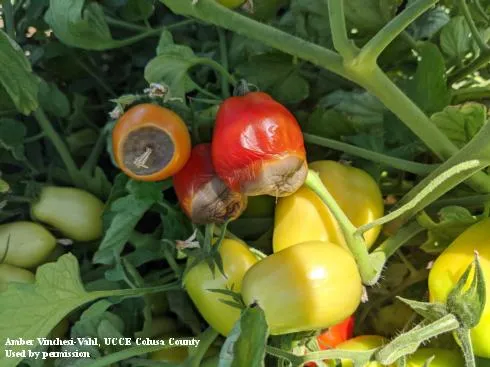
This common abiotic condition is caused by a calcium imbalance. While low calcium levels can cause this disorder, it is often triggered by inconsistent irrigation which affects calcium uptake. Blossom-end rot causes the end of an immature fruit to have sunken brown or black lesions as fruit ripen. Vegetables susceptible to blossom end rot include tomatoes, peppers, eggplants, squash, melons, pumpkins, and cucumbers.
Nutrient Deficiencies
Although vegetable plants have different nutrient requirements, deficiencies often produce similar symptoms. For instance, overall plant chlorosis is often due to low nitrogen levels. Low potassium levels can cause tip-burn or marginal necrosis on older leaves. A deficiency in iron or manganese often appears as interveinal chlorosis on the youngest leaves. While these symptoms are helpful in figuring out the cause, the only reliable way to determine a nutrient deficiency is to perform a foliage or soil test through a commercial laboratory.
Is it a Disease or Disorder
When trying to determine whether a plant problem is a disease or a disorder, there are several key factors that can help. First, identify the plant species and determine the observed symptoms or signs. Consider the plant’s age, its location, recent weather conditions, and whether other nearby plants are affected. Lastly, consider the timeframe of symptom development. Diseases typically develop unevenly in a population, worsen over time, and affect only susceptible hosts. In contrast, disorders often appear suddenly and consistently, affecting multiple unrelated plants. You are likely to encounter problems in your vegetable gardens from time to time, and identifying the root cause can help you properly address it! See the UC IPM website for specific vegetables and the diseases and disorders that can affect them.
[Originally featured in the Spring 2026 edition of the Home and Garden Pest Newsletter. Watch the webinar recording for this topic on our Youtube Channel.]