
Environmental Water Quality: Understanding Pollutants, Processes, and Watershed Connections
Water Quality Beyond the Tap
Water quality is often something we think about only when there is a problem.
In Southern California, however, water quality is shaped every day by how water moves through our environment and what it encounters along the way. What flows across streets, landscapes, and urban systems can carry pollutants into storm drains, rivers, groundwater, and coastal waters.
Understanding what is in our water, how it gets there, and how it changes over time is essential for protecting ecosystems, public health, and long-term water sustainability.
Water quality is best understood within the context of watersheds. A watershed is the area of land where all water drains to a common outlet, meaning that what happens on land directly influences the condition of our water.
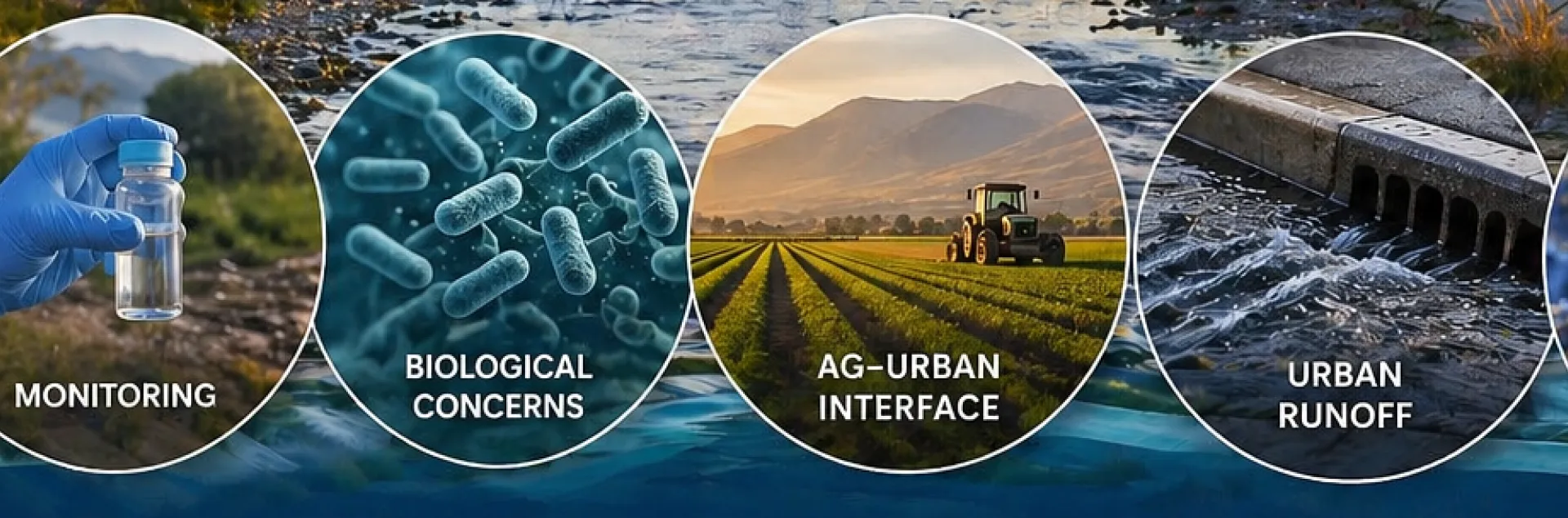
In many parts of Southern California, urban areas overlap with agricultural lands, creating an ag–urban interface where runoff, land management practices, and water use interact. This interface can influence water quality by contributing nutrients, pesticides, and other pollutants while shaping how water moves across shared watersheds.
Our Approach
This blog, part of the SoCal Urban Watershed Resilience program, focuses on how pollutants enter, move through, and affect water systems across Los Angeles, Orange, Riverside, and San Bernardino counties.
It brings together environmental science, field observations, and applied research to translate complex water quality processes into clear, practical insights. This includes ongoing work with agencies such as DPR and Public Works, supporting ambient monitoring and applied field efforts across the region.
The goal is to make water quality more visible, measurable, and understandable, while connecting science to real-world conditions and decision-making.
What You Can Expect
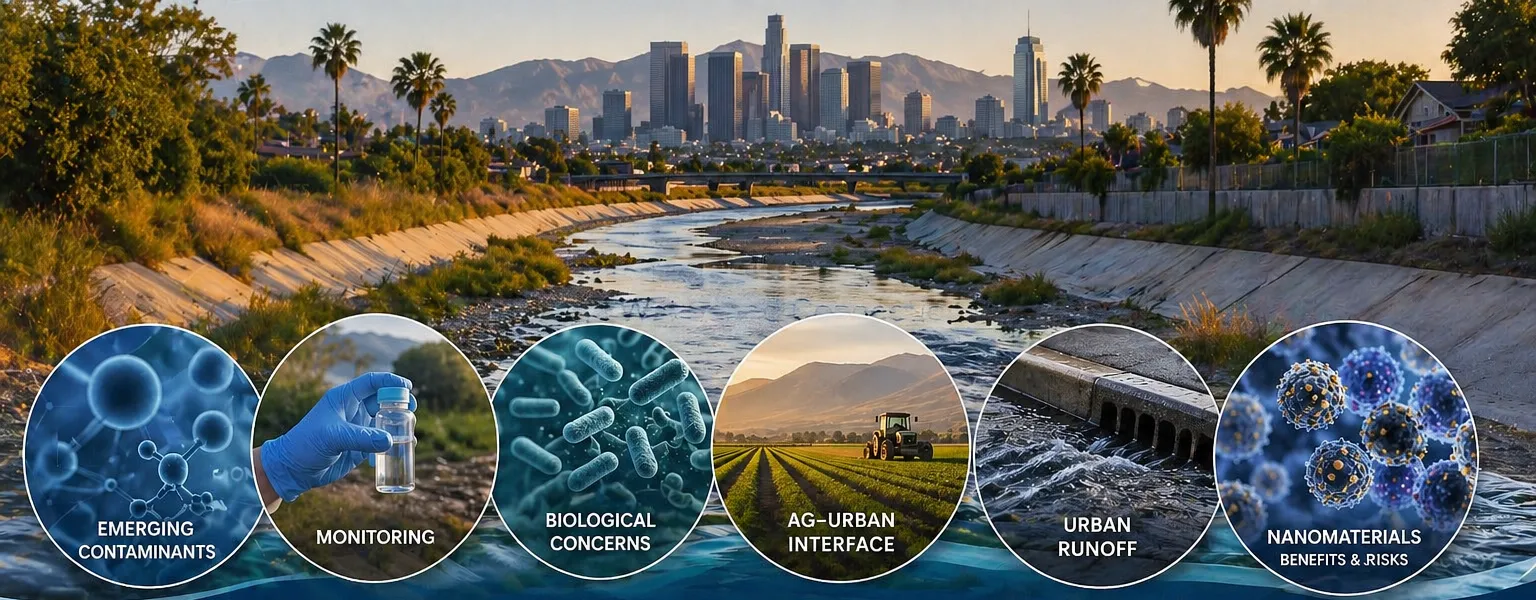
• How pollution enters and moves through urban watersheds
• Common pollutants such as nutrients, pesticides, metals, and sediments
• Emerging contaminants including PFAS, microplastics, pharmaceuticals, and volatile organic compounds (VOCs)
• Emerging materials such as nanomaterials, including their applications in treatment and their potential environmental impacts in aquatic systems
• Biological processes and contaminants, including pathogens and antimicrobial resistance
• Water quality conditions such as low dissolved oxygen and algal blooms
• Impacts of wildfire-related contaminants, including ash and fire retardants
• Environmental monitoring, field data collection, and applied studies
• Key laws, regulations, and tools used to assess and manage water quality
• Public datasets, mapping tools, and resources used by agencies and researchers
Why This Matters
Water quality reflects the condition of the systems around it.
Urban runoff can transport pollutants from everyday activities into waterways. Groundwater can be influenced by land use and contamination. Environmental conditions such as temperature and flow can affect how pollutants behave and how ecosystems respond.
Protecting water quality is not a single action, but an ongoing process shaped by how we design, manage, and interact with our environment.
A Connected System
Water quality does not exist in isolation. It is part of a broader, interconnected system.
This blog complements other SoCal Water Resources topics, including drinking water quality, water supply, water use efficiency, and water equity, by focusing specifically on environmental conditions, pollutant behavior, and watershed processes.
Together, these perspectives provide a more complete understanding of water across Southern California.
Community Connection
This blog is designed for residents, students, educators, and water professionals.
Water quality starts at individual homes, commercial, institutional as well as the community level, and everyday actions, from landscape management to waste disposal, influence the health of our shared water resources.
Work With Us
We offer workshops, presentations, and collaborative opportunities focused on water quality, stormwater, environmental monitoring, and watershed education across Southern California.
Reach out to learn how we can work together.
Share Your Story
If you are working on water quality, monitoring, stormwater projects, or environmental research, we welcome opportunities to highlight your work and share your story.
Looking Ahead
This blog will continue to evolve as new research, emerging contaminants, and field insights develop. Topics will be expanded over time to reflect ongoing work and changing conditions across Southern California’s water systems.
Call to Action
If you are interested in learning more or joining a growing network of water and watershed stewards, we invite you to subscribe to our blog or email to stay connected.
Opportunities include citizen science, community engagement, and programs for both youth and adults.
✍🏾 About the Author
Dr. Esther Lofton is an Urban Watershed Resilience Advisor with University of California Cooperative Extension, part of the University of California Agriculture and Natural Resources system. Her work focuses on water quality, stormwater management, watershed health, environmental monitoring, and community engagement across Southern California.
She works with agencies, communities, and partners to translate research into practical solutions that support sustainable and resilient water systems.
For questions, collaboration, or outreach opportunities:
📧 anrsocalwater@gmail.com
Explore More
💧 Read the Latest Blog
https://ucanr.edu/blog/water-supply-security-wss/article/oc-children-water-festival-2026-water-education
📖 Explore the SoCal Water Blog Series
https://ucanr.edu/site/socal-water-resources/socal-water-blog-series
🌊 SoCal Water Resources Program
https://ucanr.edu/site/socal-water-resources
🌿 Watersheds Program (Los Angeles & Ventura Counties)
https://ucanr.edu/site/watersheds-los-angeles-and-ventura-counties
📲 Follow
Instagram & Threads (@socal_h2o): https://instagram.com/socal_h2o
TikTok (@socal_water): https://www.tiktok.com/@socal_water
X (@SoCal_H2O): https://x.com/SoCal_H20