
The interdisciplinary nature of forestry provides a rich educational backdrop for educators to engage students in academic, social, and emotional learning. By examining the ecological, social, and economic aspects of forests, educators can create meaningful connections to natural resource management and empower students to think and act critically regarding forest and community health, resilience, and sustainability.
Several curriculum guides and programs are publicly available to help learn and teach about forest ecosystems and natural resource management. These resources are tailored apply inquiry-based, project-based, and experiential lessons on a range of forestry topics such as: wildlife, water, air, indigenous practices, energy, waste, climate change, invasive species, community planning, career pathways, and many more.
Forestry Field Foundations
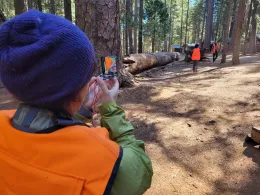
Forestry Field Foundations, developed by UC Cooperative Extension, is a curriculum designed for use by high school and post-secondary educators in the instruction of forestry concepts and skills essential for early career forestry jobs. Each lesson is organized around core competencies aligned with California Career and Technical Education Model Standards and Natural Resource Systems Career Pathways Content Standards.
Download: Module 1 | Pacing and Compass Use
Additional Forestry Curriculum
The following curricula and resources have been designed for use in a range of educational settings, from formal classroom instruction to nonformal outdoor learning in both rural and urban environments. Developed, reviewed and field-tested through collaboration between resource experts, researchers, and educators, these resources align with state and national education standards.