Fuel reduction is an important part of making homes and properties in the Central Sierra region more fire resilient.
Common approaches include mastication, mowing, prescribed burning, and herbicide treatments, but these practices can require specialized equipment, expertise, considerable labor or expense, or permitting and other regulatory requirements. Often, additional treatments are required to manage regrowth. For some landowners, hiring a contractor may be required to complete the work. Grazing offers another method to manage grasses and other fine fuels while supporting livestock production, but fencing and other livestock management needs can limit where grazing for fuel reduction is practical. A recent UCCE farm call in Amador County demonstrated how one landowner is using virtual fencing (VF) to make grazing a more targeted part of that ongoing work.
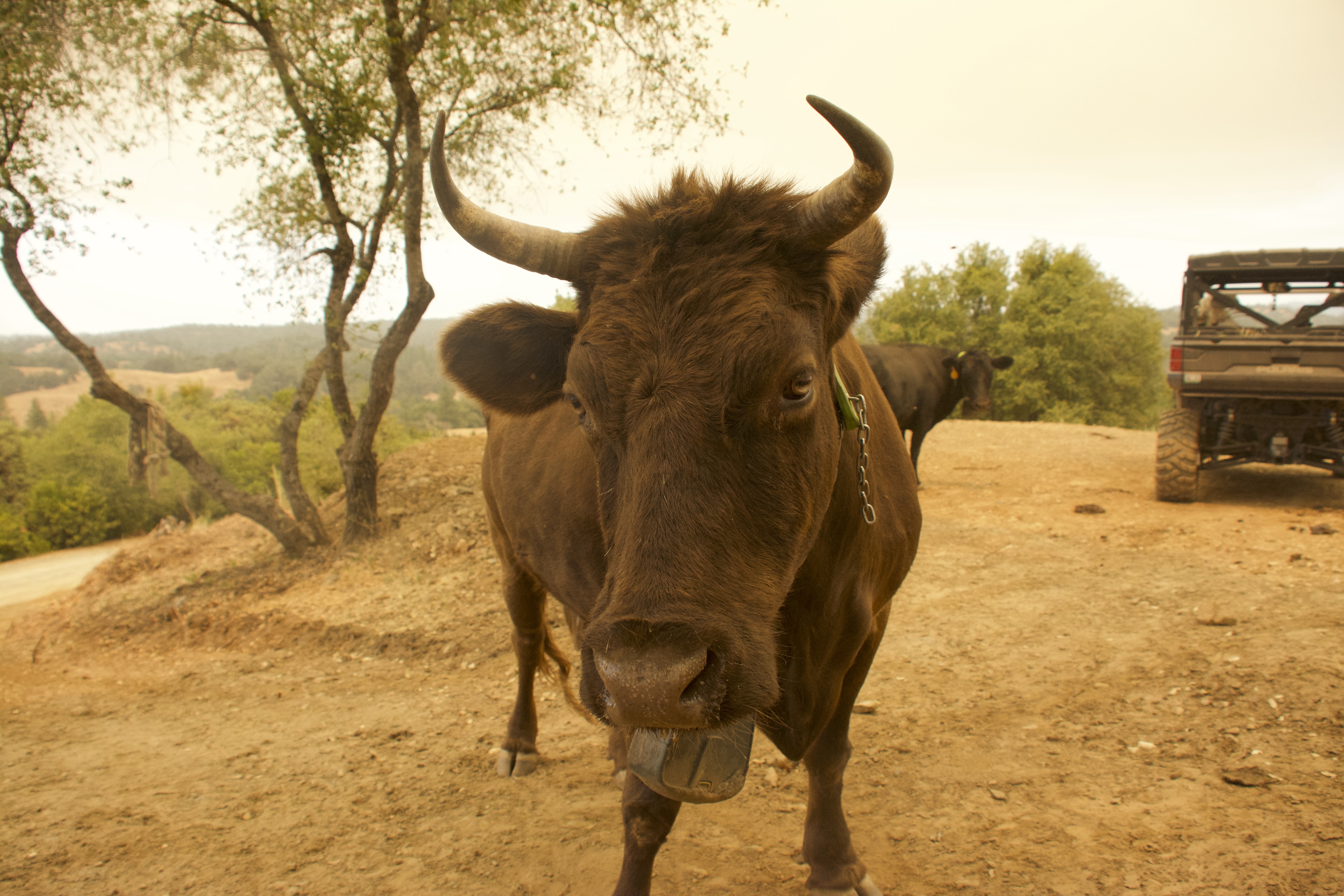
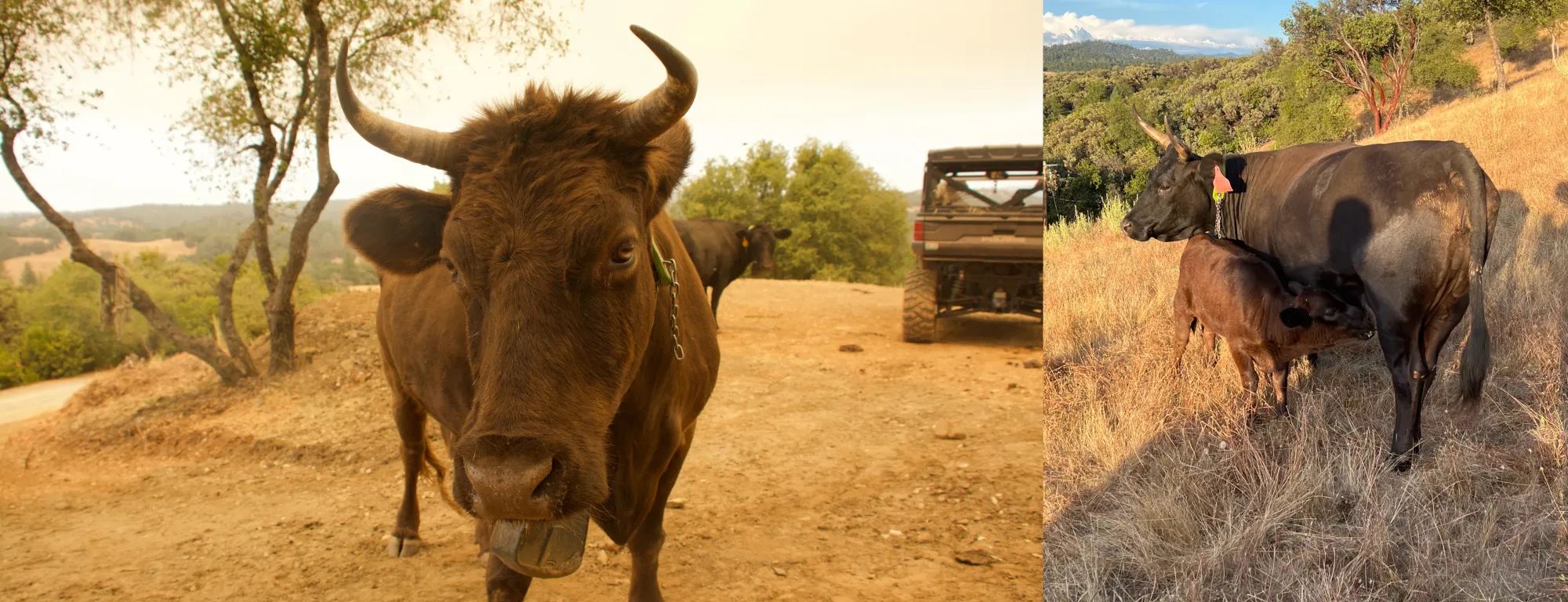
Jeff White is an Amador County resident who leads his local Firewise community. The landscape surrounding his home is a mixture of dense manzanita and toyon chaparral, oak woodland and open annual rangeland. He has used flail mowing and follow up herbicide treatments to clear brush around his home and create more fire resilient conditions. Those areas have now been converted into annual forage and scattered resprouting brush that has reduced the overall fuel load but requires annual treatments. In April 2026, Mr. White purchased three Dexter cattle, a compact Irish breed, which soon became five with the arrival of two calves (Figure 1). His goal is to use the cattle to graze the grass down around his home while developing a small beef business and providing a ranching lifestyle for his family.
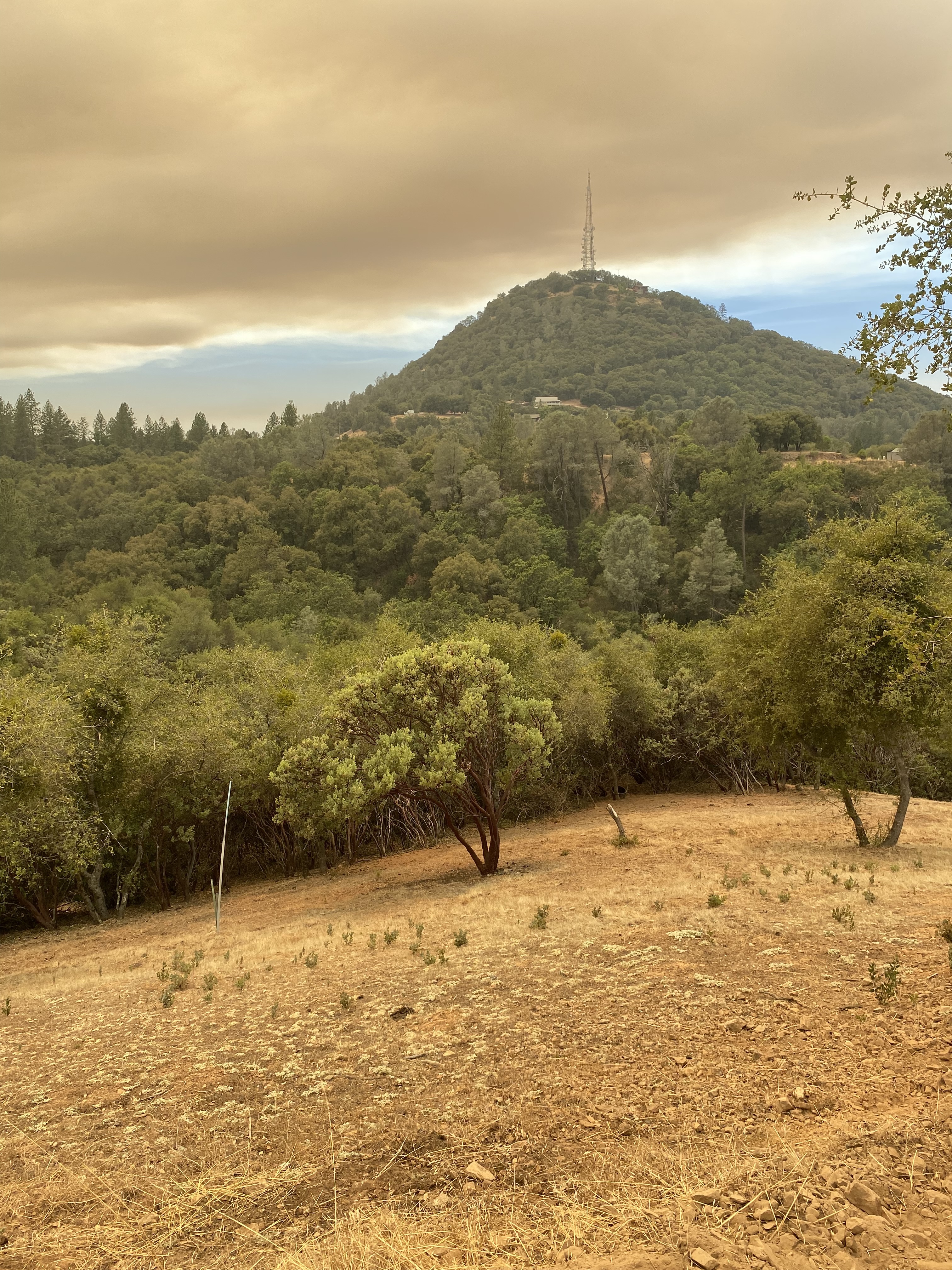
Virtual fencing has made it easier to fit grazing into that fuel management system. Using a phone app, Mr. White can create and adjust virtual boundaries within minutes and send them to the collars worn by the small herd. He can easily adjust these boundaries as vegetation and management needs change without installing additional physical fencing on the property (Figure 2). The system has also created opportunities to expand grazing along a private access road shared with several neighbors. There, Mr. White sets the VF boundary so that the herd can graze the roadside while remaining off the road itself. VF does not replace secure perimeter fencing where it is legally required or where containment is critical, like along busy public roadways. In this case, the access road is private, traffic is minimal and slow, and neighbors are aware of the use. Mr. White reports that his livestock respond well to the VF boundary, staying in bounds and usually turning away after hearing the audio cues alone. Mr. White has learned much in his first year using VF, allowing him to improve the grazing plan going forward.
Much of the attention around virtual fencing has focused on use with larger herds, expansive or multi-use rangelands, and partnerships between livestock producers and organizations like the U.S. Forest Service, Bureau of Land Management, and The Nature Conservancy. As virtual fence finds its place in the livestock and land management toolbox, Mr. White’s experience demonstrates how the technology may help small landowners incorporate grazing into ongoing vegetation and fuel management efforts. To learn more about virtual fencing, please visit our UC ANR website at https://link.ucanr.edu/vf.
Documents
-

J_White_Dexter_mom_calf_vf
A black horned Dexter cow fitted with a VF collar and nursing a calf stand on a grassy slope within the grazing area. -
J_White_grazing_area
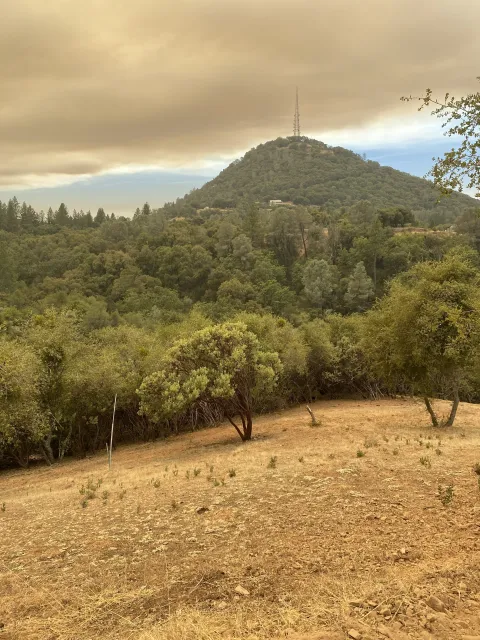
Grazed buffer around house in the foreground with dense brush and trees in the background. Smoke from the Gann Fire in Calaveras County fills the sky. -
J_White_Dexter_cow
An auburn colored Dexter cow fitted with a VF collar. Smoke from the Gann Fire in Calaveras County cast an orange haze during the site visit, reinforcing why vegetation management remains an ongoing concern for Central Sierra landowners.