
by Rob Wilson, IREC Agronomy and Pest Management Advisor
Over the last week, IREC staff have observed several pests in winter and spring grain crops. Most wheat and barley fields at IREC have populations of cereal leaf beetle, aphids, and armyworms. Fortunately, most winter wheat and barley fields are nearing maturity. Spring wheat and barley fields are a different story. Spring grain crops still have another month until maturity and current insect pest levels are building quickly.
The most damaging pests in IREC grain appear to be armyworms and Russian wheat aphid. Dakota Massey with Macy’s Flying Service also reported high armyworm populations in perennial grass hay fields. Armyworm larvae are small in many fields, but as they mature in the coming weeks current population levels can easily defoliate leaves and clip grain heads. Russian wheat aphid is an infrequent pest in Tulelake, but Russian wheat aphids populations are higher and later than most years posing a big risk in IREC spring grain fields. Russian wheat aphid inject a toxin while feeding. This feeding reduces chlorophyll production and causes plant stress. I strongly encourage growers to scout for these pests in spring grain and perennial grass hay fields as high populations of either pest will cause significant yield loss.
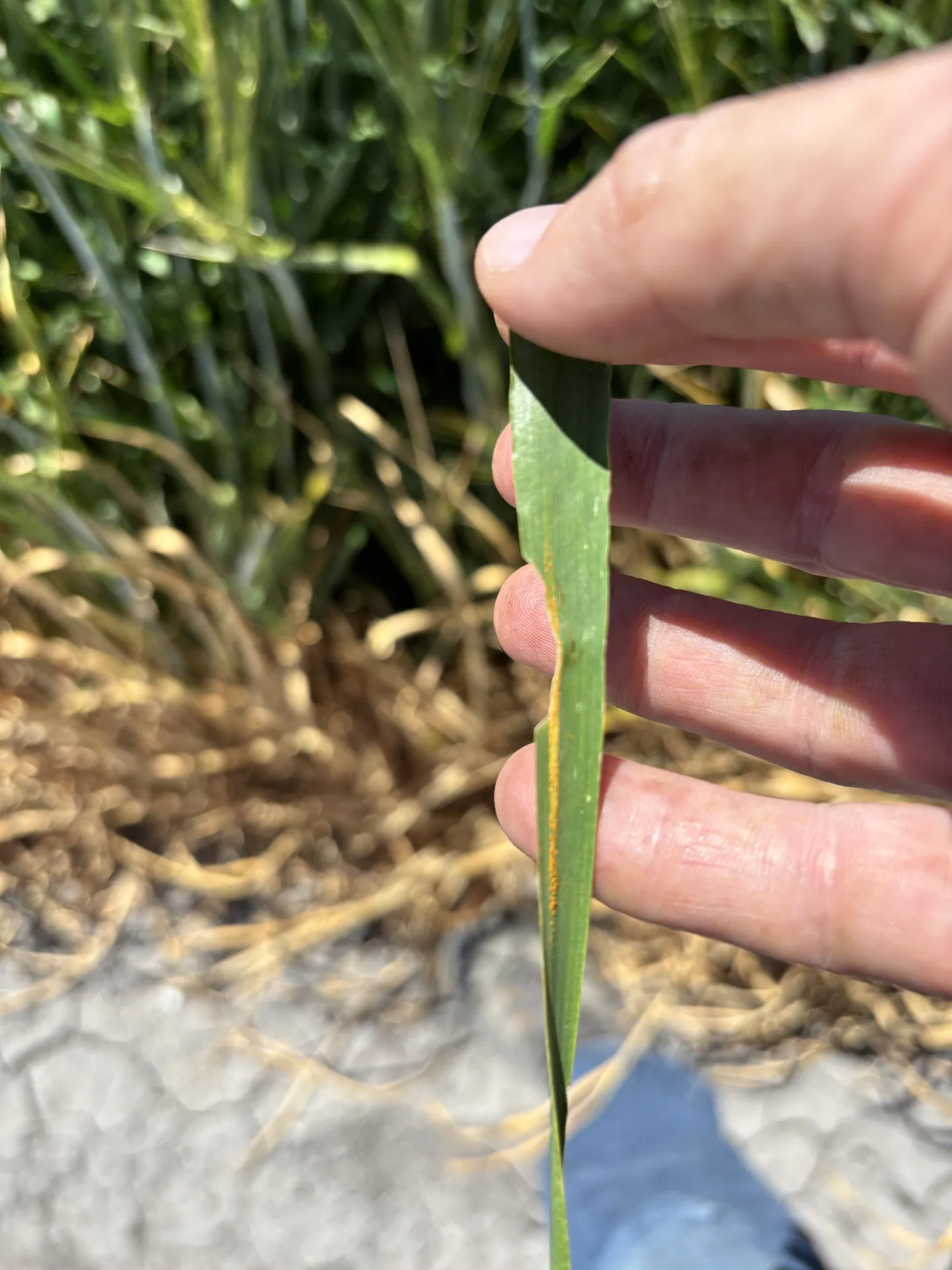
Figure 1. The first sign of armyworm damage is chewed leaves. Many IREC fields are starting to show significant defoliation. Defoliation of the flag leaf and stems during grain development reduces grain yield. This barley leaf also has some stripe rust.
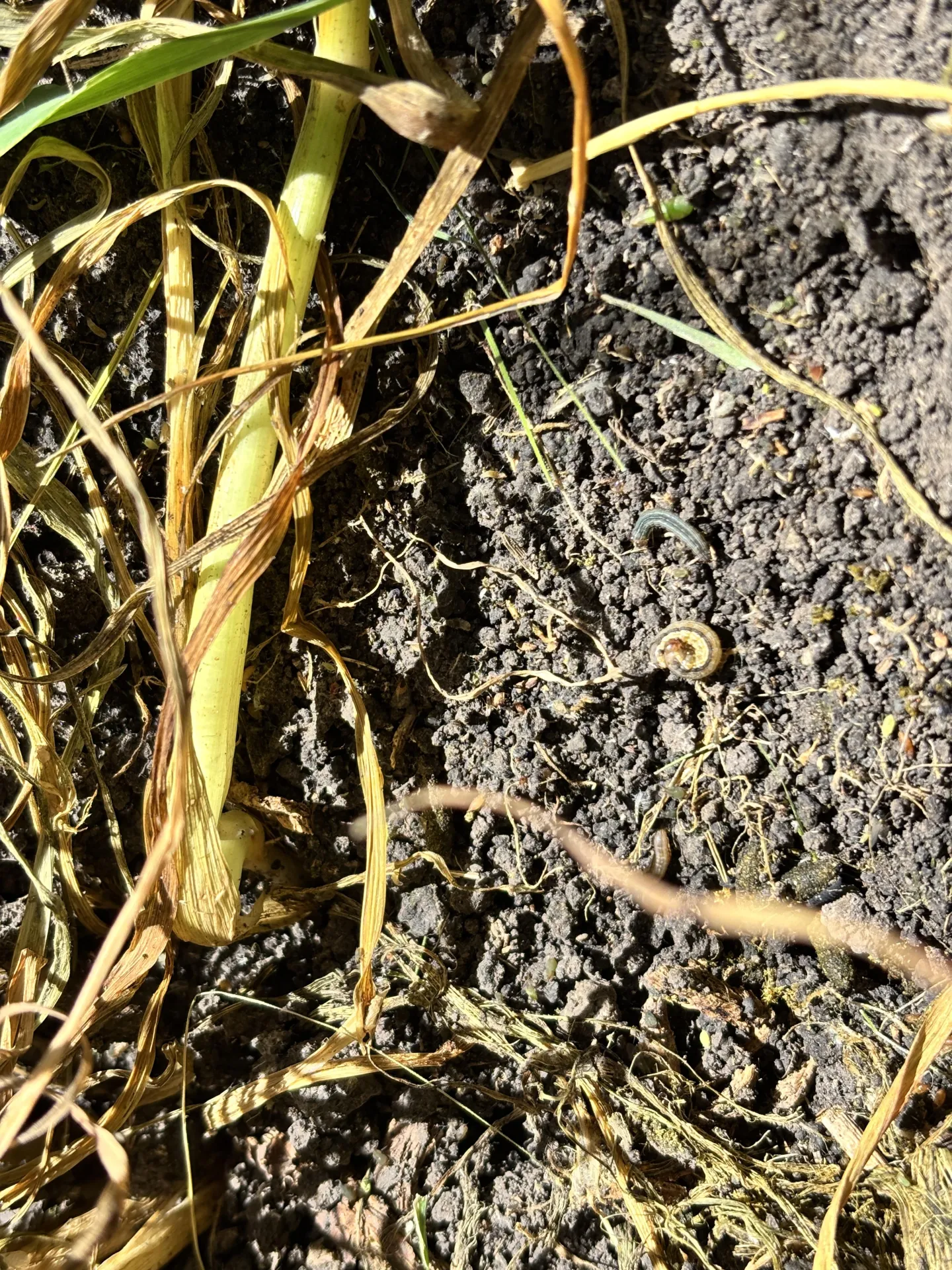
Figure 2. Armyworm larvae are most commonly found crawling on the ground during the day and move up in the plant in the evenings and morning to feed.
Frost continues to plague all crops grown in Tulelake. Last weekend many areas in the Klamath Basin experienced freezing nighttime temperatures after a week of hot weather in the 90’s. Signs of freeze damage were evident in spring grain, alfalfa, potatoes, and summer forages like corn and sudangrass. Field observations suggest earlier freezes caused significant yield loss in winter barley crops. 2026 has definitely been a bad year for frost damage especially in alfalfa.
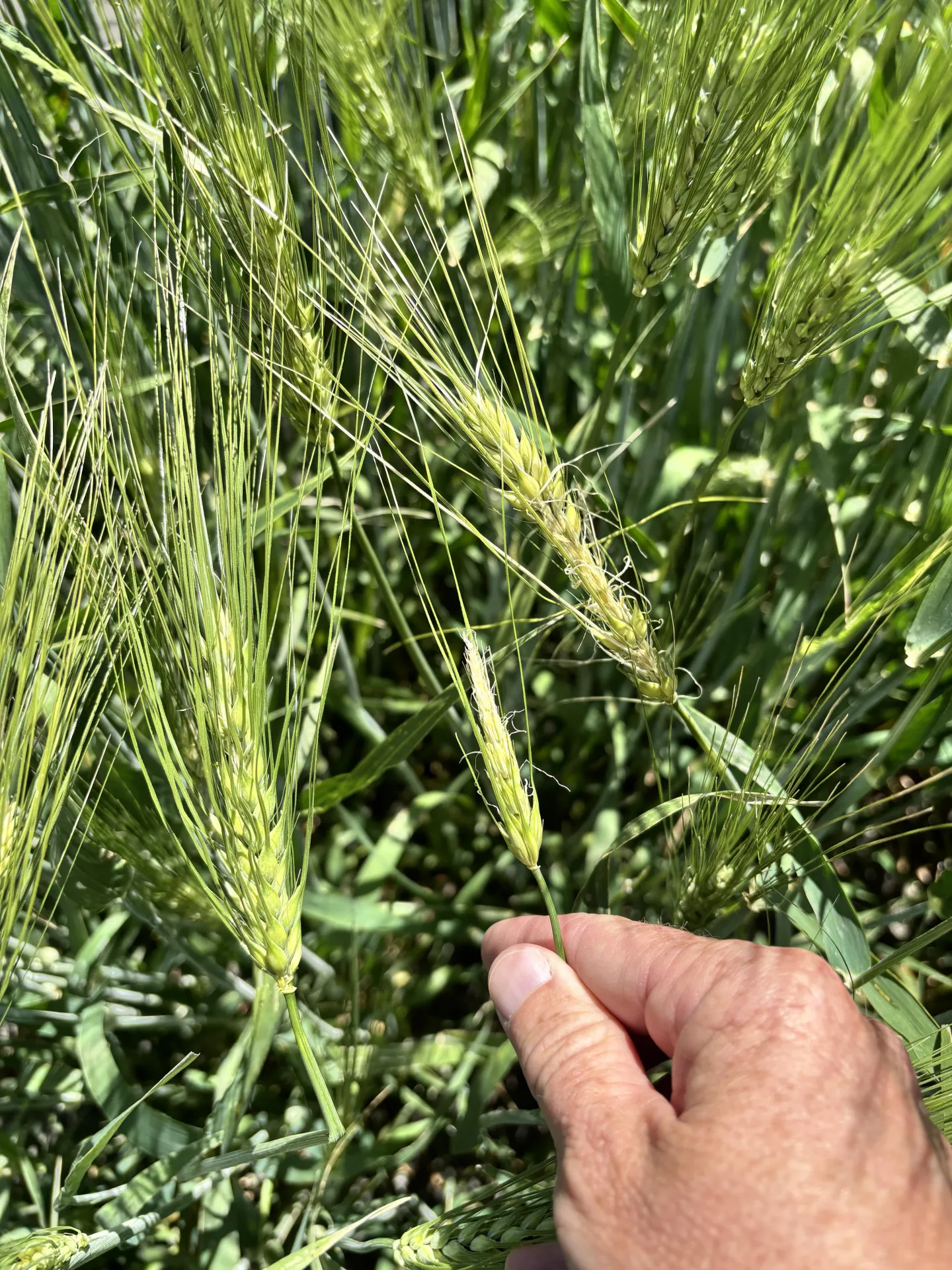
Figure 3. Blank kernels on barley at IREC caused by frost.