
Introduction
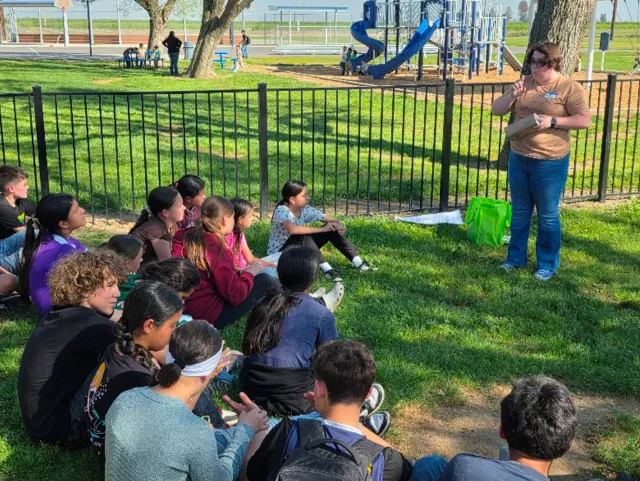
What can grow from a few garden boxes? In Merced County, the answer turned out to be much more than vegetables.
During the 2025–2026 school year, Merced County 4-H partnered with expanded learning programs in the rural school districts located in Planada and El Nido to bring hands-on garden, nutrition, and healthy living experiences directly to young people after school. Supported by a California 4-H Expanded Learning Mini Grant, the project reached 48 youth across three school sites using Junior Master Gardener Learn, Grow, Eat & Go (JMG) activities. Professional development training was provided by Matthew Rodriguez and Grace Belt regarding the JMG program and how to deliver it in an after-school setting.
The gardens produced carrots, cauliflower, peas, strawberries, peppers, tomatoes, and more. But the project also helped grow something less visible: stronger partnerships, opportunities for young people to make meaningful choices, and learning experiences that help youth develop skills they can carry into school, work, and life. Those connections are at the heart of Beyond Ready, 4-H's commitment to helping young people become ready for whatever comes next in life.
Relationships Come First
The project did not begin with a grant or a garden—it began with a relationship.
Merced County 4-H began working with Planada Unified School District during the previous school year under an MOU and at no cost to the school district. 4-H staff brought hands-on activities such as floriculture, floral design, iGrow, and Cooking Academy into the district's after-school program. Over the course of that year, school staff and 4-H educators learned how to work together, what interested young people, and what each organization could contribute.
That foundation mattered when an opportunity arose to expand the partnership through the CA 4-H expanded learning mini grant. Instead of introducing a new program to an unfamiliar partner, 4-H and the school district were able to build on an existing relationship.
“I am definitely interested in continuing 4-H programming at the district and creating a real presence here.”
– Shannon Owens, ELOP Coordinator, Planada Elementary School District
For organizations interested in expanded learning partnerships, this experience offers a simple lesson: start with the relationship, not the program. Taking time to listen, understand a partner's needs, follow through on commitments, and learn how their program operates can create the trust needed to try something new together. These lessons are consistent with research findings that we have reported in this blog post.
Creating Places Where Young People Can Learn and Belong
Expanded learning programs offer more than additional hours for instruction. At their best, they create environments where young people can explore interests (in 4-H we call them “sparks”), build relationships, make decisions, try new things, and discover what they are capable of doing. These are also important ingredients in a strong 4-H learning environment.
The 4-H Thrive approach asks adults to help youth discover their interests and strengths, form supportive relationships, feel confident and capable, create leadership opportunities, share in decision-making, and know that their ideas matter. The JMG garden project gives youth practical ways to do each of these things.
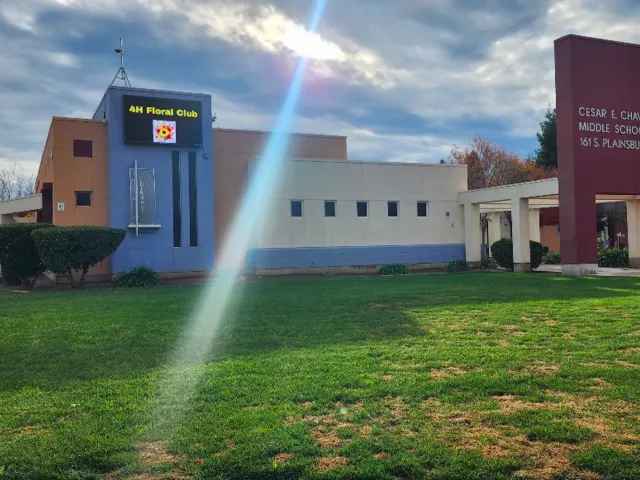
At Cesar E. Chavez Middle School, youth started a garden with broccoli, carrots, cauliflower, and bok choy. At Planada Elementary School, participants planted carrots, cauliflower, and peas. They also tasted fruits and vegetables, took part in outdoor activities, and studied the garden site. They checked the soil, water supply, and existing planter boxes to decide what needed to change so everyone could use the garden.
At El Nido Elementary School, the experience looked different. Regular classroom space was not available, so most of the learning took place directly in the garden. Each grade level received two planter boxes, and young people helped choose what they wanted to grow. Their selections ranged from strawberries and watermelon to potatoes, bok choy, peppers, radishes, carrots, and tomatoes.
Giving young people a voice in those decisions was important. They were not simply following directions in someone else's garden. They had opportunities to make choices and contribute to what their garden would become.
“After being in class all day, it was fun going outside to explore the garden and get our hands dirty!”
– Noemi, 8th grader, Cesar E. Chavez School
Experiences like these demonstrate why hands-on learning can be so engaging. Young people can see, touch, taste, question, choose, experiment, and observe the results of their work.
Growing Skills for What Comes Next
Planting a garden teaches young people about plants and food, but the learning does not have to stop there. A garden also creates opportunities to practice skills that matter far beyond gardening.
Young people make decisions about what to plant. They organize materials and share responsibilities. They work alongside other people. They observe what is happening and solve problems when things do not go according to plan. And because plants do not grow overnight, gardening provides a very practical lesson in patience, persistence, and responsibility. These experiences connect directly with Beyond Ready.
Beyond Ready connects hands-on learning with skills young people can use in work and daily life. In garden programs, they practice speaking and listening, working in a group, leading, thinking through problems, trying new ideas, adjusting when plans change, and taking responsibility. As they grow older, these activities can also help them explore further education and possible careers.
Garden-based learning can open that door as well. Agriculture today includes careers in plant science, nutrition, environmental science, food systems, water management, technology, education, community development, and many other fields.
Not every young person who participates in a garden program will pursue an agriculture-related career and that isn’t the goal. The opportunity is to help young people begin connecting what they enjoy and what they are learning today with possibilities for their future.
In that sense, becoming Beyond Ready starts long before a young person fills out a college application or prepares for a job interview. It begins when youth have opportunities to discover their interests, practice useful skills, take responsibility, solve real problems, and recognize that what they are learning can take them somewhere.
Adapting the Program Without Losing the Purpose
The experience also reinforced another lesson about working in expanded learning settings: flexibility matters. Every school and community has different schedules, spaces, staffing, resources, and needs. A program designed for one setting may need to look different in another. Check out our blog post to learn more about best practices for partnerships.
El Nido provided a good example. Without consistent access to a classroom, the garden became the classroom. Rather than allowing the space limitation to prevent programming, educators adapted the experience to the setting available. The location changed, but the purpose did not.
Youth could still learn by doing. They could still make choices. They could still work with caring adults and other young people. And they could still develop knowledge and skills through an experience that mattered to them.
For 4-H professionals and community partners, that distinction is important. Successful expanded learning partnerships do not necessarily require recreating a traditional 4-H club or classroom. A more useful question may be: How can we create a high-quality 4-H experience for young people in the environment where they already are?
From Seed Funding to Sustainable Partnership
Perhaps one of the project's most promising outcomes came after the activities were underway. The participating school districts and sites asked Merced County 4-H to continue expanded learning programming in the coming school year. Merced County 4-H is now working with school partners to explore contracted services that can help support the staff time and materials needed to continue the work. The CA 4-H mini grant was intended to do more than fund a single program. It was designed as seed funding to help 4-H professionals establish or strengthen relationships with expanded learning organizations, with the possibility that successful partnerships could develop into longer-term arrangements.
The Merced County experience offers a practical path: build trust, listen to what the school needs, create an experience that matters to young people, adjust it together, and then decide how to keep it going. Each step supports the next. A trusted partnership reaches young people, hands-on activities help them learn, and a long-term plan keeps those opportunities available. Check out our blog post on supporting youth engagement in expanded learning partnerships.
The partnership helps 4-H reach more young people. A strong learning setting gives them room to belong, explore, contribute, and lead. Hands-on activities help them build knowledge and useful skills, while a long-term partnership allows those opportunities to continue.
Growing Toward the Future
The gardens established through this project are a visible reminder of what young people accomplished. They also provide a foundation for future garden-based learning at the participating schools. But perhaps the most important thing planted through the project was not in the soil. It was the seeds of hope that were planted inside each young person who may not otherwise encounter opportunities provided by the 4-H program. We trust that these seeds of hope will blossom into a bright future for “beyond ready” youth.
A young person planting a carrot today may or may not become a horticulturist, farmer, nutritionist, scientist, or educator. But along the way, that young person can learn to make decisions, work with others, solve problems, take responsibility, persist when something does not work, and see that their contributions matter. That is what it means to create an environment where young people can thrive. That is how a partnership becomes more than a program.
This is one way we can help young people become Beyond Ready: ready for work, ready for life, and ready for what comes next.