
This column is written by the Master Gardeners of Yolo County each month. It provides answers to selected questions recently asked by Yolo County gardeners.
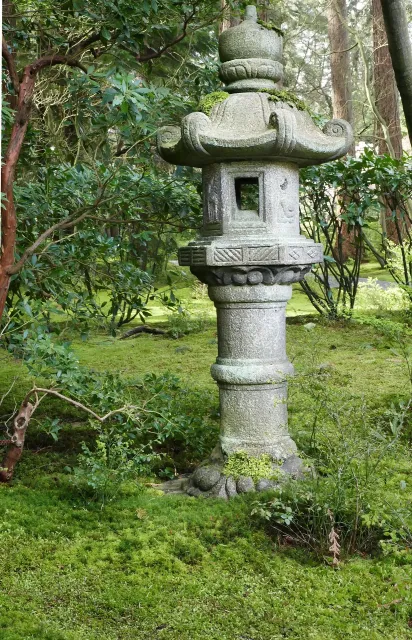
Question: What is “wabi-sabi gardening”?
Answer: The Japanese tea master Rikiu (1522-1591), once chided his son Shoan for not properly preparing the path to the teahouse. When Shoan showed how he had swept the path completely clean of leaves, Rikiu replied, “That is not how a garden path should look,” then grasped a nearby tree and shook it, letting fall a light scattering of leaves over the freshly-swept path.
What Rikiu was seeking, of course, was not the perfect but the natural.
In other words, Rikiu had wabi-sabi in mind. From the Japanese words wabi (“austere beauty”) and sabi (“rustic patina”), the combined word describes a philosophy of aesthetics that embraces the true simplicity, imperfection, and transience not only of everyday objects but of nature itself.
Consequently, while not limited to tea gardens or gardens in general, the philosophy of wabi-sabi naturally lends itself to gardening practices.
Of course, gardeners must daily deal with nature’s elements while keeping their garden’s plants productive and their garden’s infrastructure maintained. In doing so, there is a natural desire to keep everything looking well-tended and controlled. But that is not the philosophy of wabi-sabi.
Popular (predominantly Western) ideas about wabi-sabi gardening include a range of approaches, with some practitioners recommending introducing into the garden pre-weathered “props” such as old bathtubs or rusted wheelbarrows to serve as planters. But this is unnecessary, and not the wabi-sabi way.
Much more in the spirit is to let newly acquired benches and other garden structures age naturally over time, allowing the oxidized metal, peeling coatings, and faded wood to contribute to the transient beauty of the entire garden.
Beyond the garden’s manufactured structures of benches, gates, and trellises, there are the plants themselves. If possible, consider letting a single vegetable plant go to seed when you would otherwise have cropped it back. You can also think about setting aside a spot or two in the garden to let a “volunteer” take root. Perhaps let a few selected weeds crop up in a gravel path or between stepping stones.
And, of course, there are the leaves.
Rather than meticulously raking away fallen leaves, consider leaving some to decompose where they’ve fallen. It may not make for a “tidy” look, but it’s the wabi-sabi way.
That’s the essential difference between the wabi-sabi garden aesthetic and our idea of the meticulously manicured Western or “English” garden, with its cleanly swept paths, precisely-mown lawns, and perfectly-trimmed hedges. Yes, there’s a certain attraction to those spaces, and yet they seem somehow sterile and … unnatural.
Just like a Western garden, the wabi-sabi garden is very well-tended and intentional; it’s just that the wabi-sabi garden approach is to make the space look deceptively unintentional.
All gardens, be they tea gardens, botanical gardens, vegetable gardens, or zen rock gardens, have one thing in common: A plan, or design. That’s why, for most gardeners, the idea of our carefully-planned space looking untidy or uncontrolled can feel counterintuitive and anxiety-producing. But consciously letting your garden appear even a little out of control can be liberating; and embracing the imperfect and the impermanent can lead to an even more beautiful, natural-looking garden.
This article previously appeared in the Winters Express and Davis Enterprise.
Have a gardening question? Send it to jmbaumbach@ucanr.edu, with “Ask MGs” in the subject line. Include as much detail as possible and pictures if you have them.