
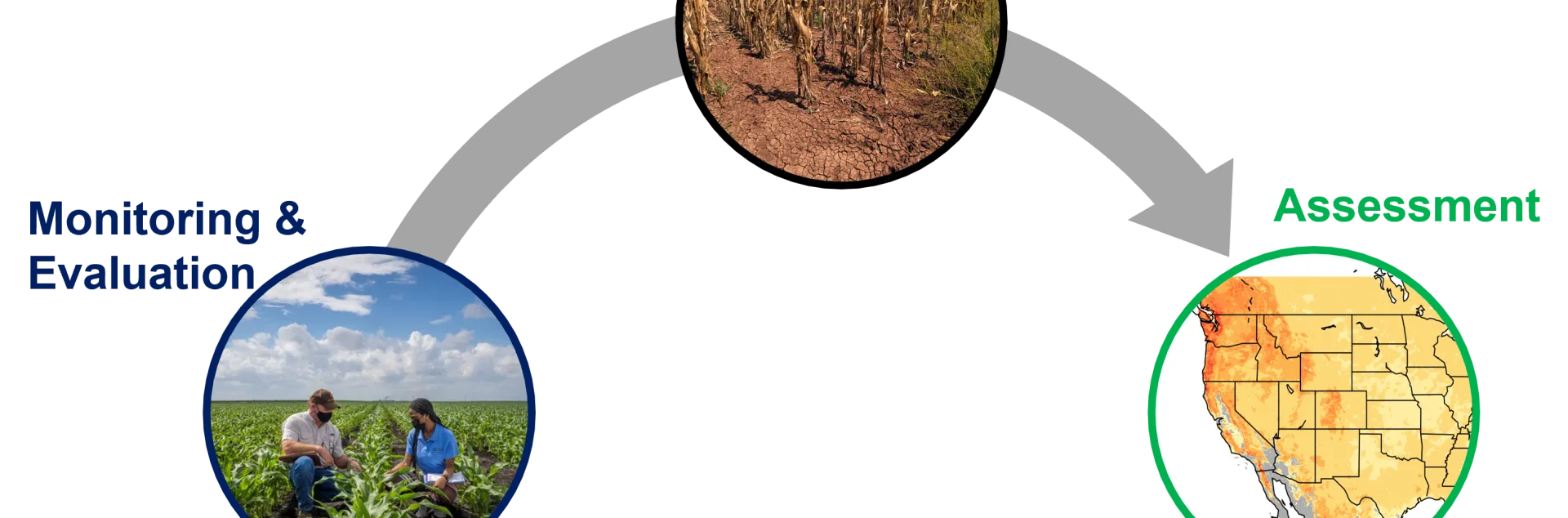
Why Climate Adaptation Matters
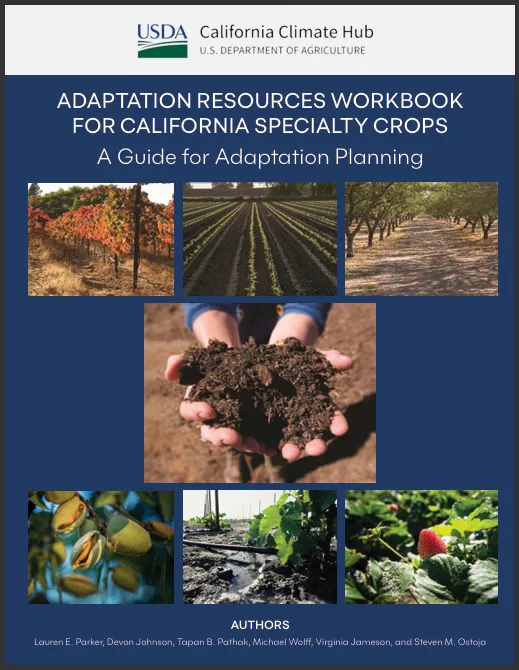
California farmers have always adapted to changing conditions. From drought and water shortages to pests, heat waves, and changing growing seasons, agricultural producers continually make decisions to keep their operations productive and resilient. As climate change increases the frequency and intensity of many of these challenges, adaptation planning becomes an increasingly important part of long-term farm management. To help growers navigate these challenges, the USDA California Climate Hub, University of California Agriculture and Natural Resources, and the California Department of Food and Agriculture developed the Adaptation Resources Workbook for California Specialty Crops: A Guide for Adaptation Planning. The workbook provided a practical framework that farmers, ranchers, and technical assistance providers can use to evaluate climate risks, identify vulnerabilities, and develop climate adaptation strategies tailored to their operations.
California agriculture is already experiencing the effects of a changing climate. Warmer temperatures, changing precipitation, increased drought frequency, extreme heat evens, wildfires, and varying pest pressures are expected to impact specialty crop production throughout the state. The workbook notes that some specialty crops may be particularly vulnerable to these changes and emphasizes that adaptation will play a critical role in maintaining agricultural productivity in the decades ahead.
Climate adaptation refers to actions that help producers address current and future climate conditions and concerns. These actions can reduce the impact of climate stressors such as heat, drought, flooding, and wildfire while helping farms recover more quickly when these events occur. The workbook also recognizes that many adaption practices provide climate mitigation co-benefits by reducing greenhouse gas emissions and increasing carbon sequestration.
The 5-Step Adaptation Process
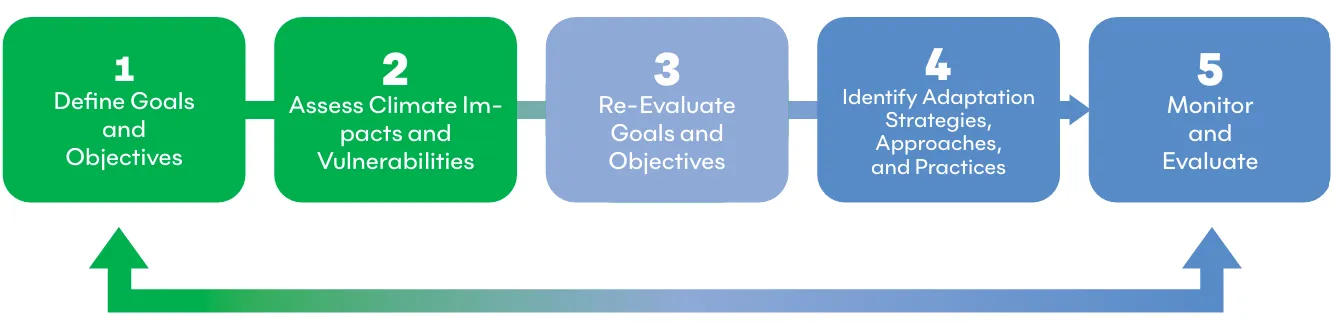
The core of the workbook is a five-step adaptation planning framework adapted from the Northern Institute for Applied Climate Science. This framework helps growers move from understanding climate risks to implementing and evaluating adaptation actions.
- Step 1: Define Goals and Objectives: Growers are encouraged to identify long-term management goals and short-term objectives that support those goals. This could include improving soil health, increasing water efficiency, or maintaining a profitable operation under changing climate conditions.
- Step 2: Assess Climate Impacts and Vulnerabilities: Growers evaluate the climate risks that affect their operations. This step can be supported by tools such as Cal-Adapt or the Climate Toolbox to help producers explore projected changes in temperature, precipitation, and other climate-related factors.
- Step 3: Re-Evaluate Goals and Objectives: In this step, revisit goals and objectives based on projected climate impacts and adjust accordingly.
- Step 4: Identify Adaptation Strategies and Practices: Use the adaptation menu to select potential actions, which are organized into strategies, approaches, and practices. This allows users to move from broad concepts to specific management actions.
- Step 5: Monitor and Evaluate: Growers will develop monitoring and evaluation plans to determine whether their chosen practices are achieving the intended outcomes.
A Menu of Adaptation Strategies
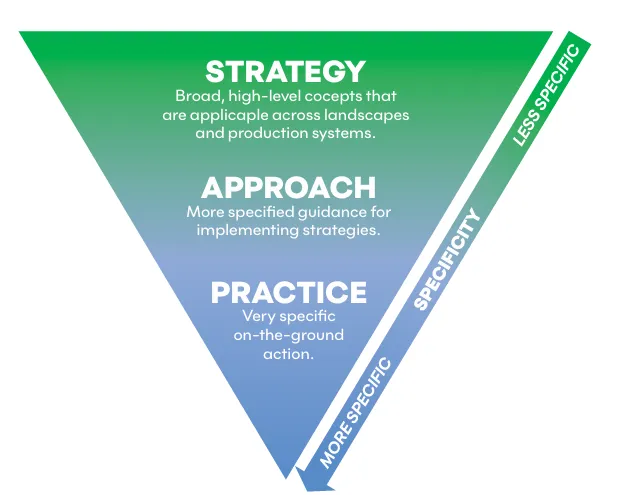
The extensive adaptation menu is a valuable part of this workbook. The menu organizes adaptation opportunities into seven major categories, each containing multiple approaches and example practices. The seven strategies are:
- Support and maintain soil health, soil biological services, and water quality
- Cope with uncertain water availability
- Manage biological crop stressors
- Prepare for temperature change
- Enhance preparedness for extreme events
- Manage farms and fields as part of a larger landscape
- Develop of expand the co-benefit efforts to mitigate climate change
These categories include climate-smart management practices such as cover cropping, compost application, irrigation efficiency improvements, pollinator habitat establishment, integrated pest management, shade structures, and renewable energy adoption.
More Than a Workbook
This guide includes an extensive collection of resources, technical references, decision-support tools, and links to additional information. Producers and technical assistance providers can use these resources to learn more about specific adaption practices, climate projections, soil health management, water conservation, pest management, and resilience planning. This workbook can also serve as a useful framework for working collaboratively with producers to assess vulnerabilities and identify practical adaption opportunities.
If you are interested in exploring this workbook, it can be accessed using the link below:
Reference
Parker, L. E., Johnson, D., Pathak, T. B., Wolff, M., Jameson, V., & Ostoja, S. M. (2023). Adaptation resources workbook for California specialty crops: A guide for adaptation planning (Technical Report CACH-2023-1). USDA California Climate Hub, U.S. Department of Agriculture Climate Hubs.