
Introduction
I grew up in Tuolumne County in the 1970s and 1980s - my family moved to Jamestown when I was just 4 months old. My Little League baseball career began in 1974 or 1975 for a team in Standard (where I attended Curtis Creek Elementary). Our home field was provided by the Pickering Lumber Company - in part of what they also used as a cat
tle pasture! This is true - there was a ground rule at the field (which we affectionately called the "Cow Palace") that any ball that landed in a cow pie in fair territory was a double. And in the fifth inning of most games, somebody's dad would drive his pickup into the outfield to chase the cows far enough away for us to finish the game.
I relate this story to illustrate a point. During that period in the Sierra foothills, at least in my memory, lots of people still grazed cattle, sheep, or goats if they had grass or brush to graze. They might only have a handful of animals, but most properties still had the infrastructure (fencing and water) to be grazed. Looking back on those days, I wonder how much impact that grazing had on fuel loads and fire behavior.
Obviously, many things have changed in the last half century. Foothill communities have grown in terms of population, which has further fragmented the landscape. Small-scale grazing systems are fewer and far between - fences have been pulled out or allowed to fall into disrepair. New foothill residents are less likely to have a background in animal agriculture.
Overview
Fast forward to 2026! This was my second spring at my new property in Calaveras County. Last year, I added 10 feeder lambs to the two ewes that moved with me from Auburn in mid April, and grazed them on my 6 acres through the second week of July (you can read about last year's fuel reduction efforts here: https://ucanr.edu/blog/ranching-sierra-foothills/article/four-legged-fuel-reduction). After last year's experience, I decided I needed more mouths, and I needed to start earlier in the spring!
On March 7, I purchased 10 Dorper lambs from a producer in Los Banos, weighing an average of 54 pounds. On March 12, I purchased 10 yearling goats from a producer in Mountain Ranch, weighing an average of approximately 60 pounds. I added these animals to the two 175-pound ewes I keep year round, for a total of 22 head. I fenced the perimeter of the 6-acre grazing area with electro-net fencing and turned the crew loose (along with Bodie, my Anatolian x Maremma livestock guardian dog). On the day I added the goats, we had a minor breakout (ok - maybe not minor - 9 of the 10 goats realized I'd turned the fence off momentarily and got out on the road. Thankfully my border collie quickly convinced them that inside the fence was where they needed to be - and I didn't experience any further escapes.
The last half of March turned quite warm - and the month as a whole was unusually dry. When I returned home from a week of work travel in the third week of March, I discovered that the lambs had coccidiosis - a protozoal intestinal infection brought on by the stress of a new environment and the warm temperatures. I treated them with a coccidiastat, but one of the lambs got fly strike on his hind quarters and eventually died from this complication. As a result, from March 26 through the end of the project on June 2, I grazed the property with 10 yearling goats, 9 feeder lambs, and 2 mature ewes.
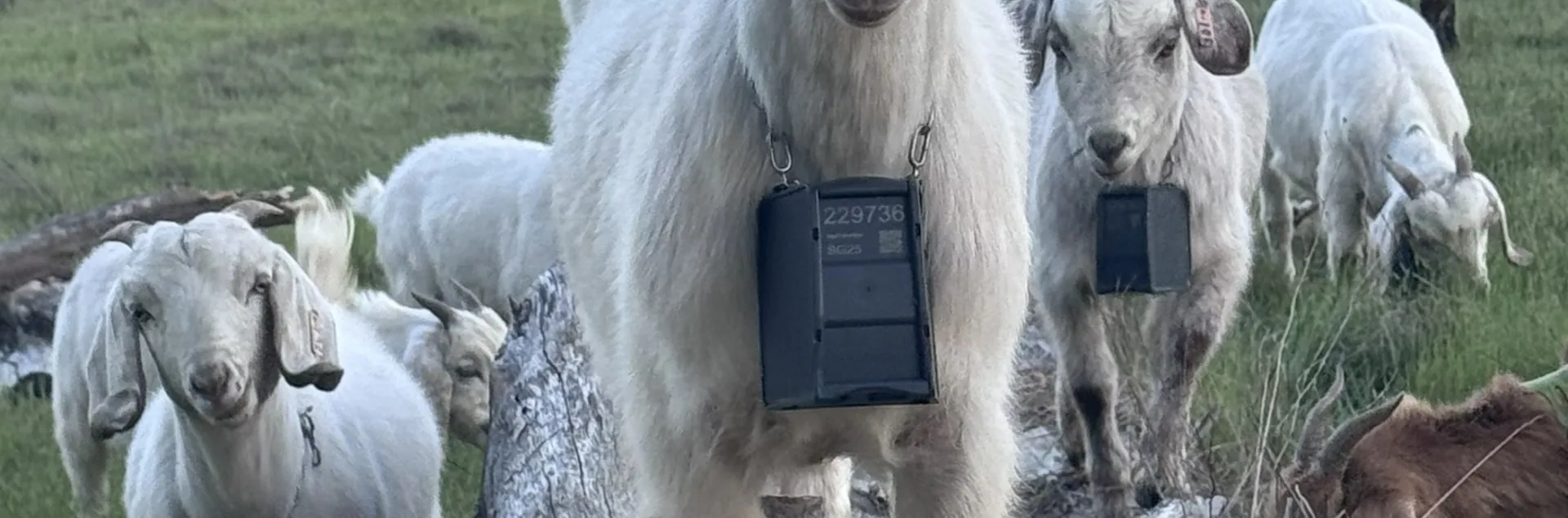
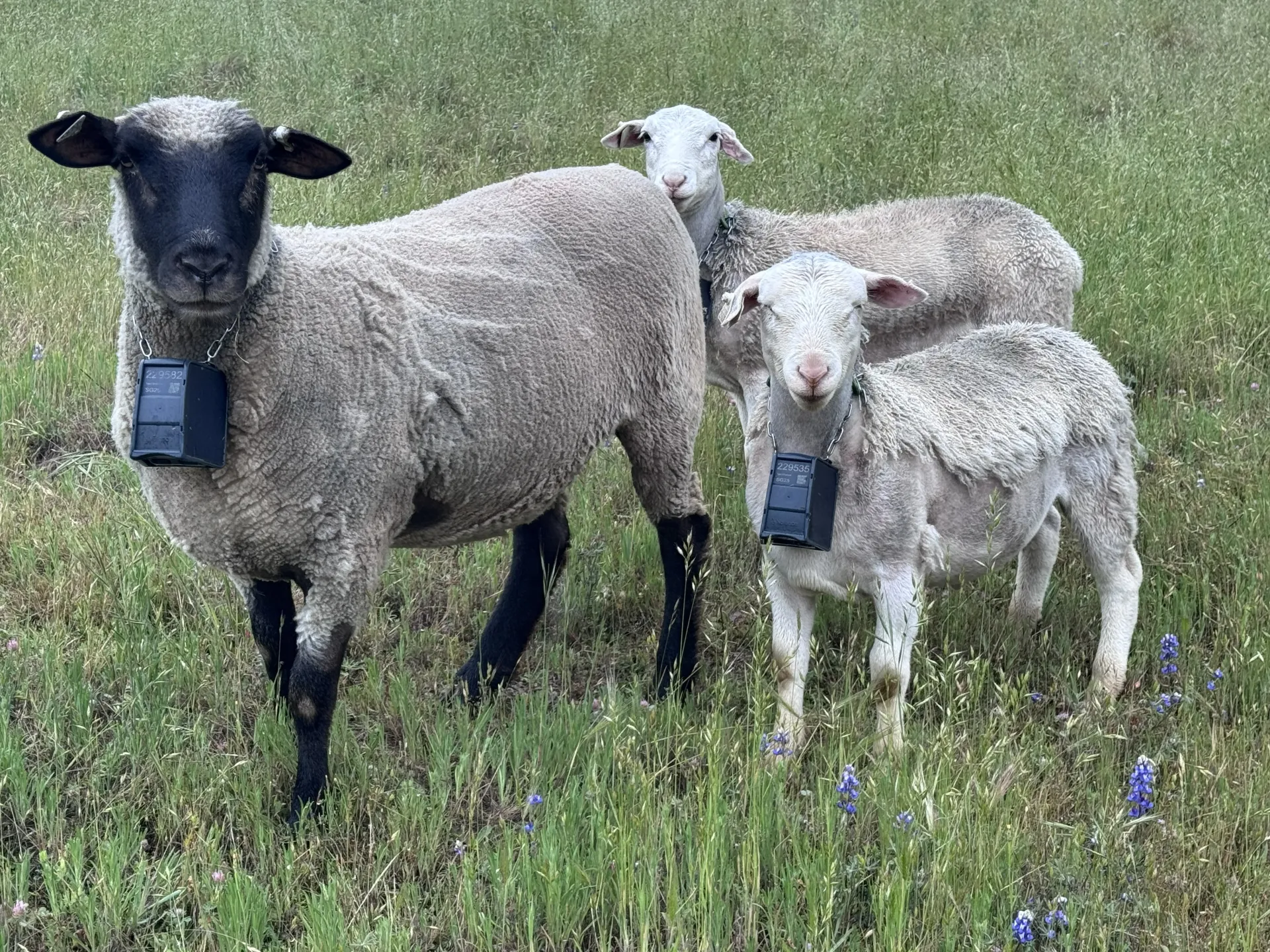
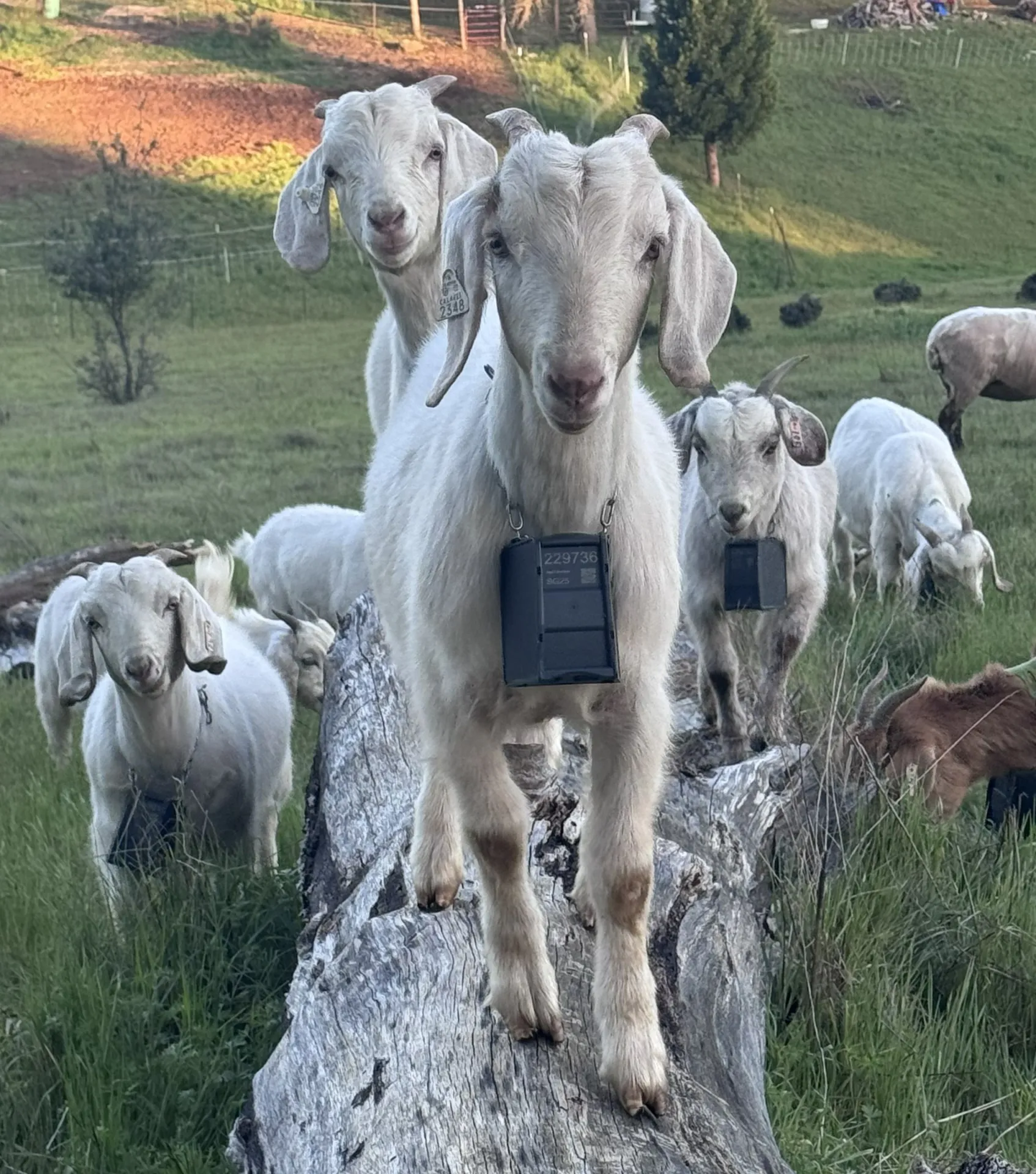
Finally, on March 26, we started our third trial run using virtual fence technology. The ewes were already trained to the system, but we took 5 days to train the goats and lambs to the NoFence collars. Observationally, the goats seemed to learn more quickly than the lambs, but after the training period, compliance was exceptional. Using the electro-net as the perimeter boundary, I divided the 6 acres into 4 paddocks for the rest of the case study. Splitting the pasture into smaller paddocks increased livestock density, which optimized animal impact and enhanced the uniformity of their grazing. The virtual fence technology also reduced the labor associated with building temporary fencing, although I haven't compared the cost of the fence with the labor savings it provided. More to come on this aspect of the project!
Then April and the first part of May turned wet! I measured over 6 inches of precipitation in April, and another 0.83 inches in May. In late March, some of my annual grasses were beginning to mature; a month later, I saw significant regrowth - especially of clover, yellow starthistle, and Italian thistle. What I thought was going to be a below-average forage year became above average!
Results
Officially, I conducted this case study from March 7 (when I bought the lambs) through June 2 (when I measured biomass inside and outside the 6-acre paddock). As of June 12, I have sold all 9 feeder lambs and 8 of the 10 goats (I'm keeping the ewes and 2 of the does, with plans to keep them for breeding purposes).
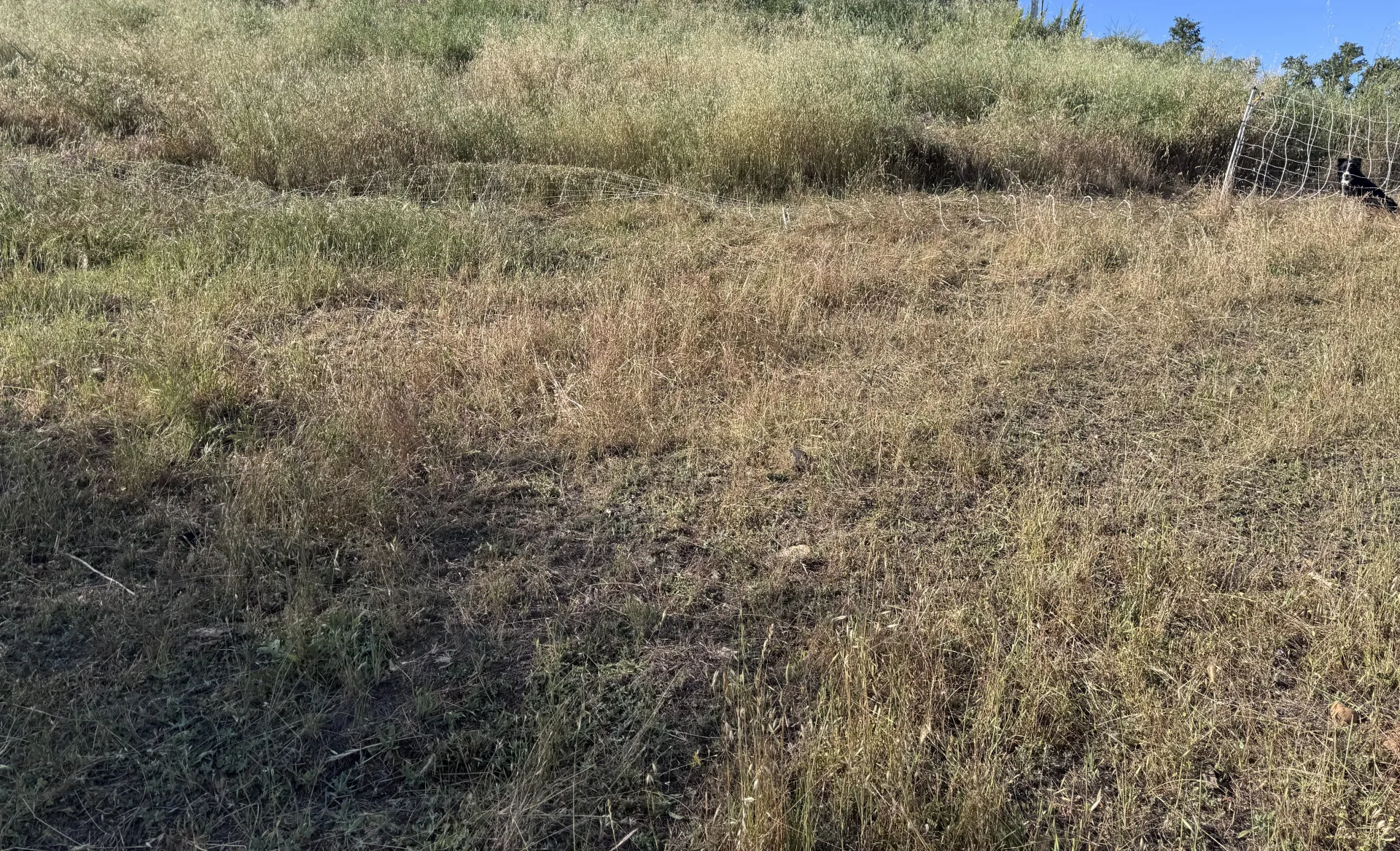
From a targeted grazing perspective, the animals accomplished my goal of reducing the fuel load on my hillside to a level that would slow (if not stop) a surface fire while also maintaining adequate residual dry matter to prevent erosion next fall when the rain starts again. On June 2, I measured ungrazed biomass outside of my perimeter fence at 10 locations. I measured grazed biomass at 10 locations along a transect that ran from the top of my hill down to the road. As you would expect, there was quite a bit of variation between the grazed and ungrazed plots, but overall the amount of biomass (forage to a rancher, fuel load to a fire professional) was reduced by more than half. I estimated that there was an average of 3,159 pounds of biomass per acre where I didn't graze the animals; I measured an average of 1,220 pounds inside the pasture. As expected, the grazed vegetation is patchy - I measured a low of 480 pounds/acre and a high of 1,920 pounds/per acre inside the pasture. Ungrazed biomass was equally variable, ranging from a low of 1,056 pounds/acre to a high of 6,146 pounds/acre.
But the removal of fuel is not the only story here. The animals also trampled much of the vegetation they didn't consume. In fire terms, they "rearranged the fuel bed," reducing it's receptivity to fire by changing how oxygen is able to interact with the dry vegetation (in other words, some of the dry grass is trampled enough that it's in direct contact with the soil, and won't burn as readily). Grazing, then, can impact two sides of the fire triangle (see below).
Some of my UC colleagues recently published research on this topic in California Agriculture. Their research examined grassland biomass thresholds and their implication for flame length and fire spread:
- At 2,496 lbs/ac, only 3% of the treatments had flame lengths exceeding 4 feet. Hand crews can fight fires in these conditions.
- At 1,248 lbs/ac, none of the treatments had flame lengths over 4 feet. The research team found a 34% probability that a fire will stop spreading below this threshold. This amount of biomass is, however, higher than the residual dry matter (RDM) level recommended to maintain ecological productivity.
- At 384 lbs/ac, the research team found that fire would not spread. This level of biomass is below UC-recommended RDM levels for rangeland productivity and ecological function.
Based on their findings, I'm reasonably confident that my four-legged fuel reduction crew accomplished my goal of making my property more fire safe. And I'll continue to spot graze key portions of my property (around my portable sawmill and adjacent to buildings) through the summer with the goal of leaving 800-1,000 lbs/acre of RDM by fall. But while I much prefer moving fence and watching my animals graze my hillside to firing up a mower or a string trimmer, I wanted to compare the cost of grazing with alternative fuels treatments.
Finally, herbaceous fuels (grass and forbs) aren't the only fuel type on my property. There are also scattered patches of wedge-leaf ceanothus (or buck brush) especially at the top of my hill. While I haven't quantified how much impact the goats and sheep had on the brush, they definitely consumed a fair bit of it. Some of it seems to be grazed to a level that may kill the plant. I also found that the goats especially liked to graze ponderosa pine saplings - anything under 4 feet tall is completely defoliated. Not ideal if I were trying to re-establish conifers on my property.
So how did it pencil out financially? Would it be cheaper to hire a crew with string trimmers to weed-whack the vegetation on my property?
| Revenue |
|
| Sale of Goats | $3,015.00 |
| Sale of Lambs | $2,150.00 |
| Total Income | $5,165.00 |
| Expenses | |
| Lamb Purchase | $1,732.50 |
| Goat Purchase | $1,920.00 |
| Labor ($15/hour) | $375.00 |
| Mileage ($0.725/mile) | $259.55 |
| Miscellaneous (Vet, etc.) | $48.00 |
| Sale Expenses | $460.23 |
| Total Expenses | $4,796.27 |
| PROFIT (LOSS) | $368.73 |
Obviously, profit depends on the market for lambs and goats (both at the purchase point and when they're sold), but I'm happy with the economics of this year's effort. And both lambs and goats gained weight during the project - another consequence of buying them earlier and selling them before forage quality declined (as it does every summer). The lambs gained 25-30 pounds per head, and the goats gained 20 pounds per head.
Future Plans
While I have no idea how much fuel load next year will bring, I'm planning to keep trying livestock rather than mowing! Next March, I'll buy 10-12 feeder lambs and 10-12 yearling goats, adding them to the ewes and does I've kept (which will hopefully have lambs and kids at their side next spring). Stay tuned!
One More Note...
If you're interested in the economics of sheep production and targeted grazing in California, I also helped write a new study that's in the most recent issue of California Agriculture. You can read our paper, "California sheep and goat ranchers adjust to wage increases" in the latest issue, as well!