
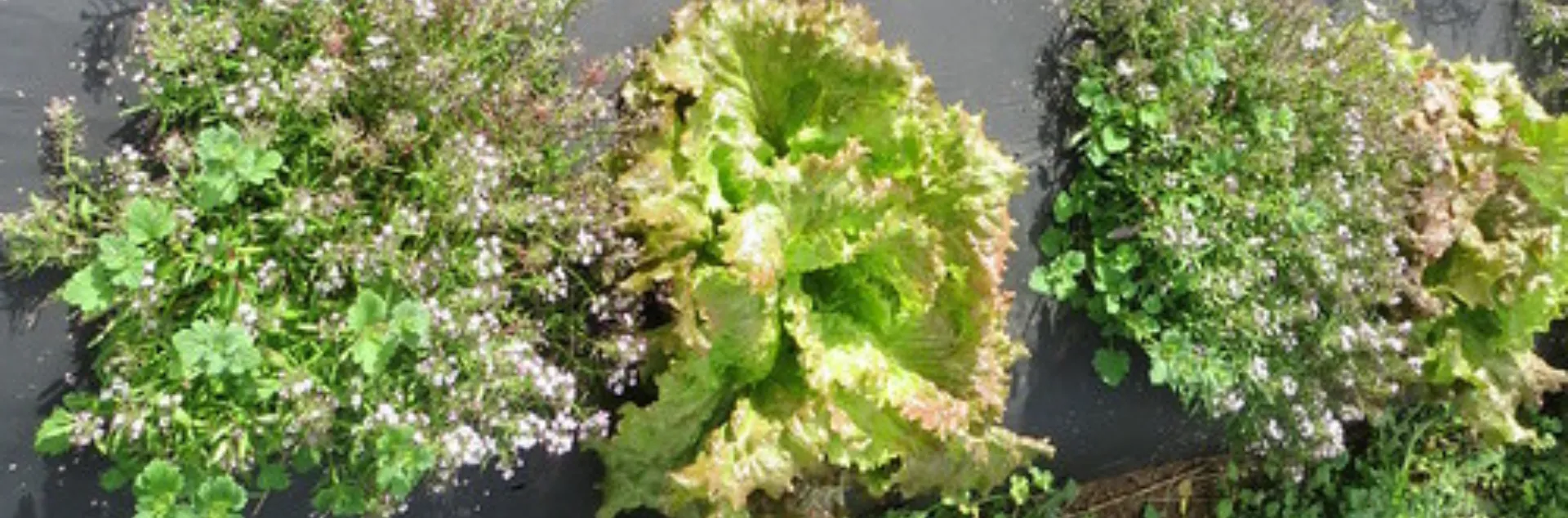

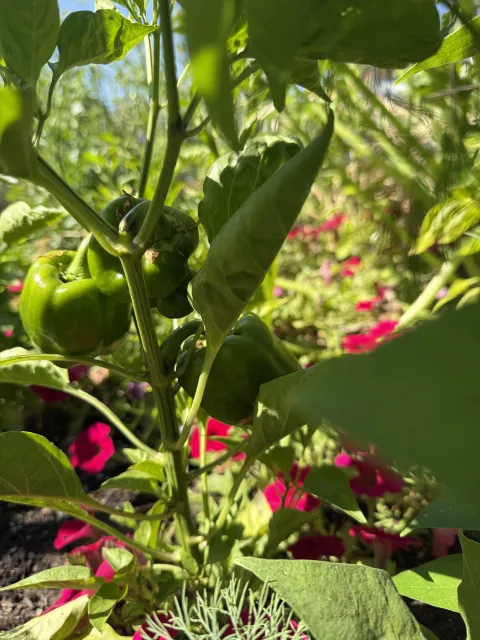
Every job is a little easier with a companion. The same is true for vegetables and herbs in the garden. With companion plants attracting insects that attack garden pests, the vegetables thrive and the garden blooms beautifully.
In Fresno gardens where companion planting was established in the spring, insects like lacewings and lady beetles are now battling vegetable pests. Lacewing larvae have strong jaws that they use to grasp and kill prey. Lady beetles feed primarily on aphids. Because predator insects are very mobile, purchasing and releasing them is not effective. But creating conditions in the garden that are appealing to predator insects allows gardeners to take advantage of their voracious appetites.
Lady beetles love flowers with flat, open tops that are easy to land on and provide accessible nectar, such as sweet alyssum, yarrow, cosmos, sunflowers and calendula.
Adult lacewings look for nectar and pollen, drawing them to nectar-rich, flat-topped, and daisy-like flowers. To attract these beneficial predators, plant herbs like dill, fennel and cilantro; daisy-like flowers such as cosmos, asters and coreopsis; and pollen-rich perennials like yarrow.
Let some of your vegetables and herbs go to flower, as these blooms also provide the easily accessible pollen and nectar adult lacewings feed on.
The diversity of plants will also attract less familiar garden predators, such as pirate bugs, which eat thrips, spider mites and whiteflies; predatory mites, which are enemies of spider mites and fungus gnats; and praying mantises, which hunt larger garden pests (though they will eat beneficials too).
Grow a wide variety of plants, supply a year-round source of water, and leave places for insects to shelter. For water, put out a shallow dish with a few pebbles for landing. For shelter, leave hollow stems, mulch and leaf litter in the garden so beneficial insects have a place to hide and hibernate.
And for the best results with companion plants, avoid insecticides. Insecticides can reduce the number of beneficial predators and shatter the ecological balance between pests and their natural enemies.
Source: California Master Gardener Handbook
______________________
Written by UC Master Gardener Jeannette Warnert