
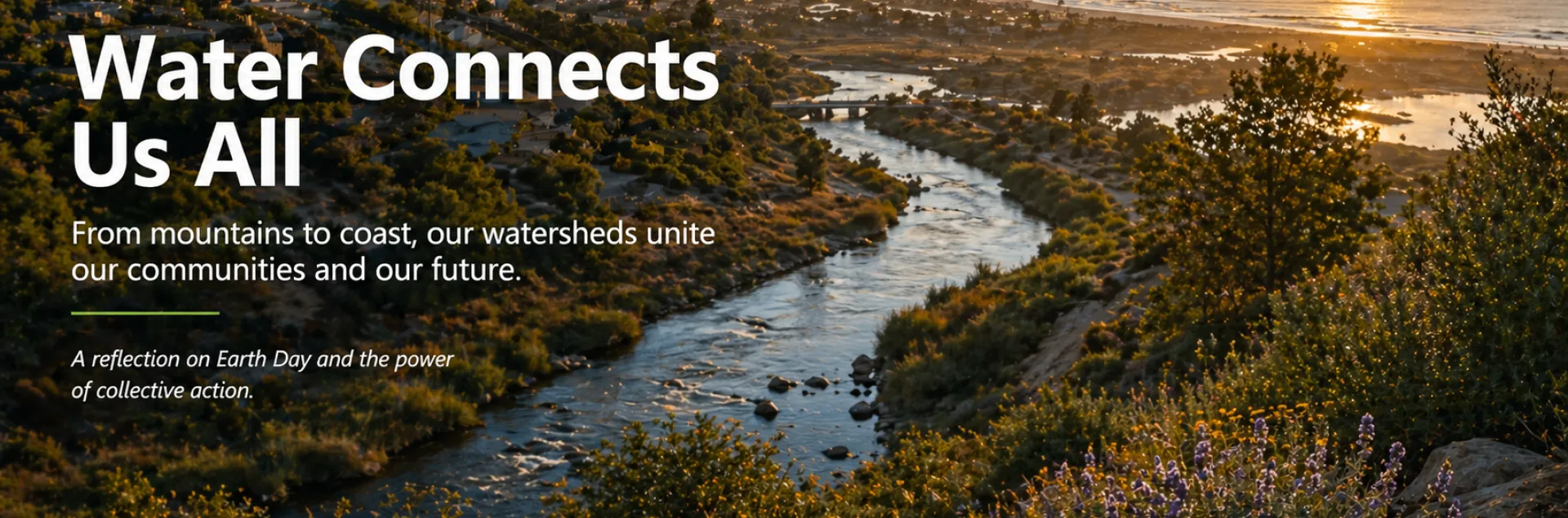

Water as Our Power: Earth Day Reflections from Southern California’s Watersheds
Each year, Earth Day gives us a moment to pause. Not just to celebrate, but to reflect. This year’s theme, led by EarthDay.org, Our Power, Our Planet, asks a simple but important question: What does our power look like in practice?
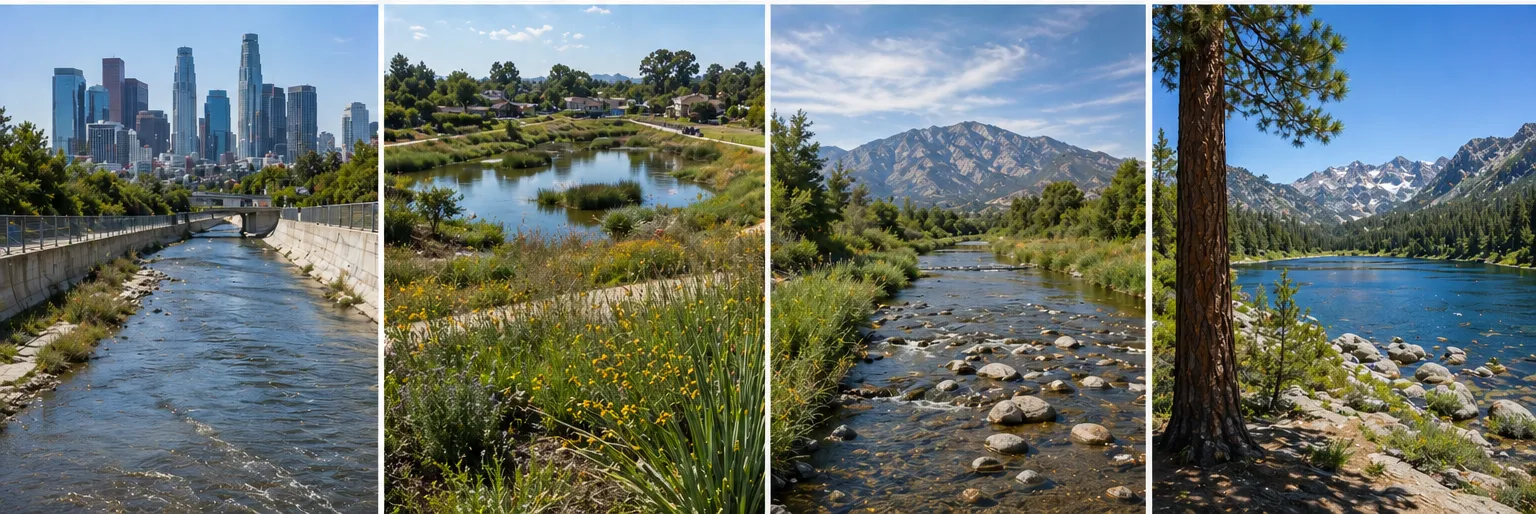
In Southern California, the answer continues to come back to water. Water is not only something we use. It is the lifeline that connects our homes, our communities, and the systems that sustain them. It shapes our landscapes, supports ecosystems, and influences how we live, build, and respond to environmental change. It also reflects our choices. How we design our cities, manage land, and interact with our environment all become visible through water.
As April comes to a close, Earth Day becomes less about a single day and more about what we observed, what we learned, and how our communities showed up.
While Earth Day is officially observed on April 22, many communities extend activities throughout the month, turning April into a broader period of reflection and action. This extended moment allows us to move beyond awareness and begin asking deeper questions about how our environmental systems function, and where our influence truly lies.
💡 Did you know?
Earth Day was first celebrated in 1970 in the United States, helping catalyze major environmental policies, including the establishment of the United States Environmental Protection Agency.
April is a Month of Action Across Our Watersheds
Across Los Angeles, Orange, Riverside, and San Bernardino counties, communities came together in ways that reflected this year’s theme.
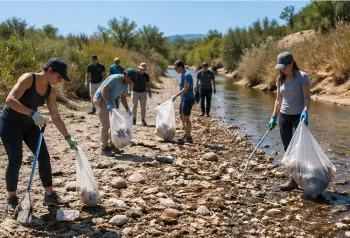
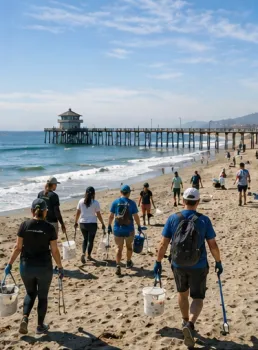
Residents participated in cleanups along rivers, neighborhoods, and coastal areas. Families attended community events focused on sustainability and environmental awareness. Local agencies and organizations created spaces for learning, connection, and action.
In many cases, these efforts also created opportunities to build awareness around water quality, watershed health, and the role communities play in protecting shared resources.
These moments may seem small on their own, but together they reflect something larger. They show that our power is not abstract. It is visible in participation, in curiosity, and in the willingness to care for shared spaces.
💡 Did you know?
Earth Day is now observed in more than 190 countries, making it one of the largest civic observances globally.
From your Home to Watershed
One of the most important lessons Earth Day continues to highlight is that environmental impact begins close to home.
What happens in our homes, backyards, driveways, sidewalks, and streets does not stay there.
Water carries it forward.
As water moves, it interacts with the built environment. It flows over roads, rooftops, and landscaped areas, picking up what is left behind.
Nutrients from fertilizers, residues from pesticides, metals from vehicles, sediments from disturbed soils, dog poop and everyday debris can all become part of this flow.
What begins as a small, localized action can become a distributed impact across an entire watershed.
When it rains, or when water runs off our landscapes, it moves through our neighborhoods, into storm drains, and into local waterways. In this way, daily actions become part of a larger system.
Understanding this connection is central to understanding environmental water quality.
💡 Did you know?In many urban areas, stormwater systems are separate from wastewater systems, meaning runoff can reach rivers and oceans without treatment, as noted by the United States Environmental Protection Agency.
What Our Work Continues to Show
Through our work across the region, one thing remains clear: water connects systems that are often treated separately.
Water supply, water quality, land use, and community resilience are closely linked.
These connections are not theoretical. They are observable in monitoring data, field assessments, and long-term trends across the region.
Changes in land cover alter how water moves. Changes in flow influence how pollutants are transported, diluted, or concentrated. These shifts affect both ecological systems and the condition of receiving waters.
As urban areas expand and more land is covered with hard surfaces, less water is able to soak into the ground. This increases runoff, reduces groundwater recharge, and contributes to rising temperatures through the urban heat island effect.
At the same time, runoff becomes a primary pathway for pollutants, transporting contaminants from urban surfaces into rivers, streams, and coastal waters.
These patterns influence how communities experience drought, heat, flooding, and water quality challenges. They also highlight the importance of planning, design, and management strategies that account for how water moves through our environment.
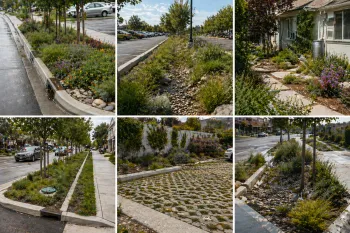
One way this connection is addressed in practice is through low impact development (LID) approaches. These strategies are designed to manage stormwater close to where it falls, using features such as rain gardens, bioswales, permeable surfaces, and native landscaping. By slowing, capturing, and filtering runoff, LID practices reduce pollutant loads, improve water quality, and support groundwater recharge. These approaches reflect a shift from moving water away as quickly as possible to managing it as part of the landscape.
💡 Did you know? Urban runoff is a leading source of water pollution in California, according to the California State Water Resources Control Board.
Our Power in Everyday Decisions
This is where the theme Our Power, Our Planet becomes real. Our power is reflected in everyday decisions:
• How we use water at home
• How we design and maintain our landscapes
• How we manage fertilizers, pesticides, and household chemicals
• How we prevent pollutants from entering our streets and storm drains
• How we participate in community efforts
These actions do not stay local. They move with water, through our neighborhoods and into the watersheds we share.
Individually, these actions may seem small. Collectively, they influence pollutant loading, runoff volume, and the overall health of our waterways.
This is where individual behavior intersects with system-level outcomes.
💡 Did you know?Outdoor water use can account for a significant portion of household water use in Southern California, especially during warmer months, as reported by the Metropolitan Water District of Southern California.
Below is a closer look at how water-related efforts took shape across our counties this Earth Day.
Across Los Angeles, Orange, Riverside, and San Bernardino counties, organizations, agencies, and community groups marked Earth Day by focusing on sustainability, watershed health, and community resilience.
These efforts reflect how Our Power, Our Planet takes shape locally.
Los Angeles County
• Los Angeles Sanitation & Environment
Hosted Earth Day LA at Pan Pacific Park, featuring zero-waste education, stormwater awareness, and sustainability booths
👉 https://www.lacitysan.org/
• LA County Sanitation Districts
Led outreach and education focused on water quality and pollution prevention
👉 https://www.lacsd.org/community-outreach/events/earth-day
• TreePeople
Supported tree planting, watershed education, and climate resilience programming
👉 https://www.treepeople.org/
Orange County
• Orange County Coastkeeper
Organized coastal and watershed cleanups to protect local waterways
👉 https://www.coastkeeper.org/
• Orange County Water District
Provided education on groundwater recharge, reuse, and water supply sustainability
👉 https://www.ocwd.com/
• OC Public Libraries
Hosted educational programs connecting families to environmental stewardship
👉 https://www.ocpl.org/earthday
Riverside County
• City of Riverside
Hosted an Earth Day celebration featuring water-wise practices and sustainability demonstrations
👉 https://riversideca.gov/calendar/event/earth-day-1
• Riverside-Corona Resource Conservation District
Advanced watershed education, conservation practices, and community engagement
👉 https://www.rcrcd.org/
San Bernardino County
• City of Diamond Bar
Organized an Earth Day event featuring recycling and sustainability resources
👉 https://www.diamondbarca.gov/1137/Earth-Day-Celebration
• Inland Empire Resource Conservation District
Focused on watershed health and community resilience programming
👉 https://iercd.org/
Why This Matters
These efforts, from cleanups and tree planting to water education and conservation programs, reflect a shared understanding: environmental stewardship begins locally, and that water is central to that work.
Across all four counties, a common thread emerges:
• Protecting water quality
• Supporting sustainable water use
• Reducing pollutant pathways through stormwater
• Strengthening connections between communities and their watersheds
• Building healthier, more resilient communities
These are not separate goals. They are part of the same system.
Efforts to improve water quality cannot be separated from how we manage land. Efforts to conserve water influence how much runoff is generated. Efforts to reduce pollution depend on both infrastructure and behavior.
A watershed approach brings these pieces together, allowing for more effective and coordinated solutions.
💡 Did you know? Watershed-based approaches are widely used in environmental management because they integrate water, land use, and ecosystem health.
Looking Ahead
Earth Day may be marked on a single day, but its impact extends beyond April.
The activities we saw across our counties this month are part of a broader movement toward healthier watersheds and more resilient communities.
They remind us that sustainability is not a one-time effort. It is something we build over time, through consistent action, collaboration, and learning.
They also remind us that solutions exist, and that progress is possible when communities, agencies, and individuals work together.
A Closing Reflection
As we move beyond Earth Day, the question remains:
What does our power look like moving forward?
In Southern California, water offers a clear answer.
It shows us how our actions are connected, how our communities are linked, and how small decisions can shape larger systems.
It also shows us where intervention is possible.
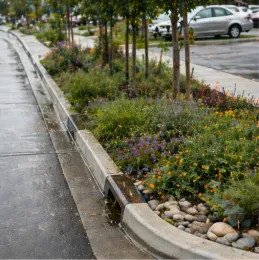
From how we design streets and landscapes, to how we manage pollutants at the source, to how we build and maintain treatment systems, there are multiple points where change can occur.
Recognizing these points is what transforms awareness into action. Because when we care for water, we are not only protecting a resource. We are strengthening our watersheds, supporting our communities, and investing in our shared future.
A Call to Action
Protecting water quality begins with awareness, but it continues through action.
Whether through everyday decisions, professional practice, or community engagement, each of us plays a role in shaping the health of our watersheds.
If you would like to be part of a growing community of water and watershed stewards, including opportunities to engage in citizen science, we invite you to subscribe to our blogs and stay connected. Our programs offer opportunities for both youth and adults.
References and Sources
• United States Environmental Protection Agency
https://www.epa.gov/
• California State Water Resources Control Board
https://www.waterboards.ca.gov/
• Metropolitan Water District of Southern California
https://www.mwdh2o.com/
✍🏽 About the Author
Dr. Esther Lofton is the Urban Watershed Resilience Advisor with University of California Cooperative Extension (UCCE), where she advances water quality, conservation, and community engagement across Southern California.
Through the Urban Watershed Resilience Program, she works at the intersection of science, education, and community partnership to address critical water challenges. Her work focuses on translating research into practical, community-centered solutions that support water supply security, improve water quality, and promote water use efficiency and equity.
She collaborates with public agencies, educators, and community organizations to bridge the gap between water systems and public understanding, with a strong emphasis on outreach, youth education, and building the next generation of water stewards.
🌐 Explore More
💧 Read the Latest Blog
https://ucanr.edu/blog/water-supply-security-wss/article/oc-children-water-festival-2026-water-education
📖 Explore the SoCal Water Blog Series
https://ucanr.edu/site/socal-water-resources/socal-water-blog-series
🌊 SoCal Water Resources Program
https://ucanr.edu/site/socal-water-resources
🌿 Watersheds Program (Los Angeles & Ventura Counties)
https://ucanr.edu/site/watersheds-los-angeles-and-ventura-counties
📩 Contact / Collaborate
:anrsocalwater@gmail.com
📲 Follow on Instagram (@socal_h2o)
https://instagram.com/socal_h2o
🎵 Follow on TikTok (@socal_h2o)
https://www.tiktok.com/@socal_h2o
🐦 Follow on X (@socal_h2o)
https://x.com/socal_h2o