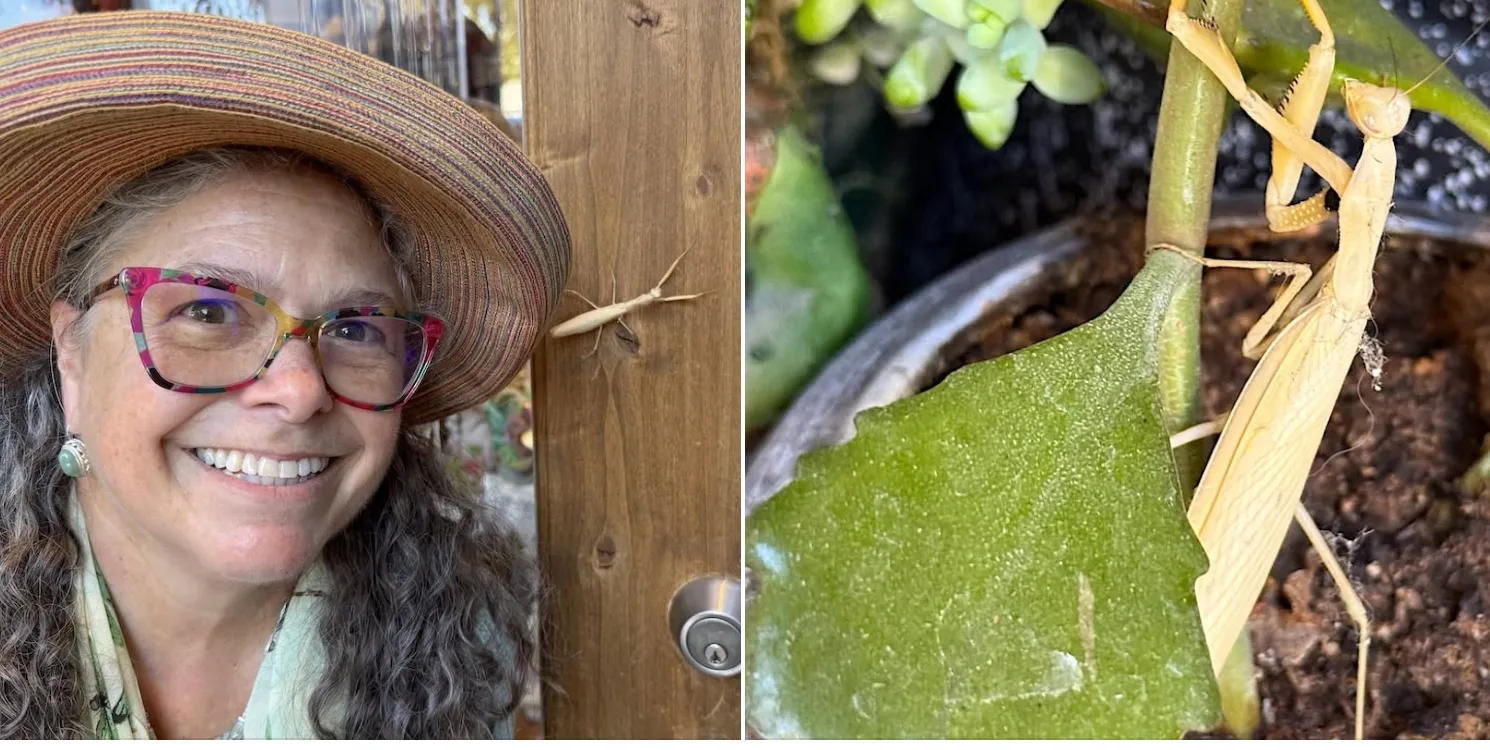

The visitor hesitated to enter.
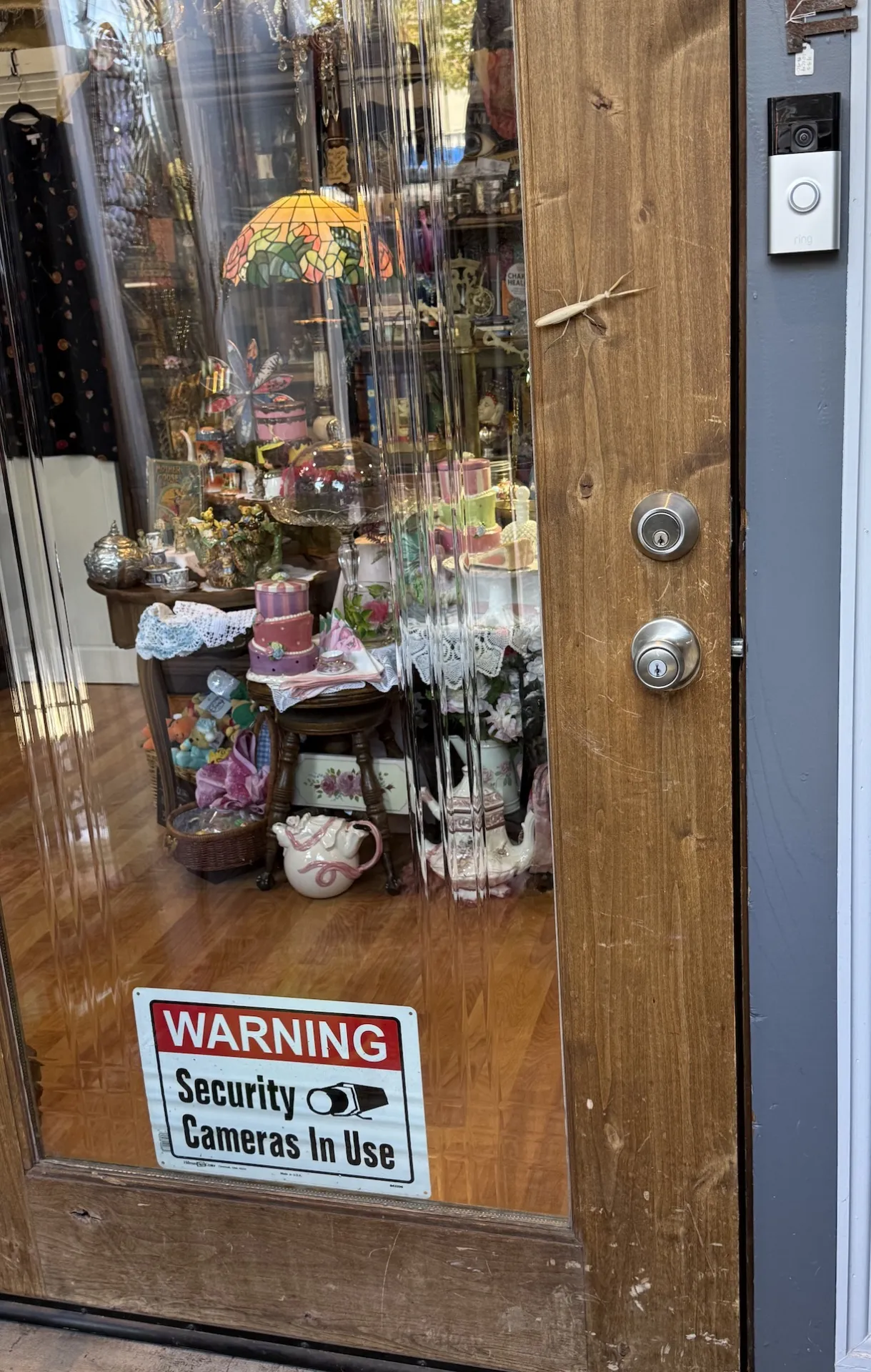
"Warning: Security Cameras in Use," a sign read.
"Shall I pray or shall I prey?"
The visitor hung out by the front door, observant of people coming and going.
Then the visitor appeared to want to ring the doorbell.
"Door dash?"
The scene: the entrance to The Artisan, a cozy vintage, antique, arts-and-crafts and consignment store at 536 Main St. in downtown Vacaville.
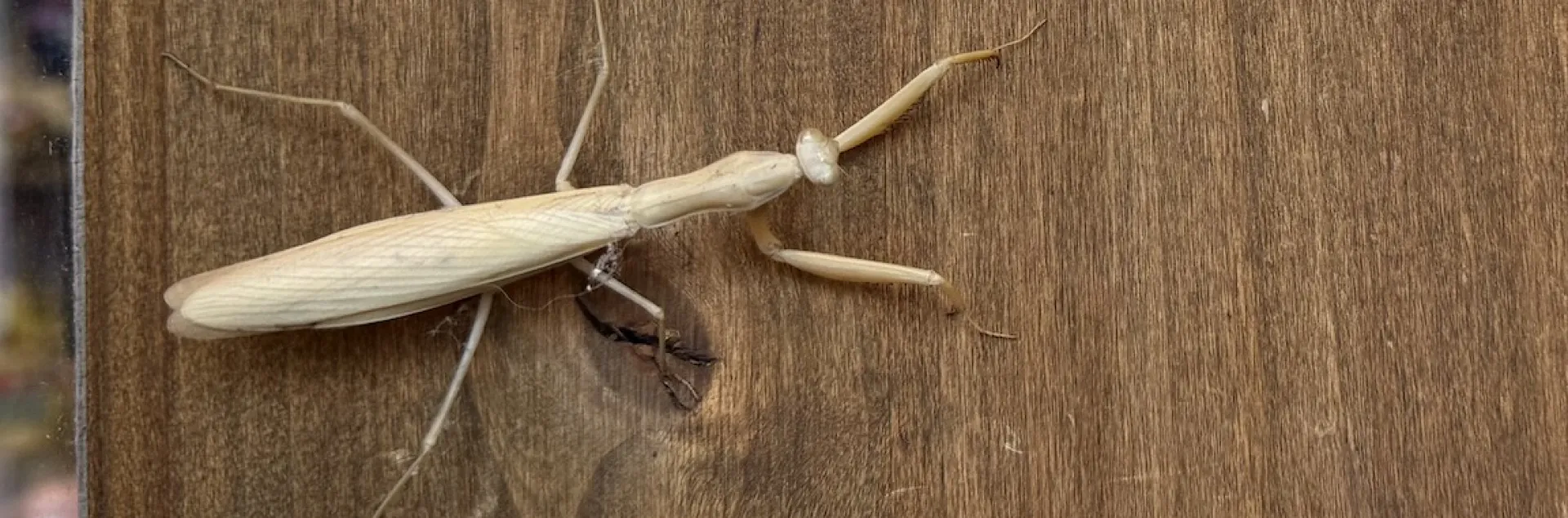
The visitor: an European praying mantis, Mantis religiosa.
Owner Jeanne Whitehouse promptly named it "Arthur," nicknaming it "Art" for short.
Maybe she should have named it Arthuretta, Artura, Arthurette or Arthurina.
It's definitely not an "Arthur."
Praying mantis expert (mantodeologist) Lohitashwa “Lohit” Garikipati, a UC Davis alumnus who is studying for his doctorate at the Richard Glider Graduate School at the American Museum of Natural History, shared that it's a female. "The antennae are much shorter and thinner than in the male," he said, "and notice the very wide abdomen visible from even the top."
Arthuretta leaped from the front door, landing in a potted plant where her door-dash menu dilemma could improve substantially.
She's still there. Looking.
Whitehouse, an insect fan, hope she stays. Who knows? Arthuretta might want to go inside and engage in a little target practice on some of the realistic-looking, insect-themed gifts--like bees, butterflies, beetles and dragonflies.
In Germany, M. religiosa is listed as Gefährdet (endangered). Globally, the International Union for Conservation of Nature assesses it as of least concern.
The European mantis, a non-native, is found throughout Europe, Asia, and Africa, as well as North America, where it was introduced.
And at The Artisan.