


Hornworms and headbands helped headline Moth Night at the Bohart Museum of Entomology, UC Davis.
Did the huge hungry hornworms hold headbands?
No, they did not. But what an alliteration!
Youngsters and adults alike held hornworms, a pest of tomatoes, and the attendees also crafted colorful moth antennae headbands that they wore throughout the night and at entomologist Joel Hernandez' blackighting display that followed in the Shields Oak Grove, UC Davis Arboretum and Public Garden.
And now, a look at the headbands and hornworms...
Moth Antennae Headbands
Crafting moth antennae headbands was part of the Bohart Museum's family arts and crafts activity, which they hold at every open house. Bohart interns Emmeline Hufftaker and Hannah Potok helped the attendees create the headbands.
Moths use their antennae as powerful sensory tools for smell and to find mates. The antennae also help them stay stable during flight. Whereas butterflies have thin, club-tipped antennae, moth antennae are often feathery, or comb-like.

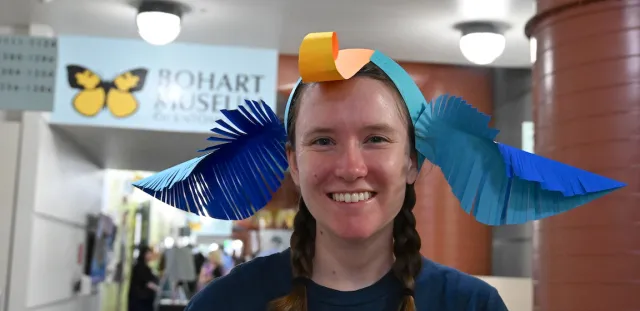
A sign provided instructions:
Create a Moth Attennae Headband:
- Fold your construction paper in half lengthwise and cut following the template
- Cut strips along the entire antennae, making sure not to cut all the way through the fold
- Cut or tear out every other strip, or leave it to create an extra feathered look
- Repeat for the second antenna
- Cut out a long strip of paper to fit around your head, then glue or staple to create the headband
- Attach the antennae to each side of the headband
- Cut out a long strip of paper for the proboscis, then curl the end and attache to the headbands in the middle of the forehead
- Sport our new moth headband!
Tomato Hornworms
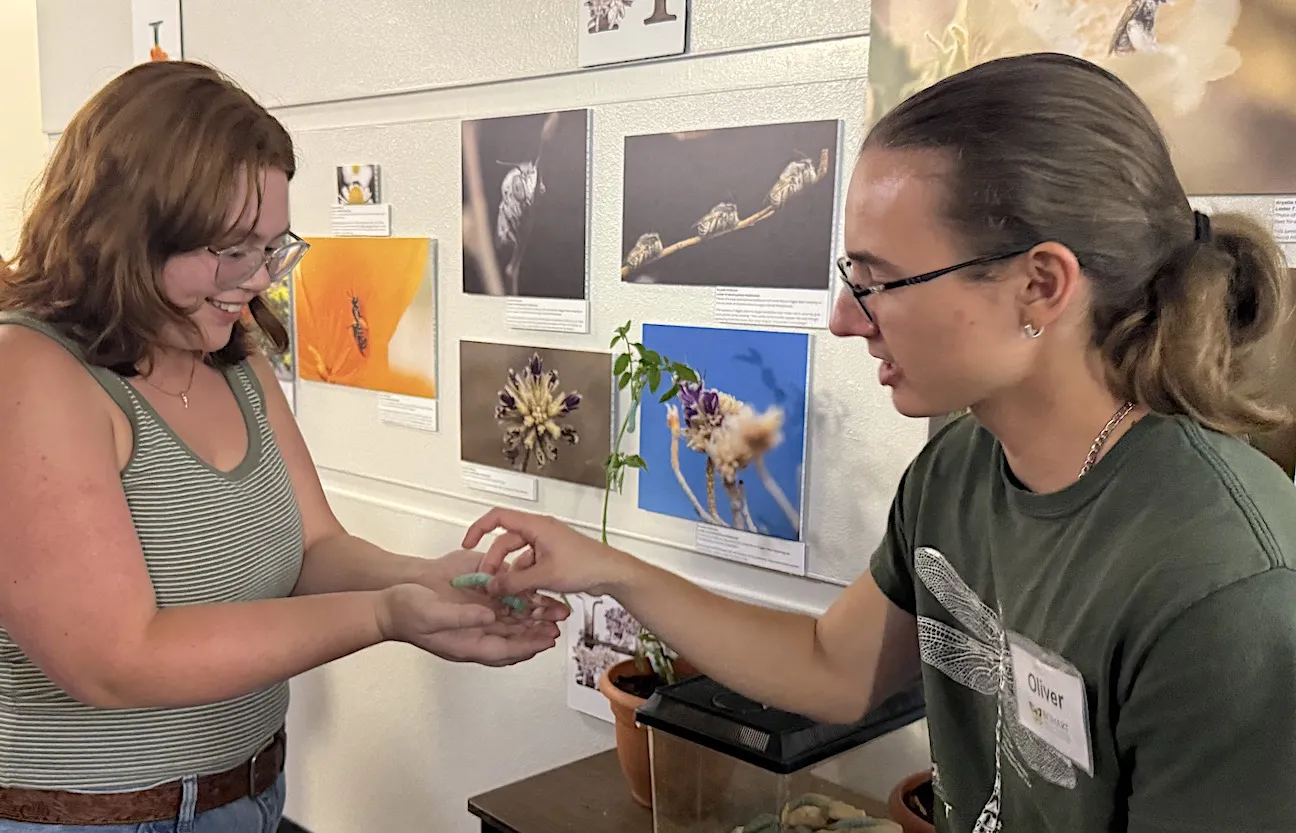
At the Bohart Museum's live petting zoo, attendees could hold Madagascar hissing cockroaches, stick insects and...drum roll...hornworms, the larvae of a moth.
- Tomato hornworm: Manduca quinquemaculata
- Tobacco hornworm: Manduca sexta
The Bohart Museum purchased the hornworms from a business in Compton, Calif.: rainbowmealworms.net.
What eats hornworms? Bearded dragons, leopard geckos, uromastyx, amphibians, tarantulas, and scorpions, "but chameleons especially love them!" according to the company. The hornworms "are high in calcium, low in fat, and have no chitin (exoskeleton), making them easily digestible."
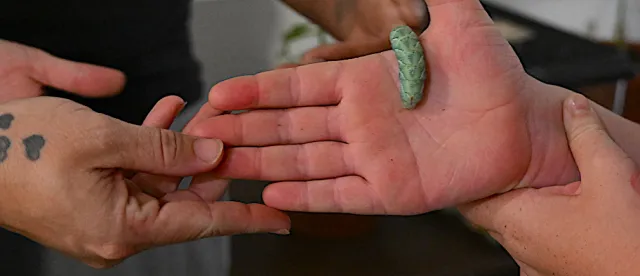
"They come with an artificial diet, so you have to feed them tomato plants for awhile for them to become a natural green," commented Tabatha Yang, the Bohart Museum's education and outreach coordinator.
Hornworms feed primarily on tomatoes, but they are also known "to attack other crop plants in the Solanaceae, including egg plants, peppers, and potatoes," according to a Bohart Museum Fact Sheet written by UC Davis Distinguished Professor (now emerita) Lynn Kimsey, who directed the Bohart Museum for more than three decades prior to her retirement in 2024.
"When the caterpillars are numerous, they can do extensive damage in a short time," Kimsey wrote. "The caterpillars feed on the upper portions of leaves and new stems, and occasionally, when the caterpillars are numer ous, it will feed on the tomato fruit as well. They tend to remain out of direct sunlight, and so are found near the main stem of the plant during the day. They are more easily spotted when they move to the outer portions of the plant at dusk and dawn. Their presence is often first recognized by an excessive amount of frass (droppings) around the base of the plant."
Scientists point out that what you see on your tomato plants is probably a tobacco hornworm, Manduca sexta, and not a tomato hornworm, Manduca quinquemaculata. UC Statewide Integrated Pest Management includes information on both of the hornworms on its website. "While both species of hornworms have a large horn on the posterior end of the body, the tobacco hornworm has seven diagonal stripes on each side of the body in contrast to the tomato hornworm, which has eight chevron-shaped stripes. Larvae feed for 3 or 4 weeks, then burrow into the soil to pupate. The adult moth is a strong flier with a wingspan up to 5 inches (12 cm). Development takes about 2 months in summer; the winter is passed in the pupal stage. There are two generations a year in most areas; larvae are usually most common in midsummer, but there may be a small population peak in late summer. Infestations tend to be more severe in warm inland areas."
The Bohart Museum, founded in 1946, is located in Room 1124 of the Academic Surge Building, UC Davis campus. It is the home of a global collection of eight million insect specimens, plus a live petting zoo and an insect-themed gift shop.
Following the open house, what happened to the hornworms?
They went home with some of the visitors, Yang said.