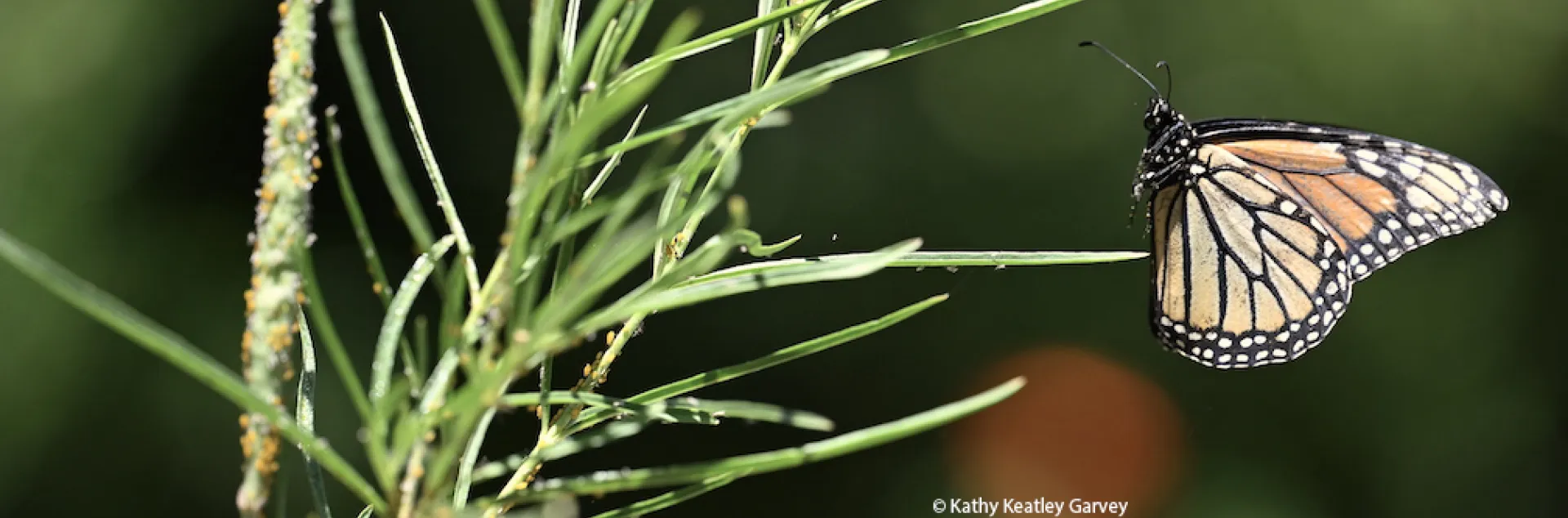
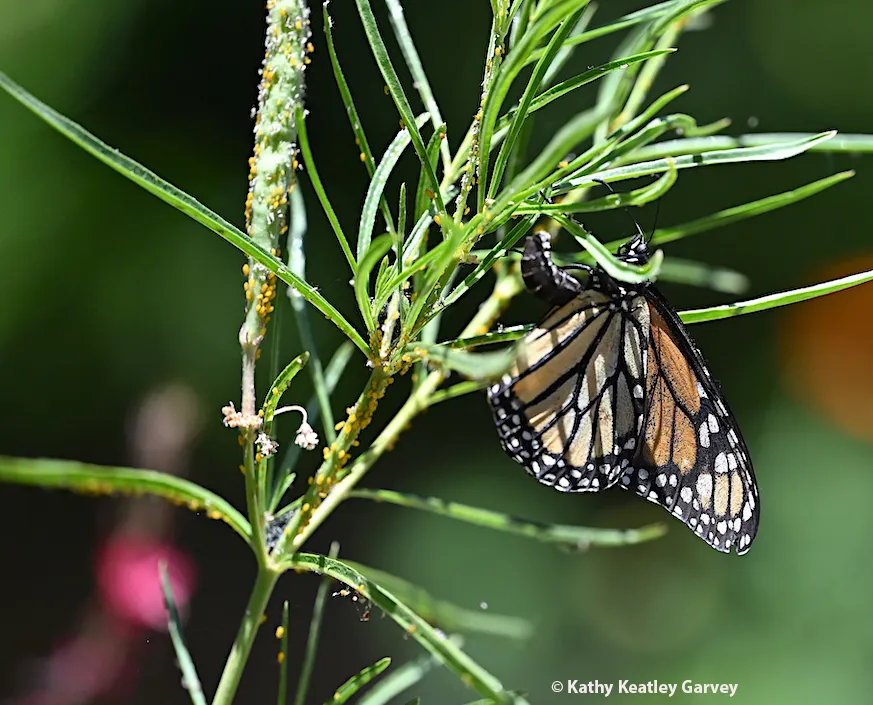
Me: "Well, hello, there, Ms. Monarch. Did you arrive to lay some eggs on our milkweed?"
Ms. Monarch: "Yes. I'm looking for young milkweed. Very young milkweed."
Me: "Shall I usher you over to it?"
Ms. Monarch: "No, no, I can find it myself. Thanks for planting it."
Me: "You're welcome. Don't mind the aphids."
Ms. Monarch: "I don't mind them at all. I come to do my business."
Me: "Tell me about yourself. We call you Danaus plexippuss. You're in the Nymphalidae family. You are the best known butterfly in the world. You're an incon. And you're known for your long annual migrations."
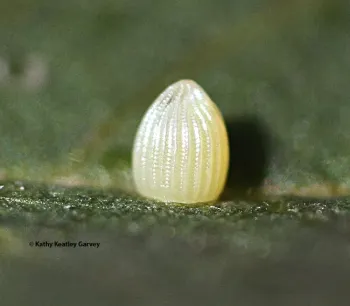
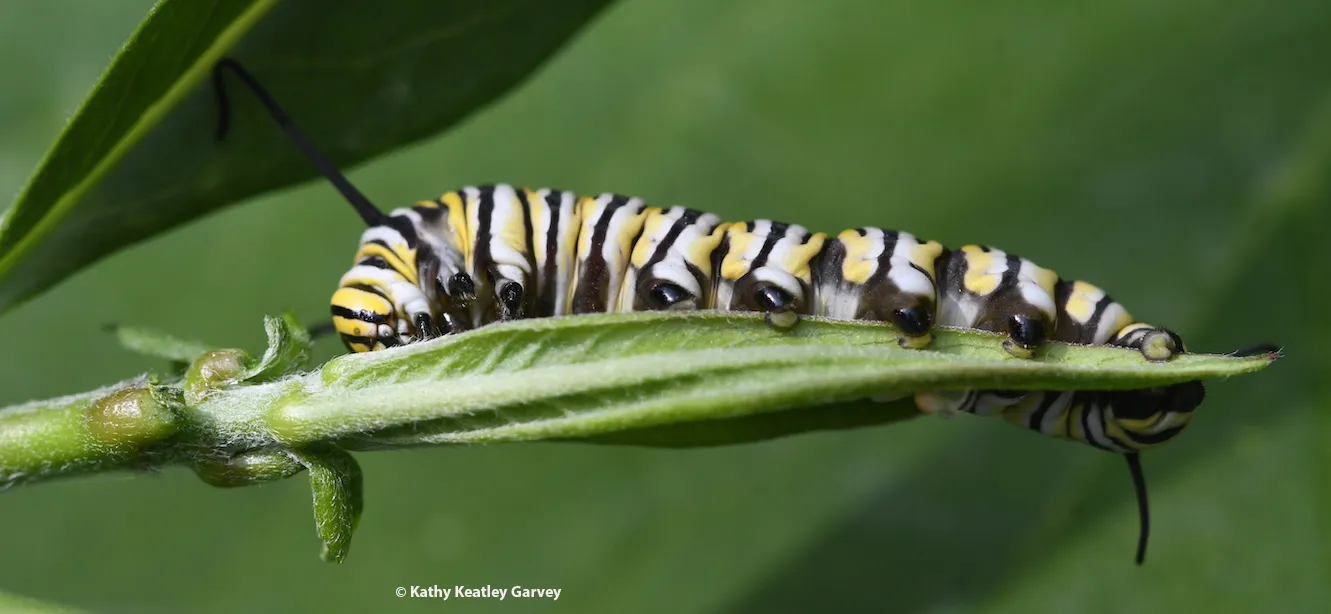
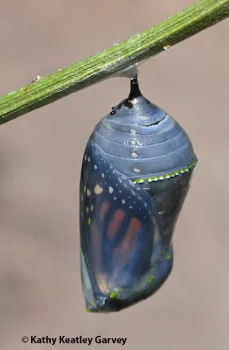
Ms. Monarch: "You named me that. I'll tell you what I do. I lay my eggs one by one, beneath the leaf of a milkweed. That's the only food for my offspring will eat. The egg hatches and the next stage is the caterpillar. We have four stages: egg, caterpillar, pupa and adult. A caterpillar will molt four or five times and then it will 'J" and become a chrysalis. And then an adult butterfly ecloses from the chrysalis. Like magic. Pure magic. Then we monarch adults have to watch out for birds, spiders, praying mantises and other predators as we find a mate."
Me: "Right, but birds learn not to eat you. You and the caterpillars don't taste good. You have a chemical we call cardenolie (cardiac glycoside). If a bird eats you, it becomes sick and vomits. Birds won't eat viceroy butterflies, either, because viceroys look like you. That's what we call an example of Müllerian mimicry. The viceroy is protected because it looks like you but it's not toxic like you are."
Ms. Monarch: "Hey, I've finished laying my eggs."
Me: "Hope the spiders, lady beetles and wasps don't eat your eggs. And hope the tachinid flies don't lay eggs in your caterpillars and kill them. And I hope you don't have OE."
Ms. Monarch: "OE? What's that? Other Enemies?"
Me: "No. Ophryocystis elektroscirrha. It's a microscopic, single-celled protozoan parasite. We tell everybody that It causes severe physical weakness, wing deformities, and early death, and is spread when caterpillars eat dormant spores left on milkweed leaves."
Ms. Monarch: "Well, you're full of good news today, aren't you?"
Me: "Just trying to protect you, my friend. Just trying to protect you. We're losing your species because of habitat loss, pesticides and climate change. We hope you monarchs don't go extinct. And go tell all your buddies that we have great milkweed here--young narowleaf milkweed--and wonderful nectar plants like Mexican sunflowers, Tithonia rotundifola. Flight fuel! Wings up!"
Ms. Monarch: "Wings up!"