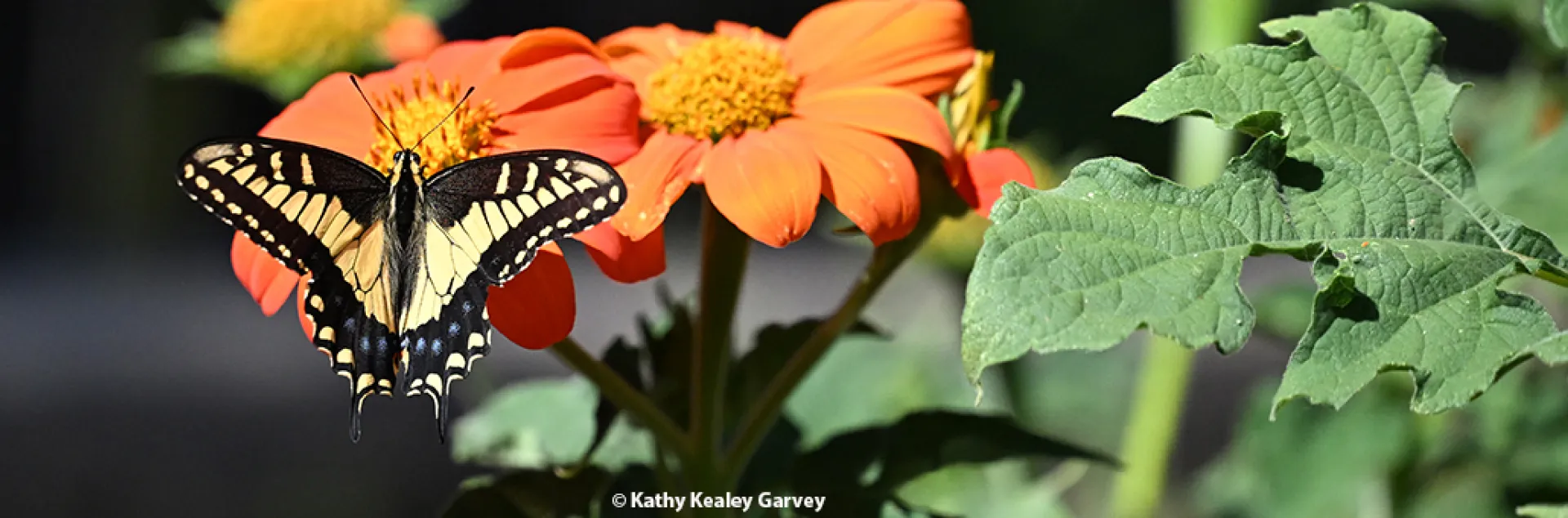

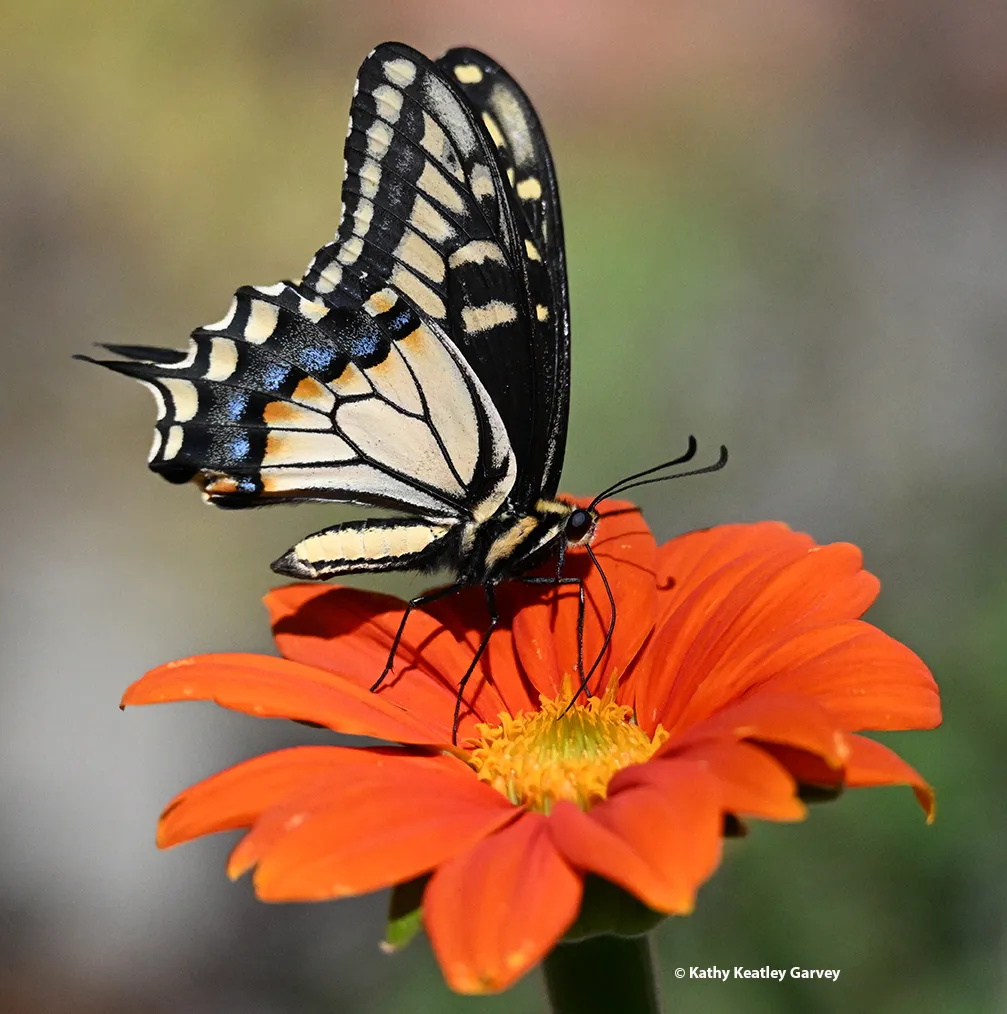
All hail the Anise swallowtail, Papilio zelicaon.
This brilliantly colored yellow and black butterfly, with blue spots on its rear wings, is often mistaken--at first glance--for the Western tiger swallowtail, Papilio rutulus. The tiger has narrow vertical black "tiger stripes" running down its forewings and hind wings. The Anise appears mostly black on its upper wings. (Google https://www.inaturalist.org/)
Both are common throughout western North America.
Butterfly guru UC Davis Distinguished Professor Emeritus Art Shapiro, who has monitored butterfly populations in central California since 1972 and maintains a research website at https://butterfly.ucdavis.edu/, says the Anise swallowtail has "several generations (late February or March-October) and breed very largely on Sweet Fennel ("Anise"), Foeniculum vulgare, and (in the first half of the season) Poison Hemlock, Conium maculatum. Both of these are naturalized European weeds."
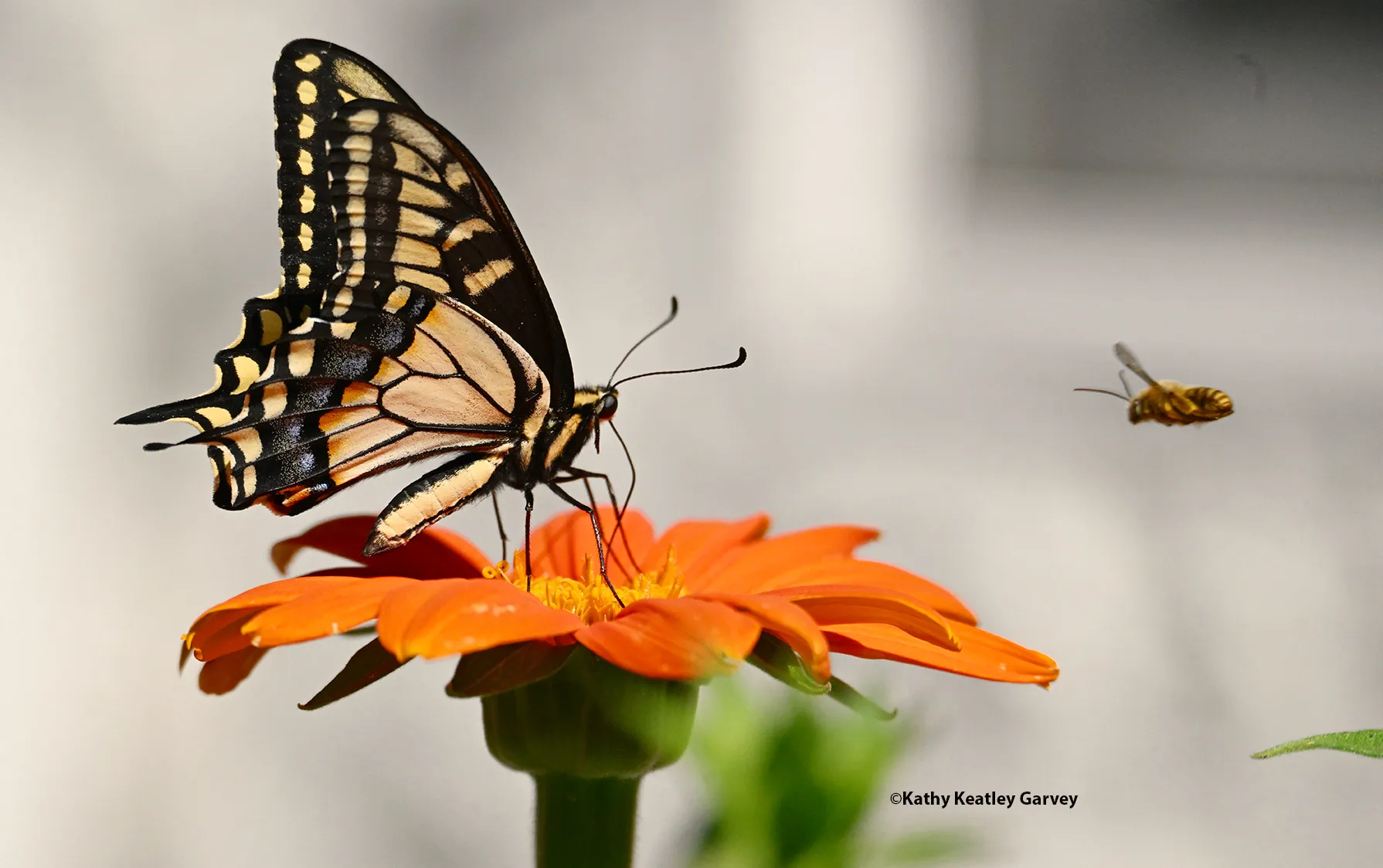
When an Anise swallowtail fluttered into our pollinator garden in Vacaville on Aug. 7, it chose to nectar on Mexican sunflower, Tithonia rotundifola. Then male long-horned bees, very terrritorial, began targeting it.
Bee vs. butterfly? Score: Bee, 1; butterfly, 0.