
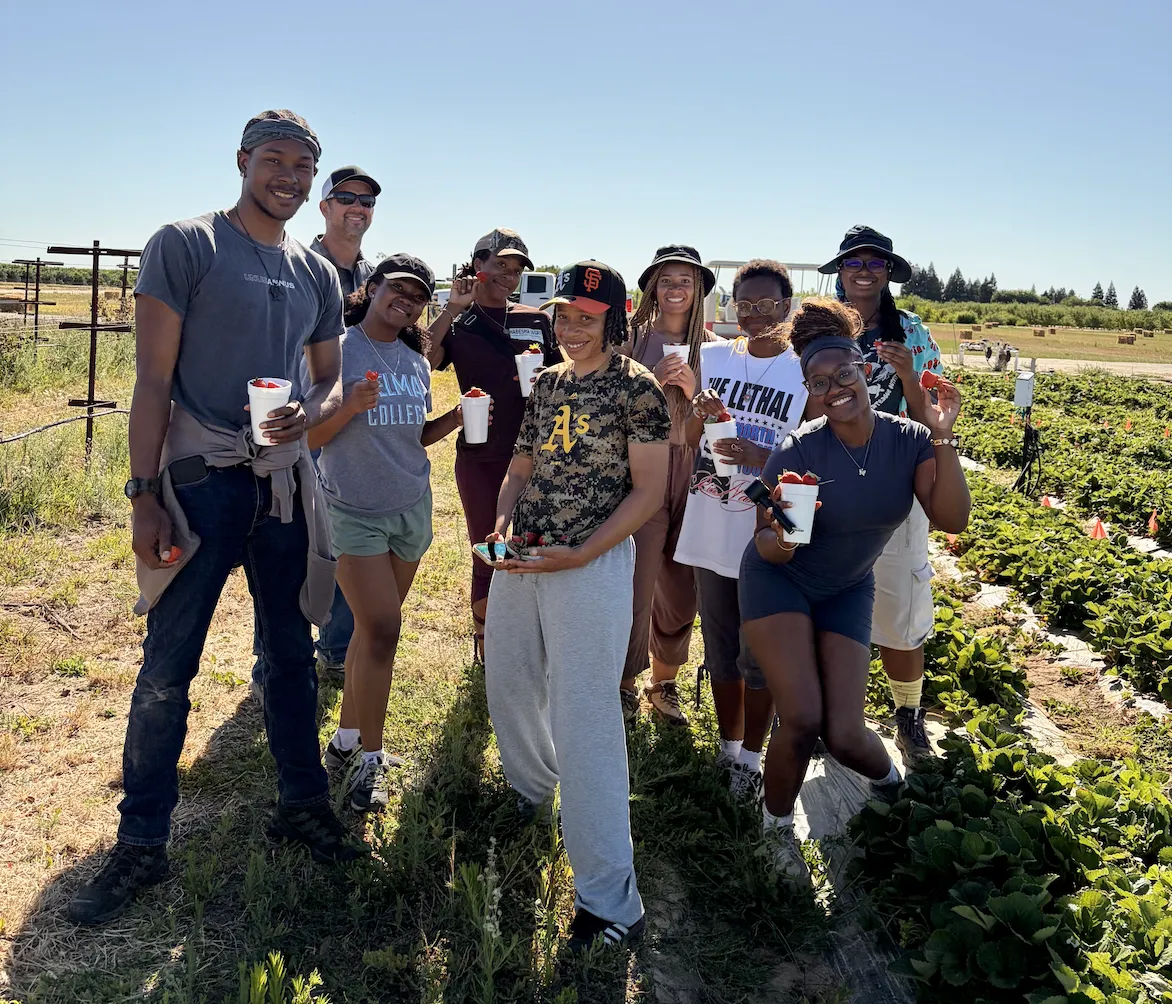
Seven undergraduate students from Historically Black Colleges and Universities toured Kearney Agricultural Research and Extension Center on June 9 and met with UC ANR scientists as one of their activities with the HBCU-Berkeley Environmental Scholars for Change Program.
Founded in 2021 by Rosalie Zdzienicka Fanshel, , who is currently a postdoctoral scholar at UC Berkeley, and Associate Professor Tim Bowles, the program is a summer research and mentorship intensive in the Department of Environmental Science, Policy, and Management at UC Berkeley.
The students spent June 9 and 10 in the San Joaquin Valley on a tour led by Fanshel and ab banks, program cultural ambassador and agroecology director for Berkeley Food Institute.
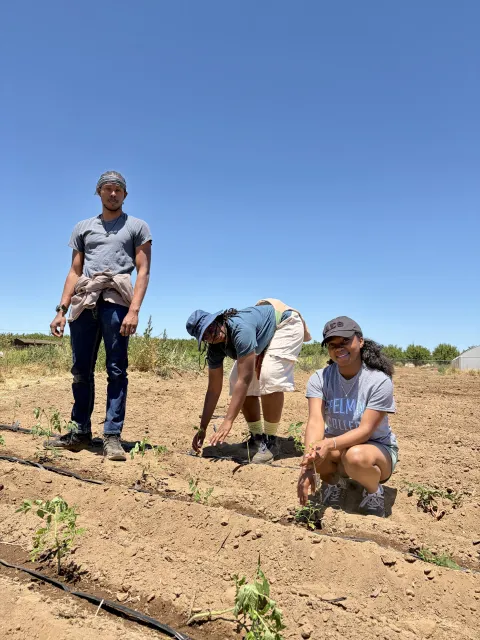
On the first day, they visited Will Scott, Jr., legendary farmer and founder of African American Farmers of California at Scott Family Farms in Fresno.
"Farmer Scott taught us about sustainable farming practices and how environmental injustice impacts the food quality and availability for the people who need it most, which is why he is dedicated to improving people's access to quality, community grown food," said Morehouse College student Ryan Riley.
From Scott Family Farms, they traveled to Parlier to tour Kearney REC.
“The HBCU-Berkeley Environmental Scholars for Change Program is so grateful for the warm welcome at Kearney REC, and for the sponsorship of our full two days in the Central Valley,” said Fanshel. “The students had an amazing, eye-opening time at each of our stops – definitely a highlight of the program every year.”
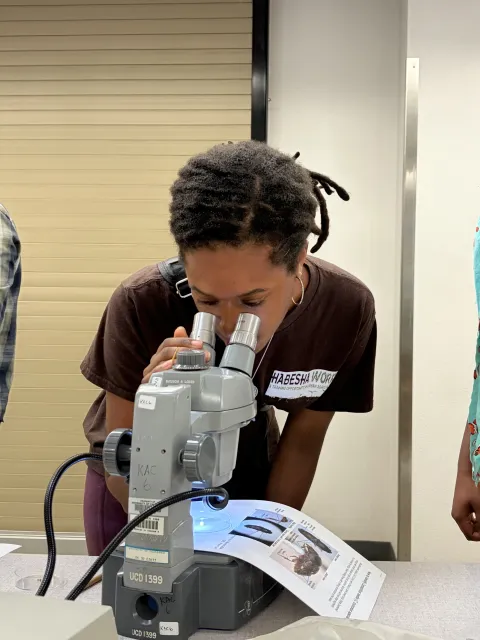
At Kearney REC, Houston Wilson, UC Cooperative Extension specialist, discussed his integrated pest management research and invited the students to look at insects under a microscope in his lab.
Jackie Atim, UC Cooperative Extension specialist, showed them her sorghum field plot and described her research on sorghum varieties for livestock forage and for grain for human consumption.
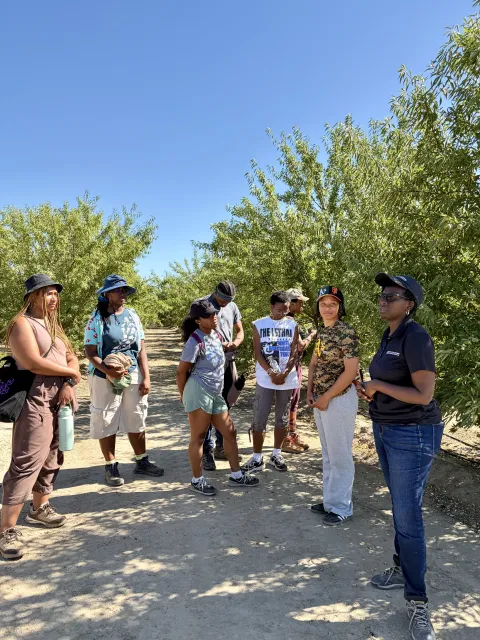
In addition to her current research, Atim told the students about her own career path.
“During the tour, I talked about my academic journey and how I studied different areas of crop science, including plant breeding, plant pathology, plant biotechnology and entomology,” Atim said. “I also shared how I currently apply this knowledge in my research and extension work focused on abiotic stress.”
Atim prepared for her career by earning a bachelor’s degree in agriculture and education from Kyambogo University in Uganda, a master’s degree in plant biotechnology from Wageningen University in the Netherlands, and a doctorate in agriculture, plant breeding and entomology from the University of Greenwich in the United Kingdom. She also studied in Germany.
“I emphasized that students from both STEM and social science disciplines have opportunities to contribute to solutions, research and extension efforts in agriculture,” Atim said. “Majors such as plant science, biology and chemistry provide a strong foundation, but they do not limit the fields in which you can work. Throughout my career, I followed emerging research trends and sought opportunities to address important scientific challenges, which is why I transitioned from biotic stress research to abiotic stress research.”
Atim, who joined UC ANR in 2022, told the HBCU students: “Whatever your field of study, you can contribute to agriculture. Whether you are a computer scientist, artist, engineer or social scientist, there is a place for your skills in agriculture. Agriculture is not just about working in the field – it is also about passion, creativity, innovation and applying the knowledge you gained in college to solve real-world problems.”
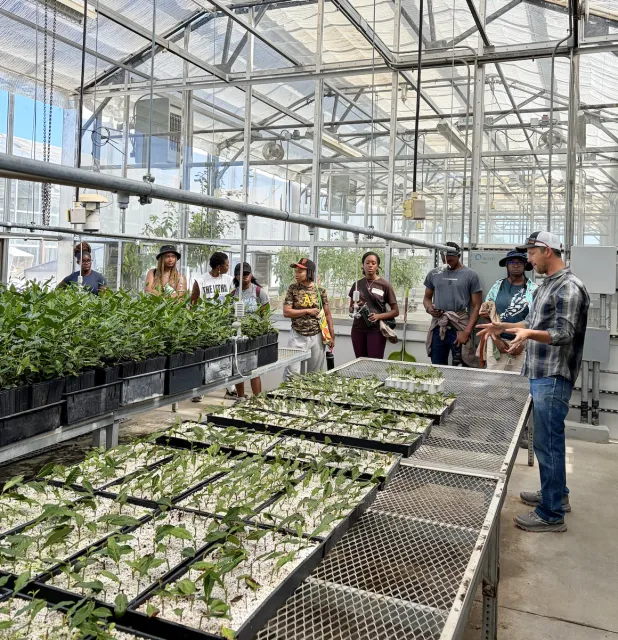
Ryan Puckett, staff research associate at Kearney REC, gave the students a tour of the greenhouse where tea plants are propagated and the strawberry fields, where he invited them to pick strawberries. After a tour of the postharvest facilities, he led an avocado tasting.
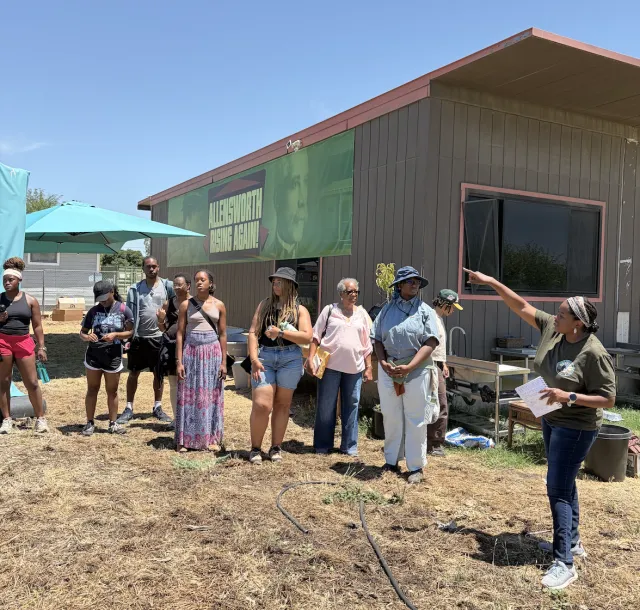
On the second day, the students visited Colonel Allensworth State Historic Park, where a collection of restored and reconstructed buildings mark the location of the historic California town founded, financed and governed by African Americans. They also met with members of Allensworth Progressive Association and toured the Community Resiliency Center, Allensworth Agricultural Experiment Station community garden and the Gadgil Lab arsenic-safe drinking water project.
“Our visit to Allensworth was a critical opportunity for expansion – expansion of my mind, my heart and my community,” said Tuskegee University student Kai Watts. “Learning about the efforts of the Allensworth Progressive Association to empower today’s community was especially impactful after visiting Colonel Allensworth State Park and learning about the greater history of community development and land sovereignty in the town.”
The field trip was funded by UC ANR and the Lewis & Kala Fund at the UC Berkeley Rausser College of Natural Resources. (The Lewis & Kala Fund is named for Vernard Lewis, UCCE specialist emeritus, and his spouse Lisa Kala, who was a UC Berkeley administrator for 30 years).
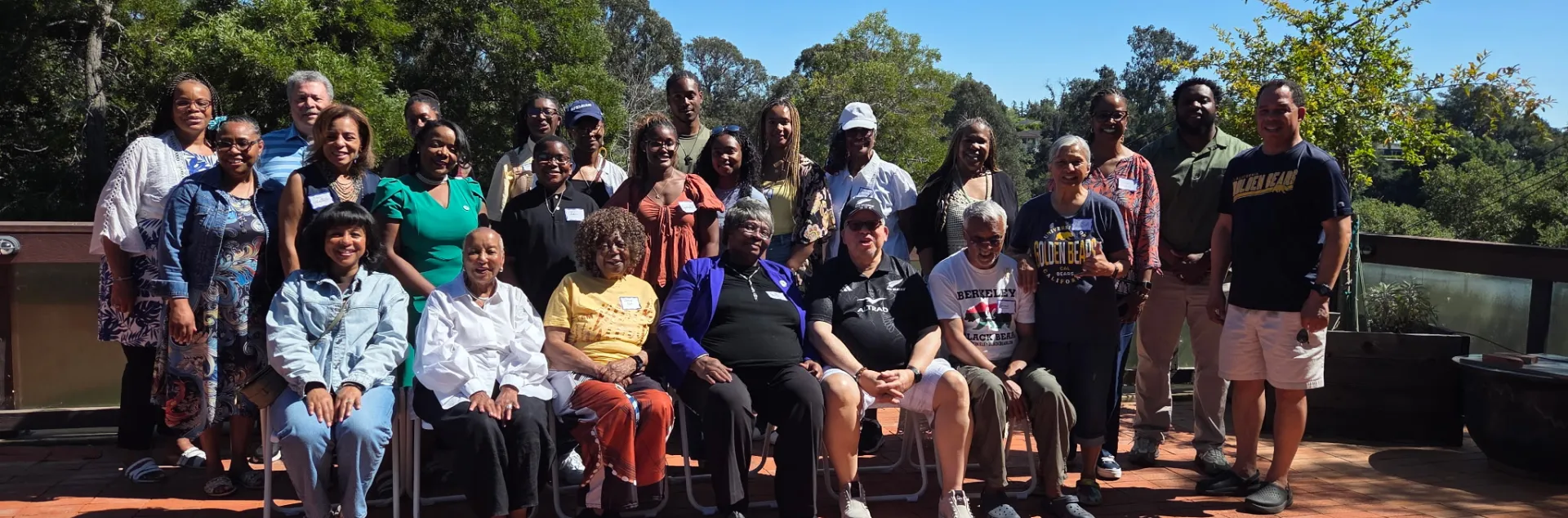
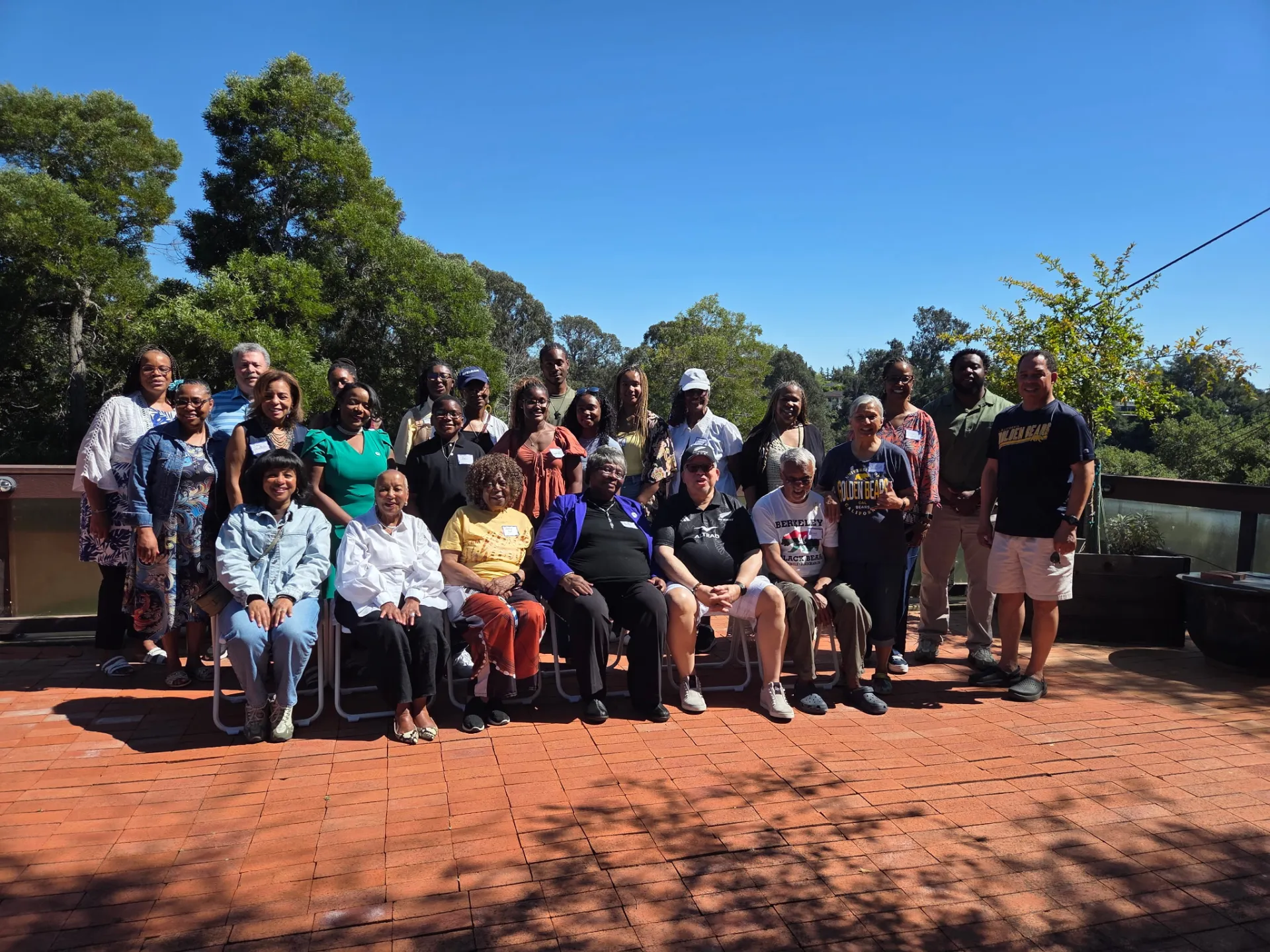
Soon after the HBCU students arrived at Berkeley, Lewis and Kala held a a special welcoming lunch was held at their home home. “This lunch, requested by past program participants, featured five generations of past Black UC administrators, scientists and alumni. The stories and experiences they shared provided a powerful and insightful afternoon,” Lewis said.
The HBCU students, who arrived in Berkeley on May 31, have been working on summer research projects on campus. During the two-month program, visiting students from Spelman College, Morehouse College and Tuskegee University conduct research with faculty, students and staff in ESPM across a wide range of intersecting environmental fields, such as agri-food systems, biodiversity, climate and water, all with a throughline of justice.
The program also facilitates multidirectional learning between the partner schools while creating enduring and welcoming pathways for Spelman, Morehouse and Tuskegee students to thrive in graduate school at UC Berkeley.
The scholars and their mentors in ESPM are:
- Ashley Felix of Spelman College with Lucas Vargas Zeppetello Lab
- Mychal-Mali McCaskill of Tuskegee University with Damian Elias Lab
- Gabrielle Pecke of Spelman College with Rachel Morello-Frosch Lab
- Sydney Reynolds of Spelman College with Whendee Silver Lab
- Ryan Riley of Morehouse College with Neil Tsutsui Lab
- Ava Sharett of Spelman College with Stephanie Pau Lab
- Kai Watts of Tuskegee University with Christopher Schell Lab
The scholars will present their research on July 30 at 9 a.m.–1:30 p.m. To attend via Zoom or in person on the UC Berkeley campus, RSVP for the Research Showcase.